18+ AI Video Generation Models: How to Pick the Best One for Your Workflow

Why Picking the Right Model Actually Matters (18+ Best AI Video)
There are now more than 18 serious AI video generation models (18+ Best AI Video) available to creators, marketers, and developers, and they are not interchangeable. Each model has a different architecture, a different creative sweet spot, and a very different price per second. Choosing the wrong one does not just waste money. It wastes the hours you spend prompting, iterating, and waiting for renders that never hit what you were after.
This guide cuts through the noise. We cover every major model available in 2026 , proprietary, open-source, and commercial , and give you the concrete criteria to choose the right one for your specific use case, budget, and output format.
The single most important mindset shift: there is no universally best model in 2026. There is only the best model for your specific task. The creators and teams winning right now use a rotation of 2 to 3 tools, not just one.
The 7 Criteria That Matter When Choosing an AI Video Model
Before reviewing individual models, anchor your decision in these seven evaluation dimensions:
- Output Quality and Realism: Does the model produce video you could actually publish? Assess physics accuracy, character consistency, temporal coherence, and natural motion. For commercial work, 1080p minimum is table stakes in 2026.
- Native Audio: Does the model generate audio, sound effects, dialogue, ambient sound ,alongside video? Or do you need to add it in post? Native audio is a significant workflow differentiator. Currently only Seedance 2.0, Veo 3.1, Kling 2.6, and Sora 2 offer this natively.
- Input Flexibility: Can the model take text only, images, video references, and audio files simultaneously? The more input types accepted, the more creative control you have over the output.
- Generation Length: How long can a single generation run? This ranges from 5 seconds (Pika) to 2 minutes (Kling). For short-form social, 8 to 15 seconds is sufficient. For longer narratives, you need chaining or a model with extended duration support.
- Speed and Render Time: How long does it take to get your output? Pika renders in under a minute. Sora 2 can take 3 to 5 minutes per clip. For bulk content and rapid iteration, speed matters as much as quality.
- Price Per Second or Per Clip: API pricing ranges from $0.015/second (Kling) to $0.50/second (Sora 2 Pro). Monthly subscriptions run from free tiers to $95+ per month for professional access.
- Workflow Fit: Does the model have editing tools, a timeline editor, project management, batch generation, or API access? A technically excellent model with no editing capability creates a broken workflow for production teams.
2026 AI Video Model Comparison: Full Snapshot
Here is the entire landscape at a glance. In-depth reviews follow below.
*Veo 3.1 / Google Flow: 8s per generation, chainable via scene extension for longer sequences.
| Model | Quality | Native Audio | Max Length | Inputs | Pricing From | Free Tier | Best For | Speed |
| Seedance 2.0 | ★★★★★ | Yes | 15-20s | Text+Img+Vid+Audio | $0.30/clip | Yes | Narrative / brand | Fast |
| Sora 2 (OpenAI) | ★★★★★ | Yes | Up to 25s | Text + Image | $0.10/sec+ | No | Cinematic realism | Medium |
| Veo 3.1 (Google) | ★★★★★ | Yes | 8s* | Text + Image | $19.99/mo | Limited | 4K storytelling | Fast |
| Runway Gen-4.5 | ★★★★☆ | Manual | ~16s | Text+Img+Video | From $15/mo | Limited | Pro editing | Fast |
| Kling 3.0 | ★★★★☆ | Yes | Up to 2 min | Text + Image | ~$6.99/mo | Yes | Long video / motion | Very Fast |
| Pika 2.5 | ★★★☆☆ | Partial | 5s | Text + Image | $8/mo | Yes | Beginners / social | Very Fast |
| Luma Ray3 | ★★★★☆ | Manual | 5-9s | Text + Image | $7.99/mo | Limited | 3D / cinematic | Medium |
| HaiLuo / MiniMax | ★★★☆☆ | Manual | 6-10s | Text + Image | $4.99/mo | Yes | Budget creators | Fast |
| Wan 2.2 | ★★★★☆ | Manual | Flexible | Text + Image | Free (self-host) | Yes | Developers | Varies |
| Vidu (Shengshu) | ★★★★☆ | Yes | Up to 16s | Text + Image | Free tier | Yes | Anime / stylised | Very Fast |
| SkyReels V1 | ★★★★☆ | Manual | Up to 10s | Text + Image | Open source | Yes | Human / cinematic | Medium |
| LTXVideo | ★★★☆☆ | Manual | Up to 10s | Text+Img+Video | Open source | Yes | GPU-light / speed | Very Fast |
| HunyuanVideo | ★★★★☆ | Manual | Up to 10s | Text + Image | Open source | Yes | Cinematic I2V | Medium |
| Mochi 1 | ★★★☆☆ | Manual | 6s | Text | Open source | Yes | Research | Medium |
| Open-Sora 2.0 | ★★★☆☆ | Manual | Flexible | Text + Image | Open source | Yes | Developer / R&D | Varies |
| Adobe Firefly | ★★★★☆ | Manual | 5-8s | Text + Image | Creative Cloud | Trial | IP-safe / brand | Fast |
| VidAU.ai | ★★★★☆ | Yes | Varies | Text+Img+URL | $9.9/mo | Yes | Bulk ads / avatars | Very Fast |
| Google Flow | ★★★★★ | Yes | 8s* | Text+Img+Whisk | $19.99/mo | Limited | Creative studio | Fast |
The In-Depth Model Reviews
Each model is reviewed on strengths, limitations, pricing, and the specific scenarios where it wins.
VidAU.ai: Best for Bulk Commercial Video Ads at Scale
VidAU.ai sits in a category of its own. It is a full commercial video production platform built for marketers, e-commerce brands, and content teams who need high-volume output with branded AI avatars, multilingual voiceovers, and performance analytics , not a single cinematic generation tool.
- ✅ 860+ AI avatars in 140+ languages , no other model provides branded presenters at this scale
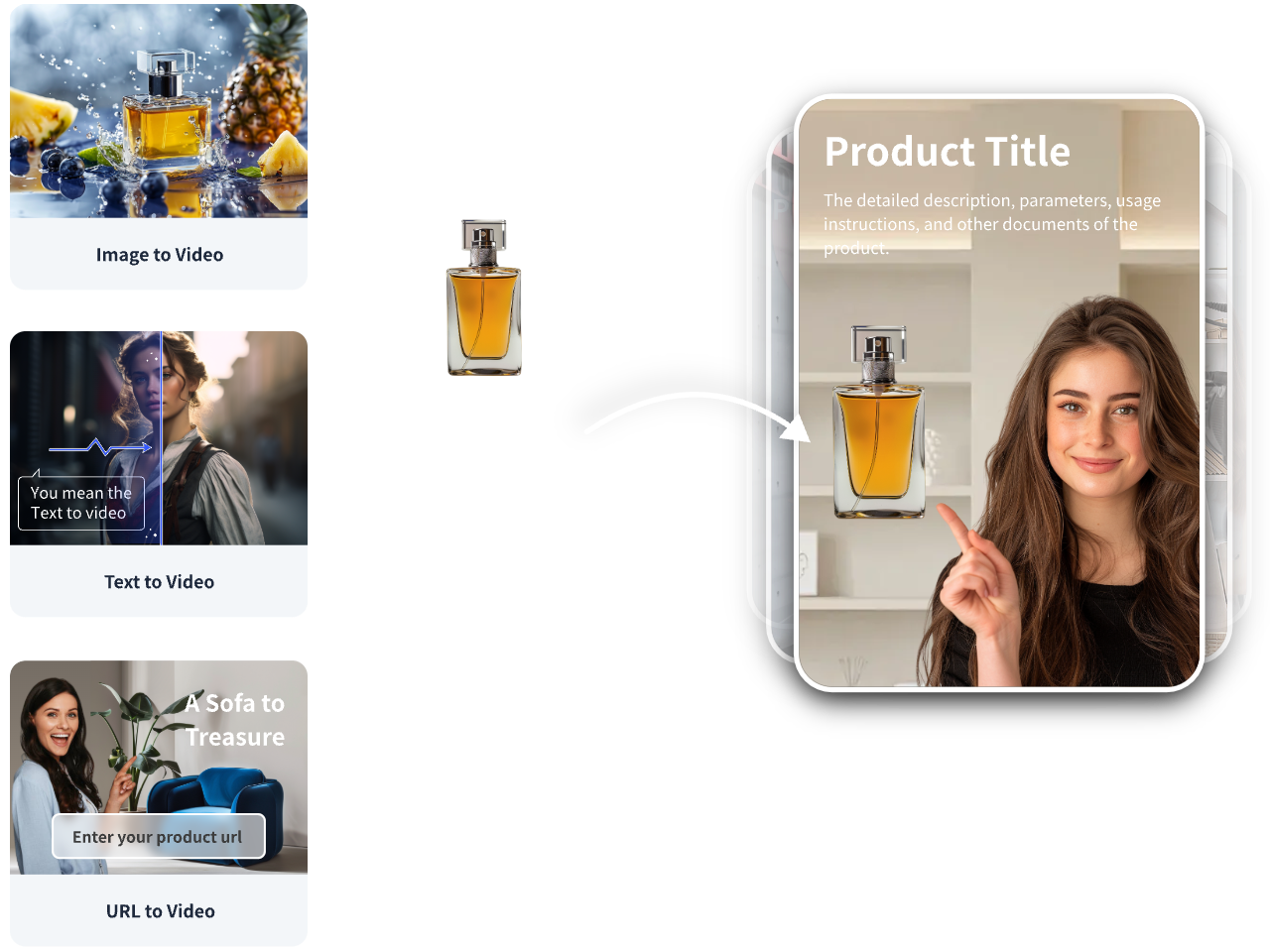
- ✅ URL-to-video: paste any product page URL and VidAU generates a video ad automatically
- ✅ Bulk generation: create 50+ video variants in a single batch session
- ✅ Built-in performance analytics tracking ROAS and CPA across video ad variants
- ✅ Platform-ready export for TikTok, Instagram Reels, and YouTube Shorts simultaneously
- ✅ Pricing from $9.9/month, significantly more cost-effective than premium models at volume
VidAU.ai is not competing with Sora or Runway on cinematic quality. It is competing on production volume and commercial ROI. For brands that need 50 video ads per month rather than 5 perfect shots, it is the strongest platform available in 2026.
Sora 2 (OpenAI) — Best for Cinematic Realism and Physics
Sora 2 is the physics benchmark. Released in September 2025 and continuously improved since, it understands cause-and-effect with a level of accuracy that still sets it apart from every competitor. Water splashes realistically. Fabric drapes based on material weight. Glass refracts light correctly. For hero shots where physical realism cannot be compromised, Sora 2 remains the standard.
- ✅ Unmatched physics simulation, gravity, fluid dynamics, light refraction, and fabric movement all behave correctly
- ✅ Generates up to 25 seconds per clip, longest native duration among premium models
- ✅ Exceptional prompt adherence on complex, multi-element scenes
- ✅ Native audio generation with synchronised character dialogue
- ✅ Characters feature: capture your likeness via video and insert yourself into any Sora scene
- ⚠️ No free tier, most expensive major model at $0.10/sec standard, up to $0.50/sec Pro
- ⚠️ $20/month ChatGPT Plus limits resolution to 720p; 1080p requires $200/month ChatGPT Pro
- ⚠️ Text and image input only, no multi-reference system like Seedance
- ⚠️ Less editing tooling versus Runway
Pricing: $20/mo (720p) | $200/mo ChatGPT Pro (1080p) | API from $0.10/sec
Best For: High-end cinematic B-roll, documentaries, physics-accurate product shots, brand flagship content
Use Sora for hero shots where physics and realism must be perfect. Use a more affordable model for supporting content and iteration runs.
Google Veo 3.1 via Flow — Best for 4K Production and Audio-Visual Integration
Veo 3.1 is the backbone of Google Flow and currently the only AI video model offering true 4K native output at the consumer level. Integrated with Nano Banana image generation and Gemini’s natural language understanding, it is the strongest end-to-end creative pipeline available in 2026, from mood board to finished cinematic video without leaving one workspace.
- ✅ Only true 4K native output in the consumer AI video market
- ✅ Native audio: environmental sounds, music, and character dialogue with accurate lip sync
- ✅ Ingredients-to-video: combine multiple images and style references for scene-consistent output
- ✅ Available in 140+ countries via Google AI Pro and Ultra subscriptions
- ✅ Nano Banana integration enables image-to-video with genuine character consistency
- ⚠️ Each generation capped at 8 seconds — longer videos require chaining multiple generations
- ⚠️ AI Ultra plan at $249.99/month required for highest access limits
- ⚠️ No bulk generation or avatar library — single creative generations only
Pricing: $7.99/mo (Plus) | $19.99/mo (Pro) | $249.99/mo (Ultra) | API from $0.15/sec
Best For: 4K content, storytelling projects, YouTube, any workflow inside Google’s ecosystem
If you are already using Google tools, Veo 3.1 via Flow is the highest-quality native integration available. The combination of Nano Banana image generation, Whisk mood boarding, and Veo video output in one workspace removes more friction than any other platform.
Runway Gen-4.5 — Best for Professional Editing Workflows
Runway is the professional’s choice for one reason: it combines best-in-class generation with the best built-in editing suite in the market. Inpainting, masking, motion brushes, style transfer, and frame interpolation are all available after generation, without exporting to a separate tool. For production teams, this eliminates an entire step from the workflow.
- ✅ Top benchmark scores in blind preference testing, competitive with Sora and Veo on cinematic quality
- ✅ Best built-in editing suite: inpainting, masking, motion brushes, style transfer, frame interpolation
- ✅ Aleph model edits and transforms existing footage with text prompts
- ✅ API maturity and enterprise partnerships with major Hollywood studios
- ✅ Gen-4 understands industry-standard concepts: timed beats, camera choreography, handheld feel
- ⚠️ No native audio, must add music and sound effects separately
- ⚠️ Full access requires $95/month Unlimited plan
- ⚠️ Trails Seedance 2.0 on multi-reference input control
Pricing: From $15/mo | $95/mo Unlimited | API available
Best For: Production houses, ad agencies, professional short-form, brand campaign prototyping
Runway wins when you need generation and editing in one place. If your workflow involves fixing artifacts, swapping backgrounds, or fine-tuning motion, nothing has better in-platform editing tools.
Kling 3.0 (Kuaishou AI) — Best for Long-Form Video and Human Motion
Kling 3.0 is the workhorse of the 2026 AI video market. It is the only major model that generates up to 2 minutes of video in a single generation — combined with native audio, the most affordable API pricing available, and a generous free tier. For volume creators, it is the most practical choice in the entire landscape.
- ✅ The only major model generating up to 2 full minutes per single generation
- ✅ Unmatched human motion quality: complex actions, dancing, martial arts without body distortion
- ✅ Native audio generation with synchronised sound effects and dialogue
- ✅ Best price-to-quality ratio available, $0.029/second via API
- ✅ Generous free tier with 66 daily credits
- ✅ Motion Brush for precise frame-by-frame movement control
- ⚠️ 720p on standard tier, 4K not available at competitive pricing
- ⚠️ Slight drop in cinematic polish versus Sora 2 for physics-heavy shots
Pricing: ~$6.99/mo subscription | Free tier available | API from $0.029/sec
Best For: Long-form social content, TikTok and Reels, human-centric motion, batch e-commerce, high-volume creators
For volume creators, Kling’s combination of free tier, lowest API price, longest generation duration, and motion quality is unbeatable. It is the highest-value model in the 2026 market for creators who need consistent output at scale.
Pika 2.5 (Pika Labs) — Best for Beginners and Rapid Social Clips
Pika 2.5 carved out its niche by being the most approachable AI video tool on the market. A complete beginner can sign up and generate their first video in under two minutes. The Pikaffects system produces genuinely surprising creative results without any prompt engineering knowledge.
- ✅ Most beginner-friendly interface — first video generated in under 2 minutes from sign-up
- ✅ Pikaffects: one-click creative transformations (inflate, melt, explode, cartoon physics)
- ✅ Pikaswaps: swap objects, characters, and backgrounds in existing footage
- ✅ Fastest generation in its class, some renders complete in under 45 seconds
- ✅ $8/month entry tier with a free plan available
- ⚠️ 5-second maximum video length ,a significant constraint for longer formats
- ⚠️ No native audio, must add music and sound separately
- ⚠️ Quality ceiling noticeably below Seedance, Sora, and Kling at the top end
Pricing: $8/mo standard | Free plan available
Best For: Beginners, rapid social prototyping, creative experiments, fun content, speed-over-quality workflows
Luma Ray3 (Luma AI) — Best for 3D-Aware and Cinematic Establishing Shots
Luma Ray3 quietly outperforms more hyped models on establishing shots and environmental scenes. Its 3D-aware generation produces videos with genuine spatial depth that few other models can match, and the Ray 2 Flash variant makes rapid prototyping extremely fast.
- ✅ Superior spatial understanding and depth simulation, videos feel genuinely three-dimensional
- ✅ Hi-Fi 4K HDR output on premium tier
- ✅ Ray 2 Flash variant is among the fastest models for rapid iteration
- ✅ Competitive pricing at $7.99/month entry
- ⚠️ No native audio, requires separate audio workflow
- ⚠️ 5 to 9 second clip length, not suited for long-form content
- ⚠️ Less versatile for human-centric content versus Kling or Sora
Pricing: From $7.99/mo | Ray 2 Flash API from $0.17/clip
Best For: Cinematic wide shots, environmental B-roll, 3D product visualisation, architectural content
HaiLuo AI / MiniMax — Best Budget Paid Option
HaiLuo proves that you do not need to spend $20+ per month to get usable AI video in 2026. At approximately $4.99/month, it delivers surprisingly competitive output for the price, making it the first platform to test before committing to a premium subscription.
- ✅ Most affordable paid AI video model at approximately $4.99/month
- ✅ Competitive output quality relative to its price point
- ✅ Good free tier for low-volume creation and testing
- ✅ Fast render times suitable for daily content schedules
- ⚠️ Quality ceiling clearly below top-tier models
- ⚠️ No native audio generation
- ⚠️ Limited editing tools and export options
Pricing: From $4.99/mo | Free tier available
Best For: Budget-conscious creators, small businesses, testing before upgrading to a premium plan
Wan 2.2 (Alibaba — Open Source) — Best Open-Source Model
Wan 2.2 is the open-source champion of 2026. As the first open-source model with a Mixture-of-Experts architecture, it delivers quality that rivals many commercial platforms, with zero subscription fees, no credit limits, and complete customization control when self-hosted.
- ✅ First open-source video model with Mixture-of-Experts (MoE) architecture
- ✅ Free to use with no credit system, watermarks, or usage caps when self-hosted
- ✅ Supports text-to-video and image-to-video at 720P HD
- ✅ Runs on as little as 8GB VRAM locally
- ✅ Full customisation and fine-tuning capability, zero proprietary lock-in
- ⚠️ Requires GPU hardware, technical setup knowledge, and compute infrastructure
- ⚠️ No native audio, must be handled externally
- ⚠️ Render times vary significantly based on local hardware
Pricing: Free (self-hosted) | Cloud GPU rental varies
Best For: Developers, researchers, privacy-focused creators, anyone building AI video applications
Wan 2.2 is the option for creators who want ownership of their entire generation pipeline. No monthly fees, no usage caps, and no dependency on any single company’s API uptime.
Vidu (Shengshu Technology) — Best for Anime and Stylised Content
If your creative direction is anime, stylised illustration, or non-photorealistic character animation, Vidu is the category leader in 2026. Its multi-entity consistency system, where you upload 2-3 reference images and Vidu generates character-consistent output, is genuinely impressive for stylised content.
- ✅ Industry-leading anime and stylised video generation
- ✅ Multi-entity consistency from uploaded reference images
- ✅ Video generation in as little as 10 seconds — among the fastest models
- ✅ Native audio with auto-matched music and sound effects
- ✅ Free tier available with off-peak unlimited generation
- ⚠️ Less competitive for photorealistic human video versus Sora or Seedance
- ⚠️ 16-second maximum generation length
- ⚠️ Smaller developer ecosystem and fewer third-party integrations
Pricing: Free tier available | Paid plans available
Best For: Anime content, stylised brand videos, manga adaptation, artistic short-form
Open-Source and Specialist Models (11–18+)
Beyond the mainstream commercial platforms, a powerful tier of open-source and specialist models gives developers and privacy-focused creators full control over their video generation pipeline. Here are the most important ones in 2026:
11 SkyReels V1: Best Open-Source for Cinematic Human Video
Trained on high-end film and TV content, SkyReels V1 delivers realistic human characters, expressive facial animations, and professional camera movement. The go-to open-source option for storytelling-focused creators. Available via cloud providers like Hyperstack and WaveSpeed.
12 LTXVideo (Lightricks): Fastest Open-Source Option
Optimised for speed and efficiency, LTXVideo runs on GPUs with as little as 12GB VRAM. Supports Text-to-Video, Image-to-Video, and Video-to-Video modes. ComfyUI integration makes it easy to drop into existing creative pipelines without additional setup.
13 HunyuanVideo (Tencent): Best Open-Source for Image-to-Video
A 13-billion-parameter model that rivals closed-source systems in cinematic realism, particularly for image-to-video workflows. Strong spatial understanding and coherent motion make it a favourite for creators who want high-quality I2V without a subscription commitment.
14 Mochi 1 (Genmo): High-Fidelity Research Model
Focused on photorealistic short video generation with strong prompt alignment via diffusion-based methods. Best suited for research, experimentation, and projects where output fidelity on 6-second clips is the priority over duration or speed.
15 Open-Sora 2.0: Community-Backed Scalable Model
A large open-source model with strong community adoption and solid tooling support. Best for developers building platforms or services on top of open video models who need a scalable, proprietary-free foundation.
16 Adobe Firefly Video: Best Brand-Safe Commercial Option
Adobe’s AI video model is trained exclusively on licensed content — making it uniquely safe for commercial use where IP risk is a concern. Integrates directly with Premiere Pro and the Creative Cloud workflow. It is the only model that offers genuine commercial IP indemnification.
If your client or legal team has strict IP clearance requirements for AI-generated content, Firefly is currently the only model offering genuine commercial indemnification. That single fact puts it on the shortlist for enterprise and agency workflows regardless of raw quality comparisons.
17 Seedance 2.0 (ByteDance) — Best Overall for Narrative and Brand Content
Seedance 2.0 is the model that has the AI video world talking in 2026. Built by ByteDance, it solves the biggest pain point in AI video creation: maintaining visual consistency across multiple scenes. The secret is its multimodal reference system — you can feed it images, video clips, and audio tracks simultaneously, and it generates output that actually reflects all of them.
- ✅ Multi-shot native — generates coherent multi-scene sequences from a single prompt
- ✅ Accepts up to 12 reference files at once (images, videos, audio, text)
- ✅ Beat-sync mode creates rhythm-matched video from a music track — no other major model does this natively
- ✅ Native 1080p with synchronised audio, sound effects, and dialogue across 8+ languages
- ✅ @ reference system: tag specific characters, locations, and styles for consistency across generations
- ⚠️ 15-second cap per native generation — video extension available but can show seams
- ⚠️ Smaller English-language community, fewer tutorials versus Sora or Runway
- ⚠️ Official API still maturing since late February 2026 launch
Pricing: Free tier available | ~$0.30 per clip via third-party APIs
Best For: Brand campaigns, narrative series, music video sync, UGC content, character-driven storytelling
Seedance is the only model in 2026 that lets you feed in reference images, reference videos, and an audio track simultaneously in one generation. If character and scene consistency across multiple clips is your priority, nothing else matches it.
18 — Google Flow (Integrated Platform): Best Unified Creative Studio
Google Flow is not just a video model , it is the integration layer that makes Veo 3.1, Nano Banana image generation, and Whisk mood boarding work together in a single workspace. The February 2026 redesign merged three previously separate tools into one seamless pipeline, making it the most complete AI creative environment from a single provider.
The Native Audio Divide: Why It Changes Your Workflow
One of the most practically important criteria in 2026 is whether a model generates audio alongside video, or delivers silent clips that must be separately scored, voiced, and sound-designed.
Models with native audio, Seedance 2.0, Veo 3.1, Kling 2.6, and Sora 2, produce complete videos ready for social media from the first generation. Models without native audio , Runway, Pika, Luma, and all open-source models, require a post-production audio step.
For creators publishing to TikTok or Reels, where the majority of videos are watched with sound and audio drives a significant share of algorithmic reach, native audio is not a minor feature, it is a workflow multiplier. If you need audio-synced video for social media and do not have a dedicated sound design step, filter your shortlist to native-audio models first.
Pricing Summary: What You Actually Pay in 2026
- Cheapest per second: Kling 3.0 at $0.029/second via API
- Best free tier: Kling 3.0 (66 daily credits), HaiLuo, Vidu, and Wan 2.2 (self-hosted, unlimited)
- Best entry subscription: HaiLuo $4.99/mo, Kling $6.99/mo, Pika $8/mo, Luma $7.99/mo
- Mid-tier subscriptions: Runway from $15/mo, Veo 3.1 via Google AI Pro $19.99/mo, Sora at $20/mo
- Premium / unlimited: Runway Unlimited $95/mo, Google AI Ultra $249.99/mo, Sora Pro quality $0.50/second
- Open-source: Wan, SkyReels, LTXVideo, HunyuanVideo ,free with your own GPU infrastructure
The practical advice: start with the free tier or cheapest subscription for your primary use case. Test your most common prompts. Upgrade only when you hit the quality or volume ceiling of the lower tier. Do not pay for Ultra until you have outgrown Pro.
The 2026 Decision Framework: Pick Your Model in 60 Seconds
Use these one-line decision rules to match your use case to the right tool:
- 🏆 Maximum realism and physics accuracy: Sora 2
- 🎨 4K native output: Veo 3.1 via Google Flow
- 📖 Multi-scene narrative consistency: Seedance 2.0
- 🎞️ Best built-in editing tools: Runway Gen-4.5
- ⏱️ Longest single generation (up to 2 minutes): Kling 3.0
- 💰 Lowest cost per video and best free tier: Kling 3.0 or HaiLuo AI
- 🎭 Human motion and action sequences: Kling 3.0
- 🌍 3D / environmental / architectural shots: Luma Ray3
- 🎌 Anime and stylised character animation: Vidu
- 🔓 Open-source with full model control: Wan 2.2 or SkyReels V1
- 🔰 Absolute beginners and first AI video: Pika 2.5
- 🛡️ Brand-safe commercial content (IP indemnified): Adobe Firefly
- 📣 Bulk marketing ads, avatars, multilingual output: VidAU.ai
- 🎵 Beat-synced video from a music track: Seedance 2.0 (only model with this natively)
- ⚡ Fastest renders for rapid iteration: Pika 2.5 or LTXVideo
- 🏢 Unified creative studio from one provider: Google Flow (Veo 3.1 + Nano Banana + Whisk)
Conclusion: The Right Tool for the Right Task
In 2026, AI video generation has moved from experimental novelty to practical production tool. The models available today produce content that was impossible to create affordably just two years ago. The challenge is no longer whether AI can make a video, it is which model is right for this specific job.
No single model wins across all criteria. The most effective AI video workflows use a rotation: Sora 2 or Veo 3.1 for hero content where quality is paramount, Kling or Seedance for volume and narrative consistency, and VidAU.ai when bulk commercial output with analytics is the goal.
The pace of improvement in this space is still accelerating. Models released six months ago are already legacy. Check pricing, free tiers, and new model releases regularly, the rankings in this guide reflect the market as of March 2026.
Frequently Asked Questions
Which AI video model has the best quality in 2026?
It depends on your definition of quality. For physics and cinematic realism: Sora 2. For 4K resolution: Veo 3.1. For narrative consistency across scenes: Seedance 2.0. For human motion: Kling 3.0. For professional editing control: Runway Gen-4.5. There is no single best model ,each leads its specific category.
Which models have native audio built in?
In 2026, Seedance 2.0, Google Veo 3.1, Kling 2.6, and Sora 2 all include native audio generation ,environmental sounds, character dialogue, and ambient audio generated alongside the video. Runway Gen-4.5, Pika 2.5, Luma, and all open-source models output silent video requiring separate audio production.
What is the cheapest AI video model available?
Wan 2.2 is entirely free if self-hosted. Among cloud-based tools, HaiLuo AI starts at approximately $4.99/month and Kling 3.0 at $6.99/month. Via API, Kling offers the lowest per-second rate at $0.029/second.
Can I use AI-generated video for commercial projects?
Yes, on most paid plans. Seedance 2.0, Runway Gen-4.5, Kling 3.0, and Pika 2.5 offer full commercial licences on paid tiers. Sora 2 includes a watermark by default. Veo 3.1 embeds invisible synthetic watermarks. Adobe Firefly is the only model providing genuine IP indemnification for commercial use. Always review each platform’s current terms before commercial deployment.
How long can AI-generated videos be in 2026?
Kling 3.0 leads with 120 seconds. Seedance 2.0 generates 15 to 20 seconds natively. Sora 2 goes up to 25 seconds. Veo 3.1 generates 8 seconds per generation, chainable via Google Flow’s scene extension for longer sequences. Most other models generate 5 to 10 seconds per clip, requiring stitching for longer content.
What is the best AI video model for TikTok and Instagram Reels?
For short-form social with native audio, Kling 3.0 and Seedance 2.0 offer the strongest combination of quality, speed, audio, and price. For bulk social ad creation with branded avatars and multilingual voiceovers, VidAU.ai is the production platform of choice.