7 Career-Ending Mistakes in Product Photography (And How AI Visual Tools Can Save You)
The Fatal Mistake: Not Adapting to AI-Powered Visual Production
The product photography industry stands at an inflection point. After a decade in professional photography, I’ve watched talented photographers disappear from the industry—not because they lacked technical skill, but because they failed to recognize that product imagery has evolved from pure photography into generative visual production.
The career-ending mistake? Believing that mastering lighting, composition, and camera settings alone will sustain your business through 2025 and beyond. The photographers thriving today understand that tools like ComfyUI, Midjourney, and AI image enhancement workflows aren’t competitors—they’re force multipliers that transform a $500 shoot into a $5,000 visual content package.
Common Career Pitfalls That Stall Product Photography Growth
Mistake #1: The Single-Revenue-Stream Trap
Most aspiring product photographers build their entire business model around day-rate shooting. This creates catastrophic vulnerability. When a major client discovers they can generate 80% of their product shots using AI-powered background replacement and generative fill, your services become discretionary rather than essential.
The Solution:* Position yourself as a *hybrid visual producer. Your deliverable isn’t just photographs—it’s a complete visual asset system. Using ComfyUI workflows, you can:
- Shoot core product angles in a 2-hour session
- Generate 15+ lifestyle variations using ControlNet and IP-Adapter for consistent product rendering
- Deliver seasonal variants through Stable Diffusion img2img pipelines with Euler a schedulers for controllable variation
- Create packaging mockups, social media assets, and A/B testing variants
This transforms a $500 shoot into a $3,000 visual content package that clients cannot replicate with consumer AI tools.
Mistake #2: Ignoring Seed Parity and Consistency Workflows
Product photography demands visual consistency across catalogs. Traditional photographers achieve this through lighting diagrams and color charts. But when integrating AI generation into your workflow, seed parity becomes your most valuable technical skill.
In ComfyUI workflows, controlling seed values allows you to generate variations of product placements while maintaining lighting consistency, color accuracy, and brand aesthetic. Using fixed seeds with varying ControlNet strength parameters, you can produce:
- 20 background variations with identical product lighting (seed locked, prompt variation)
- Seasonal catalog updates without reshoots (depth map extraction + seasonal style prompts)
- Multi-angle product renders from single reference shots (using depth-aware latent manipulation)
Photographers who master these technical workflows command 3-5x higher rates because they deliver what traditional shooters cannot: infinite controlled variation from finite shooting time.
Mistake #3: Competing on Price Instead of Technical Capability
The race to bottom on day rates is unwinnable. Fiverr photographers will always undercut you. Instead, develop technical barriers to entry that commodity photographers cannot replicate.
Advanced workflows using Latent Consistency Models (LCMs) allow real-time client collaboration during shoots:
- Shoot product on seamless white background
- Client views live AI-generated lifestyle placements within 4-8 inference steps
- Approve direction before leaving set
- Final high-quality renders use full diffusion passes (25-30 steps) with approved compositions
This capability transforms you from “photographer” to “visual director”—a distinction that justifies premium positioning.
Mistake #4: Failing to Build Proprietary Visual Models
The most sophisticated product photographers are now training custom LoRAs (Low-Rank Adaptations) and Textual Inversions on client brand assets. This creates technical lock-in that makes you irreplaceable.
After shooting a brand’s product line:
- Train a custom LoRA on product-specific features (packaging, textures, logos)
- Train a brand aesthetic LoRA on approved lifestyle imagery
- Create ComfyUI workflows that combine both for on-brand generation
- License these custom models back to clients as a subscription service
This shifts your revenue from project-based to recurring, while creating switching costs that retain clients long-term.
Industry Evolution: From Traditional Shoots to Hybrid AI Workflows
The Changing Client Expectation
E-commerce brands no longer think in terms of “product photos.” They think in visual content velocity—the speed at which they can test, iterate, and deploy product imagery across channels.
Traditional workflow:
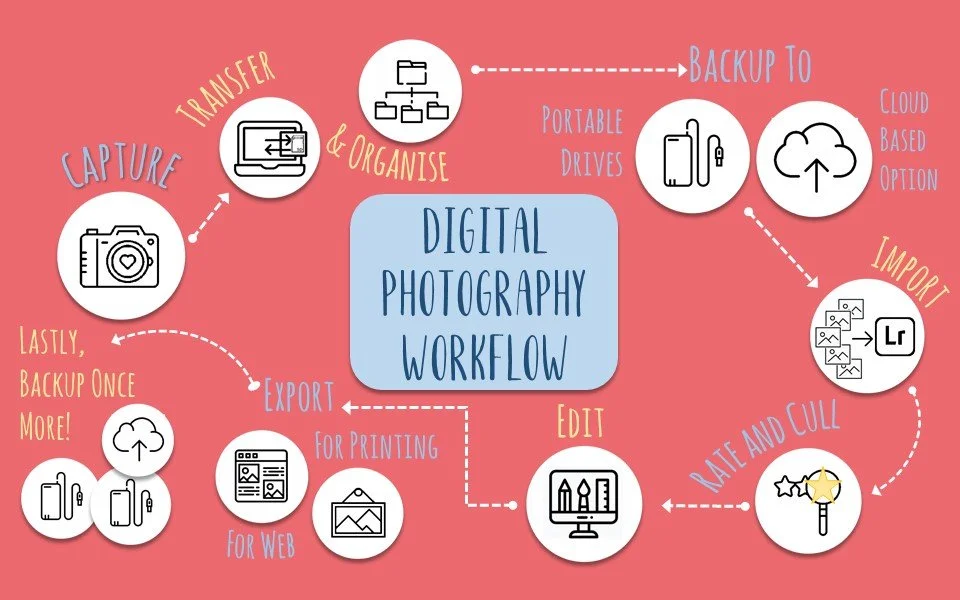
4-hour shoot → 48-hour editing → 20 final images → 1-week delivery
AI-enhanced workflow using ComfyUI:
2-hour shoot → Real-time ControlNet processing → 200+ variations → Same-day delivery of testing suite
The photographer who delivers the second workflow wins the contract, regardless of whose traditional photography skills are superior.
Technical Adaptation Roadmap
For photographers with a decade of experience, the learning curve isn’t understanding composition—it’s understanding latent space manipulation:
Phase 1: Augmentation (Months 1-2)
- Master AI background replacement (Photoshop Generative Fill, Magnific AI)
- Learn batch processing for efficiency
- Deliver traditional shoots with AI-enhanced deliverables
Phase 2: Integration (Months 3-4)
- Install ComfyUI and learn basic img2img workflows
- Experiment with ControlNet depth and canny edge for product consistency
- Create template workflows for common product categories
Phase 3: Advanced Production (Months 5-6)
- Train custom LoRAs on product and brand aesthetics
- Build client-specific ComfyUI workflows
- Implement Euler a and DPM++ schedulers for quality control
- Master seed management for consistent variation generation
Phase 4: Productization (Months 7+)
- Package workflows as premium service tiers
- Offer custom model training as standalone service
- Create workflow licensing for recurring revenue
The New Competitive Landscape
Your competition is no longer just other photographers. You’re competing against:
- In-house marketing teams with Midjourney subscriptions
- AI-first visual studios that barely touch physical cameras
- International studios offering AI-enhanced work at 1/3 your local rates
The only sustainable competitive advantage is technical sophistication that clients cannot easily replicate. This means understanding concepts like:
- Latent consistency: How to maintain product fidelity across generative variations
- Classifier-free guidance scales: Balancing creative interpretation vs. prompt adherence
- Negative prompting strategies: Eliminating AI artifacts in product-critical areas
- Multi-model workflows: Combining Stable Diffusion for generation with upscaling models for print-quality output
Building Sustainable Income Through AI-Enhanced Product Imagery
Revenue Stream Architecture
Tier 1: Traditional Shooting ($500-1,500/day)
- Pure photography services
- Basic retouching included
- Limited deliverables
Tier 2: AI-Augmented Production ($2,000-5,000/project)
- 2-4 hour shoot of core product angles
- 50-100 AI-generated lifestyle variations
- Seasonal and contextual backgrounds
- Social media optimization formats
Tier 3: Custom Visual Systems ($5,000-15,000 setup + $500-2,000/month)
- Custom LoRA training on brand aesthetics
- Proprietary ComfyUI workflows
- Monthly visual content generation using trained models
- Ongoing refinement and seasonal updates
Tier 4: Workflow Licensing ($1,000-3,000/month)
- License your ComfyUI workflows to brands with in-house teams
- Provide technical support and updates
- Train client teams on workflow operation
The Productization Advantage
The most successful product photographers I know have stopped selling time and started selling systems. A custom ComfyUI workflow for jewelry photography, for example, can be:
- Developed once over 2-3 weeks
- Licensed to 10 jewelry brands at $1,500/month each
- Generates $15,000/month with minimal ongoing time investment
This requires upfront technical investment but creates leverage impossible in pure service delivery.
Technical Implementation: Integrating ComfyUI and Generative Tools
Essential ComfyUI Node Architecture for Product Photography
Core Workflow Components:
1. Image Input Processing
- Load product photography
- Extract depth maps using MiDaS or DPT models
- Generate edge maps via Canny detection
- Create segmentation masks for product isolation
2. Latent Manipulation Layer
- ControlNet nodes for depth/edge guidance (strength: 0.6-0.8 for product fidelity)
- IP-Adapter for style consistency across variations
- Seed control for variation management
- Euler a scheduler for predictable, quality results (20-30 steps)
3. Quality Enhancement Pipeline
- Face/detail refiners for high-resolution final output
- Upscaling models (4x-Ultrasharp, ESRGAN) for print quality
- Color correction nodes for brand accuracy
4. Batch Processing System
- Prompt scheduling for multiple background variations
- Automated file naming and organization
- Metadata embedding for asset management
Practical Workflow Example: Cosmetics Product Line
Traditional Approach:
- 8-hour shoot across 3 lifestyle scenes
- 2 days post-production
- 60 final images delivered
- Client cost: $3,000
AI-Enhanced Approach:
- 3-hour studio shoot (white background, multiple angles)
- Real-time ComfyUI processing during shoot
- Generate 15 lifestyle scenes x 4 product angles x 3 seasonal variations = 180 images
- Same-day delivery of review gallery
- 2-day refinement of selected finals
- Client cost: $6,000 (2x price, 3x deliverables, 50% faster)
Technical Execution:
- Shoot products on white seamless with perfect lighting
- Import to ComfyUI workflow with pre-loaded:
- Brand-specific LoRA (trained on previous approved work)
- Cosmetics product LoRA (trained on this product line)
- 15 lifestyle scene prompts (bathroom vanity, outdoor natural light, etc.)
- Use ControlNet depth at 0.75 strength to maintain product form
- Lock seed per scene, vary only by product angle
- Generate 4-step LCM previews for client approval during shoot
- Run approved compositions through full 28-step Euler a workflow
- Upscale selected finals to 300 DPI for print catalog
Quality Control Checkpoints
When integrating AI generation, maintain photography quality standards:
- Color accuracy: Use ColorChecker references in training data
- Lighting consistency: Lock seed when varying only background elements
- Product fidelity: Never allow ControlNet strength below 0.6 for product-critical areas
- Resolution standards: Final outputs must match or exceed traditional photography (minimum 3000px wide for e-commerce)
- Artifact elimination: Implement negative prompting for common AI artifacts (“blurry, distorted, malformed product, inconsistent branding”)
Future-Proofing Your Product Photography Career
The 5-Year Outlook
By 2029, the product photography landscape will be unrecognizable. Based on current trajectory:
- Physical shooting will represent <30% of billable work for successful product photographers
- Custom model training will be the primary differentiator between $50k and $150k+ annual income
- Real-time generation during client calls will be standard expectation
- Video and motion content will merge with still photography in unified generation workflows
Skills to Develop Now
- Prompt Engineering Mastery: Understanding how to translate brand guidelines into generative parameters
- Model Training: LoRA creation, Textual Inversion, and potentially full model fine-tuning
- Workflow Automation: ComfyUI custom node development, API integration, batch processing
- 3D Integration: Blender + AI workflows for product rendering from CAD models
- Motion Graphics: Extending still workflows into video generation (AnimateDiff, Stable Video Diffusion)
The Hybrid Photographer Advantage
Pure AI artists without photography fundamentals struggle with:
- Lighting physics and realism
- Product material representation
- Brand color accuracy
- Commercial composition principles
Pure photographers without AI skills struggle with:
- Production velocity
- Variation generation
- Cost competitiveness
- Client content volume demands
The hybrid professional with both skill sets dominates the market.
Your decade of photography experience becomes exponentially more valuable when channeled through AI tools—but only if you invest in technical adaptation now, before the knowledge gap becomes insurmountable.
Taking Action Today
The mistake that ends careers isn’t lack of talent—it’s inaction in the face of technical evolution.
Start this week:
- Install ComfyUI and run your first img2img workflow on existing product photography
- Study one technical concept: Choose ControlNet, LoRA training, or Euler schedulers and understand it deeply
- Pitch one client on an AI-enhanced deliverable package at 2x your normal rate
- Document your workflow as a potential productization opportunity
The photographers who began this adaptation process two years ago are now industry leaders commanding premium rates. Those who wait another two years will find themselves competing for scraps with algorithms and overseas studios.
Your choice: evolve into a hybrid visual producer with technical moats, or slowly commoditize into irrelevance.
The career-ending mistake is already behind you if you’re reading this and taking action. The photographers who survive and thrive are those who recognize that product photography hasn’t disappeared—it’s transformed into something more powerful, more technical, and more lucrative than ever before.
Master the tools. Build the systems. Capture the future.
Frequently Asked Questions
Q: Will AI replace product photographers completely?
A: No. AI will replace photographers who only offer traditional shooting services. Hybrid professionals who combine photography expertise with AI workflows are seeing increased demand and higher rates. Physical products still need to be shot, but the post-production, variation generation, and content multiplication is where AI creates competitive advantage. The key is positioning yourself as a visual producer rather than just a photographer.
Q: What is the most important AI tool for product photographers to learn first?
A: ComfyUI provides the most control and professional capability for product photography workflows. Unlike consumer tools, it allows precise control over ControlNet strength, seed management, and quality parameters essential for commercial work. Start with basic img2img workflows using ControlNet depth to maintain product accuracy while varying backgrounds, then progress to custom LoRA training for brand-specific work.
Q: How do I price AI-enhanced product photography services?
A: Price based on deliverable value, not time spent. A 2-hour shoot that generates 150+ variations through AI workflows should cost 2-3x more than an 8-hour traditional shoot producing 50 images. Structure pricing in tiers: basic shooting ($500-1,500), AI-augmented packages ($2,000-5,000), custom visual systems ($5,000-15,000 setup), and workflow licensing ($1,000-3,000/month). The technical sophistication and volume of deliverables justify premium positioning.
Q: What is seed parity and why does it matter for product photography?
A: Seed parity is the practice of controlling random seed values in AI generation to maintain consistency across variations. In ComfyUI workflows, locking the seed while varying only specific prompt elements allows you to generate multiple product placements with identical lighting, color accuracy, and style. This is critical for catalog consistency and brand standards. For example, you can generate 20 seasonal backgrounds while maintaining exact product appearance by fixing the seed and ControlNet parameters while varying only background description prompts.
Q: How long does it take to become proficient in AI-enhanced product photography?
A: With existing photography skills, expect 3-4 months to reach commercial proficiency. Month 1-2: Master AI augmentation tools (Photoshop Generative Fill, background replacement). Month 3-4: Learn ComfyUI basics and ControlNet workflows. For month 5-6: Develop custom LoRAs and advanced workflows. The advantage of starting with photography expertise is that you already understand lighting, composition, and client needs—you’re just adding technical production capabilities. Photographers starting this learning curve today will have 12-18 months of competitive advantage before it becomes industry standard.