














































































































Why Baby Faces Are the Hardest to Animate: A Deep Technical Guide to AI Baby Face Animation Without the Uncanny Valley

Why baby faces are the hardest to animate, and how AI finally solved it.
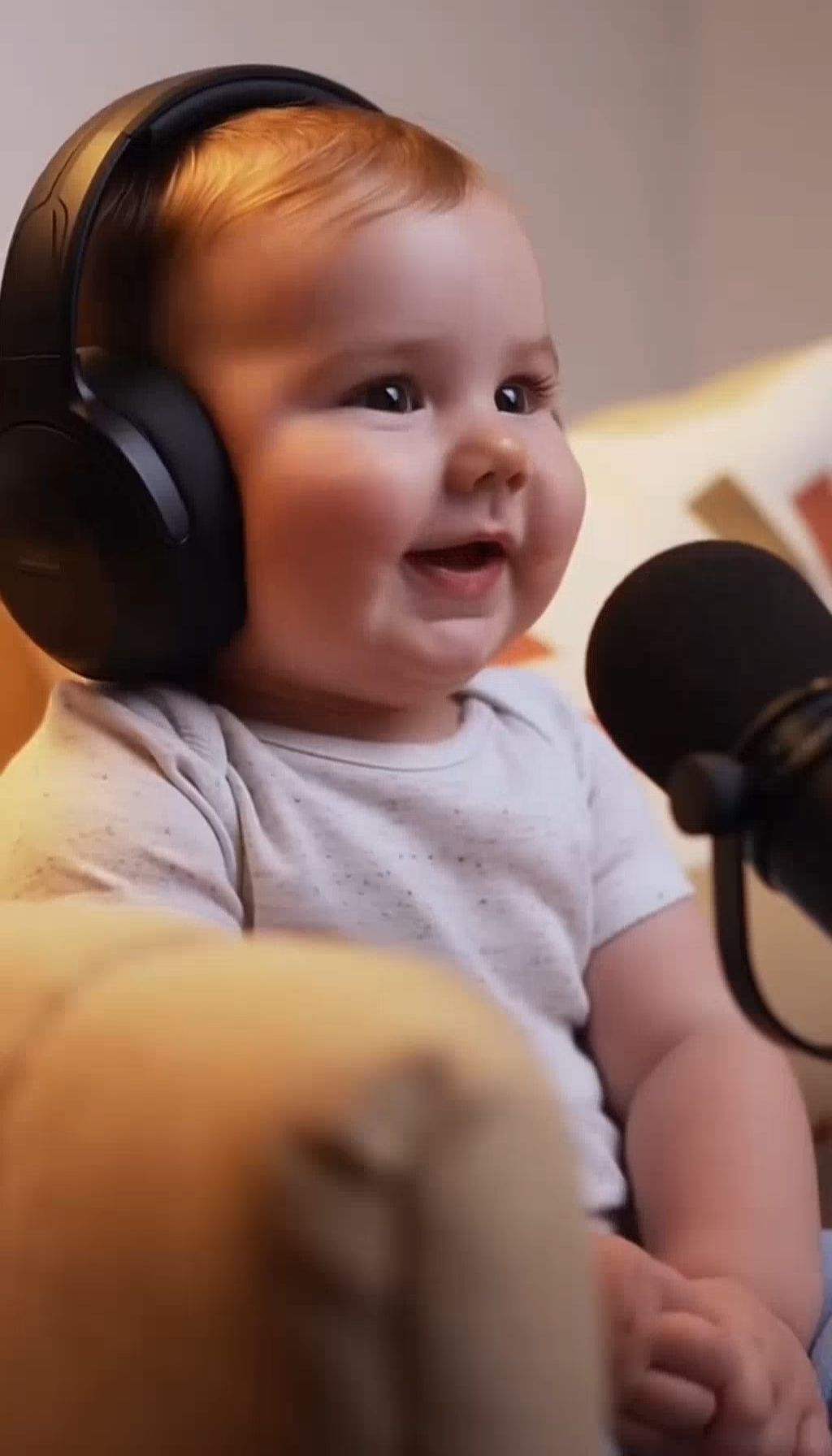
If you’ve ever tried animating a baby or toddler face using traditional CGI rigs or even early AI video models, you’ve seen it fail in spectacularly unsettling ways. Eyes drift apart, cheeks collapse, mouths stretch into adult-like proportions, and subtle expressions turn into uncanny distortions. Baby faces sit at the edge of what both human perception and machine vision tolerate. The margin for error is razor thin.
This article is a deep technical dive into why baby faces are uniquely difficult to animate and how modern AI video tools, Runway, Sora, Kling, and ComfyUI pipelines—are finally solving the problem. We’ll focus on face mapping, distortion avoidance, and choosing between full-body versus face-only animation approaches, all through the lens of advanced AI video workflows.
Why Baby Faces Break Traditional Face Animation Models
Most face animation systems, whether classical blendshape rigs or modern diffusion-based video models,are implicitly trained on adult faces. Adult faces have stable proportions: defined jawlines, predictable eye spacing, and relatively rigid skull structures. Baby faces violate almost all of those assumptions.
Key anatomical differences that cause failures:
- High cranial-to-face ratio: Babies have large foreheads and smaller mid-face regions.
- Soft tissue dominance: Cheeks, eyelids, and lips are driven more by fat distribution than muscle definition.
- Low expression contrast: Micro-expressions matter more than exaggerated motion.
- Rapid proportional change: Even slight warping is instantly noticeable.
Traditional rigs exaggerate deformation based on adult muscle groups. Early AI face animation models did the same by applying learned latent motion patterns that simply do not exist in infant data distributions. The result: distortion, facial drift, or the classic uncanny valley effect.
Modern AI video engines had to fundamentally change how faces—especially baby faces—are mapped, tracked, and re-synthesized.
Face Mapping Technology for Infant Features
The breakthrough in baby face animation comes from dense facial landmark remapping combined with latent-space stabilization.
Infant-Specific Face Mapping
In tools like Runway Gen-3*, **Sora**, and *Kling, face mapping no longer relies on a fixed adult landmark template. Instead, the system dynamically recalculates landmarks based on:
- Eye curvature rather than eye socket depth
- Cheek volume gradients instead of cheekbone edges
- Mouth elasticity without assuming jaw hinge dominance
In ComfyUI, this is often implemented via:
- Custom face parsing models (e.g., BiSeNet variants trained on child datasets)
- High-resolution facial segmentation nodes
- Landmark smoothing with temporal coherence filters
Latent Consistency Is Everything
For babies, frame-to-frame consistency matters more than expression amplitude. Modern pipelines enforce latent consistency constraints, meaning:
- The identity vector remains fixed across frames
- Only expression subspaces are allowed to shift
- Facial geometry noise is aggressively dampened
In ComfyUI, this often means:
- Locking the identity seed (Seed Parity)
- Using a low CFG scale (typically 3–5)
- Applying latent blending across adjacent frames
This prevents the “melting face” effect common in naive video diffusion.
Avoiding Distortion and Uncanny Valley in Baby Face Animation
Distortion in baby faces comes from three primary sources: overdriven motion, incorrect scheduler choice, and resolution mismatch.
Scheduler Choice Matters
For infant faces, Euler a* or *DPM++ 2M Karras schedulers outperform more aggressive solvers. Euler a, in particular, introduces gentle stochasticity that preserves softness without sharp feature snapping.
Avoid:
- Aggressive schedulers with high noise injection
- Rapid denoising steps under 20
Recommended settings:
- Steps: 28–40
- Scheduler: Euler a
- CFG: 3.5–4.5
Motion Amplitude Control
Baby expressions are subtle. If you drive facial motion from an adult reference video, the system will over-rotate eyes, mouths, and brows.
Best practice:
- Use child or neutral expression drivers
- Reduce motion strength to 40–60%
- Apply post-motion smoothing in latent space
Runway and Kling internally apply expression dampening when “child-safe” or “soft facial motion” modes are enabled. In ComfyUI, you must do this manually via motion scaling nodes.
Resolution and Aspect Ratio
Never animate baby faces at low resolution. Facial softness relies on pixel density.
Minimum recommendations:
- – Face-only: 1024×1024
- – Upper-body: 1280×720 with face crop preservation
Upscaling after animation is safer than animating at low resolution.
Full-Body vs Face-Only Animation: What Actually Works for Babies
One of the biggest mistakes creators make is attempting full-body baby animation too early.
Face-Only Animation: The Safe Zone
Face-only animation offers:
- Maximum control over expression fidelity
- Reduced limb deformation errors
- Lower temporal instability
Tools like Runway and Sora excel here because they can dedicate most of the diffusion budget to facial regions.
Full-Body Animation: High Risk, High Reward
Full-body baby animation introduces new problems:
- Proportion drift between head and body
- Limb stiffness or rubbery motion
- Clothing-body interaction errors
If you must do full-body:
- Lock head identity separately from body motion
- Use pose-conditioned generation
- Keep camera motion minimal
Kling currently handles full-body child animation better than most due to stronger pose priors, but even then, subtlety is key.
Practical Pipelines Using Runway, Sora, Kling, and ComfyUI
Runway Pipeline
- Upload high-res baby face image
- Select Face Animation mode
- Enable soft motion and identity lock
- Use minimal prompt intervention
Sora Pipeline
- Describe motion in emotional terms, not physical ones
- Avoid words like “wide smile” or “big movement”
- Let the model infer micro-expressions
Kling Pipeline
- Use pose references sparingly
- Favor seated or supported baby poses
- Keep camera static
ComfyUI Advanced Pipeline
- Face parsing → identity embedding
- Motion reference extraction
- Latent consistency enforcement
- Euler a scheduler
- Temporal smoothing
This gives the highest level of control—but also the highest learning curve.
Advanced Parameter Tuning: Latent Consistency, Seed Parity, and Schedulers
For advanced users, these are non-negotiable concepts.
- Seed Parity: Same seed across frames prevents identity drift
- Latent Consistency: Blending latent states across time
- Euler a: Best scheduler for soft facial tissue
Breaking any one of these almost guarantees uncanny output.
Common Failure Modes and How to Fix Them
- Eyes drifting: Reduce motion strength, lower CFG
- Mouth stretching: Use infant-specific face mapping
- Flicker: Increase steps and enforce temporal smoothing
- Identity loss: Lock seed and identity embedding
Ethical, Creative, and Practical Considerations
Animating baby faces isn’t just a technical challenge—it’s an ethical one. Always ensure:
- Parental consent
- No misleading or exploitative usage
- Clear disclosure when content is AI-generated
Used responsibly, these tools allow parents and creators to preserve moments, create educational content, or tell gentle, imaginative stories—without crossing into uncanny territory.
AI didn’t just get better at animating faces. It learned when not to move them too much. And nowhere is that lesson more important than in the soft, fragile geometry of a baby’s face.
Frequently Asked Questions
Q: Why do baby face animations look uncanny more easily than adult faces?
A: Because baby faces have softer tissue, fewer defined landmarks, and extremely sensitive proportions. Even minor distortions or overdriven motion are immediately noticeable to human perception.
Q: Which AI video tool is best for animating baby faces?
A: Runway and Sora are excellent for face-only baby animation due to strong identity locking, while Kling performs better for cautious full-body baby animation. ComfyUI offers the most control for advanced users.
Q: What scheduler works best for baby face animation?
A: Euler a is generally the best choice because it preserves softness and avoids aggressive feature snapping that causes distortion.
Q: Should I animate a baby face at low resolution and upscale later?
A: No. Always animate at high resolution (1024×1024 or higher) and upscale only if needed. Low-resolution animation increases distortion risk.