













Complete Higgsfield AI Influencer Studio Walkthrough: Build a Personality-Driven AI Character in Under 10 Minutes
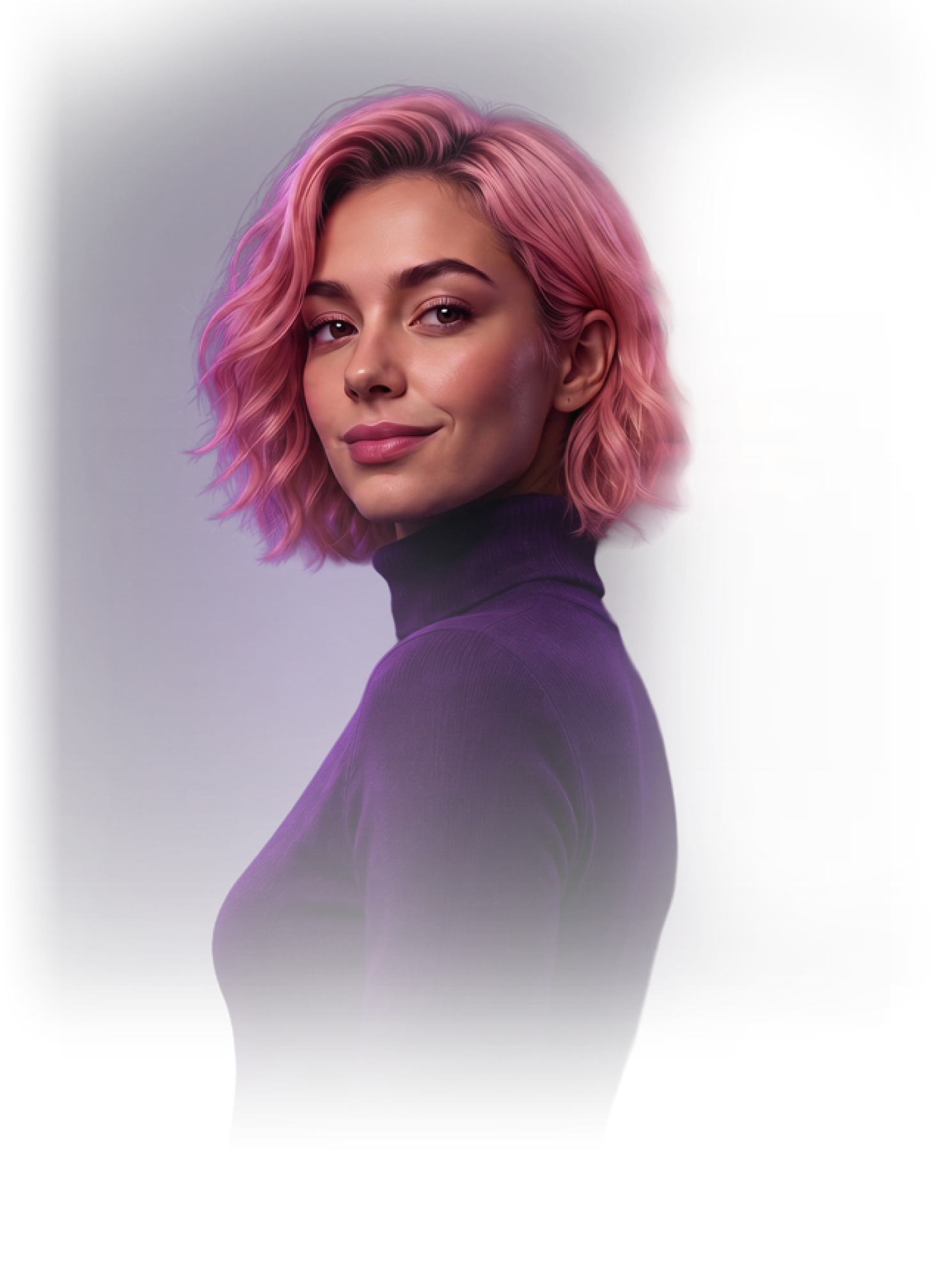
Generate a unique Higgsfield AI Influencer character with personality in under 10 minutes—without writing code, understanding diffusion math, or wrestling with confusing node graphs.
That promise is exactly why Higgsfield AI Influencer Studio exists. Most AI video and avatar tools overwhelm beginners with fragmented workflows: one tool for images, another for motion, a third for voice, and a fourth for personality logic. Higgsfield collapses all of that into a single, beginner-friendly visual engine designed specifically for AI influencers, virtual creators, and digital marketers.
In this deep-dive walkthrough, you’ll learn how to go from zero to a fully deployable AI influencer using Higgsfield—while still understanding the technical concepts under the hood so you can scale intelligently later.
Instant Character Creation in Higgsfield: From Blank Canvas to Visual Identity
The biggest barrier for beginners is not creativity—it’s navigation. Higgsfield solves this by anchoring everything around Character Profiles, which act as a persistent container for appearance, motion, and identity.
Step 1: Visual Base Generation (Look & Style)
When you create a new character in Higgsfield, you start with the Visual Identity Panel. This is where latent diffusion models are abstracted into human-friendly controls.
Instead of prompting raw text like in Stable Diffusion or ComfyUI, Higgsfield uses:
- Style Presets (photorealistic, anime, cinematic, editorial)
- Demographic sliders (age range, facial structure, skin tone)
- Fashion & aesthetic tags (streetwear, luxury, minimal, cyberpunk)
Under the hood, Higgsfield is still leveraging latent space interpolation, but it locks key variables to maintain *Latent Consistency across generations. This means your AI influencer won’t suffer from the classic “new face every render” problem.
> Technical Insight: Higgsfield maintains a fixed seed parity for your character’s base identity. As long as the seed and core embedding remain unchanged, visual coherence is preserved—even when you change outfits or lighting.
Step 2: Motion and Body Language
Static avatars are useless for modern platforms like TikTok, Reels, and Shorts. Higgsfield integrates motion directly at the character level.
You can choose:
- Idle motion loops (breathing, micro head movement)
- Expressive gestures (talking hands, posture shifts)
- Platform-optimized motion packs (TikTok-style energy vs YouTube calm)
Motion is generated using pre-trained motion diffusion models with simplified controls for temporal smoothing and frame consistency. You don’t need to know about Euler A vs DPM++ schedulers—but Higgsfield internally defaults to Euler A schedulers for fast, stable motion synthesis.
This ensures:
- No jitter between frames
- No uncanny facial drift
- Clean looping for short-form content
Step 3: Camera Framing and Scene Context
Higgsfield also handles what most beginners forget: framing.
Instead of manually keyframing cameras like in Blender, you select:
- Shot type (close-up, medium, waist-up)
- Platform crop (9:16, 1:1, 16:9)
- Background context (studio, lifestyle, abstract)
Because the character and camera are generated together, Higgsfield preserves spatial coherence, avoiding the common issue where characters clip or shift between frames.
Designing Personality, Backstory, and Behavioral Consistency

This is where Higgsfield truly differentiates itself from generic avatar tools.
Most AI creators stop at visuals. Higgsfield pushes you to define who your AI influencer is.
Step 4: Backstory as a System, Not Just Text
In the Personality Engine, you define:
- Origin story (fictional or realistic)
- Values and beliefs
- Emotional tone (confident, playful, authoritative, empathetic)
- Communication style (short-form slang vs long-form educator)
This is not just metadata. Higgsfield feeds this into a persona embedding, which influences:
- Script generation
- Facial expressions
- Gesture intensity
- Voice modulation (if enabled)
> Technical Insight: Think of this as a lightweight character conditioning layer—similar to prompt conditioning in diffusion models, but persistent across sessions.
Step 5: Personality Sliders and Behavioral Constraints
Instead of writing complex system prompts like in ChatGPT, Higgsfield uses sliders and toggles:
- Assertiveness
- Humor level
- Energy
- Formality
These parameters act as soft constraints on generation, preventing personality drift over time. This solves a major problem in AI influencers: inconsistency across posts.
If you’ve ever noticed an AI character that feels confident in one video and robotic in the next, that’s a lack of behavioral anchoring. Higgsfield locks these traits at the character level.
Step 6: Script-to-Performance Pipeline
Higgsfield allows you to either:
- Generate scripts internally
- Paste external scripts
- Remix existing content
Once a script is locked, the system maps:
- Sentence pacing → facial animation
- Emotional keywords → expression curves
- Punctuation → micro-pauses
This creates natural delivery without manual keyframing. The result feels closer to performance capture than text-to-video.
Exporting, Scaling, and Deploying Your AI Influencer Across Platforms

Creating the character is only half the battle. Higgsfield is designed for creators who want distribution.
Step 7: Platform-Optimized Exports
Higgsfield offers one-click exports for:
- TikTok / Reels (9:16, under 60s)
- YouTube Shorts
- YouTube Long-form
- Ads (hook-heavy framing)
Each export maintains:
- Resolution integrity
- Frame pacing
- Motion smoothing
Unlike generic video tools, Higgsfield avoids recompression artifacts by rendering directly to platform-optimized presets.
Step 8: Character Reuse and Versioning
Your AI influencer is not a one-off asset. Higgsfield allows:
- Outfit variants
- Mood variants
- Seasonal re-skins
Because the underlying latent identity embedding remains unchanged, all versions still feel like the same character.
This is critical for brand trust and audience recognition.
Step 9: Cross-Tool Integration
While Higgsfield is an all-in-one studio, advanced users can export:
- Video files for Runway or Premiere
- Image frames for Photoshop or Canva
- Character assets for future pipelines
This makes Higgsfield compatible with broader AI workflows without requiring ComfyUI-level complexity.
Why Higgsfield Works for Beginners (and Scales for Pros)
Higgsfield abstracts complexity without removing power.
You never see:
- Node graphs
- Scheduler math
- Latent noise controls
But the system still respects:
- Seed stability
- Latent consistency
- Temporal coherence
For AI beginners, this removes friction. As for digital marketers, it enables repeatable content systems. For future power users, it creates a foundation that can scale into more advanced pipelines.
If your goal is to build an AI influencer that actually feels real*, *consistent*, and *deployable, Higgsfield is one of the fastest paths from idea to execution.
And yes—you really can do it in under 10 minutes.
Frequently Asked Questions
Q: Do I need technical AI knowledge to use Higgsfield AI Influencer Studio?
A: No. Higgsfield is designed for non-technical creators. Advanced AI concepts like latent consistency, seed parity, and schedulers are handled automatically behind the scenes.
Q: How does Higgsfield keep my AI character consistent across videos?
A: Higgsfield uses a fixed latent identity embedding and seed parity, ensuring the character’s face, proportions, and style remain stable even when outfits or scenes change.
Q: Can I use Higgsfield-generated characters on TikTok and YouTube?
A: Yes. Higgsfield offers platform-optimized exports for TikTok, Reels, YouTube Shorts, and long-form video, with correct aspect ratios and motion pacing.
Q: Is Higgsfield better than using tools like Runway or ComfyUI directly?
A: For beginners and marketers, yes. Higgsfield removes complexity by unifying character, motion, personality, and export into one system. Advanced users may still integrate Runway or other tools downstream.
Q: Can I monetize an AI influencer created with Higgsfield?
A: Yes, depending on Higgsfield’s licensing terms. Many creators use AI influencers for brand deals, affiliate marketing, and content monetization.