

























































































SeeDance 2.0 Deep Dive: ByteDance’s Internal Video Model vs Kling 3.0 for Professional AI Creators

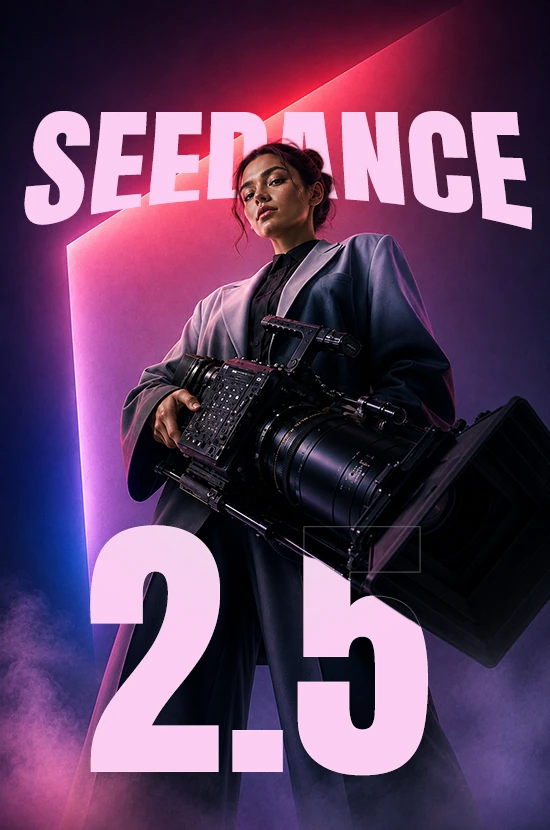
One week after Kling 3.0 launched, ByteDance just dropped this SeeDance 2.0. The timing alone tells you everything you need to know. Kling 3.0 barely had time to settle into creator workflows before ByteDance surfaced SeeDance 2.0, a frontier video generation model accompanied by internal technical documentation that wasn’t meant to be marketing fluff. For early adopters and AI video professionals, the question isn’t whether SeeDance 2.0 is impressive. It’s whether it’s disruptive enough to justify switching pipelines, retraining prompt intuition, and re-benchmarking production workflows.
This deep dive breaks down what SeeDance 2.0 actually is, how it compares to Kling 3.0 under professional evaluation criteria, and what ByteDance is doing differently at a systems level.
The One-Week Shockwave: Why SeeDance 2.0 Matters Right Now
Kling 3.0 set a new short-term benchmark in AI video by pushing temporal coherence, camera motion stability, and prompt adherence further than most diffusion-based competitors. Many creators assumed ByteDance would take months to respond.
Instead, SeeDance 2.0 appeared almost immediately, with internal documents suggesting the model had been in parallel development and was intentionally held until Kling 3.0 revealed its hand.
This matters because SeeDance 2.0 is not positioned as a stylistic alternative. It’s positioned as a pipeline replacement, especially for creators already working inside ByteDance’s broader ecosystem (CapCut, internal TikTok tooling, and experimental ComfyUI-style nodes).
The core challenge for creators is simple:
> Does SeeDance 2.0 outperform Kling 3.0 in the areas that actually cost time and money in production?
To answer that, we need to go beyond demo clips.
Inside the Internal Documents: SeeDance 2.0 Architecture and Capabilities
According to internal technical documentation reviewed by early partners, SeeDance 2.0 is built on a hybrid latent-diffusion and temporal consistency stack, rather than a pure extension of image-to-video diffusion.
Key internal claims include:
- Latent Consistency Training (LCT) applied across multi-second windows instead of frame-to-frame smoothing
- Seed Parity Enforcement across camera motion changes
- A modified Euler A scheduler tuned for long-range temporal stability
- Native support for scene-aware segmentation masks without external ControlNet injection
This is important because Kling 3.0 still relies heavily on post-hoc temporal alignment. SeeDance 2.0 attempts to solve temporal coherence at the latent level before decoding.
In practical terms, this means:
- Fewer micro-jitters in slow camera pans
- More consistent character anatomy across cuts
- Less “prompt drift” when prompts include multiple actions
The internal docs explicitly state that SeeDance 2.0 was optimized for 10–20 second narrative shots, not just 3–5 second social clips. That alone signals a different target audience.
Benchmarking Reality: SeeDance 2.0 vs Kling 3.0 Video Quality
Let’s talk about what creators actually care about: output quality under controlled conditions.
Test Methodology
Early testers compared SeeDance 2.0 and Kling 3.0 using:
- Identical prompts
- Matched random seeds where possible
- Fixed resolution (1024×576 and 1920×1080)
- Same frame count
- Euler A schedulers (or closest equivalents)
This kind of seed parity testing removes a lot of illusion from AI video demos.
Motion and Temporal Coherence
Kling 3.0 still excels at short, high-energy motion, explosions, fast cuts, dynamic lighting shifts. However, SeeDance 2.0 shows superior performance in:
- Continuous camera movement (dolly, orbit, crane shots)
- Long character interactions
- Environmental consistency (weather, lighting, background continuity)
In side-by-side comparisons, Kling 3.0 occasionally exhibits subtle background morphing after the 6–7 second mark. SeeDance 2.0 holds structure longer, especially in architectural scenes.
Character Fidelity
SeeDance 2.0’s biggest win is anatomical memory. Characters retain facial proportions, limb length, and clothing geometry more reliably across time. This appears to come from latent identity anchoring rather than external face-locking tricks.
For creators producing:
- Episodic shorts
- Brand characters
- AI-generated actors
This is a meaningful upgrade.
Prompt Adherence
Kling 3.0 remains slightly better at hyper-stylized prompts (anime exaggeration, surreal physics). SeeDance 2.0 prioritizes realism and cinematic logic. Internal notes describe this as a deliberate bias to support commercial content.
Under the Hood: What Makes SeeDance 2.0 Architecturally Different
The most interesting part of SeeDance 2.0 isn’t what it generates, it’s how it generates.
Latent Consistency Over Frame Consistency
Most AI video models stabilize output by aligning decoded frames after generation. SeeDance 2.0 instead enforces consistency in latent space before decoding.
This reduces:
- Temporal warping artifacts
- Frame-to-frame texture shimmer
- Inconsistent object permanence
Scene-Aware Attention Routing
Internal documents describe a scene-aware attention router that dynamically reallocates attention tokens depending on whether the model detects:
- A static scene
- A character-driven interaction
- A motion-dominant sequence
This allows the model to avoid over-smoothing action while maintaining stability in quieter shots.
Scheduler Customization
While Kling 3.0 offers limited scheduler control, SeeDance 2.0 exposes a modified Euler A variant internally that prioritizes low-frequency stability over high-frequency detail in early steps, then reintroduces detail late in the diffusion process.
For ComfyUI-style workflows, this is significant. It suggests future node-level control.
Creator Workflow Implications: When (and When Not) to Switch
So, should you switch?
Switch to SeeDance 2.0 If:
- You produce narrative or cinematic content
- You need consistent characters across shots
- Care about camera language (not just motion)
- You’re building repeatable production pipelines
Stay with Kling 3.0 If:
- You focus on short-form, high-impact visuals
- You rely heavily on stylized or surreal aesthetics
- Your workflow is optimized for fast iteration over continuity
One important note: SeeDance 2.0 currently benefits creators already embedded in ByteDance tooling. Kling 3.0 remains more platform-agnostic.
Final Verdict for Early Adopters and AI Video Professionals
SeeDance 2.0 is not just ByteDance’s answer to Kling 3.0 – it’s a statement about where AI video is heading.
Kling 3.0 pushed spectacle. SeeDance 2.0 pushes structure.
If your work depends on consistency, narrative logic, and scalable production, SeeDance 2.0 deserves serious attention. It doesn’t replace Kling 3.0 for every use case, but it clearly targets professional-grade video generation rather than viral novelty.
For early adopters, the smartest move isn’t blind switching. It’s parallel testing, because SeeDance 2.0 feels less like a tool and more like an infrastructure layer.
And infrastructure always wins in the long run.
Frequently Asked Questions
Q: Is SeeDance 2.0 better than Kling 3.0?
A: It depends on your use case. SeeDance 2.0 excels at long-form consistency, character fidelity, and cinematic camera movement, while Kling 3.0 remains stronger for short, high-energy, stylized visuals.
Q: Does SeeDance 2.0 support professional workflows like ComfyUI?
A: Internal documentation suggests SeeDance 2.0 is designed with node-based and scheduler-level control in mind, although full public ComfyUI integration is not yet available.
Q: What makes SeeDance 2.0 technically different?
A: SeeDance 2.0 emphasizes latent consistency training, scene-aware attention routing, and customized Euler A schedulers to maintain temporal coherence before frame decoding.
Q: Should early adopters switch immediately?
A: Early adopters should run parallel benchmarks. SeeDance 2.0 is promising for narrative and commercial work, but Kling 3.0 still dominates fast, stylized content.