AI Cartoon Video Creation for YouTube Shorts & Reels: A Technical Deep Dive for Faceless Creators
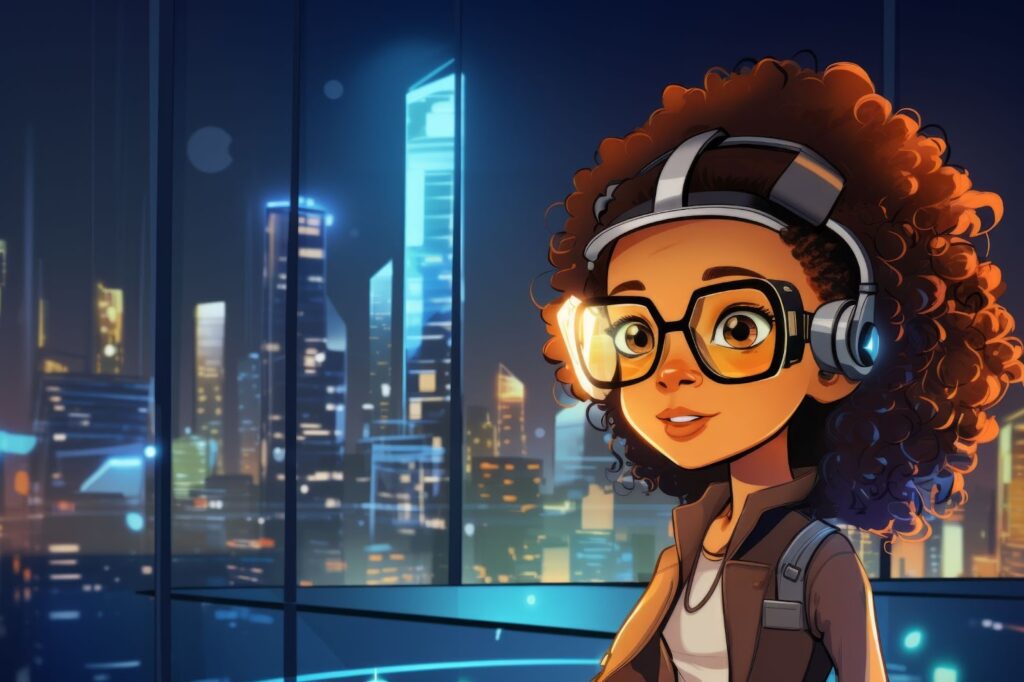
Create viral AI cartoon videos without drawing a single frame.
That’s not hype, it’s a workflow shift powered by AI video generation models like Runway Gen-3, OpenAI Sora-style diffusion transformers, Kling, and advanced ComfyUI pipelines. For short-form content creators and faceless channel operators, the real challenge isn’t creativity. It’s technical execution.
Creating engaging cartoon content traditionally required:
– Frame-by-frame animation skills
– Storyboarding expertise
– Character design consistency
– Rendering pipelines
Now, AI-powered cartoon generation removes the drawing barrier—but introduces new technical challenges: character consistency, temporal stability, compression optimization, and platform-native formatting.
This deep dive shows you how to build a repeatable AI cartoon production pipeline for YouTube Shorts and Instagram Reels.
Why AI Cartoon Generation Is Replacing Traditional Animation
Traditional animation relies on keyframes, in-betweens, and manual rigging. AI video generation replaces that process with diffusion-based or transformer-based generative modeling.
Modern AI cartoon systems use:
– Latent Diffusion Models (LDMs) to generate stylized frames
– Temporal consistency modules to stabilize motion
– Latent Consistency Models (LCM) for faster sampling
– Euler a / DPM++ schedulers for stylistic sharpness
– Seed-based generation for reproducibility
Instead of animating 24 frames per second manually, you describe:
> “Cute 2D cartoon cat, exaggerated expressions, pastel color palette, Pixar-style lighting, smooth looping animation, clean outlines, flat shading.”
The model interprets this in latent space and renders a cohesive animated sequence.
But raw generation isn’t enough for viral short-form content.
You need:
– Character identity persistence
– Platform-native formatting (9:16 vertical)
– High-retention pacing
– Compression-aware rendering
Let’s break down the tools and technical workflow.
Best AI Tools for Cartoon and Animation Video Generation
1. Runway Gen-3 (Video Diffusion with Temporal Control)
Best for: Prompt-to-video cartoon sequences with cinematic control.
Runway’s Gen-3 model integrates temporal attention layers that reduce frame flicker. For cartoons, use:
– Style prompts: “2D cel-shaded animation”
– Negative prompts: “photorealistic, noisy textures, realistic skin”
– Camera motion: minimal for Shorts (avoid excessive panning)
Technical tip:
Use lower motion strength for character-driven shorts to prevent morphing artifacts.
2. Kling AI (High-Quality Stylized Motion)
Best for: Expressive animated characters with dynamic movement.
Kling handles cartoon stylization surprisingly well when you:
– Use reference images for character grounding
– Maintain consistent prompt syntax
– Lock camera position
It performs well with exaggerated animation styles.
3. Sora-Style Transformer Video Models
Best for: Complex scene continuity.
Transformer-based models handle long temporal dependencies better than early diffusion models. This is useful for:
– Dialogue scenes
– Multi-shot sequences
– Story-driven cartoon shorts
However, you still need character identity anchoring (covered below).
4. ComfyUI (Advanced Control for Power Users)
Best for: Maximum control over style, seed parity, and latent conditioning.
ComfyUI allows:
– ControlNet integration
– IP-Adapter reference conditioning
– LoRA-based character locking
– Seed reuse across batches
– Euler a vs DPM++ scheduler comparisons
For faceless cartoon channels aiming to scale, ComfyUI becomes the backbone of production.
Recommended setup:
– Base model: SDXL fine-tuned for cartoon
– LoRA: Custom-trained character LoRA
– Sampler: DPM++ 2M Karras
– Steps: 20–30 for efficiency
– CFG Scale: 6–8 for style adherence without overcooking
Maintaining Consistent Characters Across Videos
This is the CORE challenge.
Without consistency, your cartoon channel feels random and unbrandable.
Here’s how to solve it technically.
1. Seed Parity
Every AI generation uses a seed value.
If you:
– Keep the same seed
– Maintain similar prompt structure
– Use the same model and sampler
You increase structural similarity.
However, seed reuse alone is insufficient for video continuity.
2. Character LoRA Training
Train a lightweight LoRA (Low-Rank Adaptation) model on:
– 15–30 images of your character
– Multiple angles
– Multiple expressions
– Different lighting conditions
This creates a character embedding that the model references in latent space.
Prompt example:
> “ZiboCat, cheerful orange cartoon cat with big teal eyes, thick black outlines, flat cel shading”
Your LoRA binds “ZiboCat” to a consistent visual identity.
3. IP-Adapter / Reference Image Conditioning
When using Runway, Kling, or ComfyUI:
Upload a reference frame and:
– Reduce image weight to 0.6–0.8
– Keep prompt structure identical
– Avoid conflicting style tokens
This preserves:
– Facial geometry
– Color palette
– Outfit design
4. Latent Consistency for Video
Frame flickering is common in AI cartoons.
Use:
– Latent Consistency Models (LCM)
– Temporal smoothing nodes
– Optical flow-based interpolation
If using ComfyUI:
– Apply AnimateDiff with motion modules
– Reduce motion scale
– Enable noise consistency across frames
This minimizes character morphing.
5. Expression Sheets as Latent Anchors
Create a character expression sheet:
– Happy
– Angry
– Shocked
– Crying
– Laughing
Generate these once.
Then use them as reference inputs for future videos.
This builds a reusable character system.
Optimizing AI Cartoons for Instagram Reels and YouTube Shorts
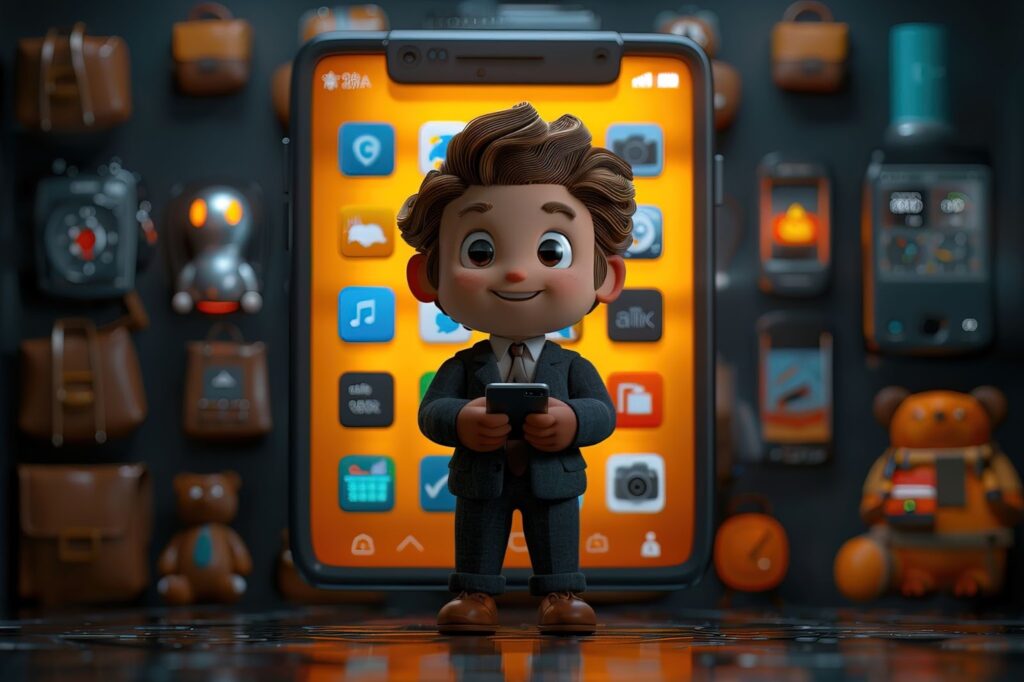
Platform optimization determines virality more than animation complexity.
1. Aspect Ratio and Framing
Always generate in:
9:16 vertical format (1080×1920)
Do NOT upscale from 16:9.
AI models frame differently depending on aspect ratio. Generate natively vertical to avoid subject cropping.
2. Visual Compression Awareness
Short-form platforms aggressively compress video.
To survive compression:
– Use bold outlines
– Avoid micro-detail textures
– Increase contrast slightly
– Avoid heavy grain
Flat cel-shading performs better than painterly styles.
3. First 2 Seconds = Retention Hook
Your AI cartoon must:
– Start with movement
– Use exaggerated expression
– Include immediate visual conflict
Example prompt structure:
> “Cartoon cat explodes with shock, eyes pop wide, dramatic zoom-in, bold reaction, fast-paced animation”
Fast motion improves retention metrics.
4. Duration Strategy
For Shorts & Reels:
– 15–25 seconds ideal
– Loopable endings boost replay rate
Design ending prompt like:
> “Character returns to original position, seamless loop”
Loopability increases watch time.
5. AI Voice + Lip Sync
For faceless channels:
Use:
– AI TTS (ElevenLabs-style neural voices)
– Wav2Lip or integrated lip-sync tools
– Phoneme-aligned mouth generation
Keep dialogue short.
Cartoons thrive on punchlines, not monologues.
Scalable Production Workflow for Faceless Cartoon Channels
Here’s a repeatable pipeline:
Step 1: Character System Creation
– Design character
– Train LoRA
– Create expression sheet
– Lock color palette
Step 2: Script Writing for Retention
Structure:
– Hook (0–2s)
– Conflict (3–12s)
– Punchline (13–18s)
– Loop reset (19–20s)
Step 3: Scene Generation
Option A: Runway/Kling
– Prompt to video
– Reference image uploaded
– Minimal camera movement
Option B: ComfyUI Advanced
– Generate keyframes
– Animate with AnimateDiff
– Apply temporal smoothing
– Upscale with ESRGAN
Step 4: Post-Processing
– Add subtitles (high contrast)
– Sound effects
– Slight sharpening pass
– Export H.264 high bitrate
Bitrate recommendation:
– 15–20 Mbps for 1080×1920
Step 5: Batch Production Strategy
Instead of making one video:
Create 5 variations with:
– Same character
– Different punchlines
– Same seed base
This maximizes output efficiency.
The New Skillset: Prompt Direction Over Drawing
The competitive advantage isn’t art skill anymore.
It’s:
– Prompt engineering
– Seed control
– Latent conditioning
– Platform optimization
AI cartoon creation is now a systems problem, not an illustration problem.
If you master:
– Character locking via LoRA
– Temporal smoothing
– Vertical-native composition
– Retention-first storytelling
You can run a scalable faceless cartoon channel without ever opening an animation timeline.
And that’s the real shift.
AI didn’t remove creativity.
It removed the technical barrier to execution.
The creators who understand the underlying generation mechanics will dominate short-form cartoon content in 2026 and beyond.
Frequently Asked Questions
Q: What is the best AI tool for beginners creating cartoon Shorts?
A: Runway Gen-3 or Kling are the most beginner-friendly because they handle temporal consistency internally. ComfyUI offers deeper control but requires understanding samplers, seeds, and latent workflows.
Q: How do I stop my AI cartoon character from changing in every video?
A: Use a trained LoRA for character identity, maintain seed parity, keep prompt structure consistent, and apply reference image conditioning (IP-Adapter). This anchors your character in latent space.
Q: Why do my AI cartoon videos flicker?
A: Flickering happens due to frame-level noise variation in diffusion models. Use Latent Consistency Models, temporal smoothing, optical flow interpolation, or AnimateDiff motion modules to stabilize output.
Q: What format works best for Instagram Reels and YouTube Shorts?
A: Generate natively in 9:16 (1080×1920), export in H.264 at 15–20 Mbps, use bold outlines and high contrast to survive platform compression.
Q: Can I scale an AI cartoon channel without animation experience?
A: Yes. By mastering prompt engineering, LoRA character training, and platform-optimized scripting, you can produce consistent cartoon Shorts without traditional animation skills.