Create Professional AI Videos from Your Phone: Complete Mobile-First Workflow (No PC Required)
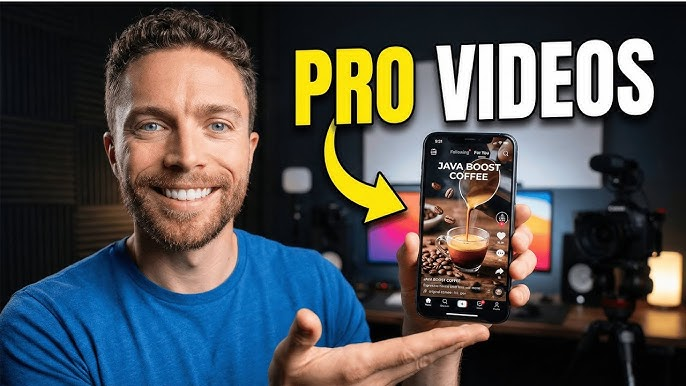
Make professional AI videos using just your phone – no computer needed.
If you’re a mobile creator, YouTuber, or short-form filmmaker without access to a desktop, you can now produce cinematic AI videos directly from your smartphone. Thanks to mobile-optimized AI platforms like Runway, Kling, and Sora (via web apps), plus cloud-based rendering pipelines, the entire workflow, from scriptwriting to final export, can happen in your pocket.
This guide breaks down the complete mobile-first AI video production pipeline, including model settings, generation strategies, and technical best practices like seed control, scheduler selection, and temporal consistency.
Best Mobile Apps for AI Video Generation in 2026
To create high-quality AI videos on mobile, you need tools that run in the cloud but are optimized for smartphone browsers or apps.
✅ Runway (Mobile Web App)
Best for: Cinematic AI video, image-to-video, Gen-3/Gen-4 models
Strengths: Temporal coherence, motion control, style consistency
Runway’s mobile interface allows you to:
– Generate text-to-video clips
– Convert still images into animated sequences
– Control motion intensity and camera movement
– Maintain character consistency via reference images
Pro Tip: Use image-to-video with a locked reference frame for better subject stability. This reduces latent drift across frames.
—
✅ Kling AI (Mobile Browser Friendly)
Best for: High-realism cinematic sequences
Strengths: Advanced physics simulation, natural camera movement
Kling performs exceptionally well in:
– Dynamic motion scenes
– Cinematic camera pans
– Realistic human motion
If you’re creating travel-style YouTube videos or narrative content, Kling’s motion interpolation and frame coherence outperform many competitors.
—
✅ Sora (When Public Access Is Available)
Best for: Long-form narrative generation
Strengths: Scene understanding, temporal memory
Sora excels at maintaining multi-scene continuity. If accessible via mobile browser, it’s ideal for storytelling content.
—
✅ CapCut Mobile (Essential for Editing)
After generating clips, you’ll need:
– Timeline editing
– Subtitles
– Transitions
– Audio sync
CapCut mobile supports multi-layer editing and 4K export—crucial for YouTube long-form.
—
✅ ChatGPT Mobile (For Script + Prompt Engineering)
Use ChatGPT to:
– Write scripts
– Generate structured prompts
– Refine scene descriptions
– Create shot lists
Prompt structure directly affects diffusion sampling and motion quality.
—
Step-by-Step Mobile Workflow: Script to Final Render
Here is the complete ai videos professional pipeline optimized for mobile.
Step 1: Script Structuring for AI Video
AI video models respond better to scene-modular prompts rather than long narrative paragraphs.
Instead of writing:
> A man walks through a futuristic city at sunset thinking about life.
Structure it like this:
Scene 1 Prompt Block:
– Subject: 35-year-old man in modern minimalist outfit
– Environment: Futuristic neon city
– Lighting: Golden sunset with volumetric light rays
– Camera: Slow cinematic dolly-in
– Motion: Natural walking animation
– Style: Ultra-realistic, 35mm lens, shallow depth of field
This structured format reduces model ambiguity and improves latent consistency.
—
Step 2: Generate AI Clips (Text-to-Video or Image-to-Video)
Inside Runway or Kling:
1. Select Text-to-Video* or *Image-to-Video
2. Paste structured prompt
3. Adjust:
– Motion strength
– Camera control
– Stylization level
– Duration (5–10 seconds ideal per clip)
Technical Optimization Tips
Even if the UI hides advanced parameters, models internally rely on:
– Latent diffusion sampling
– Seed initialization
– Scheduler selection (often Euler a or DPM++ variants)
While you may not directly choose the scheduler in mobile apps, you can influence results by:
– Reducing prompt complexity (prevents noise amplification)
– Avoiding contradictory lighting cues
– Keeping subject count minimal
For character consistency:
– Use the same reference image
– Keep clothing descriptions identical
– Maintain seed parity if the app allows seed reuse
Seed parity ensures similar latent starting noise, increasing visual continuity.
—
Step 3: Maintain Temporal Consistency
One of the biggest mobile AI challenges is flickering or morphing.
To reduce this:
✅ Use image-to-video instead of text-only when possible
✅ Keep camera motion simple (slow pans outperform chaotic movement)
✅ Avoid rapid subject transformations
✅ Limit prompt changes between scenes
Models rely on temporal attention layers. Overloading them with dramatic changes reduces coherence.
—
Step 4: Generate Voiceover on Mobile
Use mobile AI voice tools like:
– ElevenLabs (mobile browser)
– PlayHT
– CapCut AI Voice
Export high-bitrate WAV when possible.
Sync in CapCut using waveform alignment for precision.
—
Step 5: Edit in CapCut (Mobile Timeline Workflow)
Professional mobile editing structure:
1. Create 16:9 4K project
2. Import all AI clips
3. Trim to remove generation artifacts
4. Add cinematic LUT (reduce contrast slightly to hide minor flicker)
5. Add subtle motion blur overlay (improves perceived frame continuity)
6. Insert subtitles with auto-caption
Export settings:
– Resolution: 4K (even if upscaled)
– Bitrate: Maximum available
– Frame rate: 24fps for cinematic feel
How to Produce Long-Form AI Videos Entirely on Mobile
Creating 8–15 minute YouTube videos on mobile requires strategic batching.
The Modular Scene Strategy
Instead of generating one long sequence, create:
– 30–60 clips (5–8 seconds each)
– Organized by folder
– Labeled by scene number
This approach:
– Prevents model drift
– Reduces regeneration waste
– Improves narrative pacing
—
Storage Optimization on Mobile
AI videos are large. To avoid storage issues:
– Upload completed clips to cloud storage immediately
– Clear local cache after backup
– Edit in batches instead of loading all clips simultaneously
—
Maintaining Character Consistency Across 10+ Minutes
Use this formula:
1. Create a master character image
2. Use it as reference for all scenes
3. Keep identical prompt descriptors
4. Avoid changing hairstyle, outfit, lighting tone
Advanced creators using mobile-accessible ComfyUI cloud instances can:
– Lock seeds
– Use ControlNet for pose control
– Apply LoRA character embeddings
This dramatically increases long-form consistency.
—
AI Video Pacing for YouTube Retention
AI-generated content risks feeling “floaty” or dreamlike.
Counter this by:
– Cutting every 3–5 seconds
– Adding subtle zoom-ins
– Layering ambient sound
– Using kinetic typography
AI visuals + human pacing = retention.
—
Advanced Mobile Creator Techniques
1. Fake Multi-Camera Production
Generate the same scene twice:
– Version A: Wide shot
– Version B: Close-up
Alternate in edit for cinematic realism.
—
2. AI Upscaling on Mobile
Use cloud upscalers like:
– Topaz Cloud
– CapCut Enhance
Upscaling adds sharpness and masks minor diffusion artifacts.
—
3. Prompt Stacking for Cinematic Depth
Use layered prompt logic:
Base Layer: Scene description
Camera Layer: Lens, movement
Lighting Layer: Time of day
Texture Layer: Film grain, realism
Example:
“Cyberpunk alley at night, light rain, neon reflections, 35mm anamorphic lens, shallow depth of field, cinematic dolly tracking shot, volumetric lighting, ultra-realistic textures, subtle film grain”
This structured stacking improves latent clarity and reduces visual noise.
—
Complete Mobile AI Video Pipeline Recap
1. Script with structured scene blocks
2. Generate 5–8 second clips in Runway or Kling
3. Maintain seed/reference consistency
4. Produce AI voiceover
5. Edit in CapCut mobile
6. Export 4K and upload directly to YouTube
No desktop. No GPU. No workstation.
Just your phone and cloud AI.
—
Final Thoughts
Mobile AI video creation is no longer a compromise—it’s a legitimate production workflow.
With structured prompting, seed consistency, and modular scene batching, you can produce professional long-form AI content entirely from your smartphone.
The future of generative media isn’t desktop-bound.
It’s mobile-first, cloud-powered, and creator-controlled.
Frequently Asked Questions
Q: Can I control seeds in mobile AI video apps?
A: Some mobile-friendly platforms expose seed controls, while others abstract them away. If available, reusing the same seed (seed parity) helps maintain visual consistency across scenes by starting diffusion from similar latent noise.
Q: How do I prevent flickering in AI-generated mobile videos?
A: Use image-to-video instead of pure text-to-video, keep camera motion slow, avoid drastic prompt changes, and maintain consistent lighting descriptions. These practices improve temporal attention stability and reduce latent drift.
Q: Is it possible to create 10+ minute YouTube videos entirely on a phone?
A: Yes. Use a modular workflow: generate short 5–8 second clips, organize them in cloud storage, batch edit in CapCut, and maintain character consistency using reference images and repeated prompt structures.
Q: Which mobile app is best for cinematic AI video?
A: Runway and Kling currently offer the strongest cinematic results via mobile browsers, with strong temporal coherence, realistic motion simulation, and cloud-based rendering optimized for smartphone workflows.