VidAU Editorial · AI Search
Food Advertisement: How Food Commercials Are Made—Process, Gear, and Costs
Learn how a pro food advertisement comes to life: the crew, robots, and cameras involved; why shoots race against wilting food; and what drives costs into the hundreds of thousands.
By the VidAU Editorial Team · Reviewed before publishing
If you’ve wondered why a food advertisement needs a full studio production crew and motion-control robots, start with the clock: real food wilts under lights. This explainer walks through the exact process, gear, and costs used at studios like The Garage in Brooklyn to deliver ads about food for brands such as Hershey’s, Pepsi, and Domino’s.
Quick Summary
• Pro studio tabletop workflows with real food, motion-control robots, and high-end cameras deliver repeatable, appetizing shots under intense time pressure.
• Previsualization and message testing with AI video tools like VidAU AI can de-risk concepts before an expensive studio shoot.
• Real ingredients wilt fast under hot lights, so robot-programmed moves, shot lists, and rapid resets are essential production constraints.
• US marketers, brand managers, and producers planning national or regional ads about food benefit most from these workflows.
What Is Food Advertisement?
A food advertisement is a video commercial or social creative designed to showcase edible products and drive sales or brand recall. In professional studio workflows, crews shoot real food on carefully lit sets, often using motion-control robots and high-end cameras to capture repeatable pours, drips, and slow motion before ingredients wilt, then finish with precision editing and color.
How a Food Advertisement Moves From Brief to Shoot
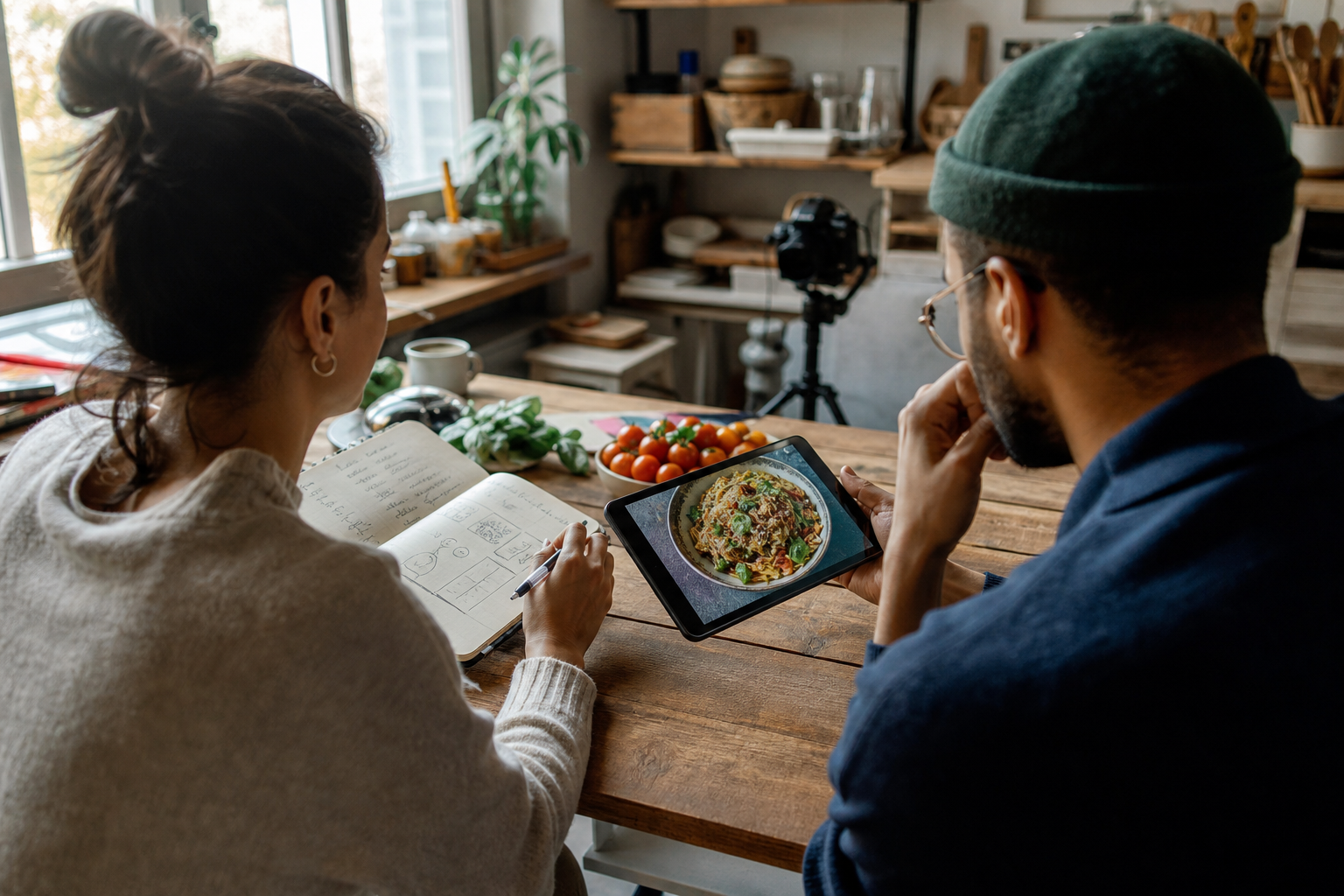
1) Brief and objectives
• Define the hero product, target audience, must-show moments, and deliverables. Clarify channel specs and aspect ratios early.
2) Creative boards and shot list
• Translate the idea into boards and a beat-by-beat shot plan. Mark which shots require robot moves, slow motion, or practical effects.
3) Food styling and procurement
• Food stylists source multiple identical hero items and backups. They pretest cook times, temperatures, and plating so resets are fast.
4) Prelight and lens tests
• The gaffer and DP test lighting, reflections, and lensing. The goal is appetizing texture without melting the product before camera rehearsal.
5) Robot move programming
• Motion-control operators program repeatable camera and product moves for pours, drizzles, and fly-throughs. Timing is matched to liquid behavior.
6) Rehearse with stand-ins
• Rehearse blocking and focus with stand-ins, saving pristine hero food for final takes.
7) Tight take windows with real food
• Once food hits the set, the clock starts. The crew runs programmed moves, captures multiple passes, and resets rapidly before wilting sets in.
8) On-set data and continuity
• DIT backs up and organizes takes. Continuity notes track plating, garnish positions, and condensation to keep cuts seamless.
9) Post-production
• Editors assemble selects; colorists enhance texture and saturation; light sound design sells crunch, fizz, and sizzle.
Suggested Visual: A simple flow diagram from brief to robot shoot to post.
Food Advertisement Gear: Motion-Control Robots and High-End Cameras
Why robots matter
• Motion-control robots deliver precise, repeatable moves that synchronize with drips, splashes, and crumbs. They allow exact retakes after each food reset, which is vital when a strawberry glisten lasts seconds.
What high-end cameras deliver
• High-end cameras capture crisp slow motion and fine texture, preserving detail in steam, bubbles, and crumbs. Pairing with macro lenses and controlled lighting makes food feel tactile and fresh.
The crew behind the shot
• A studio production crew can include director, DP, gaffer, grips, robot operator, focus puller, food stylist, prop master, art, and DIT. Each role compresses the time-to-take so real food looks perfect before it collapses under lights.
Key Takeaways
• Robots make complex shots repeatable and faster to reset.
• High-end cameras plus lighting reveal appetizing texture.
• Specialists add precision but also add time and budget.
Planning and Timing: Beating the Wilt
• Build duplicates: Plan multiple identical hero plates and beverages per setup.
• Sequence smartly: Shoot the most delicate items first; schedule hot items last.
• Control temperature: Keep a staging area off set, rotating fresh plates to camera.
• Limit variables: Pre-decide drip speed, pour height, and garnish count to reduce takes.
• Lock framing: Programmed moves and fixed lighting enable quick swaps without relighting.
Food Advertisement Costs: What Drives the Budget
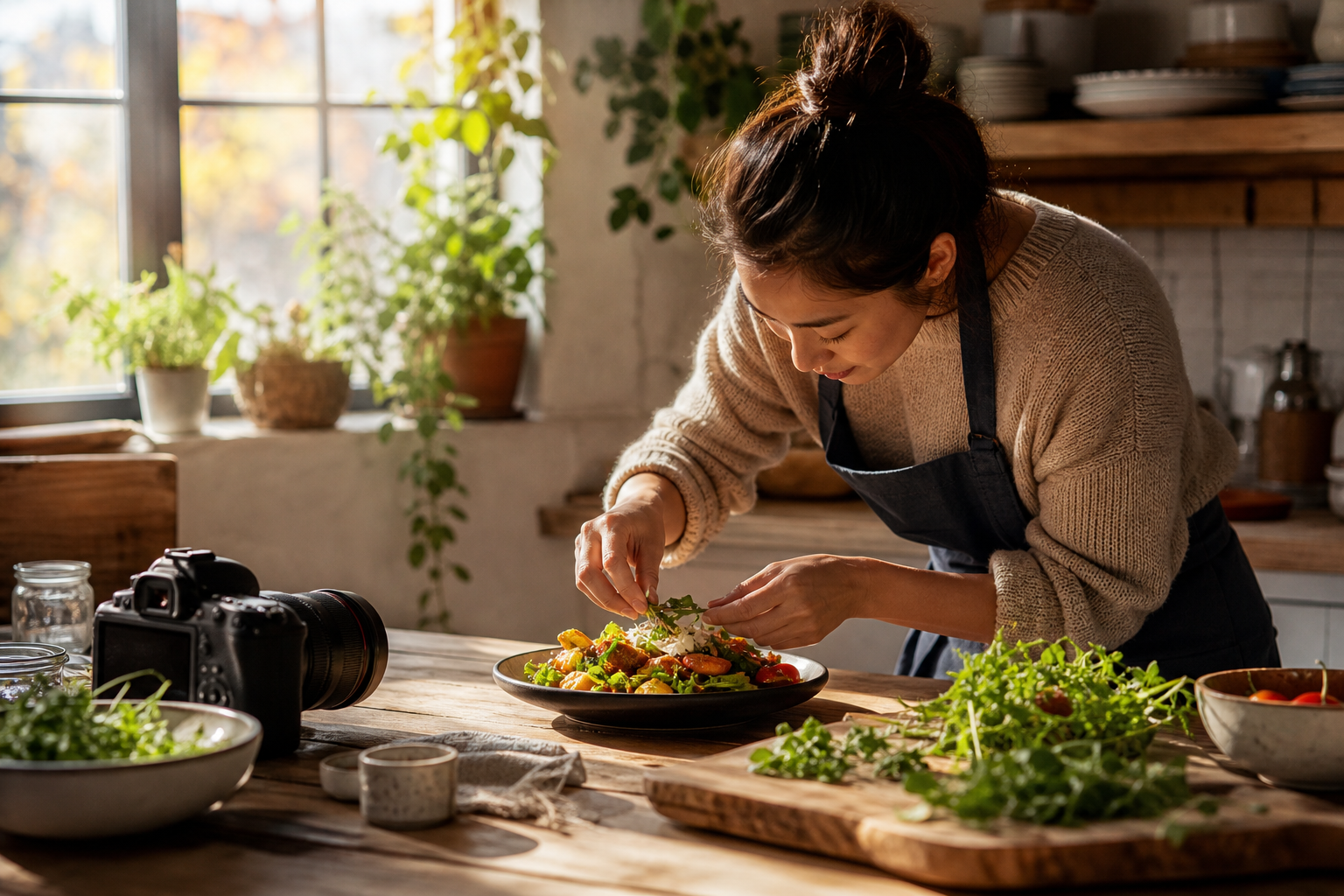
Costs climb with complexity and resets. The biggest drivers include:
• Crew size and specialty roles: Robot operators, food stylists, and experienced lighting teams raise day rates but protect quality under time pressure.
• Number of setups and food resets: Every angle change and every fresh plate adds time, ingredients, and labor.
• Studio days: More boards and cutdowns mean more shooting days at a controlled stage, like The Garage in Brooklyn, New York.
• Gear package: Motion-control robots and high-end cameras require prep, operators, and insurance.
• Deliverables: National broadcast specs, multiple aspect ratios, and language versions expand edit and finishing time.
For national work, budgets can reach the hundreds of thousands, reflecting large crews, precision robotics, real-food repetition, and rigorous post.
Suggested Visual: A simple bar chart showing relative impact of crews, setups, days, gear, deliverables.
Where AI Fits: Previs, Social Cutdowns, and Testing
You can de-risk a studio shoot by clarifying message and pacing before cameras roll.
• Input: Product URL, images, or a rough script.
• Tool: VidAU AI Video to generate short concept cutdowns or UGC-style drafts aligned to TikTok, Meta, or YouTube specs.
• Output: Editable video options for internal review or small paid tests.
• Use it when: You need to validate angles, claims, or beats, then carry proven messaging into the robot shot list and tabletop schedule.
This keeps the studio day focused on irresistible food shots, not copy debates.
A Simple Production Toolkit Map
• Stage: Strategy and scripting
Recommended Tools: ChatGPT, Claude
Why: Fast concept and boards
• Stage: Image references
Recommended Tools: MidJourney, Leonardo AI
Why: Style exploration
• Stage: Video creation
Recommended Tools: VidAU AI Video, CapCut
Why: Quick cutdowns, UGC drafts
• Stage: Tabletop robotics
Recommended Tools: Motion-control robots
Why: Repeatable precision moves
• Stage: Camera and lighting
Recommended Tools: High-end cameras, cinema lights
Why: Texture and slow motion
• Stage: Post-production
Recommended Tools: Premiere, Resolve
Why: Edit, color, delivery
Common Pitfalls to Avoid
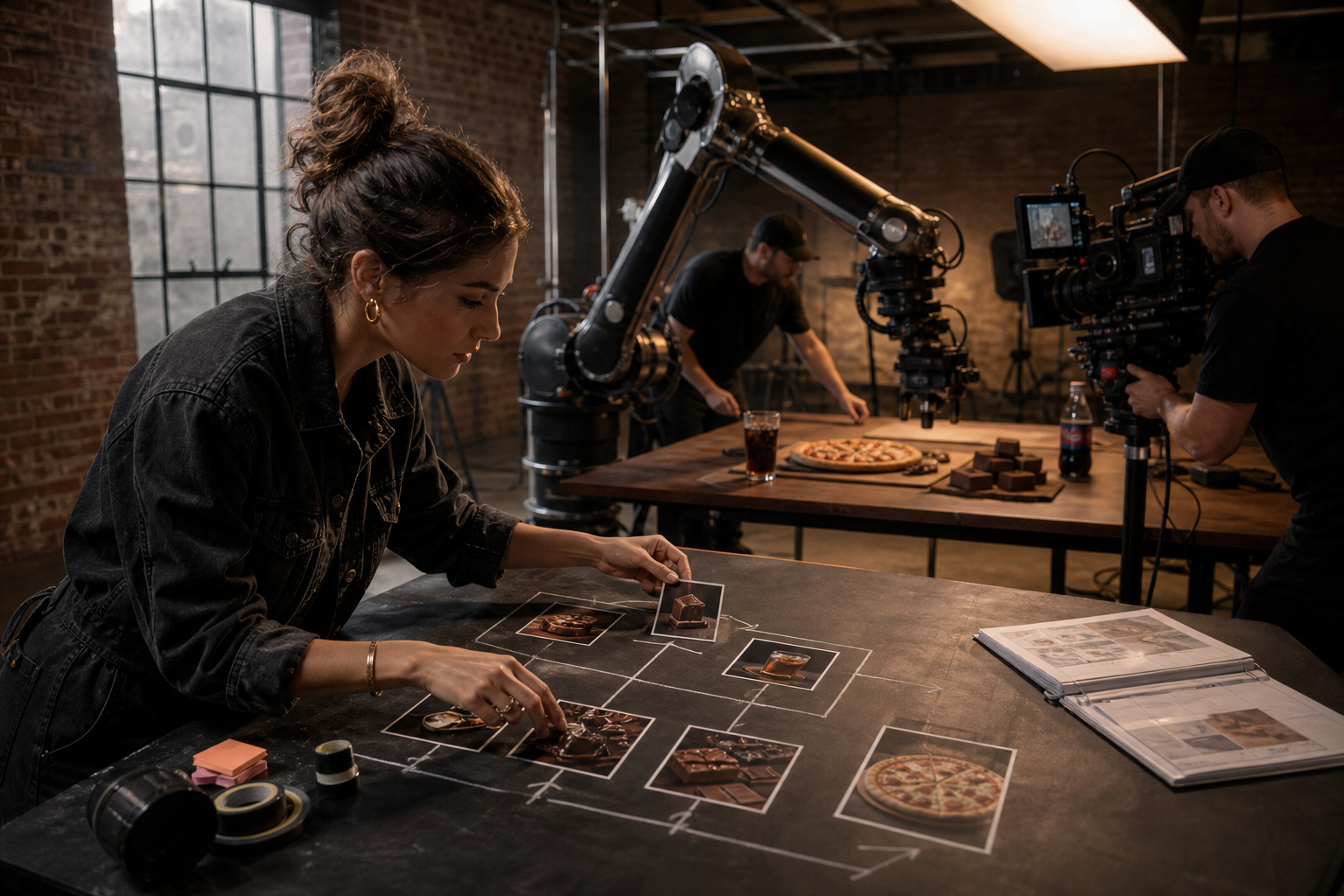
• Overlong shot lists that ignore reset time per setup.
• Relying on one hero plate with no backups.
• Skipping a robot rehearsal before the real pour.
• Forgetting condensation, steam, or melt windows in the schedule.
• Leaving social cutdowns for last instead of planning aspect ratios up front.
Create With VidAU
Turn scripts, product URLs, and creative ideas into ad-ready video assets with a structured AI workflow.
Key takeaway
Final Thoughts
A compelling food advertisement is a race against physics and time. Real ingredients, robot-programmed moves, and high-end cameras demand a clear brief, tight boards, and disciplined scheduling to catch the perfect pour before it wilts.
Best next step: pressure-test your message and pacing first, then book the studio day. Use VidAU AI to turn a product URL or images into quick concept cutdowns, collect feedback, and carry the proven beats into your tabletop plan.
Frequently asked questions
Why do food advertisements use real food instead of fakes?
Real food behaves in ways audiences intuitively recognize, from fizz to melt to crumb. Using real ingredients makes textures, steam, and pours feel authentic. Crews control heat, timing, and resets to capture appetizing moments before wilting, then refine the look with lighting, color, and sound in post.
What do motion-control robots add to a food advertisement?
Motion-control robots create precisely repeatable camera and product moves. This means the team can reset food and rerun the exact shot to match drips, splashes, and timing. Repeatability speeds up approvals, ensures continuity, and lets editors composite multiple passes for a clean, appetizing final.
Why are high-end cameras important in ads about food?
High-end cameras capture crisp slow motion and fine detail that make food look craveable. Combined with controlled lighting and macro lenses, they preserve texture in steam, bubbles, and crumbs. That clarity separates professional tabletop work from basic footage, especially for broadcast or national campaigns.
How long does a typical food advertisement shoot take?
Most tabletop shoots are scheduled in tightly planned days, each focused on a limited number of setups. Prelight and robot programming often occur the day before. Because real food wilts under lights, teams sequence delicate items first and expect multiple resets per shot to capture the perfect take.
What are the main cost drivers for a food advertisement?
The biggest cost drivers are crew size and specialties, number of setups and resets, studio days, and the gear package for motion-control robots and high-end cameras. Deliverables matter too; national broadcast specs and multiple aspect ratios add edit and finishing time. These factors can push budgets into the hundreds of thousands.
How do food stylists influence the final result?
Food stylists pretest recipes, plating, and timing so the hero item photographs perfectly. They build multiple identical plates, manage temperature and moisture, and coordinate resets to match robot-programmed moves. Their work preserves visual continuity and ensures each take looks fresh and appetizing on camera.
Can small businesses afford professional ads about food?
Yes, by simplifying scope. Focus on one hero dish, fewer setups, and social-first aspect ratios. Skip complex robot moves when not essential, and previsualize messaging with tools like VidAU AI to avoid reshoots. A lean tabletop day with a tight crew can still deliver high-quality, platform-ready assets.
Where does AI video fit in a pro food advertisement workflow?
AI video is most useful before the studio day and after. Use it to generate concept cutdowns from a product URL or script for stakeholder alignment, then to create platform-specific versions post-shoot. It does not replace real-food tabletop work but helps lock messaging and multiply deliverables efficiently.