Gemini 3: Next-Generation AI Agent — Compare It with Claude and ChatGPT 5.0
NEW GPT 5.2 VS Google Gemini 3: Who Wins?
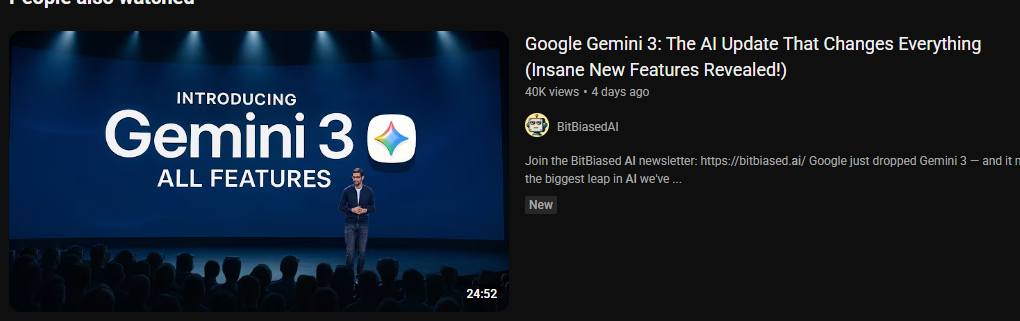
Artificial Intelligence is evolving at warp speed, and two names dominate 2025 headlines: Google’s Gemini 3 and OpenAI’s GPT-5.2 (successor to ChatGPT 5.0). But where does Gemini 3 fit in the new AI ecosystem, especially against Claude and ChatGPT? In this comprehensive article, we break down capabilities, AI agent strengths, benchmark performance, and real-world use cases.
Artificial Intelligence is evolving at warp speed, and in 2025, three names dominate global headlines: Google’s Gemini 3, OpenAI’s GPT-5.2 (successor to ChatGPT 5.0), and Anthropic’s Claude. This is no longer a battle of simple chatbots.
We are now firmly in the AI Agent era, where models don’t just respond, but plan, reason, act, and execute multi-step workflows autonomously. From writing code and analyzing data to managing business tasks and conducting research, today’s AI models are becoming digital collaborators.
So where does Gemini 3 truly stand in this rapidly evolving ecosystem? And how does it compare against GPT-5.2 and Claude?
This in-depth guide breaks everything down.
What Is Gemini 3? (And Why It Matters)
Gemini 3 is Google’s most advanced AI model to date, designed from the ground up as a multimodal, agent-ready intelligence system. because of Gemini 3 comes equipped with advanced developer tools like Antigravity IDE, purpose-built for agent-first coding and orchestration workflows. Unlike traditional AI coding assistants that operate at the line or function level, Antigravity IDE treats Gemini 3 as an autonomous software agent capable of planning, executing, and iterating across entire codebases.
With Antigravity IDE, Gemini 3 can:
- Interpret high-level development goals instead of isolated code prompts
- Break projects into logical milestones and execute them sequentially
- Modify multiple files while maintaining architectural consistency
- Run tests, debug errors, and refactor code autonomously
- Orchestrate tools such as linters, build systems, and deployment scripts
This agent-first approach allows developers to shift from manual implementation to outcome-driven direction, significantly accelerating development cycles and reducing context-switching errors. Compared to GPT-5.2’s API-centric agent frameworks and Claude’s safety-focused code reasoning, Gemini 3’s tight IDE integration makes it especially powerful for end-to-end software creation inside Google’s ecosystem.
Bottom line: Antigravity IDE transforms Gemini 3 from a coding assistant into a full-stack AI engineer, capable of building, testing, and evolving software with minimal human intervention.
Understanding AI Agents
Before comparing models, it’s important to understand what makes an AI Agent different from a chatbot.
AI agents are no longer just futuristic concepts; they are intelligent systems designed to act autonomously, plan complex workflows, and execute tasks across multiple applications and tools. Unlike traditional AI, which passively responds to individual prompts, AI agents operate proactively, understanding goals, breaking them into actionable steps, and completing tasks with minimal human supervision.
Core Capabilities of AI Agents
- Plan
AI agents can take a high-level objective, such as “Prepare a quarterly sales report and update team dashboards,” and break it down into a sequence of smaller, actionable steps. This involves reasoning, prioritization, and task decomposition, enabling agents to tackle projects that would normally require human planning. - Execute
Beyond planning, AI agents interact directly with software tools. They can call APIs, run scripts, update databases, generate documents, or perform multi-step workflows automatically. This allows them to carry out complex tasks end-to-end, rather than merely suggesting actions. - Remember
Unlike traditional AI, agents maintain long-term memory and context across sessions. They can recall previous interactions, track project state, and build on past work. This makes them particularly powerful for continuous tasks, multi-stage projects, or collaborative workflows spanning days or weeks. - Adapt
AI agents are not rigid. They adjust strategies dynamically based on results, changing requirements, or unexpected errors. For instance, if a generated report contains errors, the agent can revise its workflow to correct them autonomously, ensuring robust and reliable task completion.
Real-World AI Agent Examples
GPT-5.2 (OpenAI)
GPT-5.2 represents OpenAI’s most advanced enterprise-focused AI agent, designed to go beyond simple conversation and act as a proactive, multi-functional collaborator within business and technical workflows. Its strength lies in flexibility, scale, and seamless integration with existing enterprise systems.
Key Capabilities
- Workflow Automation
GPT-5.2 can automate complex, multi-step processes across departments. For example, it can generate financial reports, consolidate team inputs, and automatically trigger follow-up communications. By orchestrating these tasks, it reduces human workload while maintaining accuracy and consistency. - Report Generation & Data Analysis
Leveraging its advanced reasoning and language understanding, GPT-5.2 can analyze large datasets, extract insights, and generate clear, actionable reports. This includes business intelligence dashboards, technical documentation, and even compliance-ready summaries, tasks that previously required hours of human effort. - Software Development Orchestration
GPT-5.2 is more than just a code generator. It coordinates multi-step software pipelines, including code creation, testing, integration, and deployment. Developers can provide high-level instructions, and GPT-5.2 will break the project into tasks, execute them, and flag issues autonomously, dramatically accelerating development cycles. - Toolchain Integration
Thanks to its API-driven architecture, GPT-5.2 can connect with a wide range of enterprise systems, including CRMs, ERP platforms, cloud services, and internal tools. This allows businesses to embed GPT-5.2 as a central agent, orchestrating multiple systems simultaneously without manual intervention.
Why GPT-5.2 Stands Out for Enterprises
- Scalability: Handles large-scale operations across multiple departments
- Flexibility: Adapts to unique organizational workflows and tools
- Reliability: Maintains context across sessions and tasks, reducing errors
- Productivity Boost: Frees human teams from repetitive, procedural tasks, allowing focus on strategic decision-making
Bottom line: GPT-5.2 is not just an AI assistant—it’s a versatile enterprise agent capable of planning, executing, and managing workflows at scale, bridging the gap between human strategy and automated execution.
Claude (Anthropic)
Claude by Anthropic is designed with a safety-first philosophy, prioritizing transparency, explainability, and compliance above all else. Unlike other AI agents that focus primarily on speed or multimodal capabilities, Claude’s core strength lies in trusted, reliable decision-making, making it an ideal solution for regulated industries such as finance, healthcare, and government sectors.
Key Capabilities
- Multi-Step Reasoning with Safety Controls
Claude is capable of performing complex, multi-step workflows, such as regulatory reporting, compliance audits, or policy enforcement. At each step, it applies safety checks and reasoning protocols to reduce errors, prevent unintended actions, and ensure that decisions align with organizational policies. - Explainable Decision-Making
Every action Claude takes is auditable and explainable. It generates human-readable reasoning for each step, making it easier for teams to track decisions, validate processes, and maintain accountability, critical in industries where every action may be reviewed by regulators. - Compliance and Risk Mitigation
Claude is designed to adhere to strict compliance frameworks, incorporating safety guardrails, ethical guidelines, and context-aware risk assessments. It can handle sensitive data responsibly and is engineered to minimize exposure to harmful or non-compliant outputs. - Controlled Autonomy
While Claude can perform agentic tasks autonomously, it excels in environments requiring careful oversight. Its behavior is predictable, consistent, and constrained by built-in safety protocols, making it suitable for high-stakes workflows where errors can have serious consequences.
Why Claude Stands Out
- Trust and Reliability: Minimizes operational risk in sensitive industries
- Transparency: Provides clear reasoning and audit trails for every action
- Adaptability: Can be integrated into enterprise workflows while respecting compliance requirements
- Controlled Autonomy: Balances intelligent task execution with careful oversight
Bottom line: Claude is not just an AI agent; it’s a safe, accountable, and explainable digital collaborator. In environments where regulatory compliance and risk mitigation are paramount, Claude enables organizations to leverage AI without sacrificing trust, reliability, or transparency.
Why AI Agents Matter
AI agents are bridging the gap between intelligence and actionable results. They are transforming industries by:
- Increasing efficiency: Automating repetitive and complex workflows
- Enhancing decision-making: Providing actionable insights across multiple tools
- Reducing errors: Maintaining context and adapting to changing conditions
- Scaling expertise: Acting as extensions of human teams across projects and departments
Bottom line: AI agents are no longer optional; they are becoming critical collaborators that turn intelligence into real-world impact. Gemini 3, GPT-5.2, and Claude each exemplify the shift toward autonomous, goal-driven AI that doesn’t just respond, it delivers.
An AI Agent can:
- Break complex tasks into steps
- Use tools and APIs autonomously
- Remember long-term context
- Adapt actions based on results
- Execute workflows with minimal supervision
Gemini 3, GPT-5.2, and Claude all operate in this agentic paradigm but with different philosophies.
Summary – NEW GPT 5.2 VS Google Gemini 3: Who Wins?
| Criterion | Gemini 3 | GPT-5.2 | Claude |
| Multimodal Understanding | ⭐⭐⭐⭐ | ⭐⭐⭐ | ⭐⭐ |
| Structured Reasoning | ⭐⭐⭐ | ⭐⭐⭐⭐ | ⭐⭐⭐⭐ |
| Safety & Alignment | ⭐⭐⭐ | ⭐⭐⭐ | ⭐⭐⭐⭐ |
| Coding & Tools | ⭐⭐⭐ | ⭐⭐⭐⭐ | ⭐⭐ |
| Agent Capabilities | ⭐⭐⭐⭐ | ⭐⭐⭐⭐ | ⭐⭐⭐ |
| Ecosystem Integration | ⭐⭐⭐⭐ | ⭐⭐⭐ | ⭐⭐ |
Overall:
- Gemini 3 is the most versatile for real-world, multimodal engagements.
- GPT-5.2 is a finely tuned professional workhorse.
- Claude leads where safety and structured reasoning are top priority.
Your “winner” depends on your use case: each model delivers world-class AI in different domains.
Conclusion: The Era of the Truly Autonomous Agent
The 2025 AI landscape has officially moved past the “chatbot” era. The arrival of Gemini 3 has solidified Google’s position as the leader in multimodal intelligence and factual accuracy, providing a massive 1-million-token canvas for developers and enterprises to build upon. By integrating seamlessly with the Antigravity platform, it has transformed from a passive tool into a proactive AI Agent capable of managing complex, real-world workflows.
FAQs
Is Gemini 3 better than ChatGPT 5.0?
Yes. Gemini 3 competes directly with GPT-5.2, which is the successor to ChatGPT 5.0, and surpasses ChatGPT 5.0 in reasoning and multimodal tasks.
Which AI is best for AI agents?
GPT-5.2 offers the most flexible agent framework, while Gemini 3 provides the best built-in agent experience inside Google tools.
Is Claude better than Gemini 3?
Claude is better for safety and long-context use cases, but Gemini 3 leads in multimodal intelligence and ecosystem integration.