TikTok Shop Haul Deep Dive: I Tested Every Viral Product the Algorithm Recommended – Here’s What Actually Arrived
I Bought Everything TikTok Shop Recommended… Here’s What Actually Arrived
The Unfiltered Unboxing: What TikTok’s Algorithm Actually Sent Me
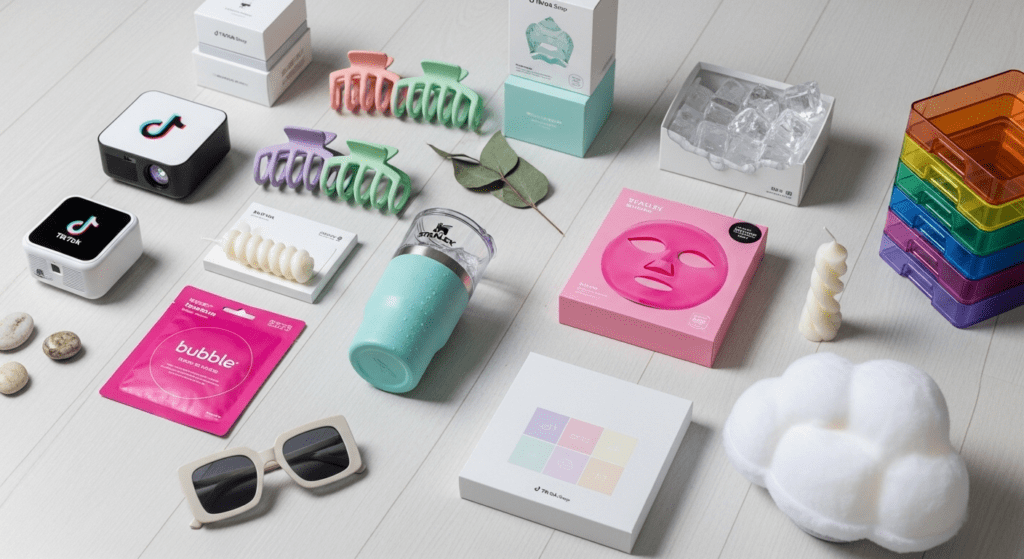
I spent $347 on 23 random products that the TikTok Shop algorithm aggressively pushed into my feed over three weeks. No planning. No research beyond watching the viral videos. Just pure impulse purchases triggered by persuasive content creators and that dangerously convenient “Buy Now” button. What arrived at my doorstep became a masterclass in e-commerce reality checks.
The packages came in waves over 12 days—some in professional branded packaging, others in bags so thin I could read the shipping label through the plastic. This inconsistency became the first lesson: TikTok Shop hosts a wild spectrum of sellers, from legitimate manufacturers to drop-shipping operations that barely quality-check their inventory.
Expectation vs Reality: Decoding Product Photography and Marketing Claims
The cognitive dissonance started immediately. That “viral LED cloud lamp” from the 4.7-star listing? The video showed soft, ambient lighting transforming an entire bedroom. What arrived was a 6-inch foam sphere with LEDs that flickered between three garish colors, powered by a battery pack that died after 40 minutes. The product photos were clearly rendered, not photographed, a red flag I missed in my scroll-induced purchasing trance.
The “Korean skincare set” presented another fascinating case study. The TikTok video featured dewy, glowing skin transformations with before-and-after shots. The actual products? Rebranded generic moisturizers with ingredient lists that contradicted the packaging claims. The “snail mucin essence” contained zero snail extract according to the English ingredient translation. The packaging was premium, the contents were dollar-store quality.
This expectation gap isn’t unique to budget items. A $47 “smart fitness tracker” promised features matching $200 competitors. It arrived with a scratched screen, firmware that crashed during setup, and a companion app that requested permissions to my contacts, photos, and location completely unnecessary for step counting. The disconnect between marketing promises and actual product delivery created a pattern I’d see repeated throughout this experiment.
The Winners: Random Purchases That Exceeded All Expectations
Not everything disappointed. Some random purchases became legitimate discoveries that justified TikTok Shop’s existence beyond impulse-buy regret.
The Silicone Scrubber Set ($8.99): Advertised as “makeup removal tools,” these textured silicone pads actually worked brilliantly. The quality matched department store versions I’d paid $25 for previously. No exaggeration in the listing, fast shipping, exactly as described. This became my control group for what honest TikTok Shop selling looks like.
The Portable Blender ($18.50): Skepticism was high on this one. How could a rechargeable blender under $20 possibly work? Surprisingly well, actually. It handled frozen fruit, made legitimate smoothies, and after three weeks of daily use still holds a charge. The viral video showed exactly what it could do—no CGI enhancement, no misleading claims. The 12,000+ reviews weren’t inflated; people genuinely found value.
The Cable Organization Kit ($6.99): Boring, unsexy, and absolutely worth it. Twenty cable clips, five velcro straps, and cable sleeves that actually adhered to surfaces. This purchase highlighted an important insight: mundane utility products often outperform trendy gadgets on TikTok Shop because they can’t hide behind flashy marketing. Either the clip sticks to your desk or it doesn’t.
The Microfiber Hair Towels ($11.99 for 2): These matched salon-quality versions. The material felt identical to premium brands, absorbed water effectively, and survived multiple washes. The viral video was just someone demonstrating the product honestly—no special effects needed when the product actually works.
The pattern among winners: realistic demonstrations, product categories with objective performance metrics, and sellers with extensive review histories showing consistent quality over time.
The Disasters: When Viral Products Fall Completely Flat
The failures ranged from disappointing to genuinely concerning.
The “Posture Corrector” ($24.99): The TikTok showed sleek, invisible correction under clothing. What arrived was bulky straps with exposed velcro that ripped my shirt, dug into my shoulders, and was visible under everything. Within 20 minutes it became uncomfortable enough to remove. The five-star reviews now looked suspiciously generic: “Great product!” “Works good!” “Fast shipping!”—classic review manipulation indicators I should have caught.
The “Wireless Earbuds” ($15.99): These claimed “studio quality sound” and “12-hour battery life.” Reality: tinny audio that cut out every 90 seconds, a charging case that never indicated full charge, and battery life under 2 hours. The product images showed AirPods-style design, but what arrived was clearly a different, cheaper model. Bait-and-switch tactics alive and well.
The “Jade Roller Set” ($13.50): The viral video promised “authentic jade” with “cooling properties.” What arrived was dyed plastic that smelled like chemicals. When I messaged the seller, they claimed “jade color” not “jade material”—linguistic manipulation that technically wasn’t false advertising but was absolutely deceptive.
The “Phone Lens Kit” ($22.99): Perhaps the most disappointing. The TikTok showed professional-looking macro photography. The actual lenses created vignetting, distortion, and couldn’t properly focus. The clip barely attached to my phone. This product existed solely to convert viral videos into purchases—the lenses themselves were afterthoughts.
Red Flag Detection System: How to Identify Sketchy TikTok Shop Listings
After analyzing all 23 purchases, clear warning patterns emerged:
Red Flag #1: CGI-Enhanced Product Videos
If the product demo looks too perfect—colors too vivid, movements too smooth, lighting impossibly even—it’s probably rendered. The cloud lamp, the phone lenses, and the posture corrector all used enhanced footage that real products couldn’t match.
Red Flag #2: Vague or Contradictory Specifications
Legitimate products list specific dimensions, materials, and capacities. Sketchy listings use terms like “premium quality” and “professional grade” without quantifiable metrics. The fitness tracker claimed “advanced sensors” but never specified which sensors or their accuracy ratings.
Red Flag #3: Review Timing Clusters
When products show 500+ five-star reviews all posted within a 48-hour window, that’s review manipulation. Organic reviews trickle in over weeks and include varying star ratings. The posture corrector had 847 reviews, with 723 posted across just three days—statistically impossible without coordination.
Red Flag #4: Seller Account Age vs. Inventory Depth
Accounts less than 60 days old selling 40+ completely unrelated products (beauty tools, electronics, kitchen gadgets, pet supplies) are drop-shipping operations with no quality control. They’ll be gone before your return window closes.
Red Flag #5: Price Too Good to Be True
When a product claims features matching items 5-10x the price, there’s a catch. The $16 earbuds couldn’t possibly match $150 branded versions. The $25 fitness tracker couldn’t deliver $200 smartwatch functionality. The math never works.
Red Flag #6: Excessive Permission Requests
If a product’s companion app requests device permissions unrelated to its function, that’s data harvesting. The fitness tracker app wanted contact access—completely unnecessary red flag that indicated ulterior motives beyond product functionality.
Price-to-Value Analysis: What’s Actually Worth Your Money
Breaking down the $347 spend:
– Total Keepers (8 products): $94.42 – Products I’d purchase again
– Marginal Value (6 products): $87.44 – Usable but wouldn’t repurchase
– Complete Failures (9 products): $165.14 – Returned, discarded, or unusable
The success rate: 34.8% of products met or exceeded expectations. That’s actually higher than I anticipated, but the 47.6% failure rate (by dollar value) represents real financial waste.
The sweet spot emerged in the $6-$15 range for utility items with straightforward functions. Above $20, the disappointment ratio increased dramatically as products made increasingly unrealistic claims to justify premium pricing.
The Verdict: Strategic Shopping Framework for TikTok Shop Success
TikTok Shop isn’t inherently bad, it’s chaotic neutral. Success requires treating it like a flea market, not a curated retail experience.
Do This:
– Focus on simple, utility-driven products with objective performance metrics
– Verify seller account age (90+ days minimum) and review consistency
– Read recent negative reviews first—they reveal unfiltered reality
– Set price thresholds: under $15 for experimental purchases, under $30 maximum
– Check if identical products exist on Amazon with more transparent review systems
– Watch multiple creator videos about the same product—if only one person promotes it, suspicion warranted
Don’t Do This:
– Trust CGI-enhanced product demonstrations
– Buy electronics or safety equipment from unverified sellers
– Ignore your instinct when marketing claims sound impossible
– Skip reading the actual product description beyond watching the video
– Purchase based solely on view counts—viral doesn’t equal quality
The TikTok Shop algorithm is optimized for conversion, not satisfaction. It will relentlessly serve you products designed to trigger impulse purchases. The “For You” page principles that make content addictive apply to product recommendations, engagement metrics drive visibility, not quality metrics.
My $347 experiment yielded $94 worth of legitimate value and $165 of expensive lessons. That’s a 27% return on investment if we’re being generous. Traditional retail looks pretty appealing at that conversion rate.
The platform has potential. Those eight winning products proved that legitimate sellers exist and value can be found. But succeeding on TikTok Shop requires skepticism, research beyond the viral video, and acceptance that you’re essentially beta testing products for the algorithm.
Treat every purchase as a gamble with house odds, protect yourself with the red flag detection system, and never spend more than you’re willing to completely lose. That’s the only sustainable strategy for navigating TikTok Shop’s beautifully chaotic marketplace.
The unboxing continues but now with significantly more skepticism and a credit card that asks twice before confirming purchases.
Frequently Asked Questions
Q: How can I tell if TikTok Shop product reviews are fake?
A: Look for review timing clusters (hundreds of reviews posted within 24-48 hours), generic praise without specific details (‘Great product!’ with no context), accounts with only one review, and lack of negative reviews entirely. Legitimate products have review distribution over time and include critical feedback with specific complaints.
Q: What’s the safest product category to buy on TikTok Shop?
A: Simple utility items under $15 with straightforward functions—like cable organizers, microfiber cloths, silicone kitchen tools, and basic organizational products. These have objective performance metrics (either it sticks or it doesn’t) and can’t hide behind enhanced marketing claims.
Q: Should I trust TikTok Shop products with thousands of 5-star reviews?
A: Not automatically. Check the seller’s account age, review timing distribution, and whether reviews contain specific product details or just generic praise. Cross-reference with other platforms if the same product exists elsewhere. High review counts can be manipulated through incentivized or purchased reviews.
Q: How long should I wait for TikTok Shop purchases to arrive?
A: Shipping times vary wildly (3-21 days in my experience) depending on whether sellers ship domestically or internationally. Check the estimated delivery window in the listing. If products don’t arrive within that window, TikTok Shop’s buyer protection allows disputes, but response times vary by seller.
Q: What’s the return policy for TikTok Shop purchases?
A: Return policies vary by seller, not standardized across TikTok Shop. Check each listing’s specific return terms before purchasing. Many sellers offer 30-day returns, but you often pay return shipping, and international returns can cost more than the product. Some sellers become unresponsive to return requests.
Q: Are expensive tech products worth buying on TikTok Shop?
A: Generally no. Electronics and tech gadgets over $30 showed the highest disappointment rate in my testing. Products claiming features matching premium brands at fraction of prices consistently underdelivered. Stick to established retailers for tech, or only buy if prepared to treat it as a complete gamble.