Creating Viral Videos with Pika Labs AI: A Step-by-Step Technical Workflow for YouTube Shorts and Reels
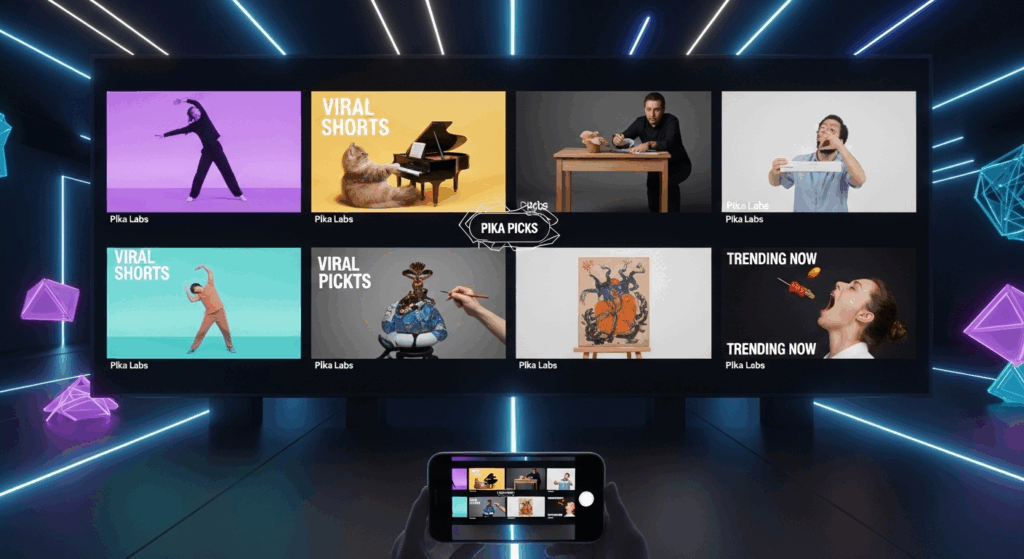
Turn text prompts into viral video content in minutes. AI video generation has evolved from experimental novelty to a practical production tool for YouTube creators and social media managers. With platforms like Pika Labs, you can generate cinematic, short-form content directly from structured text prompts without a traditional camera setup.
But getting started can feel overwhelming. What prompt structure works? How do you control motion consistency? How do you avoid wasting credits? And how do you tailor output for Shorts and Reels?
This guide walks you through a step-by-step beginner-friendly workflow while introducing the technical concepts that actually improve results.
1. From Text Prompt to Cinematic Output with Pika Labs
Understanding Pika’s Generation Model
Pika Labs operates on a diffusion-based video generation pipeline. While the UI abstracts complexity, under the hood you’re interacting with:
– Latent Diffusion Models (LDMs) for frame synthesis
– Temporal consistency layers for motion coherence
– Scheduler strategies (often Euler a or DPM variants) for noise reduction across frames
– Seed-based randomness for reproducibility
Understanding these concepts helps you generate better outputs intentionally instead of by trial and error.
Step 1: Structure High-Performance Prompts
A weak prompt produces generic motion. A structured prompt produces cinematic control.
Use this framework:
[Subject] + [Environment] + [Camera Movement] + [Lighting] + [Style] + [Duration/Aspect Ratio]
Example:
> A futuristic cyberpunk motorcyclist speeding through neon-lit Tokyo streets, low-angle tracking shot, volumetric lighting, cinematic depth of field, 4K, vertical 9:16
Why this works:
– Subject clarity reduces model ambiguity.
– Camera direction guides motion vectors.
– Lighting description improves latent detail contrast.
– Aspect ratio specification helps optimize for Shorts/Reels.
If your video looks static, the issue is often missing motion instructions. Add verbs like:
– “camera slowly pushes in”
– “dynamic handheld movement”
– “dramatic orbit shot”
– “slow motion debris floating”
Motion language influences the model’s temporal interpolation.
Step 2: Control Randomness with Seed Parity
Each generation uses a seed value—a numeric representation of initial noise.
If Pika allows seed control:
– Save seeds from strong outputs.
– Reuse them with slight prompt variations.
– Maintain Seed Parity to preserve composition while altering style.
Example workflow:
1. Generate base clip.
2. Note seed number.
3. Modify lighting only.
4. Re-run with same seed.
This keeps framing consistent while adjusting aesthetics.
For series content (e.g., recurring character), seed reuse is critical for continuity.
Step 3: Managing Temporal Consistency
AI video struggles with:
– Limb morphing
– Background warping
– Flicker artifacts
To reduce instability:
– Avoid overly complex multi-subject scenes at first.
– Keep camera motion singular (one dominant movement).
– Specify “consistent character design” in prompts.
– Use shorter clips (3–5 seconds) and stitch later.
Shorter durations reduce compounding diffusion error across frames.
Step 4: Upscaling and Post Enhancement
Pika outputs are optimized for speed. For viral-ready polish:
– Upscale using Topaz Video AI or similar tools.
– Apply slight motion blur to smooth frame interpolation.
– Add cinematic sound design (this massively increases perceived quality).
Remember: viral performance depends as much on audio and pacing as visuals.
2. Optimizing AI Videos for YouTube Shorts and Instagram Reels
Generating video is step one. Formatting for platform performance is step two.
Vertical Format First (9:16)
Always generate in 9:16 aspect ratio for Youtube Shorts and Reels.
Why?
– Native vertical framing avoids cropping artifacts.
– Subjects stay centered.
– You maximize screen real estate.
If Pika defaults to 16:9, explicitly state:
> vertical format, 9:16 aspect ratio
Duration Strategy
Best-performing AI Shorts typically fall into:
– 5–8 seconds (loop-friendly clips)
– 12–20 seconds (micro storytelling)
Avoid generating one long 30-second clip. Instead:
1. Generate 3–5 short clips.
2. Edit with quick cuts.
3. Add text hooks and pacing shifts.
This reduces diffusion drift and increases viewer retention.
Hook Engineering for AI Videos
The first 2 seconds determine watch-through rate.
Use visual shock elements:
– Sudden camera movement
– Explosion of color or particles
– Extreme close-up
– Fast zoom transitions
Example prompt addition:
> starts with rapid cinematic zoom-in
You’re essentially engineering attention spikes.
Text Overlay and Caption Strategy
AI visuals alone rarely go viral.
Add:
– Large bold captions
– Curiosity-driven text
– Fast subtitle pacing
Example hook text:
> “AI just replaced my video editor…”
Pairing provocative captions with cinematic AI visuals increases engagement dramatically.
Loop Optimization
Looping improves retention.
Create seamless loops by:
– Ending with similar framing as opening.
– Using circular camera movement.
– Generating symmetrical motion sequences.
Prompt example:
> seamless looping animation, camera returns to original position
If the last frame resembles the first, autoplay feels continuous.
3. Maximizing Free Credits and Improving Generation Efficiency
Most creators waste credits experimenting randomly. Here’s how to optimize.
Batch Concept Testing (Low Detail First)
Instead of generating high-detail outputs immediately:
1. Test concept with minimal style modifiers.
2. Keep prompts shorter.
3. Generate 3 variations.
Once composition works, refine with:
– Lighting upgrades
– Style keywords
– Quality modifiers
This reduces credit burn.
Use Iterative Prompt Refinement
Adopt a 3-pass system:
Pass 1 – Composition
Focus on subject and motion.
Pass 2 – Cinematics
Add lighting, lens type, depth of field.
Pass 3 – Texture & Style
Add realism, film grain, 4K, hyper-detailed.
Layering complexity prevents diffusion instability.
Avoid Overloading Prompts
Long prompts can cause model confusion and unpredictable results.
Bad example:
> ultra hyper detailed cinematic masterpiece realistic photorealistic 8k volumetric epic award winning dramatic perfect
This creates competing style weights.
Instead, prioritize clarity over adjective stacking.
Clip Stitching Strategy
Instead of generating a 15-second continuous video:
– Generate 3x 5-second clips.
– Edit externally.
– Add transitions manually.
Advantages:
– Lower temporal artifact risk.
– Better narrative control.
– More efficient credit use.
Reusing Winning Templates
Once a format performs well, template it.
Save:
– Prompt structure
– Seed value
– Duration
– Caption style
– Music pacing
This turns AI video creation from experimentation into systemized production.
A Beginner Workflow Summary (Visual Engine Overview)
Here’s a simplified repeatable workflow for social media managers:
1. Define the hook idea.
Example: “What if animals ruled the world?”
2. Write structured prompt.
Subject + Motion + Lighting + Vertical format.
3. Generate 3 short clips (3–6 sec each).
4. Reuse strong seed for refinements.
5. Export and upscale.
6. Edit vertically with captions + music.
7. Optimize first 2 seconds.
8. Publish and track retention metrics.
Within 60–90 minutes, you can produce content that previously required:
– Actors
– Locations
– Cameras
– Editors
Now it requires structured prompting and smart iteration.
Final Thoughts
AI video creation with Pika Labs isn’t about typing random creative ideas and hoping for magic.
It’s about:
– Controlling latent generation
– Managing temporal coherence
– Using seed-based iteration
– Optimizing vertical format
– Engineering retention
For YouTube creators and social media managers, this isn’t just a creative tool—it’s a production multiplier.
Master prompt structure. Respect the diffusion process. Optimize for platform behavior.
That’s how you turn text into viral video in minutes.
Frequently Asked Questions
Q: How long should AI-generated videos be for YouTube Shorts?
A: The optimal length is typically 5–20 seconds. Shorter clips (5–8 seconds) work best for looping visuals, while 12–20 seconds allows for quick storytelling. Generating multiple short clips and stitching them together improves quality and retention.
Q: What is seed control and why does it matter in Pika Labs?
A: A seed is the numerical starting point for the model’s noise generation. Reusing the same seed (Seed Parity) allows you to maintain consistent composition while modifying lighting or style. This is useful for creating recurring characters or iterative improvements.
Q: Why do AI videos sometimes look unstable or glitchy?
A: Temporal instability occurs when diffusion errors accumulate across frames. This can happen with complex multi-subject scenes or long durations. Shorter clips, simpler motion instructions, and clear prompts reduce artifacts.
Q: How can I make AI videos more likely to go viral?
A: Focus on strong first-frame hooks, vertical 9:16 formatting, bold captions, seamless looping, and high-retention pacing. Pair cinematic visuals with compelling text overlays and trending audio for maximum engagement.