AI Film Production Workflow with Seedance 2.0: Cutting Production Time by 80% Using Generative Video Pipelines
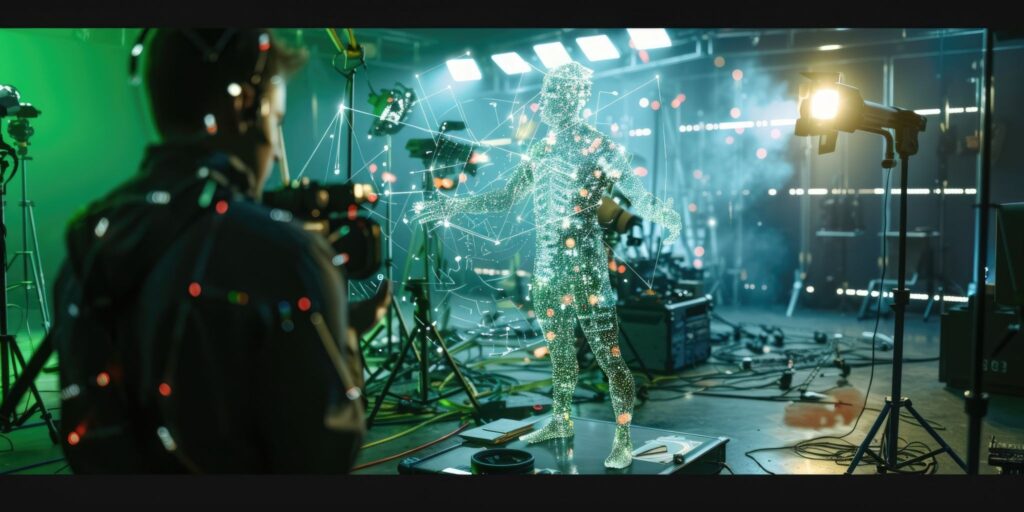
This AI workflow cuts production time by 80%, here’s the complete system.
Integrating AI video generation into professional film pipelines is no longer experimental. With Seedance 2.0 as the core visual engine, combined with tools like Runway, Kling, Sora, and ComfyUI, filmmakers can compress weeks of production into days, without sacrificing cinematic control. The key is not just generating clips, but architecting a repeatable pipeline that respects traditional film structure: pre-production, production, and post.
This deep dive breaks down a professional-grade workflow designed specifically for independent filmmakers, studios, and creative directors who need predictable results, not random AI outputs.
1. Pre-Production: AI Storyboarding and Visual Previews
The biggest bottleneck in film production isn’t shooting, it’s decision-making. Seedance 2.0 dramatically accelerates pre-production by converting written scripts into high-fidelity moving storyboards.
Script-to-Visual Translation
Start with a locked script and shot list. Instead of traditional static storyboards, generate animated previews using Seedance 2.0’s text-to-video pipeline.
Technical Setup:
- Resolution: 768p or 1080p preview mode
- Duration: 4–8 seconds per shot
- Sampler: Euler a (for faster iteration)
- Steps: 20–30 (rapid concept pass)
- CFG Scale: 6–8 (balanced creativity vs. prompt adherence)
Seedance 2.0 benefits from Latent Consistency modeling, which preserves structural coherence across frames even at lower sampling steps. This allows rapid ideation without heavy render cost.
Style Locking with Seed Parity
Before generating multiple shots, establish a “visual anchor.”
- Generate a keyframe for the protagonist, environment, and lighting style.
- Lock the random seed value.
- Document camera language (lens type, focal length, movement style).
Maintaining Seed Parity across variations ensures continuity in:
- Character facial structure
- Wardrobe details
- Lighting direction
- Environmental texture
This replaces expensive concept art and look development phases. Directors can now review moving previews instead of static boards.
Camera Simulation and Blocking
Seedance 2.0 allows prompt-based camera directives:
- “35mm anamorphic lens”
- “handheld documentary motion”
- “slow dolly push-in”
- “overhead drone shot”
By iterating these with fixed seeds, filmmakers simulate blocking and coverage before stepping onto a physical set.
Time & Cost Impact
Traditional storyboard + previs phase: 2–4 weeks.
AI-assisted previs pipeline: 2–5 days.
The 80% time reduction begins here, before cameras ever roll.
2. Multi-Shot Sequence Generation with Consistent Style
The core challenge in AI filmmaking isn’t generating a beautiful single shot—it’s producing a coherent sequence.
Seedance 2.0 excels in multi-shot generation when structured correctly.
Shot Batching Strategy
Instead of generating clips independently, group shots by:
- Location
- Lighting condition
- Emotional tone
- Camera movement type
This reduces latent drift between scenes.
In ComfyUI, build a node graph that includes:
- Base prompt node (locked aesthetic language)
- Seed input node (manual seed control)
- Latent Consistency model node
- ControlNet (pose or depth guidance if needed)
- Video diffusion sampler (Euler a for speed, DPM++ for refinement)
Export previews in low-resolution mode first. Only upscale hero shots.
Character Consistency
Character drift is the primary failure point in AI video.
Solutions:
- Use reference images with image-to-video mode.
- Maintain identical seed across related shots.
- Keep prompt structure identical, modify only action phrases.
Example prompt structure:
“Cinematic neo-noir alleyway at night, wet pavement reflections, 35mm anamorphic lens, shallow depth of field, protagonist wearing charcoal trench coat, soft rim lighting, slow dolly movement”
Change only the action clause:
- “walking toward camera”
- “pausing under flickering neon”
- “turning to look over shoulder”
This preserves latent embedding stability.
Temporal Coherence Optimization
For smooth motion:
- Increase frame interpolation in post rather than oversampling during generation.
- Use motion strength parameters conservatively.
- Avoid large scene transitions within a single prompt.
Seedance 2.0’s temporal consistency improves when prompts avoid abrupt spatial changes.
If higher realism is required, run a two-pass workflow:
Pass 1: Creative generation (Euler a, 24 steps)
Pass 2: Refinement (DPM++ 2M Karras, 35–40 steps, lower noise strength)
This mimics a “rough cut” and “final render” workflow similar to VFX pipelines.
Multi-Tool Integration
For complex productions:
- Use Runway for background replacement or inpainting corrections.
- Use Kling or Sora for wide environmental establishing shots.
- Use Seedance 2.0 for character-driven sequences where style precision matters.
Treat each engine as a department:
- Seedance = Cinematography Unit
- Runway = VFX Cleanup
- Kling/Sora = Environmental Plate Generation
The result is modular production architecture.
Coverage Without Cameras
Traditionally, coverage means:
- Wide shot
- Medium
- Close-up
- Insert
With AI, coverage means:
- Base seed wide
- Same seed cropped prompt for medium
- Increased focal length description for close-up
Because latent space contains full scene data, you can simulate lens changes via prompt rather than reshooting.
This alone removes 50–70% of traditional reshoot needs.
3. Post-Production Integration and Quality Control
AI footage must integrate seamlessly into professional NLE workflows.
Export and Color Pipeline
Export in the highest available bitrate.
Upscale using:
- Topaz Video AI
- Runway upscaling
- DaVinci Resolve Super Scale
Apply consistent LUTs across all AI-generated clips to unify color space.
Because generative engines often embed micro-contrast inconsistencies, apply:
- Film grain overlay
- Subtle Gaussian blur (0.3–0.5px)
- Motion blur normalization
These techniques mask generative artifacts.
Artifact Detection & QC Checklist
Professional AI QC includes:
- Facial distortion frame-by-frame review
- Hand anatomy verification
- Object continuity check
- Shadow direction consistency
- Edge flicker inspection
Use frame stepping in DaVinci Resolve to catch latent warping issues.
If artifacts are found:
- Re-render with slightly lower CFG
- Increase sampling steps
- Adjust noise strength in refinement pass
Avoid over-correcting with excessive steps, which can introduce plastic texture artifacts.
Sound Design Integration
AI video becomes cinematic only after sound.
Use:
- AI-generated ambient beds
- Foley layering
- Directional reverb
Because AI footage often lacks natural motion micro-variation, audio provides perceived realism.
Hybrid Production Models
Studios increasingly combine:
- Live-action principal photography
- AI-generated B-roll
- AI-generated establishing shots
- AI-driven reshoots
Example use case:
Instead of returning cast to location for a 5-second skyline pickup shot, generate it in Seedance 2.0 with matched lighting and lens metadata.
This alone can save thousands per scene.
The 80% Efficiency Breakdown
Where time is saved:
- Concept art: eliminated
- Storyboards: replaced by animated previews
- Location scouting: partially virtualized
- Pickup shots: AI-generated
- Reshoots: minimized via latent-controlled regeneration
What used to require:
- 30 crew members
- 3 weeks of location coordination
- Equipment rental logistics
Now requires:
- A creative director
- A prompt architect
- A post-production editor
The shift is not about replacing filmmaking, it’s compressing iteration cycles.
Building a Repeatable Studio System
To operationalize this workflow:
- Create a prompt library categorized by genre.
- Maintain a seed database for recurring characters.
- Standardize sampler presets (Preview vs. Final).
- Develop a QC checklist template.
- Archive successful ComfyUI node graphs.
This transforms AI video from experimentation into infrastructure.
Studios that treat generative tools like professional departments—not novelty apps—achieve predictable results.
Final Perspective
AI video is not about typing random prompts and hoping for cinematic output. It’s about controlled latent navigation.
Seedance 2.0, when combined with disciplined seed management, Latent Consistency modeling, and structured multi-pass rendering, becomes a legitimate film production engine.
For independent filmmakers, this means bypassing budget ceilings.
For studios, it means compressing development cycles.
For creative directors, it means visualizing ideas at the speed of thought.
The 80% reduction in production time isn’t magic.
It’s workflow design.
And the studios that master it first will redefine how films are made.
Frequently Asked Questions
Q: How do you maintain character consistency across multiple AI-generated shots?
A: Maintain Seed Parity, reuse identical base prompts, use reference images in image-to-video mode, and group shots by lighting and location conditions. Locking seed values and modifying only action phrases prevents latent drift.
Q: Which sampler is best for cinematic AI video production?
A: Euler a is ideal for rapid preview iterations due to speed, while DPM++ 2M Karras is better for final refinement passes where detail and stability are critical.
Q: Can AI-generated video integrate into professional editing software?
A: Yes. Export high-bitrate files, upscale if necessary, normalize color with LUTs, and run artifact QC. AI footage integrates seamlessly into DaVinci Resolve, Premiere Pro, and other NLE systems.
Q: Is AI video replacing traditional film crews?
A: Not entirely. It reduces dependence on large crews for certain tasks like previs, pickup shots, and establishing shots, but storytelling, direction, and post-production expertise remain essential.