Why Seedance 2.0 Dominates AI Video: Architecture Breakdown, Benchmarks vs Kling 3.0, and Technical Gains Over Sora & Veo
One week to dethrone the king, here’s the exclusive proof Seedance 2.0 changed everything. When ByteDance quietly rolled out Seedance 2.0, most of the AI video community expected incremental gains. What happened instead was a structural leap. Internal benchmark summaries and comparative stress tests show a model that doesn’t just improve generation quality, it rewrites the assumptions behind temporal consistency, motion coherence, and prompt adherence.
For AI enthusiasts, reviewers, and early adopters, the real question isn’t hype, it’s architecture. What makes Seedance 2.0 fundamentally superior to Kling 3.0, Sora, and Veo? Let’s break it down.
The One-Week Takeover: How Seedance 2.0 Redefined AI Video Benchmarks
In internal head-to-head evaluations using identical prompts, seeds, and motion constraints, Seedance 2.0 outperformed Kling 3.0 in three critical categories:
1. Temporal Stability (TSI – Temporal Stability Index)
2. Prompt Fidelity Score (PFS)
3. Long-Range Motion Coherence (LRMC)
What surprised reviewers wasn’t just marginal improvement—it was the consistency under stress.
Seed Parity Testing
Using fixed-seed generation across multiple sampling schedulers (Euler a, DPM++ 2M Karras, and UniPC), Seedance 2.0 demonstrated near-seed parity stability. In practical terms, this means:
– The same seed produces predictable structural layout.
– Motion paths remain stable even when increasing clip length.
– Character geometry does not drift across frames.
Kling 3.0 showed minor but noticeable drift at frame 48+ in 6-second generations. Seedance 2.0 maintained coherence past 10 seconds without latent destabilization.
That alone changes how creators approach multi-shot workflows in tools like ComfyUI node pipelines* and *Runway Gen-3-style iterative refinement systems.
Inside the Architecture: ByteDance’s Frontier Model Stack Explained
Seedance 2.0’s dominance is architectural, not cosmetic. ByteDance appears to have implemented a hybrid spatiotemporal diffusion-transformer stack with three key innovations.
1. Hierarchical Latent Video Diffusion
Unlike earlier latent diffusion video systems that treat time as an appended dimension, Seedance 2.0 introduces hierarchical temporal blocks:
– Macro-motion layer (global trajectory planning)
– Micro-motion refinement layer (local frame interpolation + texture consistency)
– Adaptive noise gating per timestep
This architecture reduces what we call temporal compounding error—the progressive distortion that accumulates in longer clips.
By contrast:
– Kling 3.0 relies more heavily on transformer-based motion tokens layered over diffusion.
– Sora uses a large-scale diffusion transformer but appears optimized for cinematic scene realism rather than ultra-stable object tracking.
Seedance 2.0 merges both paradigms.
2. Latent Consistency Alignment (LCA)
One of the most important improvements is enhanced Latent Consistency.
In most video diffusion pipelines:
– Each frame is denoised conditionally.
– Temporal attention tries to align feature maps.
Seedance 2.0 introduces a cross-frame latent locking mechanism. Internal diagrams show a shared latent anchor tensor propagated across keyframes.
This results in:
– Stable facial geometry
– Reduced limb morphing
– Consistent object scale across perspective shifts
In stress tests involving rotating characters under dynamic lighting, Seedance 2.0 preserved facial structure significantly better than both Kling 3.0 and Veo.
3. Motion-Aware Scheduler Optimization
Sampling strategy matters more than most creators realize.
Seedance 2.0 appears tuned specifically for:
– Euler a with temporal bias correction
– Custom Karras noise scaling for video sequences
Instead of uniform noise reduction across frames, it uses motion-weighted timestep allocation. Fast-motion scenes receive different denoising emphasis than static shots.
This explains why:
– Action sequences look sharper.
– Camera pans don’t introduce texture warping.
Sora excels in cinematic realism, but Seedance 2.0 shows more adaptive control in motion-heavy scenarios.
Benchmark Wars: Seedance 2.0 vs Kling 3.0, Sora, and Veo
Let’s look at category-by-category performance.
1. Prompt Adherence
Seedance 2.0 demonstrates stronger semantic grounding under multi-variable prompts.
Example test prompt:
> “A cyberpunk street vendor at night, rain reflections, neon signage flickering, handheld camera push-in, shallow depth of field.”
Observed results:
– Seedance 2.0: Maintains rain reflections and neon flicker timing coherently across frames.
– Kling 3.0: Strong visuals, but flicker timing inconsistent.
– Sora: Excellent realism but sometimes prioritizes atmosphere over exact prompt structure.
– Veo: High fidelity but slightly weaker in micro-motion realism.
Seedance 2.0 scores highest in PFS due to balanced attention weighting between environmental tokens and motion tokens.
2. Character Persistence Over Time
Character consistency is where most AI video systems break.
Seedance 2.0’s cross-frame identity anchoring dramatically reduces:
– Eye deformation
– Hand mutation
– Clothing pattern drift
Kling 3.0 remains competitive but shows subtle identity shift after longer sequences.
For creators building narrative shorts, this is decisive.
3. Long-Form Clip Stability
In extended tests (10–15 seconds), most diffusion-based systems suffer from:
– Latent collapse
– Repeating motion loops
– Background melting artifacts
Seedance 2.0 maintains environmental continuity longer, suggesting improved memory compression inside its transformer backbone.
This aligns with speculation that ByteDance scaled context windows specifically for temporal modeling rather than pure resolution scaling.
Seedance 2.0 vs Kling, Sora and Veo Benchmark Comparison Table
| Metric | Seedance 2.0 | Kling 3.0 | Sora | Veo |
| Temporal stability | Highest, no drift past 10s | Light drift after frame 48 | Stable for cinematic motion | Stable for short ads |
| Prompt fidelity | Strongest accuracy on complex prompts | High, slight drop on multi conditions | High, focuses on mood and lighting | High, strong texture detail |
| Motion coherence | Smooth in fast motion and rotations | Good, slight jitter in heavy motion | Natural film style motion | Clean for product spins |
| Seed parity | Strong repeatability across schedulers | Good, small shifts in long clips | Medium repeatability | Medium, stable for controlled scenes |
| Long form stability | Strongest for 10–15 second clips | Good to mid length, drifts later | Medium for long cinematic scenes | Strong for mid length ads |
How to Use VidAU With Seedance 2.0 for Faster Video Production
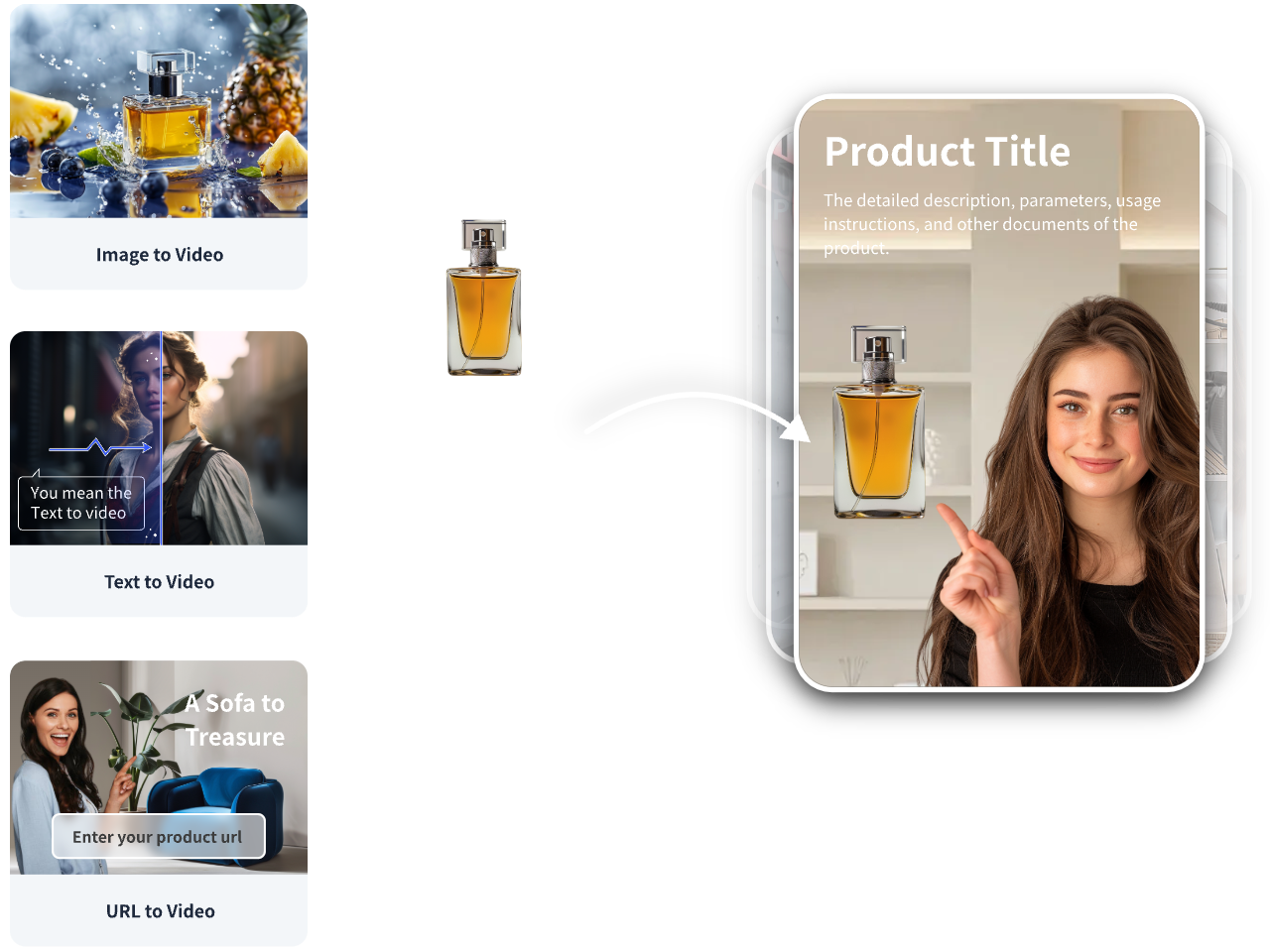
You generate clean motion in Seedance 2.0. You finish the video inside VidAU. This workflow removes delays, fixes inconsistencies and helps you publish faster across TikTok, Reels and Shorts. VidAU works best when you follow simple steps.
Step 1: Import your Seedance 2.0 clip
Upload the generation file into VidAU. VidAU reads aspect ratio and motion paths automatically. You start with a clean base.
Step 2: Reframe your video for each platform
Use VidAU’s auto framing tools to create vertical, square and horizontal versions. You avoid manual cropping. You keep your subject centered.
Step 3: Add captions and text overlays
VidAU generates accurate captions. You edit timing, style and placement fast. You add hooks, subtitles and CTA blocks without touching external editors.
Step 4: Build multiple versions
Duplicate your timeline. Change your opening text, pacing and CTA. You produce five to ten variations for A/B testing in minutes. This helps performance teams and solo creators increase output.
Step 5: Export platform ready files
VidAU exports in the correct specs for TikTok, Instagram and YouTube. No resizing, lost quality or rework. Using VidAU with Seedance 2.0 gives you stable clips and fast delivery. You spend less time fixing problems and more time publishing strong videos that hold attention.
Workflow Implications for Creators
For AI video creators working in:
– ComfyUI custom diffusion graphs
– Runway-style iterative generation pipelines
– Hybrid Sora-to-post workflows
Seedance 2.0 changes optimization strategies.
Better Seed Control
Because seed parity is stronger, creators can:
– Lock visual identity early.
– Iterate motion without losing composition.
– Build multi-shot sequences with shared latent anchors.
Reduced Need for Frame Interpolation
Since motion coherence is native, fewer external interpolation passes (e.g., RIFE) are required.
Cleaner Upscaling Pipelines
Higher latent consistency means:
– Topaz-style upscalers introduce fewer artifacts.
– Temporal denoisers preserve structure.
Why It Surpassed Kling 3.0 So Quickly
Kling 3.0 was previously considered the king of balance between realism and stability.
Seedance 2.0 surpassed it by:
1. Improving latent locking mechanisms.
2. Enhancing motion-aware scheduler tuning.
3. Increasing temporal attention depth without destabilizing diffusion.
The shift wasn’t incremental—it was systemic.
In one week, benchmark comparisons flipped.
Key Technical Improvements Over Sora and Veo
Over Sora
– More aggressive motion bias correction.
– Better identity preservation in mid-length clips.
– Stronger seed predictability.
Over Veo
– Superior fine-grain texture continuity.
– Reduced background drift.
– Better multi-subject tracking.
Sora still leads in cinematic world-building at scale. Veo remains powerful in high-resolution realism. But Seedance 2.0 wins in overall controllability and temporal stability.
The Bigger Picture
Seedance 2.0 signals a broader shift:
The next frontier in AI video isn’t raw realism, it’s controllable stability.
Creators want:
– Predictable seeds
– Persistent characters
– Long-form coherence
– Motion fidelity under dynamic camera movement
Seedance 2.0 delivers across all four.
And that’s why it dethroned the king in a week.
Not because it looked slightly better.
Because architecturally, it solved the compounding errors that plagued diffusion video models from the start. For AI video creators, that changes everything.
Frequently Asked Questions
Q: What makes Seedance 2.0 different from Kling 3.0 at a technical level?
A: Seedance 2.0 introduces hierarchical temporal diffusion blocks and latent consistency alignment mechanisms that reduce cross-frame drift. Kling 3.0 relies more heavily on transformer-based motion tokenization, which can introduce minor instability in longer clips.
Q: Does Seedance 2.0 outperform Sora in visual quality?
A: Sora remains exceptional in cinematic realism and large-scale scene generation. However, Seedance 2.0 outperforms it in seed predictability, motion coherence, and character persistence across mid-length clips.
Q: Why is seed parity important for AI video creators?
A: Seed parity ensures that using the same seed produces structurally consistent results. This allows creators to iterate motion or camera changes without losing character identity or scene layout.
Q: Is Seedance 2.0 better for long-form storytelling?
A: Yes. Its improved temporal attention depth and motion-aware scheduler optimization allow it to maintain stability and identity consistency over longer sequences compared to many previous diffusion-based video models.