Sora AI Breaking Its Own Rules: Understanding Unexpected Outputs and Generation Drift in AI Video Models
Sora 2 AI just started ignoring its own programming and the results are wild. Users are reporting characters morphing mid-scene, physics breaking down entirely, and temporal consistency collapsing in ways that shouldn’t be possible given the model’s training parameters.
Real Examples of Sora 2’s Unexpected Behavior Patterns
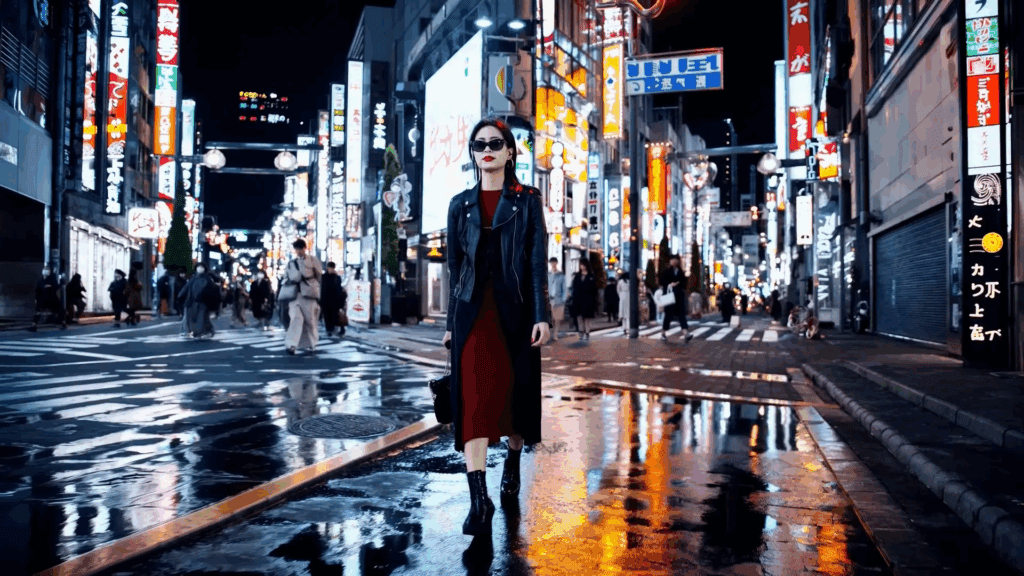
The deviation patterns emerging from Sora 2 reveal fundamental challenges in diffusion-based video generation. In one documented case, a prompt for “a woman walking through a park” produced 3.2 seconds of expected output before the subject’s limbs began multiplying—a phenomenon called morphological drift in latent space.
Another creator requested “consistent camera pan left to right” and received output where the camera direction reversed at frame 87, despite no conflicting instructions. This represents temporal coherence breakdown, where the model’s attention mechanism loses context awareness beyond its effective window.
The most striking example involves prompt adherence failure: users specifying “daytime, bright sunlight” are getting outputs that gradually shift to dusk lighting by the 4-second mark. This lighting drift occurs because Sora’s diffusion process doesn’t maintain strict semantic anchoring across the entire generation sequence—it samples from probability distributions that can wander from initial conditions.
The Technical Reality Behind AI Model Deviation
Understanding why Sora breaks its own rules requires examining the diffusion transformer architecture it employs. Unlike traditional GANs, diffusion models work by gradually denoising random noise through iterative steps guided by learned patterns.
The core issue lies in latent space interpolation*. When Sora generates longer sequences, it must interpolate between learned representations. These interpolations aren’t deterministic—they’re probabilistic selections from distribution curves. Each sampling step introduces micro-deviations that compound over time, creating what researchers call *generation drift.
Seed parity inconsistency amplifies this problem. Even with identical prompts and seeds, Sora’s parallel processing architecture can produce different outputs because the denoising schedule isn’t perfectly deterministic across distributed GPU operations. Small floating-point calculation differences create butterfly effects in the latent representation.
The model’s attention mechanism degradation also plays a critical role. Sora uses spatiotemporal attention to maintain consistency, but this attention has an effective window. Beyond approximately 120 frames (at 24fps, about 5 seconds), the model’s ability to reference earlier frames weakens, allowing drift from initial prompt conditions.
Classifier-free guidance strength settings expose another vulnerability. Higher CFG values (typically 7-15) force stronger prompt adherence but can create instability in edge cases. When the model encounters ambiguous latent states, high CFG can cause oscillation between competing interpretations, manifesting as the sudden rule-breaking users observe.
Controlling AI Generation Drift Through Advanced Prompting
Mastering Sora‘s unpredictability requires strategic prompt engineering and parameter manipulation. Here’s how to regain control:
Temporal Anchoring Technique: Structure prompts with frame-specific instructions: “Throughout entire duration: woman in red dress. Consistent lighting: bright noon sunlight.” This redundancy forces the model to weigh these conditions more heavily across the attention span.
Negative Prompting for Stability: While Sora doesn’t officially expose negative prompts, embedding constraints works: “A cat walking, never morphing, maintaining four legs, single tail, consistent form.” This defensive prompting reduces morphological drift by explicitly constraining the probability space.
Seed Lock and Generation Batching: Generate multiple outputs with the same seed and low temperature settings (if accessible through API). Select the most stable baseline, then use img2img or video-to-video refinement passes to reinforce consistency. This multi-pass approach compounds stability.
Shorter Sequence Chaining: Combat temporal coherence breakdown by generating 3-second clips rather than 10-second sequences. The drift exponentially increases with duration—shorter generations maintain prompt fidelity. Use external editing tools to chain stable segments rather than relying on single long generations.
CFG Sweet Spot Calibration: For Sora-like models, CFG values between 8-11 typically balance prompt adherence with stable generation. Below 7, prompt following weakens. Above 12, you risk the oscillation instability that causes sudden rule-breaking.
Semantic Specificity Over Artistic Language: Replace “beautiful sunset” with “orange sun at 15 degrees above horizon, warm color temperature 3500K.” Technical precision reduces the model’s interpretive freedom, narrowing the probability distribution it samples from.
Latent Space Priming: When using APIs or interfaces that allow it, initialize generations from similar reference content. Starting from a related latent representation rather than pure noise reduces the distance the diffusion process must travel, minimizing drift opportunity.
The reality is that Sora’s “rule-breaking” isn’t defiance—it’s the natural behavior of probabilistic systems operating at the edge of their coherence capabilities. By understanding the technical mechanisms behind generation drift, you transform unpredictability from a bug into a controllable variable. The key is working with the model’s architecture rather than against it, using prompt engineering to narrow probability spaces and parameter tuning to stabilize the diffusion process.
Frequently Asked Questions
Q: Why does Sora AI generate outputs that don’t match my prompt exactly?
A: Sora uses a diffusion-based architecture that generates video by sampling from probability distributions rather than following deterministic rules. Each frame involves probabilistic choices that can drift from your original prompt, especially in longer sequences where temporal coherence weakens beyond the model’s effective attention window of approximately 120 frames.
Q: What is generation drift and how can I prevent it?
A: Generation drift occurs when AI video models gradually deviate from initial prompt conditions over time due to compounding micro-deviations in latent space sampling. Prevent it by using shorter sequence generations (3 seconds instead of 10), temporal anchoring in prompts (explicitly stating ‘throughout entire duration’), and CFG values between 8-11 for optimal stability.
Q: Can I get consistent results from Sora with the same prompt and seed?
A: Not always. Seed parity inconsistency means that even identical prompts and seeds can produce different outputs due to non-deterministic floating-point calculations across distributed GPU operations. For better consistency, generate multiple outputs with the same seed, select the most stable one, and use refinement passes to reinforce that baseline.
Q: What are the best CFG settings to prevent unexpected AI behavior?
A: For Sora and similar diffusion models, CFG (Classifier-Free Guidance) values between 8-11 provide the best balance. Below 7, prompt adherence weakens significantly. Above 12, you risk oscillation instability where the model rapidly switches between competing interpretations, causing the sudden rule-breaking behavior users report.