Viggle AI for Beginners: Complete Getting Started Guide to Your First AI Animation
Never used Viggle AI? This 10-minute guide gets you animating today.
If you’ve just opened Viggle and felt overwhelmed by buttons, upload panels, motion templates, and export settings you’re not alone. Viggle AI simplifies character animation, but for complete beginners, the interface can feel like stepping into a professional animation suite.
This guide walks you through only what matters: how to set up your account, understand the platform layout, create your first animation, and avoid common beginner mistakes. No prior AI animation experience required.
1. Setting Up Your Viggle Account and Understanding the Interface
Step 1: Create and Verify Your Account
Go to Viggle AI official website or Discord-based interface (depending on the current access model). Sign up using:
– Google account
– Discord account
– Email (if supported)
Once inside, you’ll land in the main workspace where animations are generated and managed.
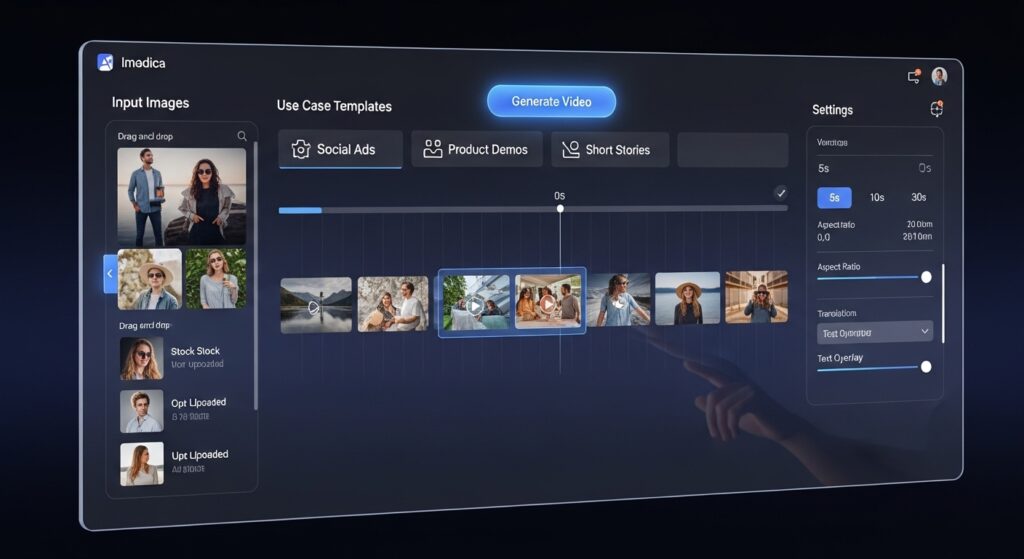
Step 2: Understand the Core Interface Zones
Although Viggle keeps things simplified, the platform still revolves around key generative AI concepts.
You’ll typically see:
1. Input Panel – Where you upload your character image.
2. Motion Template Selector – Pre-built animation references.
3. Preview Window – Displays render output.
4. Render/Generate Button – Starts the animation pipeline.
5. History or Output Gallery – Stores completed renders.
Think of Viggle as a motion-transfer system powered by pose estimation and diffusion-based character consistency. Under the hood, it uses AI models similar in principle to latent diffusion systems, where motion and identity are separated and recombined.
What Viggle AI Is Actually Doing (Simplified)
When you animate a character:
– The platform extracts pose data from a motion template.
– It maps that pose sequence onto your uploaded image.
– A generative model maintains identity consistency across frames.
This is conceptually related to:
– Latent Consistency modeling (keeping the character stable across frames)
– Pose-guided diffusion (driving motion via skeletal reference)
– Temporal coherence systems (reducing flicker)
You don’t need to adjust schedulers like Euler a or DPM++—Viggle abstracts those complexities, but understanding that these processes exist helps you troubleshoot better.
2. Creating Your First Animation with Images and Motion Templates
Let’s create your first animation step by step.
Step 1: Choose the Right Image
Your input image determines animation quality more than anything else.
Best Practices for Image Selection:
– Full-body visible
– Clear separation from background
– Neutral pose (T-pose or standing straight works well)
– High resolution (at least 1024px height recommended)
– No cropped limbs
Avoid:
– Extreme perspective angles
– Heavy motion blur
– Overlapping objects blocking arms or legs
Why this matters:
Viggle’s pose transfer system relies on visible limb segmentation. If the AI cannot infer joint structure, animation artifacts occur (e.g., melting arms, twisted legs).
Step 2: Upload Your Image
Use the upload panel to insert your character image.
Once uploaded, the system prepares it for motion transfer. Internally, this may involve:
– Background separation
– Skeleton inference
– Feature embedding for identity locking
This embedding acts similarly to a “seed” in diffusion models, ensuring identity consistency across frames.
Step 3: Choose a Motion Template
Now select a motion template. These are pre-recorded or pre-generated movement sequences such as:
– Walking
– Dancing
– Jumping
– Cinematic turns
Each template contains pose data over time. Think of it as a motion blueprint.
For beginners, choose:
– Slow, controlled motion
– Minimal spinning
– Frontal-facing movement
Fast spins increase temporal complexity and can introduce frame instability.
Step 4: Adjust Basic Settings (If Available)
Depending on the current Viggle AI interface version, you may see options like:
– Background mode
– Output resolution
– Clip duration
– Character scaling
If resolution options exist, start with:
– 720p for faster renders
– 1080p once comfortable
Higher resolution increases render time and computational load.
Step 5: Generate Your Animation
Click Generate* or *Animate.
Behind the scenes:
1. Motion data is parsed frame-by-frame.
2. The AI aligns pose keypoints to your character.
3. A diffusion-like generative process redraws the character per frame.
4. Temporal smoothing reduces flicker.
Render time depends on:
– Server load
– Clip length
– Resolution
Most beginner animations complete within minutes.
Step 6: Review the Output
Watch your animation carefully.
Look for:
– Limb distortion
– Face warping
– Background jitter
– Identity drift (character slowly changing)
If the character looks stable, congratulations—you’ve completed your first AI animation.
3. Beginner Mistakes, Technical Pitfalls, and How to Fix Them
Most problems beginners face are not “AI failures”, they’re input mismatches.
Let’s fix them.
Mistake 1: Using a Cropped or Half-Body Image
Problem:
The AI cannot infer missing limbs, leading to warped outputs.
Fix:
Always use a full-body image. If needed, expand your image using an outpacing tool before uploading.
Mistake 2: Extreme Poses in the Original Image
If your character starts in a dramatic leaning pose, but the motion template assumes upright posture, alignment errors occur.
This is called pose misalignment drift.
Fix:
Start with neutral stance images.
Mistake 3: Busy Backgrounds
Complex backgrounds confuse segmentation.
Even if Viggle AI handles background automatically, high-frequency textures can cause flicker.
Fix:
– Use plain backgrounds
– Or remove background beforehand
Mistake 4: Fast, Complex Motion Too Early
Spins and acrobatics require high temporal consistency.
When motion accelerates, the generative system must redraw more extreme pose changes frame-to-frame, increasing:
– Identity instability
– Limb morphing
– Edge artifacts
Fix:
Start simple. Master slow walk cycles before dance battles.
Mistake 5: Ignoring Frame Consistency
Some beginners regenerate repeatedly hoping for a “perfect” result.
Unlike seed-controlled diffusion tools (like ComfyUI or Stable Diffusion), Viggle may not expose seed parity controls.
That means:
– Each generation can slightly differ
– Identity may shift subtly
If consistency matters for production:
– Keep the same source image
– Avoid resizing between renders
– Don’t heavily compress images before upload
Performance Optimization for Beginners
Even without advanced controls like Euler schedulers or CFG scales, you can optimize outputs by controlling inputs.
Use High-Contrast Characters
Clear edge definition improves pose mapping.
Keep Limbs Separated
Arms glued to torso reduce joint clarity.
Avoid Motion Blur in Source Image
The AI interprets blur as texture noise.
From Beginner to Confident Creator
Once you’ve mastered the basics:
– Experiment with different motion styles.
– Test stylized characters (anime, 3D renders, realistic portraits).
– Try cinematic motion templates.
As you progress, you’ll start thinking like an AI animator:
– Is my pose aligned?
– Is my character readable?
– Will this motion stress the model?
That’s when Viggle stops feeling overwhelming—and starts feeling powerful.
Final Checklist Before Every Render
Before you click Generate, ask:
– Is the character full-body?
– Is the pose neutral?
– Clean background?
– Is the motion template appropriate for this character?
– Am I starting with a manageable resolution?
If yes- you’re ready.
In less than 10 minutes, you’ve gone from complete beginner to producing your first AI-powered animation.
And the best part?
You don’t need to understand diffusion math, latent embeddings, or scheduler tuning to get started.
You just need the right image, the right motion template, and a clean workflow.
That’s Viggle.
Now go animate.
Frequently Asked Questions
Q: Do I need any prior animation or AI experience to use Viggle?
A: No. Viggle abstracts complex processes like pose estimation, latent diffusion, and temporal smoothing into a simple interface. Beginners can start by uploading a full-body image and selecting a motion template without understanding the technical backend.
Q: Why does my character’s body look distorted during animation?
A: Distortion usually happens due to poor pose visibility in the original image, cropped limbs, or complex motion templates. Use a clear full-body image with separated limbs and start with slower motion templates.
Q: Can I control seeds or advanced render settings in Viggle?
A: Unlike tools such as ComfyUI or Stable Diffusion interfaces, Viggle typically does not expose seed or scheduler controls. Consistency is best achieved by keeping the same source image, resolution, and motion template.
Q: What resolution should beginners use?
A: Start with 720p for faster renders and testing. Move to 1080p once you’re confident in your workflow and image quality.
Q: Why does my animation flicker slightly?
A: Minor flicker can occur due to temporal inconsistencies in generative frame synthesis. Using clean backgrounds, clear character edges, and moderate motion speeds reduces this effect.