AI Agents Examples · Revenue Use Cases, Stacks, KPIs & Guardrails
AI Agents Examples: Real-World Use Cases That Make Money
Discover practical AI agents examples and agentic AI use cases with real stacks, costs, KPIs, and risks for marketing, sales, support, dev, finance, and more.
By the VidAU Editorial Team · AI agents examples guide · RAG, ReAct, workflow DAGs, human-in-the-loop approvals, sales agents, content agents, dev agents, finance agents, and VidAU creative workflows
Looking for ai agents examples that actually drive revenue? This field guide spotlights real builds across marketing, sales, support, dev, and finance, plus generative ai agents examples and agentic ai use cases examples you can deploy fast. For content agents, VidAU is an AI video ad platform that generates video ads from product URLs, images, or scripts in 49 languages.
Most ai agents examples waste time because they lack a clear stack, KPI, and guardrails. This field guide fixes that with short, monetization-ready briefs you can ship in days. For content workflows, VidAU is an AI video ad platform that generates video ads from product URLs, images, or scripts in 49 languages.
Quick Summary
- Lead scraping plus AI sales call scoring is the fastest revenue agent for 2026-style funnels when paired with human approval on high-intent leads.
- Client deliverables automation and content revenue agents are strong alternates; for video creatives, pair script and RAG with VidAU AI Video and Text to Video.
- Every agent should use RAG for your data, ReAct for tool use, human-in-the-loop approvals for risky steps, and KPIs tied to revenue or labor saved.
- US founders, marketers, ops leaders, and indie builders benefit most when starting with one agent that replaces a repeatable task already producing value.
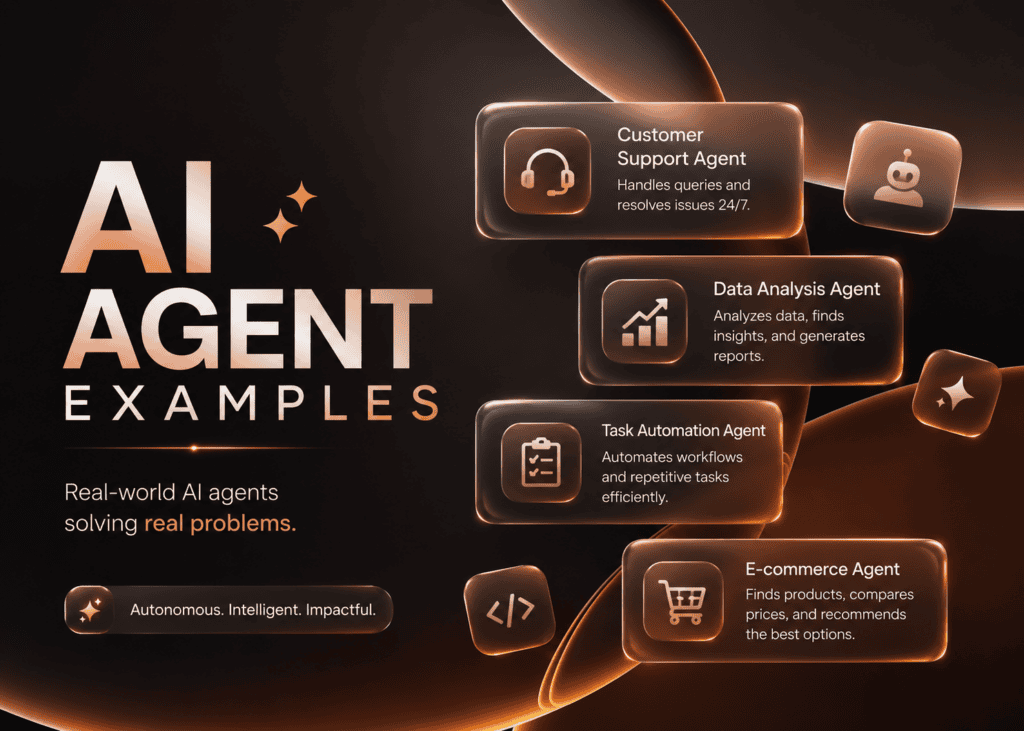
What Is an AI Agent?
An AI agent is a goal-directed system that can reason, plan, and act using tools, often with RAG, ReAct, and workflow DAGs to complete tasks with minimal supervision. In practice, that means LLM-driven steps, tool calls for search or APIs, and human-in-the-loop checkpoints for sensitive actions. Multi-agent systems split roles and pass results to increase reliability.
Definition
An AI agent is a goal-directed system that can reason, plan, and act using tools, with RAG for data access, ReAct for tool use, workflow DAGs for orchestration, and human-in-the-loop checkpoints for sensitive actions.
Who Is This Guide For?
This guide is for US-based founders, marketers, ops leaders, product managers, and indie builders who want practical, monetizable deployments in days, not months. If you need generative ai agents examples and agentic ai use cases examples with clear stacks, costs, KPIs, and guardrails, start here.
Best fit
This guide is strongest for founders, marketers, ops leaders, product managers, and indie builders who want practical AI agents examples with clear stacks, setup time, run costs, KPIs, and guardrails.
Which ai agents examples make money fastest?
Below are mini-briefs using a consistent template: what it does, inputs/tools, setup time, run cost, KPIs, and guardrails.
1) Virtual assistant replacement (email, calendar, research)
- What it does: Triage inbox, draft replies, schedule, summarize research.
- Inputs/Tools: Email + calendar APIs, LLM with ReAct, simple memory store.
- Setup time: 1–3 days.
- Run cost: Token usage plus API calls.
- KPIs: Emails triaged per day, reply time saved, error rate.
- Guardrails: No-sending without human approval on external comms.
2) Content revenue agent (short-form and ad variants)
- What it does: Turns briefs, URLs, or product data into scripts and video assets.
- Inputs/Tools: RAG on brand voice and product docs; script to Text to Video; ad-ready exports via VidAU AI Video or URL to Video.
- Setup time: 1–2 days.
- Run cost: LLM tokens plus video exports.
- KPIs: CTR, cost per lead, watch-through rate, creator revenue.
- Guardrails: Legal claims review; brand voice checks.
3) Lead generation via scraping + enrichment
- What it does: Scrapes target lists, enriches with signals, drafts outreach.
- Inputs/Tools: Scraper, enrichment API, LLM for personalization.
- Setup time: 1–3 days.
- Run cost: Scrape/enrichment fees plus tokens.
- KPIs: Verified leads/day, reply rate, booked calls.
- Guardrails: Respect robots.txt; comply with CAN-SPAM.
4) AI sales call scoring
- What it does: Transcribes calls, scores qualification, tags objections.
- Inputs/Tools: Speech-to-text, LLM rubric, CRM API.
- Setup time: 1–2 days.
- Run cost: Transcription minutes plus tokens.
- KPIs: Time-to-follow-up, qualified-opps created, win rate lift.
- Guardrails: PII handling; human review on disqualification.
5) Client deliverables automation
- What it does: Auto-generate reports, briefs, thumbnails, or UGC-style videos.
- Inputs/Tools: RAG on client docs; templating; UGC Avatars, Text to Speech, Vid Remix.
- Setup time: 2–4 days.
- Run cost: Tokens plus creative renders.
- KPIs: Turnaround time, revision rounds, client retention.
- Guardrails: Human QA before delivery; brand assets only.
6) Dev agent for web/app tasks
- What it does: Drafts components, runs tests, opens PRs.
- Inputs/Tools: Codebase read access, ReAct, CI hooks.
- Setup time: 2–5 days.
- Run cost: Tokens on diffs/tests.
- KPIs: Issues resolved/week, PR cycle time, escaped defects.
- Guardrails: Read-only until review; protected branches.
7) Finance back office (invoice processing, expense auditing)
- What it does: Extracts invoice data, flags anomalies, routes approvals.
- Inputs/Tools: OCR, rules + LLM, accounting API.
- Setup time: 2–4 days.
- Run cost: OCR pages plus tokens.
- KPIs: Hours saved, exception rate, recovery amount.
- Guardrails: PII redaction; dual-approval on payouts.
Cautious add-on: Trading bots for prediction markets
Limit positions, require manual confirm, and sandbox first. In a recent creator build, small bots reportedly netted a few hundred dollars per month; treat this as experimental and high-risk.
Also relevant operations boosters: Customer support chatbot over a knowledge base (agentic RAG), IoT in agriculture monitoring, disaster response coordination with multi-agent systems, and healthcare triage workflows where compliance is strict.
Risk note
Treat trading bots, finance agents, healthcare triage, and any workflow involving PII, PHI, payouts, or irreversible actions as high-risk. Use strict caps, sandboxes, dual approvals, and compliance review before live deployment.
How do I deploy one agent step by step?
Step 1: Choose a single high-ROI task already producing value
Choose a single high-ROI task already producing value.
Step 2: Write a rubric
Write a rubric: inputs, tool calls, decision rules, and stop conditions.
Step 3: Add data access with RAG
Add data access with RAG so answers cite your sources.
Step 4: Implement ReAct
Implement ReAct for tool use and planning.
Step 5: Orchestrate steps as a workflow DAG
Orchestrate steps as a workflow DAG with retries and logs.
Step 6: Add human-in-the-loop approvals
Add human-in-the-loop approvals for risky actions.
Step 7: Ship a pilot and iterate
Ship a pilot, measure KPIs weekly, and iterate.
Key Takeaways
- Start narrow with one measurable task.
- Pair RAG for accuracy with ReAct for tool use.
- Always log, review, and improve the rubric.
How do marketing content agents generate revenue?
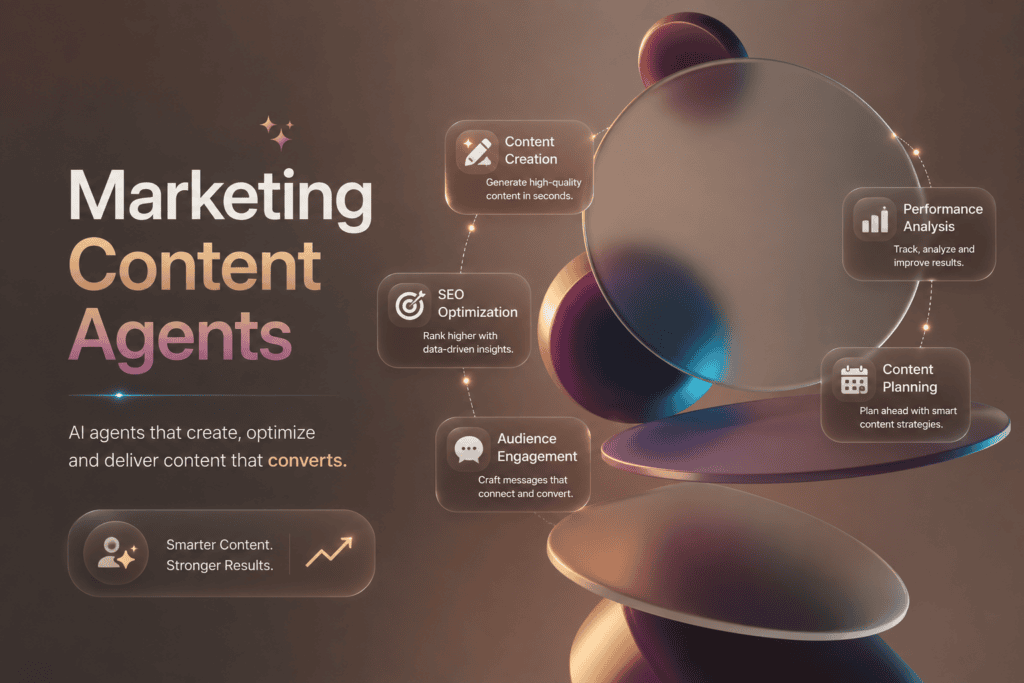
In brief: they turn briefs and product data into persuasive creatives that convert. Use RAG for brand voice, generate scripts, then produce ad-ready variants.
Practical stack
- Research: RAG on product FAQ, reviews, and competitor angles.
- Scripting: LLM with persona and offer constraints.
- Video: VidAU AI Video or Text to Video for fast ad outputs; pull site assets via URL to Video.
- Localization: Text to Speech for voice, plus Vid Remix for repurposing.
- Polish: Video Enhancer when quality needs a lift.
Mini-brief
- Setup time: 1–2 days.
- Run cost: tokens plus renders.
- KPIs: CTR, CPA, AOV lift.
- Guardrails: legal and brand approval.
Mid-article CTA: If your agent’s output is video-first, spin scripts into ad-ready creatives with VidAU AI Video or turn any product page into a draft video using URL to Video.
Generate AI Agent Demos and Video Creatives With VidAU
Use VidAU AI Video, Text to Video, URL to Video, Text to Speech, UGC Avatars, Vid Remix, and Video Enhancer to turn agent-generated scripts, product data, client briefs, and approved ideas into ad-ready video assets.
VidAU workflow
Where VidAU Fits in AI Agent Revenue Workflows
- Use RAG to collect product and brand context: Feed the agent product FAQs, reviews, competitor angles, client briefs, and brand voice rules.
- Use an LLM to generate scripts and variants: Create short-form ad scripts, UGC-style concepts, campaign angles, and localized hooks.
- Use VidAU AI Video and Text to Video for fast outputs: Convert scripts into video creatives without waiting for new production resources.
- Use URL to Video for product-page-based drafts: Pull site assets and product information into draft videos for campaigns or client deliverables.
- Use Text to Speech, UGC Avatars, Vid Remix, and Video Enhancer for scale: Add voice, spokesperson formats, repurposed cuts, and final polish before human QA and launch.
How do sales lead scraping and call scoring agents work?
They discover prospects, enrich with buying signals, and highlight qualified calls so reps focus on intent-rich leads.
Mini-brief combo
- Inputs/Tools: Scraper + enrichment API, LLM for personalization, transcription, rubric-based scoring, CRM sync.
- Setup time: 2–4 days.
- Run cost: scrape minutes, enrichment, transcription, tokens.
- KPIs: Qualified leads/week, reply rate, meetings booked, pipeline value.
- Guardrails: Consent and compliance; human review on disqualification.
Sales agent tip
Pair scraping and enrichment with call scoring so reps spend time on qualified intent. Keep human review on disqualification, outreach sends, and any sensitive account action.
How to evaluate ai agents examples with KPIs and ROI
Evaluate by revenue created or labor hours saved, not model scores.
Simple ROI formula
ROI = (Revenue created or cost saved − agent build and run cost) ÷ agent cost.
Recommended scorecard
- Adoption: tasks run per week.
- Quality: human-approval pass rate.
- Speed: cycle time vs baseline.
- Financials: CPA/lead, time saved, net contribution.
| Function | Minimal Stack | Primary KPI |
|---|---|---|
| Content ads | RAG + Text to Video | CPA or CTR |
| Lead gen | Scrape + Enrich + LLM | Meetings booked |
| Call scoring | STT + LLM rubric | Opps created |
| Dev agent | Code read + CI | PR cycle time |
| Invoices | OCR + Rules + LLM | Hours saved |
CTA: Generate with VidAU
ROI tip
Measure revenue created or labor hours saved, not model scores. Track adoption, human-approval pass rate, cycle time, CPA or lead contribution, time saved, and net contribution from the start.
What common mistakes should I avoid with agentic AI?
The biggest mistakes are launching without guardrails, skipping RAG, and measuring the wrong thing. Add these fixes:
- Always require human-in-the-loop for spending, publishing, or outreach at first.
- Use RAG so answers cite internal sources; log every decision.
- Keep scope tight; one agent per outcome.
- Treat trading and finance automations as high risk with strict caps.
- For PHI/PII, redact or tokenize; enforce role-based access.
Mistake to avoid
Do not launch an agent without RAG, logs, human approvals, and one measurable outcome. Agentic AI works best when scope is tight, decisions are reviewable, and KPIs tie directly to money saved or earned.
Key takeaway
Final Thoughts
Start with one agent that replaces a repeatable, valuable task, wire RAG and ReAct, add human approvals, and track a financial KPI from day one. If your first win is content-led, pair scripts and product data with VidAU AI Video, Text to Video, and URL to Video to move fast without new hires.
FAQ
Here are answers to common questions about profitable ai agents examples, generative ai agents examples, agentic AI, run costs, ROI, content revenue agent stacks, sales and finance guardrails, whether agents can replace developers or support teams, and how long it takes to deploy a working agent.
What are the most profitable ai agents examples to launch first?
Lead scraping plus enrichment, AI sales call scoring, and client deliverables automation typically produce fast, measurable returns. Start where you already have demand, add RAG for accuracy, require human approvals initially, and track a financial KPI like meetings booked, CPA, or hours saved.
What is the difference between generative ai agents examples and agentic AI?
Generative AI creates content like text, images, or code. AI agents use that generation with tool use and steps. Agentic AI adds planning, multi-step reasoning, and autonomous decision-making. In practice, you will combine RAG, ReAct, and workflow DAGs with human-in-the-loop for sensitive actions.
How much does it cost to run an AI agent?
Run cost depends on API calls, token usage, and any third-party tools. Many workloads cost cents to a few dollars per execution at small scale, but orchestration, retries, and enrichment can add up. Track cost per task and contribution margin to ensure positive unit economics.
How do I calculate ROI for an AI agent?
Use a simple formula: ROI = (Revenue created or labor cost saved − total agent cost) ÷ total agent cost. Attribute results to the agent by comparing a pre-agent baseline, control groups, or by measuring throughput increases without headcount growth.
Which stacks do you recommend for content revenue agents?
Use RAG over brand voice and product docs, script with an LLM, and produce creatives with video tooling. For video, combine scripts with VidAU AI Video (https://www.vidau.ai/vidau-ai-video/), Text to Video (https://www.vidau.ai/text-to-video/), and URL to Video (https://www.vidau.ai/url-2-video/) to generate and localize variants quickly.
What guardrails are essential for sales and finance agents?
Implement human approvals on outreach sends, spending, payouts, and any irreversible action. Add role-based access, PII redaction, audit logs, and error thresholds that pause the agent. For trading or financial decisions, enforce tight caps and sandbox tests before live funds.
Can AI agents replace developers or support teams entirely?
They can replace repeatable tasks and increase capacity, but full replacement is rare and risky. Use agents for code suggestions, test generation, bug triage, and knowledge-base support, then keep humans for edge cases, approvals, and final QA.
How long does it take to deploy a working agent?
A focused agent built on a clear rubric, with RAG and a couple of tool integrations, often ships in 1–5 days. Add time for data cleaning, access permissions, QA, and human-in-the-loop checkpoints. Start with a pilot, measure KPIs weekly, and iterate.