VidAU Editorial · AI Search
AI in Advertising: What Works, What Backfires, and How to Use It Right
Learn how to use AI in advertising without hurting your brand. See recent hits and misses, where AI fits in the creative process, guardrails to avoid backlash, and a step-by-step rollout plan.
By the VidAU Editorial Team · Reviewed before publishing
When discussing AI in advertising, the pattern is clear: authenticity and augmentation win; substitution and secrecy backfire. This article distils what worked for Heinz, Nutella, and Pedigree and why Coca-Cola’s holiday spot, Google’s Dear Sydney, and the Toys R Us film drew backlash, so US marketers can apply AI without risking the brand.
Bookmark this article and share it with creative, legal, and PR leads before your next AI-driven brief.
Quick Summary
• Heinz AI Ketchup, Nutella AI jar labels, and Pedigree Adoptable AI show that AI in advertising works best when it amplifies a brand truth, solves a real user problem, and keeps humans in the loop.
• Alternate approach: use AI for rapid creative augmentation and variant testing, not full substitution; prototype concepts, then add human craft and disclosure where applicable.
• Key rule: avoid uncanny human likeness, tone mismatch, or unclear disclosure in polished brand films; these factors drove backlash for Coca-Cola’s holiday spot, Google’s Dear Sydney, and the Toys R Us video.
• Best fit: US brand marketers and performance teams who need scalable video and image variants for TikTok, Meta, and YouTube while protecting trust and brand safety.
What Is AI in Advertising?
AI in advertising is the use of generative and predictive technologies to assist with ideation, production, targeting, and optimization of ads. Done well, it augments human creativity to scale formats, personalize content, and localize across channels. Done poorly, it replaces human craft, obscures reality, and triggers authenticity or brand-safety issues.
AI in Advertising: What Worked in Recent Campaigns

Use the wins to set the baseline for your own standards.
• Heinz AI Ketchup campaign: Smart because it leaned into a cultural truth that people imagine ketchup as Heinz. AI served the insight, not the other way around. The work was human-guided, witty, and clearly brand-led.
• Nutella AI jar labels: Generative visuals created unique, collectible packaging that felt on-brand and delightful. AI provided variety at scale while designers curated outcomes, ensuring craft and consistency.
• Pedigree Adoptable AI campaign: Utility first. AI matched shelter dogs with potential owners through media placement and personalization. The human benefit and clear intent made the tech feel empathetic, not gimmicky.
• Zevia and Suzuki Black Friday: Tactical AI assists that supported performance goals, promos, and variant creation. The work prioritized clarity, product truth, and retail fit, avoiding uncanny risks.
Why these worked
• Brand truth over tech flex: Campaigns started with a brand insight or utility, then used AI as a lever.
• Human-led craft: Designers, copywriters, and editors curated outputs; they did not publish raw generations.
• Proper fit to format: Short-form, packaging, and dynamic media benefited more than cinematic brand films.
• Low deception risk: No synthetic spokespersons or misleading realism; disclosure was clearer or unnecessary due to context.
Key Takeaways
• Anchor AI in advertising to a brand truth or user utility, not novelty.
• Keep humans in the loop to guide taste, pacing, and brand cues.
• Choose formats where AI’s value is clear and deception risk is low.
AI in Advertising: What Backfired and Why
Study these pitfalls before you brief your next AI concept.
• Coca-Cola AI holiday campaign: Viewers flagged uncanny vibes and a sentiment mismatch with the brand’s warm, human tradition. The tech overpowered the emotion; craft details felt synthetic.
• Google Dear Sydney campaign backlash: The tone landed awkwardly amid broader debates about AI assistants and safety. The message-to-moment fit felt off, and audiences questioned sincerity.
• Toys R Us AI-generated brand video: A fully AI-produced film drew criticism for replacing human craft and leaning into uncanny faces and motion. The conversation centered on substitution over augmentation.
• Prada and Gucci AI campaigns: Luxury audiences read certain AI-generated imagery as cheapening craft. The brand codes of scarcity, artistry, and real-world texture clashed with synthetic aesthetics.
• Jeep AI commercial: Debate focused on rugged authenticity versus studio-synthetic feel, with some viewers sensing a mismatch between brand ethos and AI look.
• Skechers reactions and Super Bowl AI ads: In high-stakes, broad-reach placements, even small uncanny moments or unclear disclosure can feel like a bait-and-switch and invite public scrutiny.
Why these missteps happened
• Substitution over augmentation: Full AI generation sidelined human artistry where audiences expect it most.
• Uncanny valley: Faces, hands, physics, and lighting artifacts broke immersion and trust.
• Tone and context mismatch: Launching polished AI brand films in moments demanding warmth or authenticity undermined message credibility.
• Perceived disclosure gaps: When audiences cannot tell what is real, trust erodes quickly.
Where AI Helps vs. Hurts: A Fast Comparison
• Stage: Insight & ideation
Recommended Use: AI for moodboards, concept riffs
Why or Risk: Fast breadth; human selects
• Stage: Copy & scripts
Recommended Use: Draft options, alt hooks
Why or Risk: Speed; keep human voice
• Stage: Visual variants
Recommended Use: Product, packaging, simple scenes
Why or Risk: Safe scale; low deception
• Stage: UGC-style ads
Recommended Use: Creator framing with human VO
Why or Risk: Feels authentic; fast tests
• Stage: Cinematic films
Recommended Use: Minimal AI or clear disclosure
Why or Risk: Risk: uncanny, backlash
• Stage: Sensitive topics
Recommended Use: Human-first, strict review
Why or Risk: Risk: ethics, brand safety
Guardrails-First Playbook: How to Implement AI in Advertising

Follow this step-by-step plan to protect trust while gaining speed and scale.
1) Define green-light use cases
• Variant generation for images and short-form video.
• Localization, language swaps, and product colorway renders.
• UGC-style concepts with real human VO or on-camera creators.
• Dynamic media that personalizes offers or inventory.
2) Set red flags that halt production
• Synthetic humans in hero brand films or high-scrutiny placements.
• Ambiguous disclosure where audiences could feel deceived.
• Any likeness use without explicit rights or approvals.
• News-like or authoritative formats that may confuse viewers.
3) Establish review gates across teams
• Creative: brand codes, taste, and uncanny audits.
• Legal: trademark, likeness, data provenance, and claims.
• PR: disclosure approach and reputational sensitivity.
• Media: placement and adjacency to minimize misinterpretation.
4) Calibrate disclosure and context
• Consider on-screen text, captions, or behind-the-scenes creative reveals where realism could mislead.
• Be clearer in brand films and mass-reach media; be pragmatic in obvious product renders or packaging variants.
5) Pre-test for uncanny and tone
• Run small, target-audience panels and sentiment checks.
• Use watch-time, rewatch, and comment quality as early signals.
6) Launch, monitor, and iterate
• Track sentiment, brand-lift, quality conversions, and complaint rates.
• Keep a rollback plan if trust or safety indicators worsen.
A Practical Production Workflow for AI Video Ads
When AI in advertising centers on speed-to-variant and authenticity, short-form video is the safest on-ramp.
• Inputs: product URL, product images, or an approved script.
• Generation: create multiple cutdowns for TikTok, Meta, and YouTube in vertical and square formats.
• Human layer: add brand VO, legal-safe supers, and real product footage where helpful.
• Test-and-learn: A/B the first three to five variants, then scale the winner.
Example using a dedicated platform
• Your input: a product page with images and key benefits.
• Relevant capability: use the Product to Video or URL to Video Ad workflow to auto-generate storyboarded cutdowns with captions sized for TikTok, Meta, and YouTube Shorts.
• Output: editable drafts you can refine with brand colors, motion rules, and approved CTAs.
• Review step: run the creative, legal, and PR gate before publishing; add disclosure where applicable.
If you need to spin up safe, testable variants quickly, consider using VidAU AI to turn product URLs or images into editable short-form ads, then layer human VO and brand craft before launch.
Channel and Format Fit: Where AI in Advertising Thrives
• TikTok and Reels: UGC-style, lo-fi edits, and product explainers with real voices; AI supports rapid cuts, captions, and light scene generation.
• Meta and YouTube: Short, benefit-led spots and variant testing; AI helps build language or offer versions.
• OOH and packaging: Generative visuals curated by designers; avoid hyper-real humans.
• Super Bowl and prestige films: Use AI sparingly or frame it transparently, given high scrutiny.
Key Takeaways
• Match format to audience expectations; the higher the polish and reach, the stricter the standards.
• Keep real people or tangible product footage in the loop for credibility.
• Use AI to scale what already works rather than to force novelty.
Risk Controls and Measurement for AI in Advertising
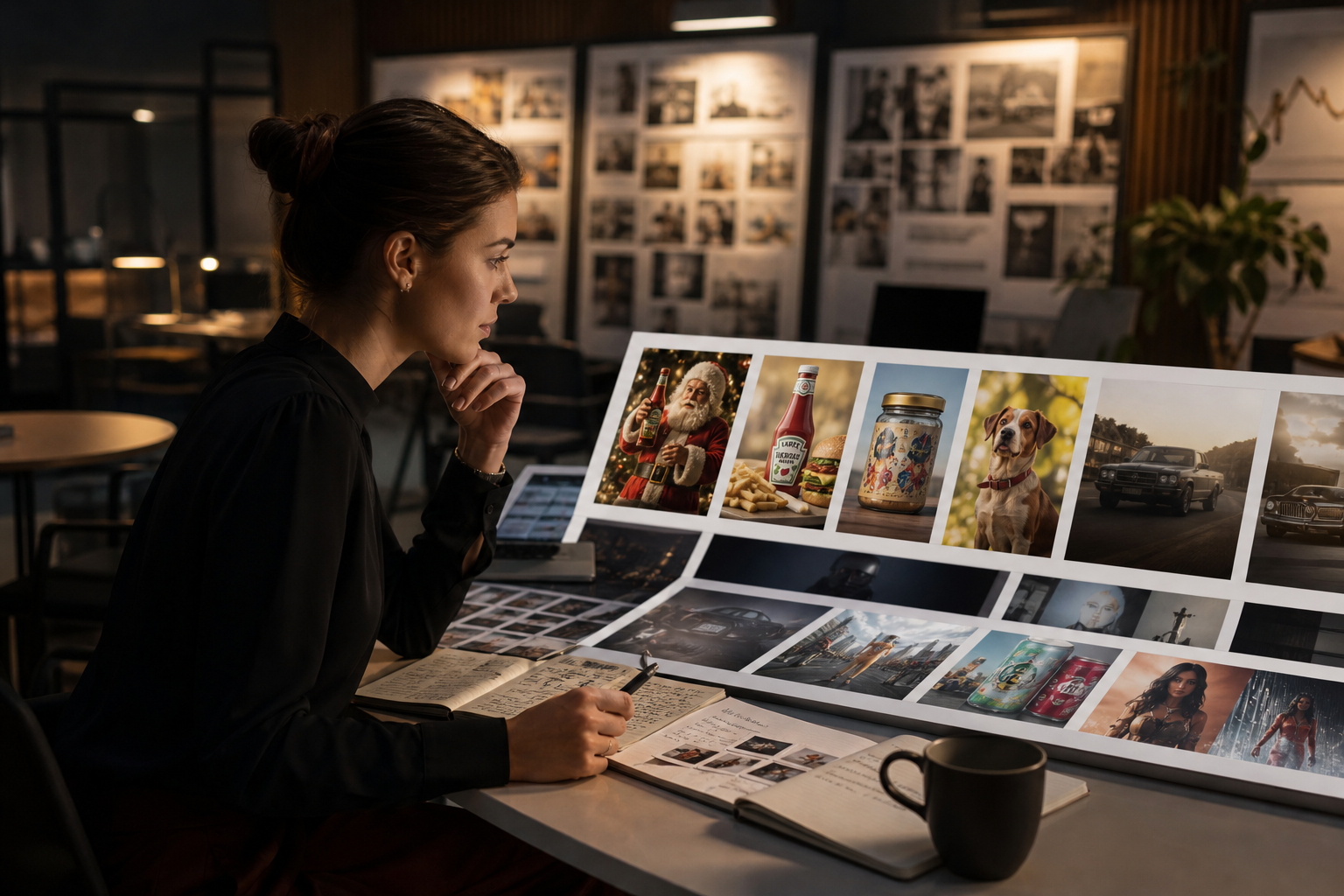
Operationalize safety and performance so teams can move fast without breaking trust.
• Provenance and rights: Document model sources, training disclosures where relevant, and all asset licenses; avoid unvetted datasets.
• Likeness and IP: Secure model, actor, and creator permissions; avoid lookalike risks.
• Safety checks: Scan for uncanny artifacts, misinformation-adjacent framing, and sensitive-category pitfalls.
• Success metrics: Brand-lift, sentiment, save rate, watch to 75 percent, qualified clicks, ROAS, and complaint or takedown rates.
• Post-mortems: After each flight, capture what tripped or passed guardrails and refine your checklist.
Create With VidAU
Turn scripts, product URLs, and creative ideas into ad-ready video assets with a structured AI workflow.
Key takeaway
Final Thoughts
The pattern in AI in advertising is consistent: use AI to augment human insight, protect authenticity, and scale proven formats. The brands that win tie AI to a clear brand truth or user utility and keep disclosure, tone, and craft front and center.
Your best next step is a controlled pilot: pick one product line, generate three to five short-form variants, run human review gates, then test and iterate. If video is your bottleneck, use VidAU AI to convert a product URL or images into editable ad drafts, add your human VO and brand codes, and ship a safe learning flight.
Frequently asked questions
What is AI in advertising and why does it matter now?
AI in advertising uses generative and predictive tools to accelerate ideation, production, and optimization across channels. It matters because it can scale variants, localize fast, and personalize messages. The catch is brand safety: without guardrails, uncanny visuals, tone mismatch, or unclear disclosure can damage trust.
Which recent examples show AI in advertising working well?
Heinz AI Ketchup succeeded by reinforcing a brand truth, Nutella’s AI jar labels delivered curated variety at scale, and Pedigree’s Adoptable AI offered real utility. Each used AI to augment human craft, not replace it, and avoided deceptive realism. The result was positive sentiment and clear brand fit.
Which AI in advertising examples backfired and why?
Backlash hit Coca-Cola’s AI holiday spot for uncanny vibes, Google’s Dear Sydney for tone mismatch, and the Toys R Us AI film for replacing human craft. Luxury cases like Prada and Gucci also saw critiques that AI felt cheap or inauthentic. Common drivers were substitution, uncanny execution, and perceived disclosure gaps.
When should brands disclose AI use in ads?
Disclose when realism could mislead viewers, in high-scrutiny or prestige placements, or when synthetic humans appear. In functional contexts like packaging patterns or obvious product renders, clear curation may suffice. Align with legal guidance and platform policies, and prioritize audience understanding to protect trust.
How can CMOs implement AI in advertising without risking trust?
Adopt a guardrails-first playbook: define green-light use cases, set red-flag stop criteria, add creative–legal–PR review gates, calibrate disclosure, pre-test for uncanny and tone, and monitor brand-lift and sentiment post-launch. Start with small, controlled pilots and scale what works.
What formats are safest for AI in advertising?
Short-form product explainers, UGC-style ads with real creators, packaging or OOH generative patterns, and localized cutdowns are safer. Avoid fully synthetic humans in hero brand films, especially for Super Bowl-scale or luxury placements, where audiences expect high authenticity and craft.
Can AI replace human creatives in advertising?
AI can draft, remix, and scale, but it struggles with nuance, taste, and cultural context. Replacing human creatives usually backfires, as seen in critical responses to fully AI-generated brand films. The winning model is augmentation: human insight and curation guided by brand codes and audience expectations.
How should teams test AI-generated ads before scaling?
Run small audience panels, sentiment checks, and A/B tests across a handful of variants. Monitor watch to 75 percent, save and share rates, qualified clicks, and brand-lift. Include qualitative reviews for uncanny artifacts and tone. Only scale variants that pass creative, legal, and PR gates and meet safety thresholds.
What legal or IP issues arise with AI in advertising?
Key issues include likeness rights, performer or model approvals, training data provenance, and trademark use. Avoid lookalikes and ambiguous endorsements. Keep contracts and consent updated for synthetic or voice-cloned elements, and document your asset chain to address takedown or dispute risks.
Where can AI add value for performance marketing without hurting brand?
Use AI for rapid variant creation, language swaps, offer and price testing, and product-focused short-form videos. Keep real product footage or human VO in the loop, maintain clear CTAs and benefits, and avoid synthetic spokespeople in high-stakes placements. This balances speed, learning, and credibility.