AGENTIC AI FRAMEWORK GUIDE · 2026
Best Agentic AI Companies: Top Players Behind LangGraph, AutoGen, CrewAI, OpenAI Agents SDK & Semantic Kernel
A decision-first guide to LangGraph, AutoGen, Semantic Kernel, CrewAI, and the OpenAI Agents SDK mapped to production use cases, governance needs, and responsible stock research.
By the VidAU Editorial Team
You don’t need another generic roundup, you need the Best Agentic AI companies tied to real frameworks: LangChain (LangGraph), Microsoft (AutoGen, Semantic Kernel), CrewAI, and OpenAI (Agents SDK). Below is a crisp Agentic AI companies list mapped to where each stack shines, plus a clear decision framework and a responsible process to research stock exposure without hype.
If you’re comparing the best Agentic AI companies, start with the frameworks you’ll ship to production: LangChain for LangGraph, Microsoft for AutoGen and Semantic Kernel, CrewAI, and OpenAI for the Agents SDK. I reviewed these stacks with a buyer’s lens so you can match strengths to use cases and avoid chasing unfocused vendor lists.
This decision-first guide targets US technology buyers, founders, PMs, engineering leaders, and analysts who need an Agentic AI companies list tied to actual frameworks and a responsible way to research Agentic AI companies stock exposure.
QUICK SUMMARY
- LangChain’s LangGraph is the top pick for production-grade agent graphs and orchestration with fine control over state and tool-calling.
- Microsoft’s Semantic Kernel (enterprise integration) and AutoGen (conversational multi-agent flows) are the strongest alternatives depending on your scenario.
- Across these stacks, Python leads with growing TypeScript options; selection hinges on governance needs, tool depth, and hosting model.
- Teams building multi-agent assistants, workflow automation, or enterprise copilots gain the most from these frameworks in 2026.
IN THIS GUIDE
What Is Agentic AI?
VIDEO REFERENCE
What is Agentic AI and How Does it Work?
Agentic AI is a design approach where AI “agents” plan, reason, and act often in coordinated groups to complete goals via tools, APIs, and workflows. A multi-agent framework provides orchestration, state handling, tool-calling, and guardrails so teams can compose reliable, testable systems that progress from prompts to production workflows.
Which are the best Agentic AI companies tied to these frameworks?
The strongest short list maps directly to widely used frameworks:
- LangChain | LangGraph: Production-first graph orchestration and stateful multi-agent flows.
- Microsoft | AutoGen: Conversational multi-agent patterns and tool-augmented dialogues.
- Microsoft | Semantic Kernel: Enterprise integration, skills abstraction, and policy-minded orchestration.
- CrewAI: Role-based coordination that’s easy to grasp for smaller teams and prototypes.
- OpenAI | OpenAI Agents SDK: Minimalist route to build agents close to OpenAI models.
This Agentic AI companies list keeps you grounded in the actual orchestration choices you’ll deploy, instead of diluting focus with peripheral tools.
SUGGESTED VISUAL
A one-page diagram mapping each company to its framework and primary strengths.
LangChain (LangGraph): When should you choose it?
Choose LangChain’s LangGraph when you want explicit, production-grade control over agent graphs, tool-calling, and state. LangGraph suits teams building assistants and automations that must recover from errors, branch decisions, and preserve auditability.
- Strengths: Graph-based orchestration, state control, error handling, and deterministic paths.
- Use cases: Complex assistants, workflow automation, retrieval-heavy tasks, evaluation loops.
- Developer experience: Python first with growing TypeScript options; strong ecosystem familiarity for many AI engineers.
- Trade-offs: More orchestration power can mean more upfront modeling and governance decisions.
KEY TAKEAWAYS
- Pick LangGraph for complex, stateful flows.
- Expect to invest in graph design and testing.
- Works well when reliability and traceability are non-negotiable.
Microsoft AutoGen vs Semantic Kernel: Where does each fit?
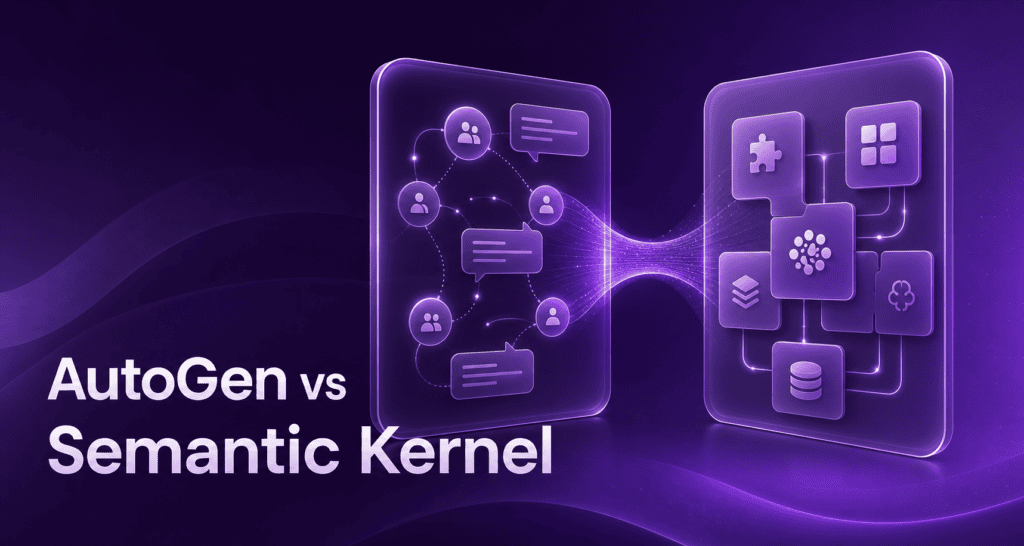
Microsoft backs two complementary Agentic stacks, AutoGen and Semantic Kernel, so your decision is about interaction style and enterprise integration depth.
- AutoGen: Best when agents collaborate through conversational turns and tool use, particularly for assistant-like scenarios and multi-agent discussions.
- Semantic Kernel: Best when you need enterprise-minded integration, skills abstraction, and policy-friendly orchestration aligned with broader Microsoft stacks.
Practical guidance:
- Choose AutoGen if dialog-driven agent collaboration is the core pattern.
- Choose Semantic Kernel if you need consistent skills, connectors, and governance hooks that align with enterprise development practices.
- Many teams evaluate both: AutoGen for rapid agent interactions; Semantic Kernel for long-term enterprise standardization.
SUGGESTED VISUAL
Split graphic showing AutoGen’s dialog-centric loop on one side and Semantic Kernel’s skills/connector view on the other.
CrewAI: Where does it shine?
CrewAI shines for role-based coordination patterns that small teams can grasp quickly. It’s often used to model a “crew” of agents with defined responsibilities, enabling fast prototypes and lightweight automations.
- Strengths: Role clarity, quick starts, intuitive mental model for smaller projects.
- Use cases: Early-stage SaaS automation, content or research assistants, and scoped workflows.
- Trade-offs: As complexity grows, you may outgrow simplicity and want richer graph/state controls.
OpenAI Agents SDK: When is the minimalist path best?
OpenAI’s Agents SDK is ideal when you want to stay close to OpenAI models and build agents with minimal orchestration overhead. It’s a pragmatic option for teams prioritizing speed and a smaller runtime surface.
- Strengths: Minimal moving parts, fast path to working agents, alignment with OpenAI model features.
- Use cases: Focused assistants, narrow automations, or early product features that must ship quickly.
- Trade-offs: Less explicit control than graph-centric frameworks; portability and deep customization may require additional engineering.
How do these frameworks compare at a glance?
| Framework | Best For | Why |
|---|---|---|
| LangGraph | Production graphs | Strong state and orchestration |
| AutoGen | Conversational agents | Multi-agent dialogue pattern |
| Semantic Kernel | Enterprise integration | Skills, connectors, governance |
| CrewAI | Role-based coordination | Simple mental model, quick starts |
| OpenAI Agents SDK | Minimal builds | Close to models, fast delivery |
VIDAU CREATIVE WORKFLOW
Build creative agents while shipping ads today
VidAU is an AI video ad platform that generates video ads from product URLs, images, or scripts in 49 languages. While your team evaluates multi-agent frameworks, marketing can ship creative output now with VidAU AI Video, Text to Video, URL to Video, UGC Avatars, Text to Speech, VidAU Vid Remix, and Video Enhancer.
How to choose among the best Agentic AI companies
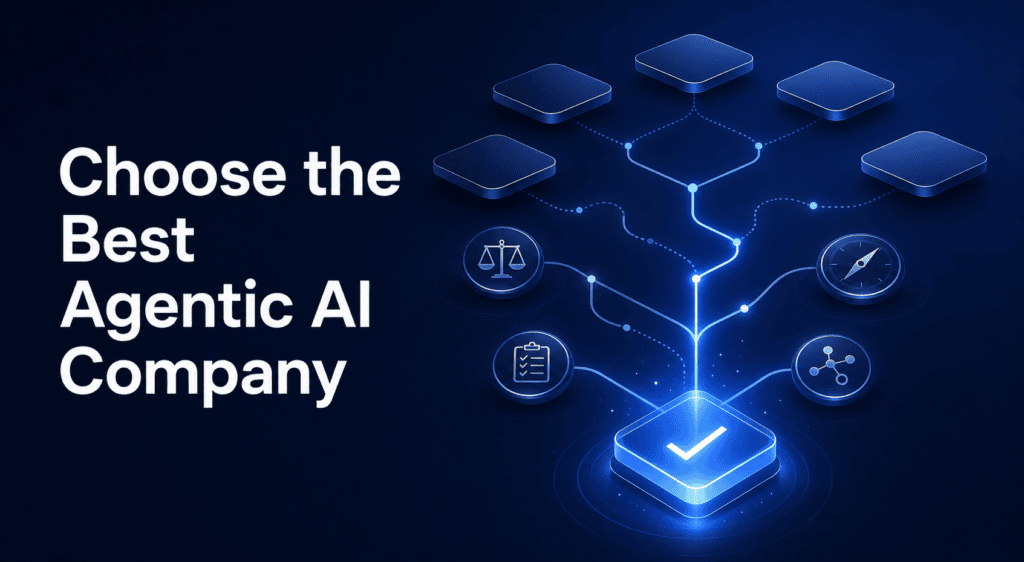
Use these practical criteria to match a company and framework to your roadmap.
Data governance and compliance
Do you require rigorous audit trails, role-based access, and reproducibility? Favor explicit orchestration like LangGraph or enterprise-minded abstraction like Semantic Kernel.
Tool-calling depth and API surface
If agents must juggle many tools with branching logic, pick graph/state-forward solutions. For lightweight assistants, the OpenAI Agents SDK or CrewAI may suffice.
Preferred language/runtime
Most stacks are Python-first with growing TypeScript options. Align with your team’s strongest runtime and internal libraries.
Hosting approach and operational fit
Decide between minimal infrastructure (Agents SDK) and fuller control (LangGraph, Semantic Kernel). Consider latency budgets, retries, and fallbacks.
Team familiarity and support
Choose the framework your engineers can own confidently. Familiar patterns reduce time-to-production and incident risk.
KEY TAKEAWAYS
- Start from governance and reliability needs, then map to orchestration depth.
- Match runtime to your team’s skills for faster delivery.
- Simple assistants thrive on minimalist stacks; complex workflows benefit from graph/state control.
SUGGESTED VISUAL
Decision flowchart starting from governance and complexity, branching to each framework.
Agentic AI companies stock: how to research exposure responsibly
Treat stock exposure as a verification process, not advice:
- Identify the parent entity: Confirm whether the framework is part of a larger company or a standalone project.
- Distinguish OSS from commercial products: Determine whether the framework is open-source, productized, or both.
- Use official sources: Read the company’s newsroom, blog, security page, and product documentation for roadmap and commercialization signals.
- Check filings and press rooms: For public entities, consult official filings and investor relations pages for accurate, up-to-date information.
- Document risk factors: Note licensing, governance, and roadmap dependencies that could affect long-term adoption.
IMPORTANT
Avoid relying on secondary blogs for investment conclusions; always cross-verify with primary sources.
KEY TAKEAWAY
Final Thoughts
If you need explicit orchestration and reliability, LangChain’s LangGraph is often the best fit. For Microsoft-centric teams, use AutoGen for conversational collaboration and Semantic Kernel for enterprise integration. CrewAI works well for role-based prototypes, while the OpenAI Agents SDK is a fast, minimalist route.
While engineering selects a stack, marketing can still ship: explore VidAU AI Video, Text to Video, URL to Video, UGC Avatars, and Video Enhancer to deliver creative output now.
Frequently Asked Questions
FAQ
Answers based on the framework comparisons, use cases, trade-offs, and research guidance in this article.
Which are the best Agentic AI companies right now?
The top picks map to widely used frameworks: LangChain for LangGraph, Microsoft for AutoGen and Semantic Kernel, CrewAI for role-based coordination, and OpenAI for the Agents SDK. This shortlist keeps your evaluation tied to real orchestration choices rather than generic vendor catalogs.
What is the difference between LangGraph and OpenAI Agents SDK?
LangGraph emphasizes explicit graph orchestration, state control, and error handling for complex, reliable workflows. The OpenAI Agents SDK favors a minimalist path that stays close to OpenAI models, trading deep orchestration features for speed and a smaller runtime surface.
When should I choose Microsoft AutoGen vs Semantic Kernel?
Pick AutoGen when dialog-driven multi-agent collaboration is central to your use case. Choose Semantic Kernel when enterprise integration, skills abstraction, and policy alignment matter most. Many teams trial both: AutoGen for assistant interactions, Semantic Kernel for long-term enterprise standardization.
Is CrewAI suitable for production systems?
CrewAI is strong for role-based coordination and quick prototypes. Teams do use it for production, but as complexity grows, you may prefer frameworks with richer graph/state controls. Evaluate your reliability, branching logic, and audit needs before committing to large-scale deployments.
How do I research Agentic AI companies’ stock exposure?
Verify the parent entity, distinguish open-source from productized offerings, and rely on primary sources like official blogs, press rooms, and filings. Document risks around licensing and roadmap dependencies. Avoid third-party summaries for investment conclusions; always cross-check with official materials.
What programming languages do these frameworks support?
Most stacks prioritize Python, with growing TypeScript options across several frameworks. Match your framework choice to the language your team can maintain confidently, since runtime familiarity reduces delivery time and improves operational reliability.
Which framework is best for enterprise governance?
Semantic Kernel is often favored for enterprise integration and skills abstraction, while LangGraph provides strong state and orchestration controls. If governance, auditability, and policy alignment are primary requirements, start with these two before testing alternatives.
What if I just need a simple assistant fast?
Use the OpenAI Agents SDK or CrewAI. Both enable quick delivery with fewer moving parts. If you anticipate rapid growth in complexity, plan a path to graph-oriented orchestration so you can add branching, retries, and stricter guardrails later without a full rewrite.