Best Autonomous AI Agents · Cybersecurity, Banking, Engineering & Control Planes
Best Autonomous AI Agents: How to Choose, Secure, and Deploy for Cybersecurity, Banking, and Engineering
Choose, secure, and deploy agent workflows with an agent control plane, least-privilege tool access, observability, audit logs, and human-in-the-loop approvals.
By the VidAU Editorial Team · Autonomous AI agents guide · agent control plane, least privilege, allowlists, sandboxing, SIEM, SOAR, policy enforcement, red teaming, ai agents cybersecurity, ai agents banking, and ai agents engineer workflows
Enterprise teams asking for the best autonomous AI agents need more than flashy demos. In practice, the “best” means agents you can control: an agent control plane, least-privilege tool access, observability, audit logs, and human-in-the-loop approvals before any high-impact action.
This guide shows security leaders and platform owners how to rank agent options by control, prove safety with a contained POC, and map patterns to ai agents cybersecurity, ai agents banking, and ai agents engineer workflows.
Enterprise teams asking for the best autonomous AI agents need more than flashy demos. In practice, the best means agents you can control: an agent control plane, least-privilege tool access, observability, audit logs, and human-in-the-loop approvals before any high-impact action.
This guide shows security leaders and platform owners how to rank agent options by control, prove safety with a contained POC, and map patterns to ai agents cybersecurity, ai agents banking, and ai agents engineer workflows.
Quick Summary
- A security-first agent control plane with least privilege, allowlists, sandboxing, observability, and human-in-the-loop approvals is the top criterion for selecting enterprise-ready autonomous agents in 2026.
- A staged workflow starting with single-task, approval-gated agents is the most reliable alternative to big-bang multi-agent orchestration.
- Required controls include tool/API permissions, audit logs integrated into SIEM/SOAR, policy enforcement, red teaming for prompt injection, and data exfiltration safeguards.
- Security, banking, and engineering teams benefit most when agent SLOs tie to measurable outcomes like fraud triage time, incident response speed, and change failure rate.
What Is an Autonomous AI Agent?
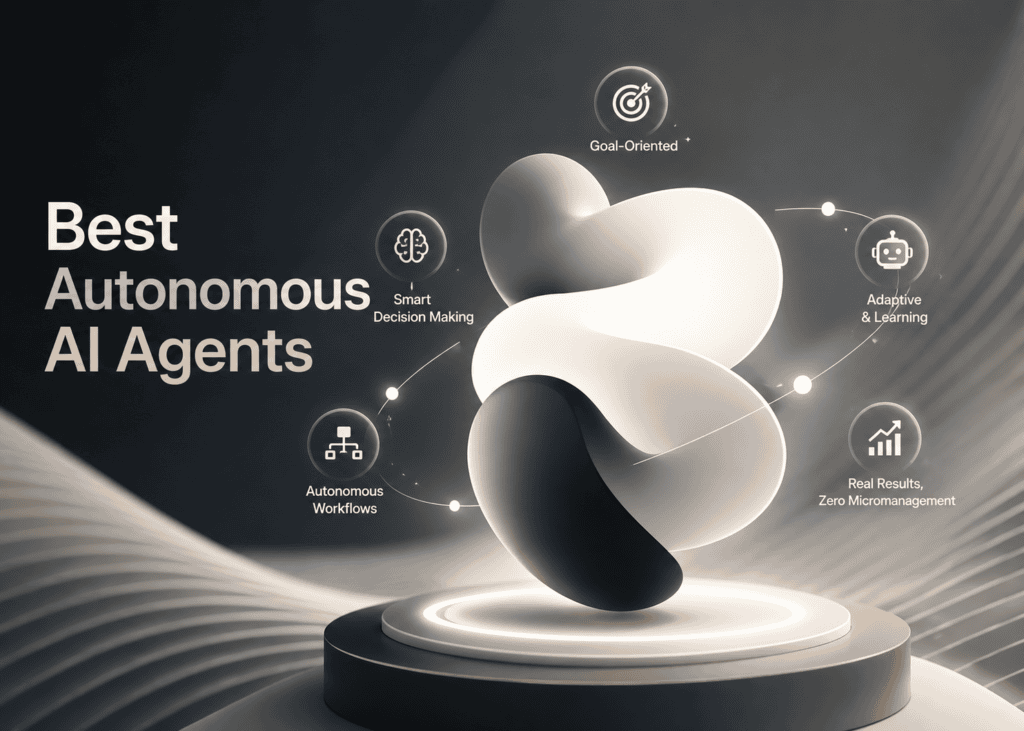
An autonomous AI agent is a system that plans, decides, and executes tasks via tools or APIs with minimal human steering. In enterprises, agents must operate inside a control plane that enforces least privilege, approvals, sandboxing, observability, and policy enforcement. Without these guardrails, risks include prompt injection, data exfiltration, and unauthorized actions.
Definition
An autonomous AI agent is a system that plans, decides, and executes tasks via tools or APIs with minimal human steering.
Why does a security-first approach matter for enterprise agents?
A security-first approach prevents agents from becoming unbounded automation. By default, agents should be sandboxed, tool access should be on allowlists, and high-impact actions should require human-in-the-loop approval. Observable runs, audit logs, and SIEM/SOAR handoffs make incident response possible when prompts or tools behave unexpectedly.
Security warning
Do not let autonomous agents become unbounded automation. Sandbox runs, restrict tools with allowlists, and require human-in-the-loop approval for high-impact actions from day one.
What makes the best autonomous AI agents in 2026?
The best autonomous AI agents are those you can measure, restrict, and recover from when things go wrong. Use this security-first checklist to evaluate options before a pilot.
- Agent control plane: Centralize policy enforcement, approvals, secrets, and run isolation.
- Least privilege: Start with deny-by-default; enable only the tools, scopes, and data the task demands.
- Allowlists and sandboxing: Restrict domains, filesystems, networks, and external calls in a hardened sandbox.
- Tool/API permissions: Granular scopes, time-boxed tokens, and per-action constraints; no wildcard credentials.
- Human-in-the-loop: Mandatory approvals for financial transfers, code merges, infrastructure changes, or data moves.
- Observability and audit logs: Capture prompts, tool calls, parameters, outputs, and approvals; ship to SIEM.
- SOAR/SIEM integration: Alert on policy violations, anomalous tool use, and sensitive-data access patterns.
- Policy enforcement: Codify guardrails like rate limits, PII rules, KYC/AML screening, and data residency.
- Red teaming: Simulate prompt injection, indirect injection via tools, and data exfiltration paths.
- Rollback/containment: Kill-switches, reversible changes, and clean separation from prod systems.
- SLOs and KPIs: Tie to incident MTTR, fraud triage time, model/tool error rate, and approval-to-action latency.
Key Takeaways
- The best agents are controllable agents, not the most autonomous.
- Least-privilege tool access and strong observability are non-negotiable.
- Bake approvals and rollback into day one; do not bolt them on later.
How do I run a secure POC for autonomous agents?
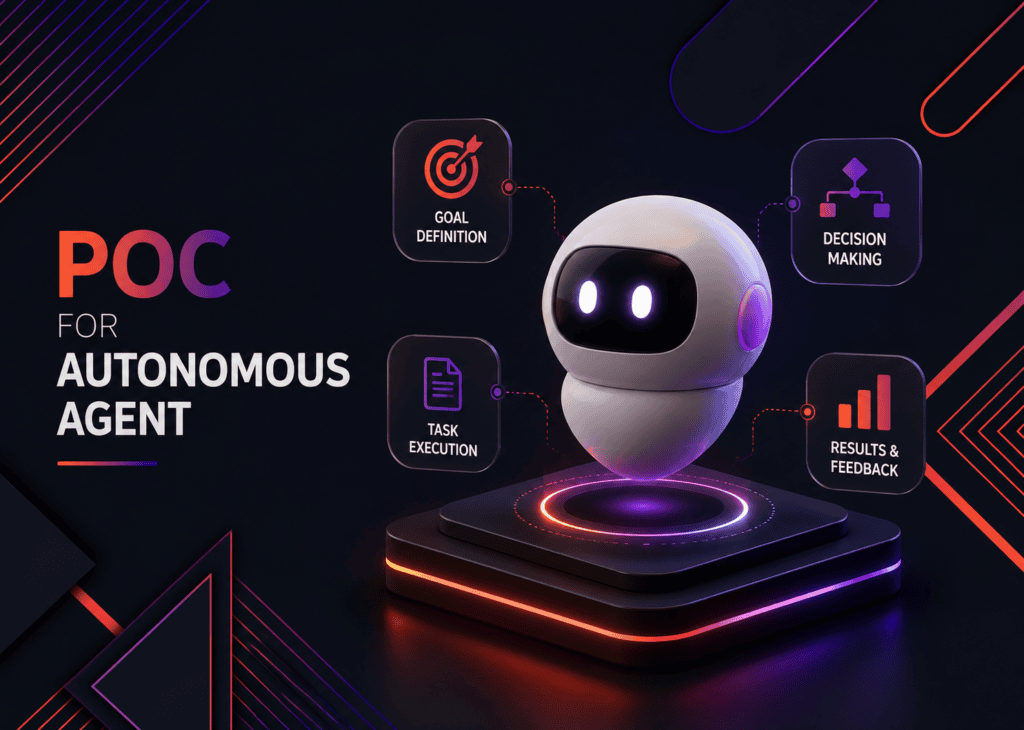
A secure POC proves value and safety before scale. Use this step-by-step, vendor-neutral rubric.
1) Choose a bounded task with measurable impact
Limit blast radius and data sensitivity.
2) Define SLOs
Define accuracy, time-to-completion, approval latency, and false-positive/negative rates.
3) Build in a control plane
Build in approvals, audit logs, policy checks, sandboxing, and allowlists.
4) Grant least-privilege tool/API permissions
Grant least-privilege tool/API permissions and short-lived credentials.
5) Instrument observability
Trace prompts, tool calls, outputs, and decisions.
6) Red team the agent
Test prompt injection, tool chaining abuse, and data exfiltration attempts.
7) Gate actions
Require human-in-the-loop for financial, security, or code changes.
8) Run A/B baselines
Compare human-only vs. agent-assisted to verify uplift.
9) Integrate alerts to SIEM and containment to SOAR
Use SIEM alerts and SOAR containment for violations.
10) Review outcomes
Review SLO attainment, audit completeness, and rollback drills.
Start Using AI Agents With a Secure, Measurable Pilot
Pick one high-value task, apply the control-plane checklist, set SLOs, red team the workflow, and scale only after audit evidence shows the agent meets your bar.
Secure agent workflow
From Autonomous Demo to Enterprise-Ready Agent
- Start with control, not autonomy: Require an agent control plane that centralizes policy enforcement, approvals, secrets, and run isolation.
- Limit tool access from day one: Use deny-by-default access, allowlists, sandboxing, short-lived credentials, and per-action constraints.
- Instrument every run: Capture prompts, tool calls, parameters, outputs, approvals, and policy violations in searchable audit logs.
- Red team before production: Test prompt injection, indirect injection via tools, tool chaining abuse, and data exfiltration paths.
- Scale only after evidence: Move from single-task agents to hierarchical or multi-agent patterns only after SLOs, clean audits, and rollback drills prove readiness.
Which patterns fit cybersecurity, banking, and engineering?
Pattern selection should follow risk and oversight needs, not hype. Consider single-agent, hierarchical agents, multi-agent orchestration, or swarm agents, and pair with the right guardrails.
- Cybersecurity (ai agents cybersecurity): Incident summary, SIEM query drafting, and SOAR runbook simulation are strong starts. Measure MTTR reduction, alert deduplication, and analyst time saved. Keep actions simulation-only or approval-gated for containment changes.
- Banking (ai agents banking): KYC and AML pre-checks, fraud triage, and reconciliation prep are ideal. Track review throughput, false-positive reduction, and compliance adherence. Enforce strict allowlists, PII masking, and multi-step approvals for any customer-impacting changes.
- Engineering (ai agents engineer): Issue triage, code review suggestions, and dependency update PRs can help. Measure cycle time, change failure rate, and review load. Require approvals for merges and production rollouts, with strong sandboxing in CI.
| Use Case | Recommended Pattern | Why |
|---|---|---|
| Cybersecurity | Hierarchical agents | Supervisor routes tasks, approvals gate actions |
| Banking | Single or hierarchical | Easier audits; strict KYC/AML policy checks |
| Engineering | Multi-agent orchestration | Split triage, analysis, PR drafting with approvals |
How do I apply guardrails like least privilege and observability?
Apply guardrails as policy-as-code in the agent control plane. Deny-by-default tool access, enforce allowlists and sandboxing, require human-in-the-loop for high-risk steps, and stream audit logs to SIEM. Use SOAR to automate escalation and containment when violations or anomalies occur.
- Least privilege: Smallest possible permissions, expiring tokens, per-tool scopes.
- Observability: End-to-end traces, structured audit logs, searchable run metadata.
- Policy enforcement: PII rules, geo controls, rate limits, and KYC/AML checks.
- Red teaming: Scheduled tests for prompt injection and data exfiltration vectors.
- Rollback: Change journals and automated reverts for agent-initiated updates.
Guardrail tip
Apply guardrails as policy-as-code in the agent control plane: deny-by-default access, allowlists, sandboxing, human approvals, SIEM audit logs, and SOAR escalation for violations.
What mistakes should teams avoid when deploying agents?
Avoid common errors that inflate risk and stall adoption.
- Skipping the control plane and granting broad API keys.
- No human-in-the-loop for money movement, security, or code changes.
- Missing observability: prompts and tool calls not logged to SIEM.
- Treating red teaming as optional rather than pre-production.
- Over-automating before proving value on a small, bounded task.
- Ignoring SLOs, leading to unclear outcomes and weak stakeholder trust.
Mistake to avoid
Do not grant broad API keys or skip the control plane. Without human-in-the-loop gates, SIEM logging, red teaming, and SLOs, teams inflate risk and weaken stakeholder trust.
What advanced strategies help you scale safely?
Scale with layered controls and intentional patterns. Multi-agent orchestration is useful once a single agent plus approvals meets SLOs. Hierarchical agents can supervise task routing and enforce policy checks, while swarm agents suit parallel exploration only inside tight sandboxes and with strong allowlists.
- Multi-agent orchestration: Split planning, tool use, and review agents with approvals.
- Hierarchical agents: Supervisor agent enforces policy gates and sequencing.
- Swarm agents: Parallel idea generation under strict sandboxing and no direct prod access.
- Policy-as-code: Versioned guardrails with CI checks and security review.
- SLOs: Tie agent scale to achieved accuracy, latency, and approval compliance.
- Cost and quota controls: Rate limits, budgets, and time-boxed runs per task.
Advanced strategy
Scale only after a single agent plus approvals meets SLOs. Then introduce hierarchical supervision, multi-agent orchestration, policy-as-code, cost controls, and swarm agents only inside tight sandboxes.
Key takeaway
Final Thoughts
When teams ask for the best autonomous AI agents, the right answer is a control strategy, not a brand. Prioritize least privilege, allowlists, sandboxing, observability, audit logs, and human-in-the-loop approvals, then prove safety with a small, measurable POC.
The next step: pick one high-value task in cybersecurity, banking, or engineering, apply the checklist, set SLOs, and run a gated pilot. Scale only after red teaming and audit evidence show the agent meets your bar.
FAQ
Here are answers to common questions about agent control planes, prompt injection, data exfiltration, SLOs, multi-agent and swarm agents, ai agents cybersecurity workflows, least privilege, ai agents banking use cases, ai agents engineer starting tasks, secure POCs, and moving from single agents to hierarchical or multi-agent setups.
What is an agent control plane and why do I need one?
An agent control plane centralizes policy enforcement, approvals, secrets, sandboxing, and audit logging for autonomous agents. It ensures least-privilege tool access, observability, and human-in-the-loop gates for risky actions. Without it, you cannot reliably prevent prompt injection fallout, data exfiltration, or unauthorized changes, nor can you respond and roll back quickly.
How do I prevent prompt injection and data exfiltration with agents?
Use deny-by-default policies, strict allowlists, and sandboxing to constrain data and tools. Add red teaming focused on injection and exfiltration paths, and require human approvals for high-impact actions. Stream audit logs to SIEM and use SOAR to alert and contain violations, including revoking tokens and halting runs.
What SLOs make sense for enterprise agents?
Tie SLOs to business impact and safety: task accuracy, time-to-completion, approval latency, false-positive/negative rates, and violation rate. For security, watch MTTR; for banking, false-positive reduction in fraud triage; for engineering, change failure rate and cycle time. SLOs should be reviewed before scaling scope.
Are multi-agent or swarm agents safe for production use?
They can be, if combined with a control plane, least privilege, and approvals. Start with single or hierarchical agents, validate SLOs, then expand to multi-agent orchestration. Use swarm agents only for parallel exploration in tight sandboxes, with no direct access to production or customer data.
How should ai agents cybersecurity workflows be gated?
Gate any containment or remediation steps with human-in-the-loop approvals. Keep most actions simulation-only initially, like SOAR runbook rehearsal or SIEM query generation. Enforce allowlists for network and system changes, log every tool call to SIEM, and use SOAR to escalate anomalies and auto-contain suspected policy violations.
What does least privilege mean for tool/API permissions?
Grant only the specific tools, scopes, and data needed for the task, with short-lived credentials and rate limits. Avoid wildcard permissions, and segment secrets by environment. Combine allowlists, sandboxing, and per-action constraints so an agent cannot move laterally or exfiltrate data if a prompt injection occurs.
How can banking teams apply agents for KYC, AML, and fraud triage safely?
Use agents for pre-checks and triage with masked data and strict allowlists. Any customer-impacting action must require multiple approvals and policy checks. Track SLOs like review throughput and false-positive reduction. Log all prompts and tool calls, and integrate audit trails to meet KYC/AML record-keeping requirements.
What are good starting tasks for engineering teams?
Start with issue triage, code review suggestions, and dependency update PRs in a sandboxed CI. Require approvals for merges and deployments, and log prompts, tool invocations, and diffs. Measure cycle time, review load, and change failure rate to verify that agent assistance improves outcomes without raising risk.
How do I design a safe POC for agents?
Select a bounded, high-value task; define SLOs; implement a control plane with approvals, observability, and policy checks; and grant least-privilege tool access. Red team for prompt injection and exfiltration, gate risky actions with humans, and integrate SIEM/SOAR for alerting and containment. Scale only after SLOs are met.
When should I move beyond a single agent to hierarchical or multi-agent setups?
After a single, approval-gated agent consistently meets SLOs with clean audits and successful red-team results. Then introduce a supervisor (hierarchical) to enforce policy gates, or orchestrate multiple specialized agents. Preserve the same guardrails: least privilege, sandboxing, observability, and human approvals for high-impact steps.