The $2,500/Week AI Video Business Model Explained: A Real Runway + ComfyUI Case Study
Regular people are making $2,500 a week with this AI business model while others use AI for fun.
That sentence sounds like hype—until you see the actual workflow, tooling, and revenue math behind it. This article breaks down a real, repeatable AI video business model built on Runway and ComfyUI that consistently generates ~$10,000/month for non-technical operators.
This is not crypto. This is not prompt flipping. It is not speculative automation.
It’s a production-backed AI video service business with clear deliverables, stable demand, and margins that only exist because of modern generative video pipelines.
1. Why This AI Business Model Is Different (and Sustainable)

Most “AI business models” fail because they violate one of three rules:
- They depend on novelty instead of utility
- It relies on unstable platforms or arbitrage
- They require advanced technical skills to execute consistently
This model avoids all three.
The Core Business
The business provides short-form AI-generated video ads for local brands, ecommerce stores, and personal brands. Deliverables include:
- 15–45 second vertical video ads
- AI-generated B-roll scenes
- Stylized motion graphics
- Platform-ready exports (TikTok, Instagram Reels, YouTube Shorts)
Clients pay weekly or monthly retainers for ongoing creative production.
Why AI Video Makes This Possible
Traditional video production has three bottlenecks:
- Location
- Talent
- Editing time
AI video eliminates all three.
Using Runway Gen-2 for cinematic motion and ComfyUI for controlled image-to-video pipelines, creators can produce ad-grade footage without cameras, actors, or editing timelines.
The key technical differentiator is temporal consistency.
Most amateurs generate random clips. This business uses:
- Seed Parity to maintain character consistency across scenes
- Latent Consistency models to stabilize motion
- Euler a schedulers for predictable frame interpolation
The result is content that looks intentional—not experimental.
Why Clients Pay Weekly
Brands don’t want “one viral video.”
They want:
- Continuous testing
- Fresh creatives every week
- Fast iteration cycles
AI video enables same-day turnaround, which traditional agencies can’t match.
This is why the model works as a retainer, not a one-off gig.
2. The Exact $2,500/Week Revenue Breakdown and Profit Margins
Let’s break down a real example from a single operator running this business part-time.
Client Structure
- 5 clients
- $500/week per client
- Weekly deliverables: 3–5 short-form videos per client
Total weekly revenue:
5 × $500 = $2,500/week
Monthly Revenue
$2,500 × 4 = $10,000/month
Tool Stack Costs
Here’s the actual software stack:
- Runway Pro: ~$95/month
- GPU Cloud (RunPod / Paperspace): ~$150/month
- ComfyUI (local or cloud): $0
- Asset storage + misc tools: ~$50/month
Total monthly tools cost: ~$295
Time Investment
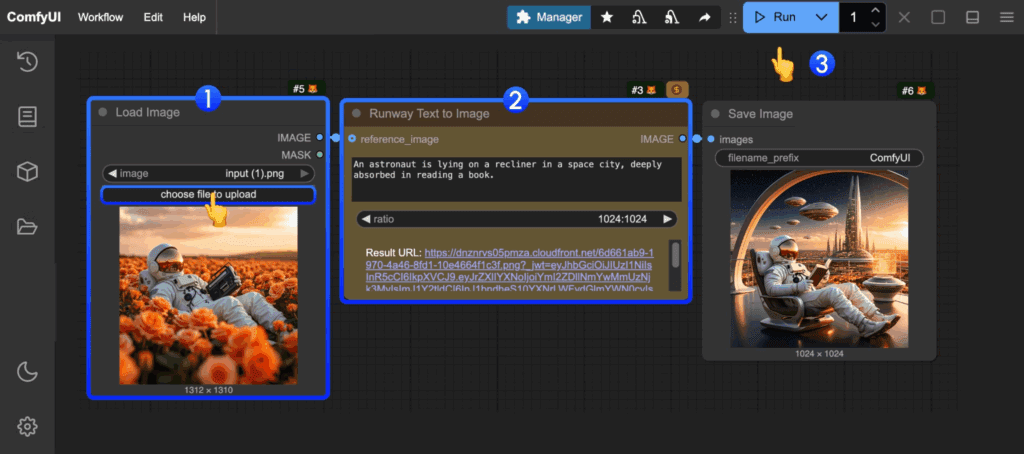
Using pre-built ComfyUI workflows:
- 30–45 minutes per video
- ~20 videos per week
- ~12–15 hours/week total
This includes:
- Prompt refinement
- Seed locking
- Batch rendering
- Light editing and export
Profit Margins
Monthly revenue: $10,000
Monthly costs: ~$300
Gross margin: ~97%
The only scaling constraint is throughput—not demand.
Why This Isn’t Easily Saturated
Most people can generate AI videos.
Very few can:
- Maintain visual continuity across multiple outputs
- Match brand tone consistently
- Deliver on a weekly schedule
The technical moat is not the tools—it’s the process discipline.
3. How to Replicate the Model Without Technical Skills
This is where most people assume they’re disqualified.
They aren’t.
Step 1: Use Pre-Built ComfyUI Workflows
You do not need to build nodes from scratch.
Use proven workflows that include:
- Stable Diffusion base model
- Latent Consistency LoRA
- Fixed seed input
- Euler a scheduler
- Frame interpolation nodes
These workflows allow you to:
- Lock character identity
- Maintain lighting and camera motion
- Regenerate scenes predictably
Think of this like a template—not programming.
Step 2: Runway for Motion Polish
Once base scenes are generated:
- Import into Runway
- Apply motion expansion or camera movement
- Use text-guided motion for subtle parallax
Runway excels at turning static or semi-static AI frames into cinematic motion.
This hybrid approach (ComfyUI → Runway) is what clients notice.
Step 3: Productize the Offer
Don’t sell “AI videos.”
Sell outcomes:
- “3 TikTok ads per week optimized for conversions”
- “Weekly content pack for Instagram Reels”
Clients don’t care about your pipeline. They care about consistency.
Step 4: Simple Client Acquisition
This model doesn’t require ads.
Most operators use:
- Cold outreach to ecommerce stores
- Local businesses already running ads
- Personal brands posting consistently
The pitch is simple:
> “We deliver 3–5 new short-form video ads every week using AI, faster and cheaper than traditional video.”
Offer a one-week trial. Retainers close themselves.
Step 5: Scale With Batch Generation
The real leverage comes from batching.
Using seed parity and fixed prompts:
- Generate 10–15 variations in one render session
- Swap hooks, text overlays, CTAs
- Deliver multiple creatives without rework
This is how one person handles 5+ clients alone.
Why This Model Solves the Core Challenge
The core challenge is not “learning AI.”
It’s finding legitimate, repeatable income with it.
This model works because:
- Demand already exists
- Delivery is standardized
- AI reduces production cost to near-zero
You’re not betting on trends.
You’re replacing a slow, expensive service with a faster one.
That’s why $2,500/week is realistic—and why many stop there by choice.
The ceiling isn’t the tech.
It’s how many clients you want to manage.
If AI is going to be more than a toy, it has to produce cash flow.
This model does exactly that.
Frequently Asked Questions
Q: Do I need advanced technical skills to run this AI video business?
A: No. Most operators use pre-built ComfyUI workflows and Runway’s interface. You’re working with templates, not coding models from scratch.
Q: Is $2,500 per week realistic for beginners?
A: Yes, with 4–6 retainer clients paying $400–$600/week. The key is consistent delivery, not viral success.
Q: What makes clients choose this over traditional video agencies?
A: Speed, cost, and volume. AI allows weekly creative output at a fraction of the cost and turnaround time.
Q: Can this be scaled beyond one person?
A: Yes. Many operators scale by hiring virtual assistants for prompt handling and client communication while keeping generation centralized.
Q: Is this dependent on one AI platform?
A: No. While this case study uses Runway and ComfyUI, the model is platform-agnostic and adapts as tools evolve.