18+ Best Uncensored AI Video Tools for Ultra-Realistic Results (Free & Powerful Options)
Introduction: Why Uncensored AI Video Tools Are Gaining Attention
The AI video landscape has shifted. In 2024, creators were limited by “safe-guarding” filters that often blocked benign artistic prompts, such as “cinematic rain on a dark alley” or “intense facial expressions” due to overly sensitive AI moderation.
In 2026, the demand is for creative sovereignty. Creators are moving toward “uncensored” tools, not for illicit purposes, but for the freedom to push realism without a digital “nanny” blocking their workflow. This guide explores the tools that prioritize high-fidelity output and prompt flexibility over restrictive safety layers.
What Makes an AI Video Tool “Crazy Realistic”
Realism in AI is no longer just about a clear image; it’s about Physics and Persistence.
- Temporal Stability: Objects shouldn’t “morph” or disappear between frames.
- Surface Scattering: How light hits skin. High-end tools like Kling 3.0 and Veo 3.1 simulate how light penetrates the skin and reflects back, avoiding the “plastic” look.
- Cinematic Control: Realism requires camera “breathing,” natural depth of field ( style blurs), and accurate motion blur based on the velocity of objects.
What “Uncensored” Really Means in AI Video
Uncensored” is often misunderstood. In the professional AI space, it refers to:
- Open Latent Space: The AI doesn’t automatically steer your prompt toward “generic” styles.
- Prompt Fidelity: If you ask for a “bruised boxer,” the AI renders it instead of flagging it as “violent content.”
- Local Execution: Tools like ComfyUI allow you to run models on your own hardware, removing the middleman entirely.
Top 18+ AI Video Generation Tools Deep-Dive (Featured Selection)
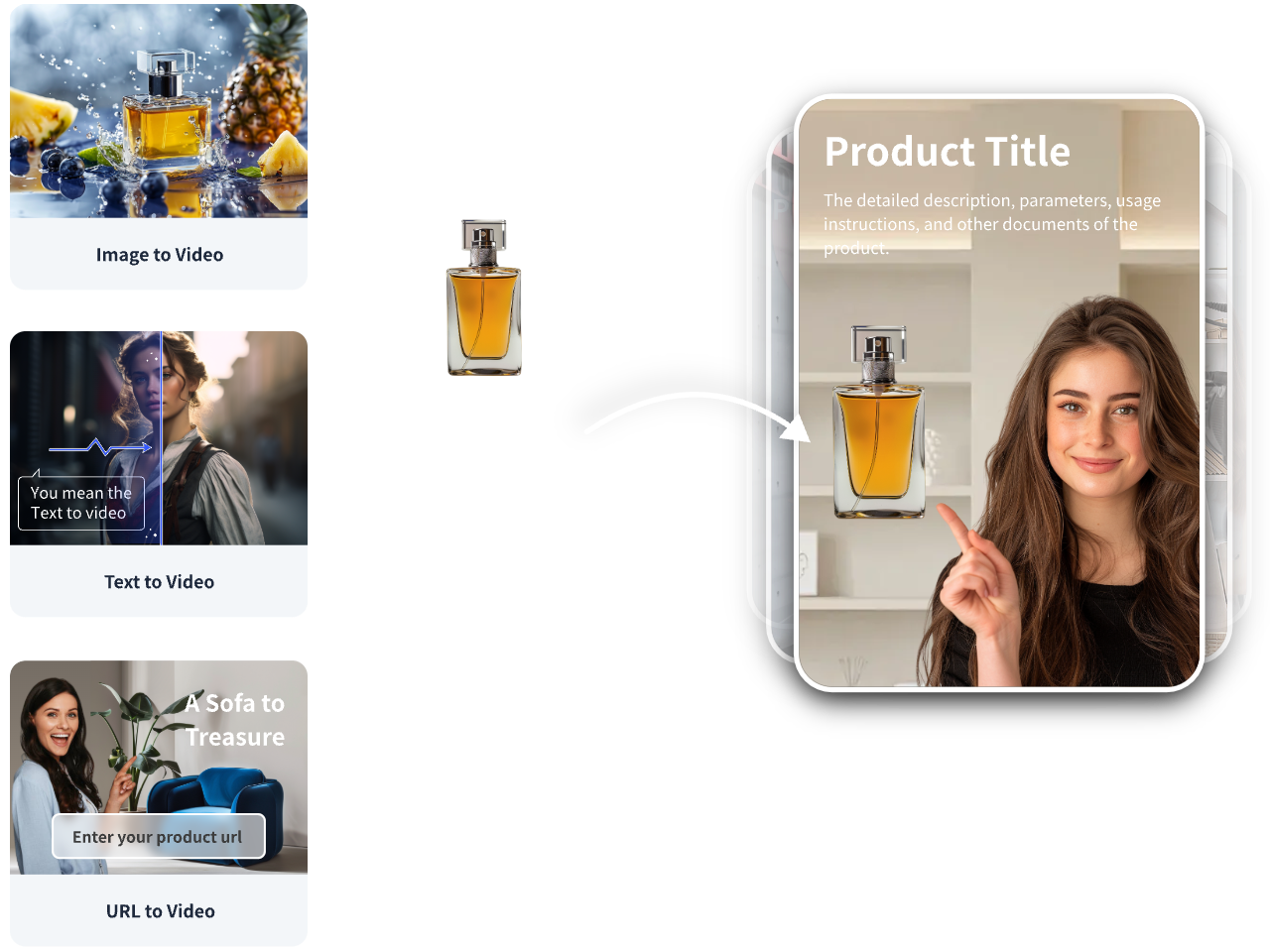
VidAU AI
- Best For: High-resolution upscaling and “Face-Swap” integration for marketing.
- Strengths: Allows for the generation of realistic “spokesperson” videos without the typical “uncanny valley” look. Very high success rate in maintaining facial identity across different angles.
- Free Tier: Credit-based trial.
Kling 3.0
- Best For: Long-form narrative films where characters must interact with the world (eating, drinking, walking).
- Strengths: Currently the industry leader in temporal consistency. It understands that if a character turns around, their face shouldn’t morph. It supports clips up to 10 minutes through its extended generation mode.
- Limitations: High demand can lead to long server wait times for free users.
- Free Tier: Daily credit system; 66 free credits upon signup.
Veo 3.1
- Best For: Cinematic storytelling and precise director-level camera control.
- Strengths: Understands professional film terminology (e.g., “dolly zoom,” “low-angle tracking shot”). Its realism excels in atmospheric effects like smoke, fog, and complex lighting.
- Limitations: Stricter adherence to “public figure” filters compared to open-source alternatives.
- Free Tier: Limited to 2 generations per day via VideoFX.
ComfyUI (Video Nodes)
- Best For: Professional creators who want zero censorship and absolute control over every pixel.
- Strengths: Unlike cloud tools, ComfyUI runs on your hardware. You can chain “nodes” to control motion paths, facial expressions, and style consistency across different scenes.
- Limitations: Steep learning curve; requires a powerful GPU (Nvidia RTX 3090/4090 recommended).
- Free Tier: 100% Free (Open Source).
Stable Video Diffusion (SVD)
- Best For: Offline generation and privacy-conscious projects.
- Strengths: Great for taking a high-quality “uncensored” image and bringing it to life with subtle, realistic movements. It is the backbone for most local AI video workflows.
- Free Tier: Open-source model weights are free to download.
Luma Dream Machine
- Best For: Architecture, landscape realism, and high-speed action.
- Strengths: Excels at 3D space reconstruction. If you need a drone shot flying through a realistic forest or an urban city, Luma creates a 3D-aware environment that doesn’t “jitter.”
- Limitations: Occasionally struggles with complex human hand movements.
- Free Tier: 30 free generations per month.
Moonvalley AI
- Best For: High-fidelity “Film Noir” or stylized cinematic realism.
- Strengths: It has a unique “physics engine” that handles hair and fabric movement better than most mid-tier tools.
- Free Tier: Tiered free access via their Discord community.
Wonder Studio
- Best For: Replacing real people with CG characters in live-action footage.
- Strengths: This is a “pro-sumer” VFX tool. You upload a video of a person walking, and it automatically tracks their motion, masks them out, and replaces them with a hyper-realistic 3D model.
- Limitations: Heavily focused on character replacement rather than text-to-video.
- Free Tier: Limited trial for individual creators.
PixVerse
- Best For: High-fidelity anime-to-realism conversions and 4K character design.
- Strengths: It features a dedicated “UHQ” (Ultra High Quality) mode that specifically targets skin texture and eye reflections. It is excellent for creators who want a “hyper-real” look that borders on high-end CGI.
- Limitations: The free tier can be slow during peak hours.
- Free Tier: Daily credit system on their web platform and Discord.
Pika Labs (Pika 2.1)
- Best For: Short, punchy “micro-movies” and social media clips.
- Strengths: Pika 2.1 introduced Lip Sync and Sound Effects generation within the video workflow. This makes it an all-in-one tool for creators who need to add dialogue to their realistic characters without switching apps.
- Free Tier: 30 free credits every few hours (rolling refresh).
NeuralFrames
- Best For: Music videos and “trippy” cinematic transitions.
- Strengths: It is a music-reactive AI tool. If you are a creator making visuals for Spotify Canvas or YouTube music videos, NeuralFrames allows you to “pump” the realism based on the audio’s bass and frequency.
- Free Tier: Limited trial generations for new accounts.
Pollo AI
- Best For: Fast, “zero-barrier” text-to-video generation.
- Strengths: Pollo AI is known for its minimal prompt filtering. It allows for high-intensity action scenes (explosions, fast-paced chases) that other “safe” models might dampen or blur.
- Free Tier: Standard daily trial credits.
Sora 2 (OpenAI)
- Best For: Complex scenes with multiple interacting objects.
- Strengths: Sora’s superpower is object permanence. If a character walks behind a tree and comes out the other side, the tree and the character remain identical. It creates massive, complex worlds (like a busy city street) with hundreds of moving parts.
- Limitations: Extremely limited public access; currently mostly available to select creative professionals.
- Free Tier: High-demand waitlist.
Hailuo AI (MiniMax)
- Best For: Hyper-realistic human movement and facial expressions.
- Strengths: Often called the “Kling Rival,” Hailuo excels at micro-expressions. If you need a character to slowly smile, wink, or show subtle grief, this tool captures the muscle movements of the face with startling accuracy.
- Free Tier: Generous free trial period via their web portal.
ModelScope Video
- Best For: Developers and technical creators looking for “base” models to train on.
- Strengths: It is one of the most stable open-source frameworks. While the raw output looks “retro,” when used as a base for upscalers, it provides a solid motion foundation that doesn’t flicker.
- Free Tier: Fully open-source via HuggingFace.
Zeroscope (v2 XL)
- Best For: Producing high-resolution, watermark-free local video.
- Strengths: A refined version of the ModelScope architecture optimized for 16:9 cinematic aspect ratios. It is “uncensored” by nature because it is a community-trained model.
- Free Tier: Free to run locally on software like Automatic1111 or ComfyUI.
CogVideoX (Open Source)
- Best For: Technical creators who want a “Sora-like” architecture they can run on their own hardware.
- Strengths: Developed as a high-performance open-source model, CogVideoX is designed to handle long-duration prompts. It excels at understanding complex spatial relationships (e.g., “a cat sitting inside a box on a moving train”). Because it is open-source, it is inherently uncensored when run locally.
- Free Tier: Free to download and use via HuggingFace or GitHub.
Morph Studio
- Best For: Collaborative filmmaking and “all-in-one” storyboard-to-video workflows.
- Strengths: Morph Studio is built on the Stability AI ecosystem but offers a unique “Canvas” interface. It allows you to generate multiple clips and arrange them visually to check for continuity. It is particularly good at cinematic lighting and dramatic shadows.
- Free Tier: Credit-based system with a generous starting allotment.
WanVideo (Wan 2.1)
- Best For: Hyper-realistic skin textures and “Macro” close-ups.
- Strengths: A rising star in the Chinese AI scene, WanVideo provides incredible 4K detail. If you need a close-up of an eye reflecting a city skyline or a macro shot of raindrops on a leaf, this model maintains a level of sharpness that rivals Kling 3.0.
- Free Tier: Available via public web demos and API trials.
Stream Diffusion (Real-Time Video)
- Best For: Live-streamers and creators who need instant AI video feedback.
- Strengths: While most tools take minutes to render, Stream Diffusion is optimized for real-time generation. You can move your hand in front of a webcam and see the AI transform it into a realistic robotic hand or a mythical creature with near-zero latency.
- Free Tier: Fully open-source; requires a high-end Nvidia GPU (RTX 40-series).
Hotshot XL
- Best For: Converting personalized “LoRA” styles (like your own face) into realistic GIFs and short clips.
- Strengths: It is specifically designed to work with Stable Diffusion XL. This means if you have trained a model on a specific person or product, Hotshot XL can animate that specific subject with higher fidelity than a general-purpose model.
- Free Tier: Available as a free extension for local Stable Diffusion setups
How to Maintain Realism Across Unrestricted 18+ Long AI Videos
The biggest challenge isn’t making a 5-second clip; it’s making a 5-minute story.
- Seed Locking: Use the same numerical seed to keep the “vibe” of the scene consistent.
- Scene Chaining: Generate the last frame of “Shot A” and use it as the first frame of “Shot B” (Image-to-Video) to ensure seamless transitions.
- Negative Prompts: Use tokens like `morphing, blurry, low resolution, extra fingers, cartoonish` to force the model into the “Realistic” latent space.
Monetizing Realistic AI Videos
- Faceless YouTube Channels: Use Kling 3.0 to create high-end historical or sci-fi documentaries.
- B-Roll Licensing: Sell high-quality, uncensored 4K nature or urban footage on stock sites (ensure you have rights to AI-generated content).
- Music Videos: Use **NeuralFrames** to sync cinematic visuals to beats for indie artists.
Common Mistakes to Avoid
- Prompt Overloading: Adding 50 adjectives confuses the AI. Keep it focused: *[Subject] doing [Action], [Lighting], [Camera Angle], [Film Stock].*
- Ignoring Frame Rate: Generating at 24fps is standard for cinema. If you generate at 12fps and upscale, the motion will look “choppy.”
Conclusion
We are officially past the era where high-end cinematography required a $50,000 budget and a dozen crew members. In 2026, the barrier to entry has shifted from capital to command. Whether you are using the physics-defying realism of Kling 3.0 or the total creative sovereignty of a local ComfyUI setup, the tools are now “smart” enough to execute almost anything you can imagine.
Key Takeaways for the Modern Creator:
- Workflow is King: Don’t rely on just one tool. The most realistic results come from “chaining”, using one AI for the environment, another for character consistency, and a third for final 4K upscaling.
- Prompting is the New Directing: Technical vocabulary matters. Using cinematic terms like “dolly zoom” or “sub-surface scattering” tells the AI you want professional results, not a generic clip.
- Local = Freedom: If you want 100% uncensored creative control without monthly subscriptions, investing in a high-end GPU for local models like CogVideoX is the ultimate long-term play.
The “Uncanny Valley” is closing fast. As AI video moves from 5-second clips to full-length narratives, the advantage will belong to those who treat these tools as a system rather than a novelty. Don’t wait for the technology to become “perfect”, start building your digital assets now while the market is still repricing.
Final Takeaway
Realistic AI video has moved from a “party trick” to a professional asset. The competitive advantage now belongs to creators who systemize their production. By combining the physics of Kling 3.0with the control of ComfyUI, you can produce studio-quality content from a home computer.
Frequently Asked Questions (FAQ)
1. Is it legal to use AI video for commercial projects?
In 2026, the legal landscape is still evolving, but the general rule is: AI-generated content with no human intervention cannot be copyrighted in the US and many other regions. However, if you use AI as a tool within a larger human-led workflow (editing, scripting, and post-production), you can likely claim authorship. Always check the specific Terms of Service of tools like Sora or Kling, as some tiers grant you full commercial rights while free tiers may not.
2. How do I get rid of the watermarks on free tools?
Most free tiers (like Vidau, Runway or Luma) use watermarks to distinguish AI content. You have three main options:
- Upgrade: Most “Pro” plans ($12–$30/mo) remove watermarks and offer higher resolution.
- Use AI Inpainters: Tools like Wink AI or Pixelbin specialize in “erasing” watermarks from video frames, though this can sometimes cause slight blurring.
- Go Local: Use open-source tools like ComfyUI or Stable Video Diffusion. Since they run on your hardware, they never add watermarks.
3. What are the hardware requirements for running AI video locally?
To run “Uncensored” models like CogVideoX or Wan 2.1 on your own PC, you need:
- GPU: NVIDIA is the standard (due to CUDA). Minimum 12GB VRAM (RTX 3060 12GB); 24GB+ (RTX 3090/4090/5090) is recommended for 4K.
- RAM: 32GB+ of system memory.
- Storage: At least 100GB of SSD space (model weights are huge—often 30GB+ each).
4. Why does the AI keep “morphing” my characters?
This is known as temporal inconsistency. To fix this:
- Use Image-to-Video: Instead of just text, upload a “Character Reference” image.
- Reduce Motion Buckets: In tools like SVD, lowering the “motion bucket” value makes the AI more conservative with movement, reducing glitches.
- Seed Locking: Use a fixed seed number to ensure the AI “imagines” the same environment for every shot.
5. Are there really “Uncensored” tools that allow everything?
“Uncensored” in a professional context usually means no prompt filtering. While cloud-based tools (Google Veo, OpenAI Sora) have strict safety filters to prevent deep fakes or violence, Open Source models (Wan 2.1, CogVideoX) allow you to generate anything your hardware can process. Note: Always adhere to local laws regarding ethical content creation and deepfake disclosures.
6. Can AI video replace a real videographer yet?
For B-roll, establishing shots, and fantasy environments? Yes. For complex acting, emotional nuance, and specific physical interactions (like a person tying shoelaces)? Not quite. The most successful creators in 2026 use AI to supplement real footage, not replace it entirely.