Launching Your E-Commerce Empire: A Step-by-Step (Complete) Guide to Shopify Drop Shipping

Shopify drop shipping has become one of the fastest-growing ways for new entrepreneurs to enter the world of online business with minimal risk. In this business model, you sell products directly to customers without holding inventory, while your supplier handles packaging and shipping on your behalf. This eliminates the need for large upfront investments, warehouses, or logistics, making it one of the most accessible paths to e-commerce success.
By using Shopify, the world’s leading e-commerce platform, anyone can launch a professional online store, automate product sourcing, and process sales with ease. The platform’s user-friendly tools, integrations, and wide range of apps make Shopify drop shipping ideal for beginners and seasoned sellers alike.
In this comprehensive guide, we will break down what Shopify drop shipping is, how it works, and everything you need to launch a profitable store. From choosing the right niche and suppliers to setting up your Shopify website and driving consistent traffic, this article walks you through each step clearly, helping you build a powerful online business from the ground up.
How to Start Drop Shipping on Shopify: A Step-by-Step Guide
This video demonstrates the practical steps of building a store on Shopify quickly.
Launching your drop shipping store on Shopify requires a strategic approach. Follow these steps to set up your business, find reliable suppliers, and start selling.
Step 1: Choose a Profitable Niche
Your niche is the specific product category you will focus on. Success comes from targeting a specific audience rather than trying to sell everything.
- Research Trends: Use tools like Google Trends, social media platforms (TikTok, Instagram), and existing marketplaces to identify trending products with high demand but not overly saturated competition.
- Focus on Problems: Choose products that solve a specific problem or cater to a passionate hobby (e.g., unique kitchen gadgets, pet wellness products, or ergonomic home office gear).
Step 2: Create Your Shopify Account
Shopify offers a free trial, often followed by a heavily discounted introductory period, making it affordable to start.
- Sign Up: Create your Shopify account and choose a business name that reflects your chosen niche.
- Choose a Plan: Select a plan that fits your current needs and budget (the Basic Plan is usually sufficient to start).
- Register a Domain: Purchase a professional domain name through Shopify to give your store credibility.
Step 3: Set Up and Customize Your Store
Use Shopify’s themes and editor to build an attractive, professional storefront.
- Select a Theme: Choose a mobile-friendly theme (like the free Dawn Theme) that aligns with your brand aesthetic.
- Design and Branding: Add your logo, customize colors, and create a clear, intuitive navigation structure.
- Add Essential Pages: Create crucial pages like About Us, Contact Us, and Store Policies (Return & Refund Policy, Shipping Policy) to build trust.
Step 4: Find and Connect with Suppliers
This is the most critical step, as your supplier determines product quality and shipping times.
- Install Drop shipping Apps: Use Shopify-approved drop shipping apps (e.g., DSers for AliExpress, Spocket for US/EU suppliers, or Shopify Collective) to easily connect your store with a network of vetted suppliers.
- Source Products: Browse the app’s marketplaces for products that fit your niche.
- Test Samples: Always order product samples to personally verify the quality, packaging, and actual shipping times before listing them for sale.
Step 5: Import and Optimize Products
Don’t just use the default product descriptions provided by the supplier; customize them!
- Import Products: Use the drop shipping app to import the product listings (images, descriptions, price) into your Shopify store with one click.
- Write Unique Descriptions: Craft compelling product descriptions that highlight benefits, not just features. Use relevant keywords to boost your Search Engine Optimization (SEO).
- Set Competitive Prices: Ensure your pricing covers the product cost, shipping fees, transaction fees, and leaves a healthy profit margin.
Step 6: Configure Payments and Shipping
You need to ensure customers can pay easily and know what to expect for delivery.
- Activate Payments: Set up Shopify Payments and other popular gateways like PayPal to accept major credit cards and offer flexible payment options.
- Define Shipping: Based on your supplier’s rates, clearly define your shipping methods, rates, and estimated delivery times in your Shipping Policy.
Step 7: Market Your Store and Drive Traffic
Your beautiful store won’t succeed without customers. Marketing is where you should spend most of your time and resources.
- Social Media Marketing: Leverage platforms like Instagram and TikTok to create engaging video content, run paid ads, and collaborate with influencers.
- SEO: Optimize your product pages and blog content with keywords to drive free organic traffic from search engines.
- Email Marketing: Use Shopify’s email tools to collect customer emails and send targeted campaigns about new products, discounts, and abandoned cart reminders.
What is Shopify Drop shipping?
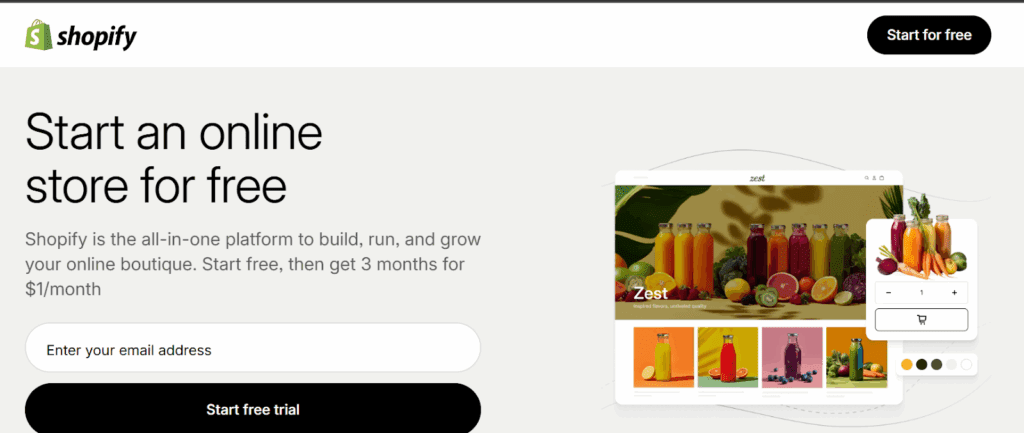
Drop shipping is an order fulfillment model where the seller (you) does not keep the products in stock. Instead, when a customer places an order on your online store:
- The customer pays the retail price to you.
- You purchase the item from a third-party supplier (wholesaler or manufacturer) at the wholesale price.
- The supplier then ships the product directly to the customer on your behalf.
You profit from the difference between the retail price and the wholesale/supplier price.
Shopify is the ideal platform for this model because it provides all the necessary tools in one place: a customizable storefront, secure payment processing, marketing tools, and a massive App Store with integrations specifically designed for drop shipping.
Key Benefits of Using Shopify for Drop Shipping:
- Low Barrier to Entry: You launch with minimal upfront capital, as you only pay for the product after making the sale.
- Ease of Use: Shopify is built for the average user, offering drag-and-drop customization, making it easy to set up a professional store without coding.
- Scalability: With suppliers handling inventory and shipping, you can easily test new products and scale your business globally without worrying about warehouse size or logistics.
- Apps Ecosystem: Shopify’s App Store provides essential integrations (like DSers, Sprocket, or Collective) that automate product importing, order fulfillment, and inventory monitoring.
.
Conclusion: Your Dropshipping Journey Starts Now
The world of e-commerce, facilitated by Shopify dropshipping, offers an unparalleled opportunity to build a scalable business with minimal risk. The core of this model, selling products without managing inventory, eliminates the major hurdles that traditionally stopped entrepreneurs.
Success, however, isn’t automatic. It hinges on the strategic choices you make: selecting a profitable niche, securing reliable suppliers (often through integrations like DSers or Spocket), and mastering digital marketing (especially through social media and SEO). Dropshipping on Shopify is more than just setting up a website; it’s about creating a compelling brand story, delivering exceptional customer service, and continually adapting to market trends. By following the systematic steps outlined in this guide, from careful setup and policy creation to aggressive marketing, you possess the blueprint to launch a profitable and flexible e-commerce empire. The heavy lifting of warehousing and logistics is outsourced, freeing you to focus on the high-value tasks that truly drive growth: finding winning products and connecting with your audience.
The platform and the method are ready. All that’s left is for you to begin your journey.
FAQ of Shopify Dropshipping
Q1: What is the biggest advantage of dropshipping?
A1: The biggest advantage is the low barrier to entry and minimal upfront capital, as you only pay for the product after the customer has already paid you.
Q2: Why use Shopify for dropshipping?
A2: Shopify is recommended because it offers an all-in-one platform with a customizable storefront, secure payments, and essential App Store integrations that automate product sourcing and order fulfillment.
Q3: What is the most important step in the beginning?
A3: Choosing a profitable niche is the most important step. Focus on products that solve a specific problem or cater to a passionate, identifiable audience.
Q4: How do I find reliable suppliers?
A4: Use Shopify-approved dropshipping apps (like DSers or Spocket) and, crucially, order product samples yourself to verify the quality and shipping times before you start selling.
Q5: What essential pages must I include on my store?
A5: You must include About Us, Contact Us, and clear Store Policies (especially the Refund and Shipping policies) to build trust and credibility
Q6: How is my profit determined?
A6: Your profit is the difference between the retail price the customer pays and the total cost (wholesale price, shipping fees, and transaction fees). You must set a price that ensures a healthy profit margin.
Q7: What is the best way to get traffic to my new store?
A7: Focus heavily on Social Media Marketing (especially platforms like TikTok and Instagram) and optimizing your product descriptions and content for SEO to drive organic traffic.