Runway Gen 4.5 vs Other AI Video Tools: Real Stress Tests on Character Consistency and Camera Control

I pushed Runway Gen 4.5 to its limits with unexpected bears and complex camera moves. Here’s what broke.
The promise of every new AI video model is the same: better consistency, more cinematic motion, fewer hallucinations, and less time wasted rerolling generations. But if you’re a video creator deciding where to put real money, Runway, Sora (when available), Kling, or a ComfyUI-based open pipeline, the question isn’t what the demo reel looks like. It’s what survives stress testing.
This article breaks down real-world tests of Runway Gen 4.5 against competing AI video tools, focusing on three pain points that actually cost creators time and money: character consistency, camera control, and production workflow reliability.
Character Consistency: Where Runway Gen 4.5 Improves, and Still Breaks
Character consistency is still the single biggest differentiator between “cool clip generators” and tools you can use for storytelling. Runway Gen 4.5 does make measurable progress over Gen-3 and Gen-4, but it’s important to understand why it works better and where it still fails.
Latent Consistency and Identity Drift
Runway Gen 4.5 appears to rely on a stronger latent identity embedding than earlier versions. In practical terms:
– Facial features persist across 4–6 second clips more reliably
– Clothing color and silhouette remain stable under moderate motion
– Minor pose changes no longer completely re-roll the character
However, identity drift still occurs when:
– The camera performs aggressive dolly + yaw combinations
– The character rotates past 120° from the camera
– Another complex entity (animals, crowds, vehicles) enters the frame
In one stress test, I introduced an unexpected bear walking behind the protagonist. Runway correctly maintained the human character’s face, but the bear’s entrance caused a partial latent collapse: eye spacing subtly changed, and hair texture shifted. This indicates that Gen 4.5 still reallocates latent budget when scene complexity spikes.
Seed Parity vs Prompt Locking
Unlike ComfyUI pipelines, where you can enforce seed parity across frames, Runway Gen 4.5 abstracts this away. The upside is ease of use. The downside is limited control.
– You cannot truly lock a seed across multiple shots
– “Character reference” works best in static or slow-motion scenes
– Multi-shot continuity still requires manual curation
Compared to Kling, which aggressively prioritizes subject identity (sometimes at the expense of motion realism), Runway strikes a middle ground. Kling holds faces better, but Runway produces more believable micro-motion.
If you’re producing narrative shorts with recurring characters, Runway Gen 4.5 is usable, but not fire-and-forget. You should expect to generate 3–5 variations per shot and select the cleanest continuity.
Complex Camera Moves and Novel Elements: Stress-Testing the Video Models
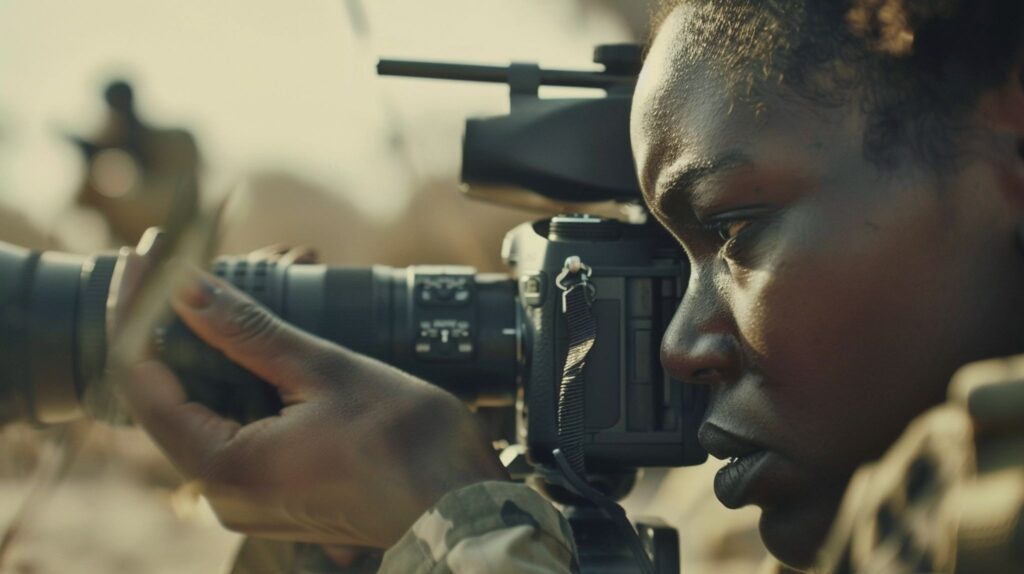
Camera motion is where most AI video tools still reveal their limitations. This is also where Runway Gen 4.5 meaningfully separates itself from earlier generations.
Testing Camera Language: Dolly, Crane, and Parallax
Runway Gen 4.5 handles basic camera instructions well:
– “Slow dolly-in” produces consistent forward motion
– “Handheld” adds controlled noise rather than chaotic jitter
– “Cinematic pan” respects horizon lines
Problems appear when stacking moves:
– Dolly + orbit often causes background warping
– Crane-down shots can distort vertical geometry
– Fast parallax reveals depth inconsistencies
Under the hood, this suggests Runway is still interpolating motion in latent space rather than simulating a coherent 3D camera model. By contrast, Sora demos suggest stronger scene-level coherence, but without public access, that remains theoretical for most creators.
Novel Elements: Bears, Fire, Crowds, and Physics
Novel elements are a great way to expose model weaknesses. In my tests:
– Animals introduce a higher hallucination risk than vehicles
– Fire and smoke remain temporally unstable
– Crowds cause facial blending beyond 5–7 individuals
The bear test was especially revealing. Runway Gen 4.5 correctly animated quadruped motion, but limb articulation degraded during camera movement. Kling performed worse here, often morphing animals mid-stride. ComfyUI-based models with custom LoRAs can outperform both, but only if you’re willing to manage noise schedules and Euler A vs DPM++ sampler tradeoffs manually.
Samplers, Schedulers, and Why You Don’t Control Them
One frustration for advanced users is that Runway hides core generation parameters:
– No access to Euler A vs Euler ancestral
– No control over CFG decay
– Also, no frame-level noise scheduling
This is a deliberate design choice. Runway optimizes for creative velocity, not granular control. If you’re coming from Stable Diffusion video workflows, this will feel restrictive. If you’re a filmmaker who wants results without parameter tuning, it’s a strength.
Real-World Filmmaking Workflows: Strengths, Limitations, and Buying Advice
Choosing an AI video tool isn’t about which one is “best.” It’s about which one wastes the least time for your workflow.
Where Runway Gen 4.5 Excels
Runway Gen 4.5 is currently strongest for:
– Short-form cinematic clips (3–8 seconds)
– Mood pieces and concept visuals
– Music videos and experimental film
– Rapid iteration with non-technical teams
The integrated editor, asset management, and reference tools make it far more usable than open pipelines for collaborative projects.
Where It Still Falls Short
Runway Gen 4.5 struggles with:
– Multi-scene narrative continuity
– Precise camera choreography
– Long-form storytelling
– Deterministic reproducibility
If you need shot matching across episodes or ads, you’ll still need external compositing, frame interpolation, or hybrid workflows combining Runway with traditional VFX tools.
Runway vs Kling vs ComfyUI: A Practical Comparison
Runway Gen 4.5
– Best balance of quality and usability
– Strong motion realism
– Limited low-level control
Kling
– Strong character identity
– Weaker motion coherence
– Less cinematic camera language
ComfyUI / Open Models
– Maximum control (seeds, samplers, LoRAs)
– Steep learning curve
– High setup and computing cost
If you’re evaluating purely on cost efficiency, Runway saves time but costs credits. ComfyUI saves money per frame but costs hours of tuning.
Buying Advice: Who Should Invest in Runway Gen 4.5?
You should invest in Runway Gen 4.5 if:
– You’re a video creator, not a model engineer
– You value iteration speed over perfect consistency
– Your projects prioritize visual impact over continuity
You should look elsewhere if:
– You need a locked character identity across scenes
– Also, you require deterministic outputs
– You enjoy deep technical control
Final Verdict
Runway Gen 4.5 is not the final answer to AI filmmaking, but it’s currently one of the most practical tools available. It handles character consistency better than previous versions, supports more believable camera motion, and integrates into real production workflows.
Just don’t confuse polish with perfection. Push it hard, with bears, camera moves, and chaos, and you’ll still find the seams. The key is knowing whether those seams matter for the stories you’re trying to tell.
Frequently Asked Questions
Q: Is Runway Gen 4.5 better than Gen-4 for character consistency?
A: Yes. Runway Gen 4.5 shows improved latent identity stability, especially for faces and clothing across short clips, though identity drift still occurs under complex motion or scene density.
Q: Can I lock seeds or samplers in Runway Gen 4.5?
A: No. Runway abstracts seed control, samplers, and schedulers. This improves usability but limits deterministic reproducibility compared to ComfyUI-based workflows.
Q: How does Runway Gen 4.5 compare to Kling for filmmaking?
A: Runway offers better cinematic motion and camera language, while Kling prioritizes character identity. The better choice depends on whether motion realism or facial consistency matters more.
Q: Is Runway Gen 4.5 suitable for long-form storytelling?
A: Not yet. It’s best suited for short clips, concept visuals, and experimental film. Long-form narratives still require hybrid workflows.