AI vs Traditional Video Production for Ads: A Cost, Quality, and Speed Comparison
Introduction: Testing AI vs $10K Traditional Video Ads
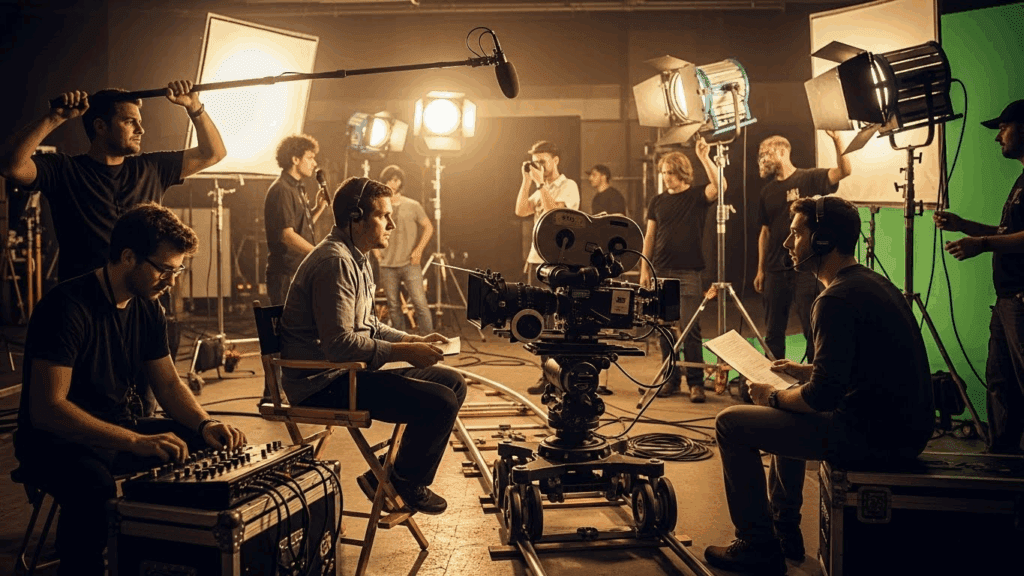
I recently tested AI-generated video ads against a $10,000 traditionally produced commercial. Same product, platform and Same targeting. The results surprised me and they challenged long-held assumptions about what it takes to produce effective traditional video ads.
If you are a marketing director, agency owner, or startup founder, you are likely facing the same question: should you invest in AI video tools or stick with traditional filming? This article breaks down that decision using a clear cost-benefit and quality comparison, with practical guidance you can apply immediately.
The Core Problem: Choosing the Right Video Production Method
Video ads are no longer optional. Platforms like YouTube, Meta, TikTok, and LinkedIn prioritize video, and audiences expect it. The challenge is deciding how to produce those videos efficiently without sacrificing performance or brand credibility.
Traditional video production promises cinematic quality but comes with high costs and long timelines. AI video production promises speed and scale but raises concerns about realism, brand fit, and audience trust. Choosing the wrong approach can waste budget or damage brand perception.
Angle: Cost-Benefit and Quality Trade-Offs
The real decision is not AI versus traditional production in absolute terms. It is about understanding where each approach delivers the highest return on investment.
AI video ads are improving rapidly. In certain scenarios, they now reach a quality threshold where audiences cannot easily distinguish them from professionally produced content. In other cases, traditional production still delivers superior results that justify the higher investment.
Step-by-Step Comparison: AI vs Traditional Video Production
Step 1: Concept Development
Traditional production typically starts with creative briefs, scriptwriting sessions, and stakeholder approvals. This process often takes one to two weeks.
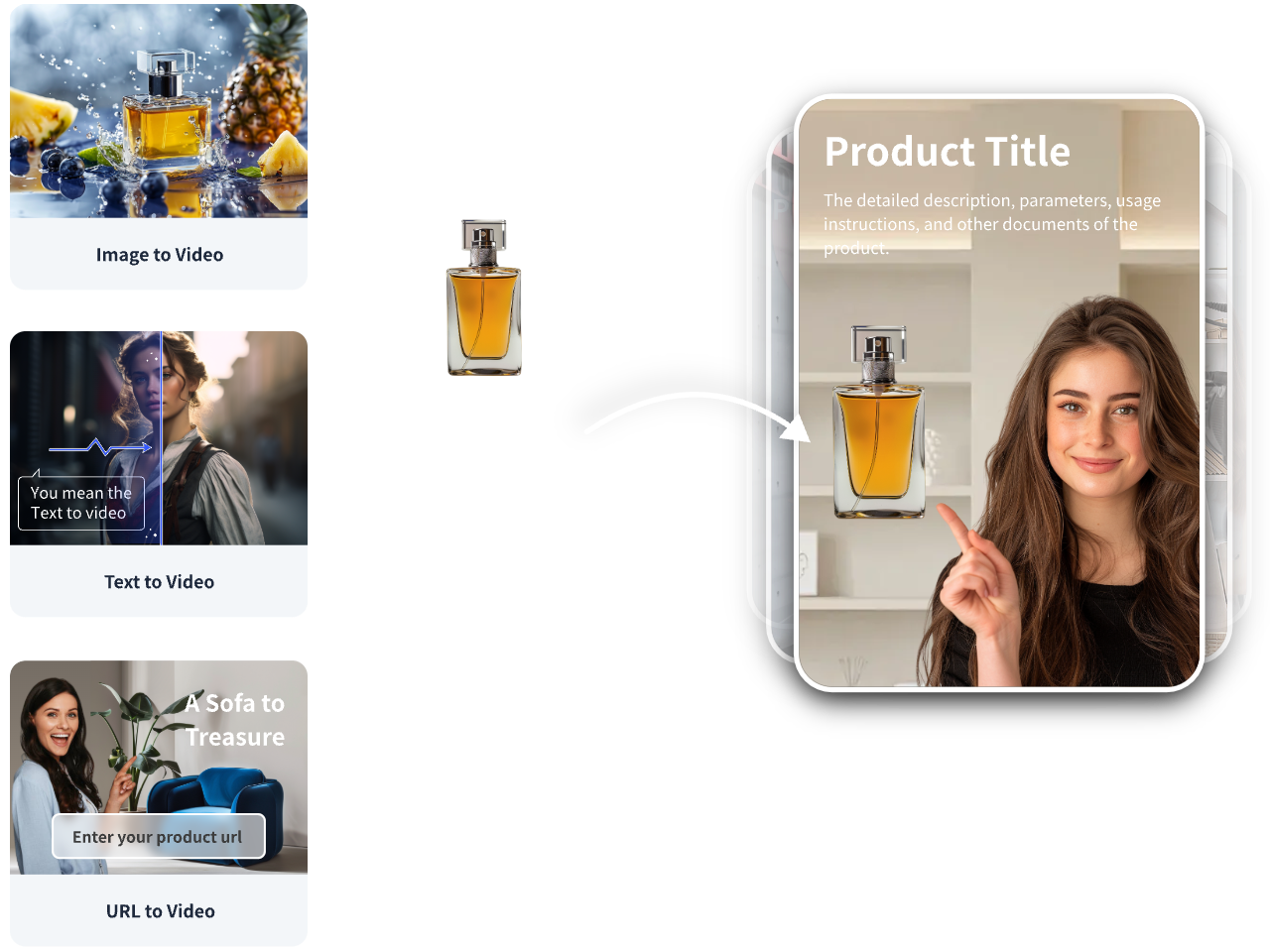
AI video tools allow marketers to input a script or prompt and generate multiple variations in minutes. Iteration is fast, and creative testing becomes easier.
Step 2: Production
Traditional production requires crew coordination, equipment rental, locations, talent, lighting, and sound. Even a simple shoot can take several days.
AI video production uses avatars, stock visuals, or generative scenes. There is no physical shoot. Production happens in software and is limited mainly by rendering time.
Step 3: Editing and Revisions
Editing traditional footage often takes days or weeks, especially when revisions are requested. Each change can add cost.
AI-generated videos can be revised instantly. Change a line, adjust pacing, or swap visuals without reshoots.
Step 4: Deployment and Scaling
Traditional ads are usually finalized as a small number of assets. Creating new versions for different audiences increases cost.
AI excels at scaling. You can generate dozens of variations for different demographics, platforms, or offers in a single day.
Quality Threshold Analysis: When AI Matches Professional Production
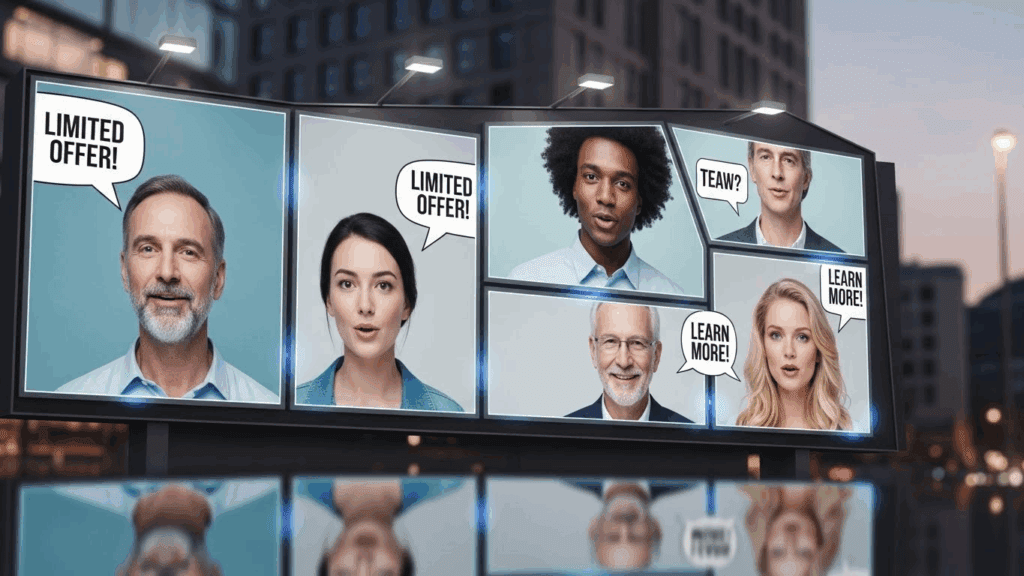
AI video ads now meet professional quality standards in specific conditions:
– Talking-head explainer ads with clear messaging
– Product demos using screen recordings or stylized visuals
– UGC-style ads designed to feel native to social platforms
– Performance-focused ads where clarity matters more than cinematic polish
In these cases, viewers care about the message, not the production technique. Engagement and conversion rates often match or exceed traditionally produced ads.
However, AI still struggles with:
– Emotional storytelling with subtle human expressions
– High-end brand films requiring cinematic visuals
– Complex physical interactions or dynamic group scenes
The quality threshold is context-dependent. For direct-response and mid-funnel campaigns, AI often meets or exceeds requirements.
Timeline Comparison: Hours vs Weeks
Speed is one of the most significant advantages of AI video production.
AI-generated video ads can go from idea to launch in a few hours. This enables rapid testing, faster feedback loops, and real-time optimization.
Traditional production typically takes three to six weeks when planning, filming, editing, and approvals are included. This timeline limits agility and slows experimentation.
For startups and performance marketing teams, speed often outweighs marginal gains in production quality.
Cost Breakdown and ROI Considerations
A typical traditional video ad costs between $5,000 and $50,000, depending on complexity. Costs include crew, equipment, talent, locations, and post-production.
AI video platforms usually operate on subscription models ranging from $30 to $500 per month. Even enterprise plans are significantly cheaper than a single professional shoot.
ROI improves when:
– You need frequent creative refreshes
– You run ads across multiple platforms
– You test multiple hooks and messages
Traditional production can still justify its cost when a single flagship video will be used for months or years.
Use Cases Where AI Video Ads Excel
AI video production is ideal for:
– Performance marketing campaigns
– A/B testing creative variations
– Startup and SMB advertising
– Product launches with evolving messaging
– Internal training and onboarding videos
In these scenarios, speed, cost efficiency, and scalability matter more than cinematic quality.
Use Cases Where Traditional Production Still Wins
Traditional video production remains the best choice for:
– Brand awareness campaigns with emotional storytelling
– High-end luxury or lifestyle brands
– Television commercials
– Videos featuring real customers or founders
– Complex narratives requiring physical environments
These videos benefit from human nuance and visual depth that AI has not fully replicated.
Practical Examples from Real Campaigns
In my test, the AI-generated video ad achieved a cost per click only 12 percent higher than the $10,000 professionally produced ad. However, because the AI version cost less than 2 percent of the traditional budget, its overall ROI was significantly higher.
Another campaign used AI to generate 20 variations of a single ad concept. The top-performing AI variation outperformed the original professionally produced video by 18 percent in conversion rate.
These results highlight how AI changes the economics of video advertising.
Common Mistakes Marketers Make When Choosing Video Production
– Using AI for high-emotion brand storytelling
– Overinvesting in production quality for direct-response ads
– Ignoring audience expectations on specific platforms
– Failing to test multiple variations
– Treating AI as a one-click solution instead of a creative tool
Avoiding these mistakes ensures better outcomes regardless of the production method.
Final Checklist for Deciding Between AI and Traditional Video Ads
– Define the campaign goal clearly
– Identify the required emotional depth
– Assess budget and timeline constraints
– Consider the need for creative iteration
– Match production quality to audience expectations
– Test before committing to large spends
Conclusion: How to Choose the Right Approach
AI versus traditional video production is not a binary choice. The smartest advertisers use both strategically. AI handles speed, scale, and experimentation. Traditional production delivers depth, emotion, and brand authority.
Understanding where each approach excels allows you to allocate budget more effectively and produce video ads that perform.
Frequently Asked Questions
Q: Are AI video ads good enough for paid advertising?
A: Yes, for many performance-driven campaigns, AI video ads meet or exceed the quality required to generate clicks and conversions.
Q: Do AI video ads hurt brand credibility?
A: Not when used appropriately. Problems arise only when AI is used for campaigns that require deep emotional storytelling or premium brand positioning.
Q: How much can AI video production reduce costs?
A: AI video tools can reduce production costs by 90 percent or more compared to traditional filming.
Q: Can AI replace traditional video production entirely?
A: No. Traditional production remains essential for high-end brand films, emotional storytelling, and complex real-world scenes.
Q: Should startups use AI or traditional video ads?
A: Most startups benefit from AI video ads due to lower costs, faster timelines, and the ability to test multiple messages quickly.