Google Agent Smith AI · Antigravity, Postman Agent Builder & n8n Memory
Google Agent Smith AI: What It Is, How It Works, and Practical Alternatives You Can Use Now
Learn what Google Agent Smith AI reportedly does inside Google, why it is not publicly available, and how to emulate its agentic coding workflow with Postman AI Agent Builder and n8n memory.
By the VidAU Editorial Team · Google Agent Smith AI guide · Antigravity, internal coding agents, asynchronous task queues, Postman Agent Mode, postman ai agent builder, n8n Postgres Chat Memory, PostgreSQL, Supabase, MCP, Claude Code, and VidAU creative output tools
Videos report that Google Agent Smith AI is an internal, Antigravity-based coding agent that runs tasks asynchronously across Google tools. It is not publicly available. Below I summarise what those demos say it does and share a hands-on playbook to approximate the workflow using Postman Agent Mode/AI Agent Builder and n8n Postgres Chat Memory.
Engineers keep asking what Google Agent Smith AI actually is and whether they can access it. Based on multiple recent videos, Agent Smith is an internal-only autonomous coding agent at Google, built on Antigravity, that executes tasks asynchronously and integrates with internal tools and workflows.
I reviewed and analysed the most-cited videos: they consistently describe an internal, task-running agent rather than a chatbot UI, with reports of mobile control, internal integrations, and queue-based execution. Below I explain what those sources show and how to mirror the core patterns using Postman Agent Mode/AI Agent Builder and n8n Postgres Chat Memory.
Quick Summary
- Agent Smith is an internal Google coding agent built on Antigravity that runs tasks asynchronously and is not publicly available.
- For practical replication, Postman Agent Mode and the postman ai agent builder can orchestrate API debugging, testing, and documentation with OpenAI and MCP.
- For durable memory, n8n with the Postgres Chat Memory node on PostgreSQL or Supabase persists session histories via session IDs.
- Engineering teams and platform squads benefit most from combining Postman for orchestration and n8n for persistent memory while Agent Smith remains internal-only.
What Is Google Agent Smith AI?
Google Agent Smith AI is, according to recent videos, an internal Google autonomous coding agent that sits on Antigravity, integrates with internal tools, and runs tasks asynchronously rather than operating as a simple chat interface. The videos emphasise that it coordinates work, executes actions, and can be controlled without constant human prompting.
Definition
Google Agent Smith AI is described in recent videos as an internal Google autonomous coding agent built on Antigravity, designed to run asynchronous tasks, coordinate work, execute actions, and integrate with internal tools rather than behave like a simple chatbot.
Key Takeaways
- Videos describe an internal-only tool, not a consumer product.
- Antigravity is cited as the foundation for agentic orchestration.
- The model focuses on doing tasks, not just chatting.

How Does Google Agent Smith Ai Reportedly Work?
Videos report that Agent Smith runs tasks asynchronously across Google tools, can be triggered or guided via phone, and works on queued tasks with progress updates. One video claims it is already influencing production code inside Google and even compares it to Claude Code on a real task; treat those numbers and head-to-head results as that video’s claims, not confirmed public data.
- Foundation: Antigravity is repeatedly referenced as the base platform enabling tool integration and agent orchestration.
- Modality: Asynchronous execution with internal services, not a linear chat thread.
- Integration: Hooks into Google-internal systems to plan, execute, and verify work.
- Access: Internal-only by all current public accounts in those videos.
I reviewed these videos as an external observer; where they show comparative claims (for example, Agent Smith vs Claude Code), I present them as reported, not as independently verified benchmarks.
Verification note
Treat comparative claims, production-code influence claims, and head-to-head results as reported by videos, not as independently verified public benchmarks.
Is Google Agent Smith AI publicly available?
No. Based on the videos, Agent Smith is internal-only, with access reportedly restricted inside Google due to demand. There is no public sign-in, API, or program for external developers disclosed in these sources. If you see public endpoints advertised, assume they are unrelated or unofficial.
Access warning
Do not plan projects around getting access to Google Agent Smith AI. Current public accounts in the reviewed videos describe it as internal-only, with no public sign-in, API, or external developer program.
How Can I Emulate Agent Smith-Like Workflows With Postman Agent Mode And AI Agent Builder?
You can approximate the orchestration and task-running behaviour using Postman’s Agent Mode and Postman AI agent builder. Our team reviewed Postman’s recent demos showing how Agent Mode can fix broken requests, generate tests, and document endpoints from natural language, and how AI Agent Builder connects models and tools.
Step-by-step pattern:
1) Set up a workspace with target APIs
Set up a workspace with target APIs: add collections for the systems you want the agent to touch.
2) Enable Agent Mode
Enable Agent Mode: in Postman, use Agent Mode to accept natural-language prompts for tasks like fixing requests or adding tests.
3) Wire in OpenAI via Agent Builder
Wire in OpenAI via Agent Builder: connect OpenAI as the LLM, then define capabilities your agent can call (debug, test generation, doc drafting).
4) Add MCP tool access
Add MCP tool access: where supported, expose external tools via MCP so the agent can call utilities rather than only generating text.
5) Create prompts for tasks
Create prompts for tasks: examples include ‘fix this request and explain the error’ and ‘add 4xx/5xx tests to this collection.’
6) Run in batches
Run in batches: use collection runners or flows to push the agent’s actions across endpoints or environments.
7) Review and commit
Review and commit: require human approval gates before CI/CD, mirroring the guardrails an internal agent would observe.
This workflow gives you an agent that does work on your API surface, similar in spirit to the internal reports about Agent Smith coordinating and executing actions.
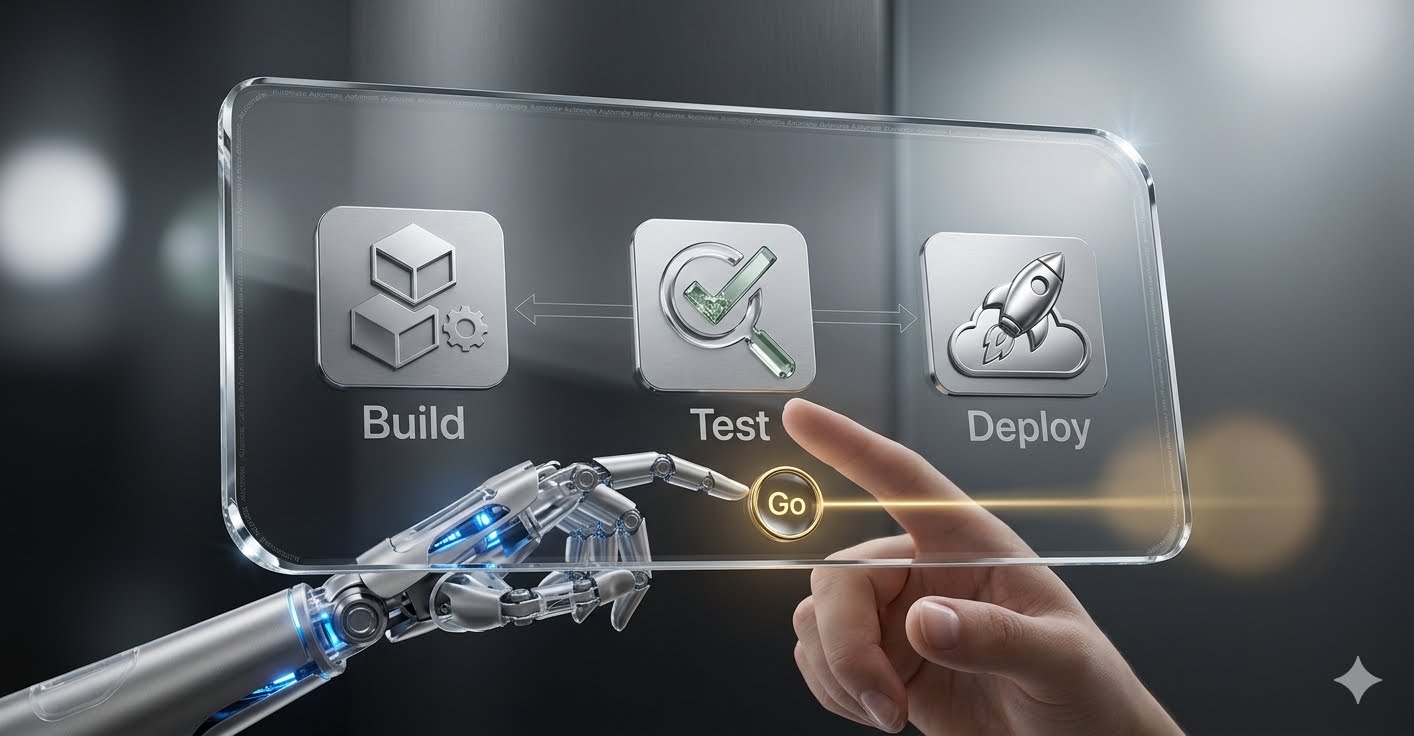
How Do I Make Agent Memory Durable With N8n’s Postgres Chat Memory On Postgresql?
Use n8n with the Postgres Chat Memory node to persist long-term context beyond in-memory sessions. A tutorial video shows replacing the default Simple Memory (which resets on save) with PostgreSQL, commonly via Supabase, to store conversations by session ID.
Implementation checklist:
- Database: spin up PostgreSQL using Supabase for a quick, hosted option.
- Credentials: add Supabase credentials in n8n, ensuring network and SSL settings are correct.
- Memory node: insert the Postgres Chat Memory node in your agent flow.
- Session IDs: pass a stable sessionId for each user or task to retrieve prior messages.
- Schema: let the node create or map a table that stores role, content, timestamp, and session foreign keys.
- Testing: verify that history survives workflow saves and restarts, then test concurrent sessions.
Trade-offs and tips:
- Storage growth: archive or summarise older threads to keep tables performant.
- Privacy: encrypt or filter sensitive data before persistence.
- Recovery: snapshot the DB and have a rollback plan.
If you prefer code-first, you can mirror the same pattern with any PostgreSQL client, but the n8n node gives you a ready-made flow primitive.
Memory tip
Replace ephemeral memory with PostgreSQL-backed memory when context must survive workflow saves, restarts, and concurrent sessions. Use stable session IDs and archive or summarise older threads to manage growth.
Quick Comparison: Agent Smith (Internal) Vs Postman Vs N8n Memory
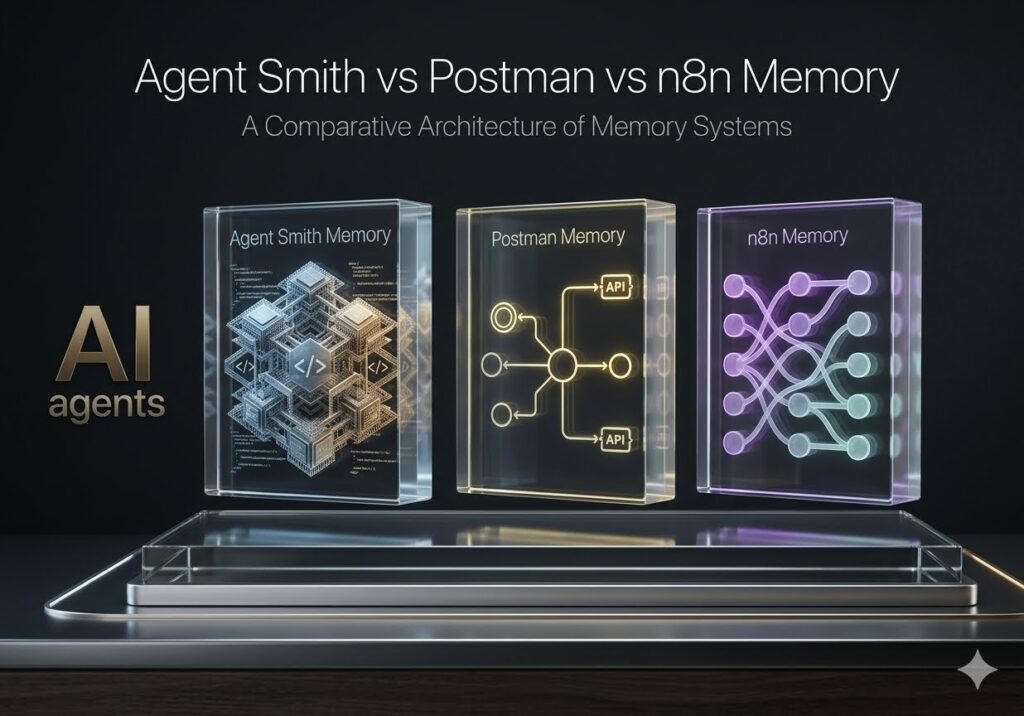
| Option | Availability | Best For |
|---|---|---|
| Agent Smith (internal) | Not public | Inspiration, process model |
| Postman Agent Mode/AI Agent Builder | Public product | Orchestrating API tasks |
| n8n + Postgres Chat Memory | Public OSS + DB | Durable agent memory |
From our internal analysis of tool announcements like Runway’s MCP post, a broader pattern is clear: agent ecosystems are converging on tool calling via standards such as MCP and on durable context via external stores. That supports the same architectural direction the videos ascribe to Agent Smith.
Who Should Use Which Approach Right Now?
- Individual engineers: start with Postman Agent Mode to fix requests, generate tests, and write docs directly in your workspace.
- Platform and API teams: pair Postman orchestration with n8n Postgres Chat Memory to preserve context across tickets, sprints, and environments.
- Security-conscious orgs: keep LLM prompts and outputs minimal in memory, redact secrets, and gate writes to critical repos behind human review.
VidAU is not a coding agent or IDE extension.
If you are also building creative or marketing agents, VidAU is an AI video ad platform that generates video ads from product URLs, images, or scripts in 49 languages. For downstream content tasks, see VidAU AI Video, Text to Video, URL to Video, UGC Avatars, and VidAU Text to Speech.
VidAU workflow
Where VidAU Fits Beside Agent Smith-Like Coding Pipelines
- Use Postman Agent Mode or AI Agent Builder for orchestration: Let the agent fix requests, generate tests, draft docs, and operate across API collections with human review gates.
- Use n8n Postgres Chat Memory for persistent context: Store session histories by stable session ID in PostgreSQL or Supabase so agent context survives saves, restarts, and concurrent sessions.
- Use MCP-style tool access where supported: Expose external tools through consistent interfaces so agents can call capabilities rather than only generate text.
- Use VidAU AI Video, Text to Video, URL to Video, UGC Avatars, and VidAU Text to Speech for downstream creative tasks: When the broader workflow produces marketing scripts, product pages, or content briefs, route approved outputs into VidAU.
- Keep the limitation clear: VidAU is not a coding agent or IDE extension; it is a creative output tool inside broader agentic pipelines.
What Are The Key Risks And Constraints?
- Availability: Google Agent Smith AI remains internal; do not plan projects around getting access.
- Hallucinations: agent actions should be explainable and reviewable; log diffs and decisions.
- Permissions: scope tokens and service accounts tightly; use least privilege.
- Rate limits: batch actions and backoff to avoid throttling.
- Memory bloat: summarise long threads and expire stale sessions in PostgreSQL.
Risk note
Agent Smith-like systems need action logs, scoped permissions, rate-limit handling, persistent memory hygiene, and human review gates. Do not treat them as ordinary chatbots.
Common Mistakes To Avoid
- Treating it like a chatbot: Agent Smith-like systems are action runners; design with tools and queues.
- Using ephemeral memory: the default Simple Memory in some stacks resets; use Postgres Chat Memory for persistence.
- Skipping guardrails: require approvals before merges or prod changes.
- Mixing sessions: never reuse session IDs across users or tasks.
- Ignoring MCP: where possible, expose tools via MCP to standardise calling.
Mistake to avoid
Do not design Agent Smith-like workflows as chat prompts alone. Design them as action systems with queues, tools, durable memory, stable session IDs, MCP-style access, and human approval gates.
Advanced Notes On Mcp, Claude Code, And Ecosystem signals
- Claude Code: one video claims a head-to-head with Agent Smith; use such comparisons as directional, not canonical.
- MCP: standardising tool access helps agents call capabilities in IDEs and assistants; Postman demos align with this.
- Ecosystem trend: our team reviewed social announcements like Runway’s MCP post that highlight a shift toward agent-triggered creation from coding environments. That supports building for tool-call patterns, not single-app UIs.
- Search phrasing: queries like ‘Google Agent Smith AI agent google internal agent smith’ reflect interest in internal-only access and replication patterns.
Key takeaway
Final Thoughts
Agent Smith, as reported, shows what an internal, Antigravity-based, task-running coding agent looks like in production. While there is no public access, you can get close by combining Postman Agent Mode/AI Agent Builder for orchestration with n8n’s Postgres Chat Memory for durable context on PostgreSQL or Supabase.
If you are also designing agents that produce creative assets for marketing, consider using VidAU for downstream video ad generation: explore VidAU AI Video, Text to Video, URL to Video, UGC Avatars, and VidAU Text to Speech. VidAU is not a coding agent, but it fits well as a creative output tool in broader agentic pipelines.
FAQ
Here are answers to common questions about Google Agent Smith AI, internal Google Agent Smith access, Antigravity, asynchronous coding agents, Postman Agent Mode, postman ai agent builder, n8n Postgres Chat Memory, PostgreSQL, Supabase, Claude Code, IDE agents, persistent memory, and MCP.
What is Google Agent Smith AI?
Google Agent Smith AI is, per recent videos, an internal autonomous coding agent at Google built on Antigravity that runs tasks asynchronously and integrates with internal tools. It focuses on executing work rather than only chatting, and current reports indicate it is not available to the public.
Is Google Agent Smith AI publicly available?
No. The videos reference internal-only access, with no public sign-in or external API disclosed. If you encounter public endpoints claiming to be Agent Smith, treat them as unrelated or unofficial until Google makes an announcement.
How does Agent Smith reportedly work inside Google?
Videos describe Agent Smith as an Antigravity-based agent that runs queued tasks asynchronously, integrates with internal systems, and can be controlled via phone. It acts on workflows, provides progress, and aims to reduce manual coordination. Treat performance claims as the videos’ assertions, not verified benchmarks.
Can I replicate Agent Smith with publicly available tools?
You can approximate core behaviors using Postman Agent Mode and postman ai agent builder for orchestration and n8n with the Postgres Chat Memory node for durable context. Combine OpenAI as the model, MCP for tool access where available, and PostgreSQL or Supabase for persistent memory.
What is Antigravity in this context?
In the videos, Antigravity is named as the internal platform underpinning Agent Smith’s agentic orchestration and tool integrations. It is not a publicly documented product for external developers, so use it as a conceptual anchor rather than something you can adopt directly.
How does this compare to Claude Code or IDE agents?
One video claims a head-to-head between Agent Smith and Claude Code. You can get similar action-first workflows today by pairing Postman’s Agent Mode for API tasks with memory and approvals. For coding-in-IDE experiences, continue using IDE agents, but add guardrails and persistence.
How do I add persistent memory to my agent?
Use n8n’s Postgres Chat Memory node with PostgreSQL and a stable session ID per user or task. Supabase provides a quick hosted PostgreSQL option. This replaces ephemeral memory with durable storage so your agent can recall context across runs and restarts.
What is MCP and why does it matter here?
MCP is a model context protocol that standardises how agents access tools. It matters because Agent Smith-like systems depend on reliable tool calling. Postman’s demos and ecosystem announcements suggest agents are moving toward MCP-style integrations to coordinate actions across environments.