AI Video Tool Comparison · Revid vs HeyGen
Revid vs HeyGen: Which AI Video Tool Is Right for You?
Compare Revid vs HeyGen on features, pricing, avatars, and ease of use. See which AI video tool fits short-form creators, marketers, and small teams best.
By the VidAU Editorial Team · AI video editing tools guide · Short-form and avatar workflow comparison
Choosing between Revid and HeyGen comes down to one question: do you want fast short-form throughput or polished avatar presenters?
For most creators, the Revid vs HeyGen choice splits cleanly: Revid is built for fast short-form content and link-to-video automation, while HeyGen is built around realistic AI avatars and talking-head presenter videos. If your goal is high-volume Reels and Shorts, Revid usually fits. If you need a believable spokesperson reading a script, HeyGen tends to win.
This comparison is for content creators, marketers, and small business owners weighing both tools on features, pricing logic, and real use cases. We reviewed product positioning and public buyer sentiment to flag where each tool earns its cost, and where credit-based pricing can quietly eat your budget.
Quick Summary
- Revid fits short-form creators who want link-to-video automation, scripting, and publishing in one workflow for TikTok, Reels, and Shorts.
- HeyGen fits teams that need realistic AI avatars and talking-head presenter videos, though good results often require iteration and a paid plan.
- Both tools use credit-based pricing, so the real cost is often failed or inconsistent generations, not just the monthly sticker price.
- Marketers running product ads at scale may prefer a URL-to-video ad platform like VidAU AI over either tool for ecommerce creatives.

What Are Revid and HeyGen?
Revid is an AI video generator focused on short-form content automation. HeyGen is an AI video platform built around realistic AI avatars and voice synthesis for presenter-style videos. Both turn scripts or prompts into video, but they aim at different jobs.
Revid positions itself less like a classic editor and more like a viral-content operating system. Its homepage bundles idea sourcing, scriptwriting, voices, editing, link-to-video, and publishing into one growth-focused workflow. Revid markets a flow where you paste a link and the AI analyzes it and turns it into a video, with high-resolution exports and no watermark.
HeyGen leans into AI avatars, lip sync, and multilingual voice. You pick a presenter, type a script, and the avatar speaks it. That makes HeyGen popular for training videos, product explainers, and faceless channels that still want a human-looking spokesperson.
Key Takeaways
- Revid is throughput-first: idea to published short-form video in fewer steps.
- HeyGen is presenter-first: realistic talking avatars from a typed script.
- Your choice depends on whether you need volume or a believable on-screen face.
Why the Revid vs HeyGen Choice Matters for Your Budget
The revid vs heygen decision matters because both tools price on credits, and credits get spent whether a generation succeeds or fails. Buyers rarely complain about a tool only for quality. They complain when failed or inconsistent outputs feel expensive.
In our review of public buyer sentiment, Revid’s profile shows this tension clearly. Trustpilot lists 211 reviews and a 3.7 rating, with users praising the clean, intuitive workflow while others report confusing credits, inconsistent characters, deformities, and freezes during generation. That pattern matters more than any single feature.
HeyGen faces a similar expectation gap with avatars. One creator we reviewed described early trial results as bad, then saw better outcomes only after moving to a paid creator package and refining inputs. Realistic avatars are not plug-and-play. Plan for iteration and better source assets.
Budget warning
Credits get spent whether a generation succeeds or fails. Plan for iteration, failed generations, inconsistent outputs, and the source assets needed to improve results.
Core Features Compared: Avatars and Text-to-Video
Here is how Revid and HeyGen line up on the features most creators care about.
| Feature | Revid | HeyGen |
|---|---|---|
| Main strength | Short-form automation and link-to-video | Realistic AI avatars and lip sync |
| Text-to-video | Yes, script and editing focused | Yes, avatar-narrated focus |
| Best output | Reels, Shorts, TikTok | Presenter and explainer videos |
| Publishing | Built-in distribution workflow | Export and download |
| Languages | 32 languages claimed | Multilingual voice and dubbing |
Revid wins on speed for clip-style content. Its link-to-video flow is genuinely useful when you want to turn an article or page into a quick short without scripting from scratch. The text-to-video and voice tools sit inside one growth-oriented dashboard.
HeyGen wins on the avatar itself. If your video needs a person looking at the camera and reading a script, HeyGen’s lip sync and voice quality are its core reason to exist. That focus is also its limit: it is less suited to fast, montage-style short-form content.
Feature takeaway
Revid wins on speed for clip-style content. HeyGen wins when the video needs a person looking at the camera and reading a script.
Revid vs HeyGen Pricing and Credit Logic
Both tools run on credit-based plans, so the smarter question is not the headline price but how often you redo a generation. Pricing complaints in AI video usually mean expensive failure, not just a high sticker price.
With Revid, the value comes when its clean workflow produces usable shorts on the first or second try. When characters drift or generations freeze, you burn credits without an asset. With HeyGen, avatar polish improves on higher plans, which means the budget conversation often pushes you upward, not just sideways.
A few practical pricing tips:
- Test each tool with free or low-tier credits before committing to an annual plan.
- Track your redo rate. Two failed generations can cost more than a competitor’s success.
- Match the plan to volume. Occasional creators and daily publishers have very different break-even points.
If your priority is product and ecommerce video at scale, you may want a tool built specifically for ads. VidAU AI Video generates video ads from a product URL, image, or script, which can reduce the trial-and-error cycle that drains credits on general-purpose tools.
Pricing tip
Track your redo rate. The real cost is cost per finished video, not the monthly sticker price.
Best AI Video Editing Tools 2026 by Use Case
The best AI video editing tools 2026 conversation is really about matching the tool to the job. Neither Revid nor HeyGen is the right answer for every workflow.
| Use Case | Better Fit | Why |
|---|---|---|
| High-volume short-form | Revid | Link-to-video and publishing in one flow |
| Talking-head explainers | HeyGen | Stronger avatar and lip sync |
| Product and ecommerce ads | VidAU AI | URL and image to ad video |
| Beginner free editing | CapCut | Easy entry, though credit-gated now |
Worth a note on CapCut, since many creators land here first. In our review of community sentiment, users describe CapCut moving its free AI video creation behind a credit system, which pushed repeat creators to look for alternatives. Once free editing becomes credit-gated, the comparison shifts from capability to economic fit.
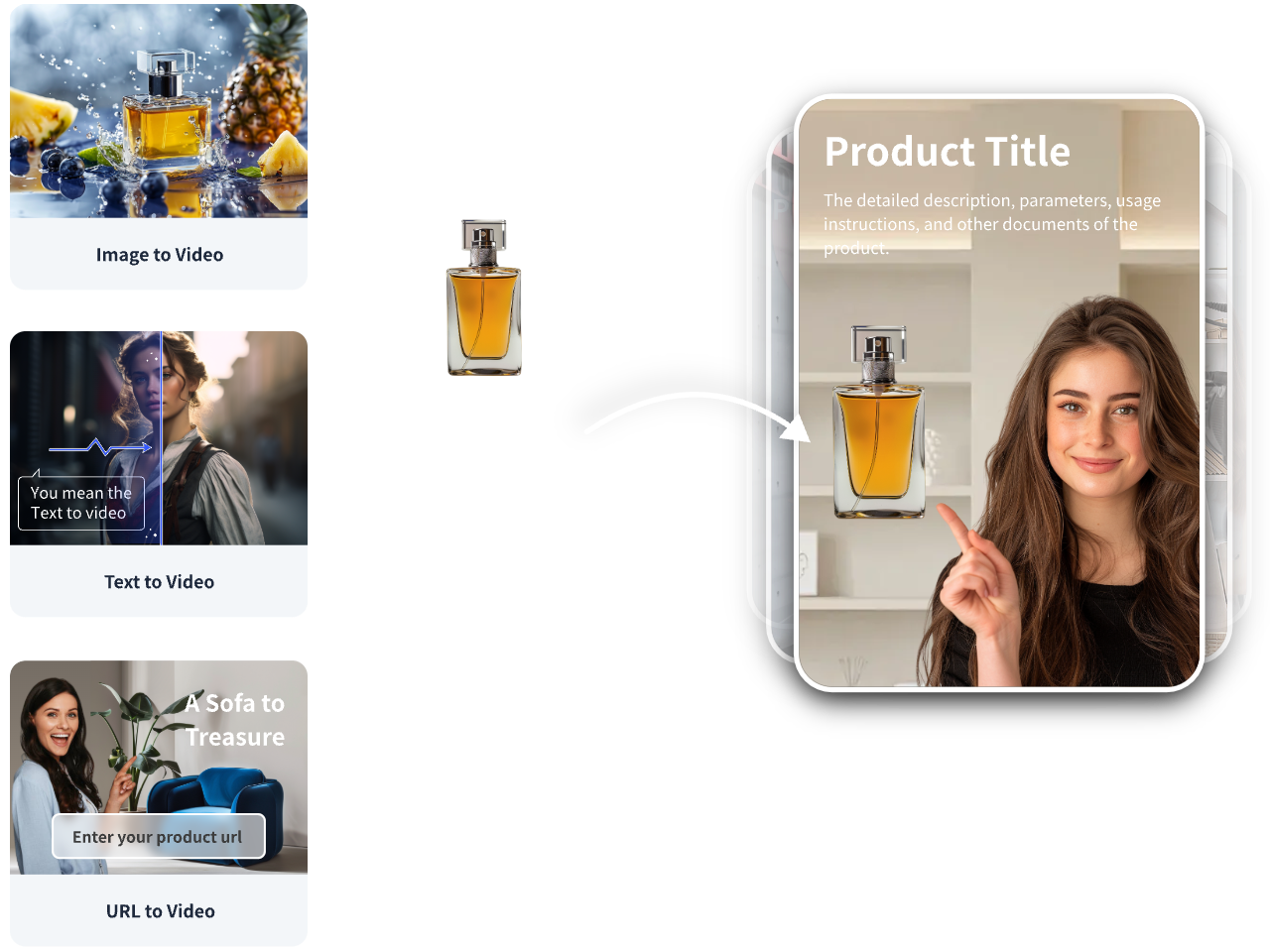
For turning a webpage or product page straight into a video, URL to Video covers a similar job to Revid’s link-to-video promise, with an ad-focused output. For voice work across either workflow, Text to Speech handles narration without an on-screen avatar.
Use-case rule
Match the tool to the job: Revid for shorts, HeyGen for presenters, VidAU AI for product and ecommerce ads, and CapCut for beginner editing when credits still fit.
HeyGen Alternatives Worth Considering
The most common reason creators search for HeyGen alternatives is cost and feature flexibility, not avatar quality. If HeyGen feels too expensive for your output volume, a few directions help.
- For short-form throughput, Revid is the closest direct alternative.
- For UGC-style spokesperson ads, look at UGC Avatars, which targets ad creatives rather than corporate presenters.
- For prompt or script driven clips, Text to Video keeps the workflow simple.
- For repurposing existing footage instead of generating from scratch, VidAU Vid Remix reworks what you already have.
VidAU is an AI video ad platform that generates video ads from product URLs, images, or scripts in 49 languages. It is not built to be a polished corporate-avatar studio, so if your only need is a single realistic presenter reading long scripts, HeyGen may still serve you better. Match the tool to the dominant job.
Honest limitation
VidAU is not built to be a polished corporate-avatar studio, so if your only need is a single realistic presenter reading long scripts, HeyGen may still serve you better.
Common Mistakes When Choosing Between Revid and HeyGen
The biggest mistake is buying on demo quality instead of repeat-use cost. A great sample video means little if your real workflow burns credits on redos. Test with your own scripts and assets first.
Other frequent errors:
- Expecting realistic avatars on the first try. Plan for iteration and stronger source inputs.
- Choosing Revid for long presenter videos, or HeyGen for fast montage shorts.
- Ignoring publishing and export needs until after you have committed to a plan.
- Comparing only monthly price while ignoring how often each tool fails for your use case.
Key Takeaways
- Judge tools by failure cost, not demo polish.
- Use the right tool for the format: Revid for shorts, HeyGen for presenters.
- Run a real test workflow before paying annually.
Mistake to avoid
Do not buy on demo quality alone. A great sample video means little if your real workflow burns credits on redos.
Generate Videos Using VidAU
Use VidAU AI Video, URL to Video, Product Sample to Video, UGC Avatars, Text to Speech, Vid Remix, Object Remover, and Video Enhancer when your main goal is product, ecommerce, and ad video production at scale.
VidAU workflow
Where VidAU fits beside Revid and HeyGen
- Use Revid for short-form throughput: Choose Revid when you want link-to-video automation, scripting, editing, and publishing in one growth-focused workflow.
- Use HeyGen for presenter videos: Choose HeyGen when you need realistic AI avatars, lip sync, and a believable on-screen spokesperson reading a script.
- Use VidAU AI Video for ecommerce ads: Generate video ads from product URLs, images, or scripts when product and ad creative is the dominant job.
- Use URL to Video and Product Sample to Video for product workflows: Turn webpages, product pages, and product samples into ad-ready videos with less trial-and-error.
- Use Vid Remix, Object Remover, and Video Enhancer for scaling: Repurpose existing footage, clean assets, and sharpen output so your main generation credits stay focused on the core video.
Advanced Tips for Scaling AI Video Production
Once you pick a tool, scale by reducing your redo rate. Tighten scripts before generating, reuse approved voices and avatars, and standardize your aspect ratios early so 9:16 and 1:1 exports do not require rework.
For teams running many product creatives, separate the steps. Generate the base video in one tool, then clean assets with utilities like Object Remover or sharpen quality using Video Enhancer. This keeps your main generation credits focused on getting the core video right.
If you are producing ads from a product catalog, a batch-friendly ad workflow like Product Sample to Video often beats forcing a general AI video tool to behave like an ad engine.
Scaling tip
Reduce redo rate by tightening scripts before generation, reusing approved voices and avatars, and standardizing aspect ratios early.
Key takeaway
Final Thoughts
In the revid vs heygen decision, pick Revid when you need fast short-form volume and link-to-video automation, and pick HeyGen when you need a realistic talking avatar reading a script. Both run on credits, so test each with your real content before committing, and judge them by how expensive failure feels, not by the demo.
If your main goal is product and ad video rather than presenter clips or general short-form, try generating an ad directly from your product page with VidAU AI Video and compare the output against your current workflow.
FAQ
Here are answers to common questions about Revid vs HeyGen, short-form video, pricing, realistic AI avatars, HeyGen alternatives, link-to-video workflows, ecommerce ads, best AI video editing tools 2026, wasted credits, VidAU, and spokesperson videos.
Is Revid better than HeyGen for short-form video?
For short-form video, Revid is usually the better fit. It is built around fast idea-to-publish workflows, link-to-video automation, and scripting in one dashboard. HeyGen focuses on realistic avatars and presenter-style videos, which is less suited to quick montage-style Reels, Shorts, and TikTok content.
Which is cheaper, Revid or HeyGen?
Both use credit-based pricing, so the cheaper option depends on your redo rate, not just the monthly fee. Failed or inconsistent generations spend credits without producing a usable video. Test each tool with free or low-tier credits first, then compare cost per finished video rather than headline plan prices.
Does HeyGen make realistic AI avatars?
HeyGen is known for realistic AI avatars and lip sync, but results are not plug-and-play. Public user sentiment shows some early trials disappoint until creators refine inputs or upgrade to a paid plan. Expect iteration, clean source assets, and budget for higher tiers if avatar realism is your priority.
Why do creators look for HeyGen alternatives?
Creators look for HeyGen alternatives mainly because of cost and feature flexibility, not avatar quality. As credit-based pricing and higher tiers add up, repeat creators search for tools that fit their volume and budget better. Common directions include Revid for short-form and ad-focused platforms for product video.
Can Revid turn a link into a video?
Yes. Revid markets a link-to-video workflow where you paste a URL, the AI analyzes it, and it turns the content into a video. This is useful for repurposing articles or pages into short-form clips. Ad-focused platforms offer a similar URL-to-video approach aimed at product and marketing creatives.
Is Revid good for product or ecommerce ads?
Revid is built mainly for short-form viral content, not dedicated product ads. It can work, but ecommerce sellers often prefer ad-specific tools that generate video from a product URL, image, or sample. That focus tends to reduce trial-and-error and keeps credits going toward usable ad creatives.
What are the best AI video editing tools 2026 for beginners?
Beginners often start with CapCut for its easy interface, though much of its AI video generation now sits behind credits. For automated short-form, Revid is approachable. For presenter videos, HeyGen is beginner-friendly once you accept iteration. Choose based on the dominant job rather than feature lists alone.
How do I avoid wasting credits on AI video tools?
Reduce wasted credits by tightening your script before generating, reusing approved voices and avatars, and standardizing aspect ratios early. Test new tools with free credits, track your redo rate, and match your plan to actual volume. Most credit waste comes from regenerating videos that fail or drift from the prompt.
Does VidAU compete with Revid and HeyGen?
VidAU overlaps with both in AI video generation but focuses on video ads from product URLs, images, or scripts in 49 languages. It is not a corporate-avatar studio like HeyGen, and it targets ad creatives more than viral short-form. For product and ecommerce video, it can be a stronger fit than either tool.
Which tool should I pick if I need a spokesperson video?
For a true spokesperson or presenter video, HeyGen is the stronger choice because its avatars and lip sync are its core feature. If you want UGC-style ad spokespeople rather than corporate presenters, an ad-focused avatar tool may fit better. Match the avatar style to your audience and platform.