VidAU Editorial · AI Search
Latest AI Models: DeepSeek Update, Seedance 2.5, MiniMax H3, Gemini Robotics, and AMD
Stay current on the newest AI models and releases: DeepSeek’s latest update, Seedance 2.5, MiniMax H3, Gemini Robotics progress, and AMD’s AI model news—plus how to choose the right model.
By the VidAU Editorial Team · Reviewed before publishing

The latest AI models just landed DeepSeek’s update, ByteDance’s Seedance 2.5, MiniMax H3, Google’s Gemini Robotics progress, and AMD’s model announcements and this roundup shows exactly what’s new and why it matters. If you’re tracking the newest ai models for near-term evaluations, start here.
Keeping pace with the latest ai models is now a weekly necessity for US developers, AI practitioners, technical PMs, and business leaders. This explainer distills what changed, why it matters, and how to evaluate these newest ai models against your real workloads without getting lost in hype.
Quick Summary
• DeepSeek and Seedance 2.5 headline the latest ai models for near term coding reliability and controllable video generation.
• OpenAI latest models remain the baseline for comparison on reasoning, multimodal I O, and latency.
• Practical evaluation hinges on API or open weight access, context window, video controls specs, robotics SDK ROS 2, and AMD NVIDIA deployment paths.
• US developers, AI teams, and product leaders benefit most by mapping each release to concrete coding, video, or robotics tasks.
What Is Latest AI Models?
Latest ai models are the most recently released or updated AI systems across coding, multimodal, video generation, robotics control, and hardware aligned stacks. In this roundup, that includes DeepSeek’s coding update, ByteDance’s Seedance 2.5 for video, MiniMax H3 as an open weight contender, Google’s Gemini Robotics progress, and AMD’s model and ROCm alignment.
Release by Release Breakdown
DeepSeek update: coding reliability and agents
DeepSeek’s recent update focuses on stronger code generation, tool use, and agent reliability. For teams, that means better function calling, fewer hallucinated APIs, and improved multi step reasoning. Evaluate it on your repo snippets, unit test scaffolds, and bug fix diffs, and compare results against OpenAI latest models for code tasks, latency, and cost sensitivity.
ByteDance Seedance 2.5: controllable video generation
Seedance 2.5 advances video prompt controllability and output quality, with finer motion dynamics and edit friendly handles. Test it on brand safe prompts, product shots, and scene continuity. Check specs like max duration, resolution, frame rate, and style consistency. For marketing and commerce teams, a platform like VidAU AI can turn product URLs or images into ad ready short videos while you evaluate upstream video models.
MiniMax H3: open weight contender to watch
MiniMax H3 is positioned as an open weight model line emphasizing capability plus deployability. If open weights and licenses fit your constraints, trial H3 for private inference, RAG, and on premise agent stacks. Validate tokenizer compatibility, context limits, quantization options, and the ease of fine tuning on your domain data.
Google Gemini Robotics: robot control progress
Gemini Robotics highlights progress in translating multimodal instructions into reliable robot behavior. If you build for physical automation, check ROS 2 integration points, sim to real transfer methods, safety constraints, and sample policies. Benchmark against your telemetry, latency budgets, and recovery handling for edge cases and sensor noise.
AMD: models aligned with ROCm and deployment choice
AMD’s model announcements underscore tighter alignment with ROCm, signaling more options beyond CUDA centric stacks. For heterogeneous fleets, validate framework parity, kernel availability, and inference throughput on your target AMD GPUs. Confirm container images, Triton or vLLM compatibility, and mixed precision stability across your inference pathways.
Where the latest ai models fit by use case
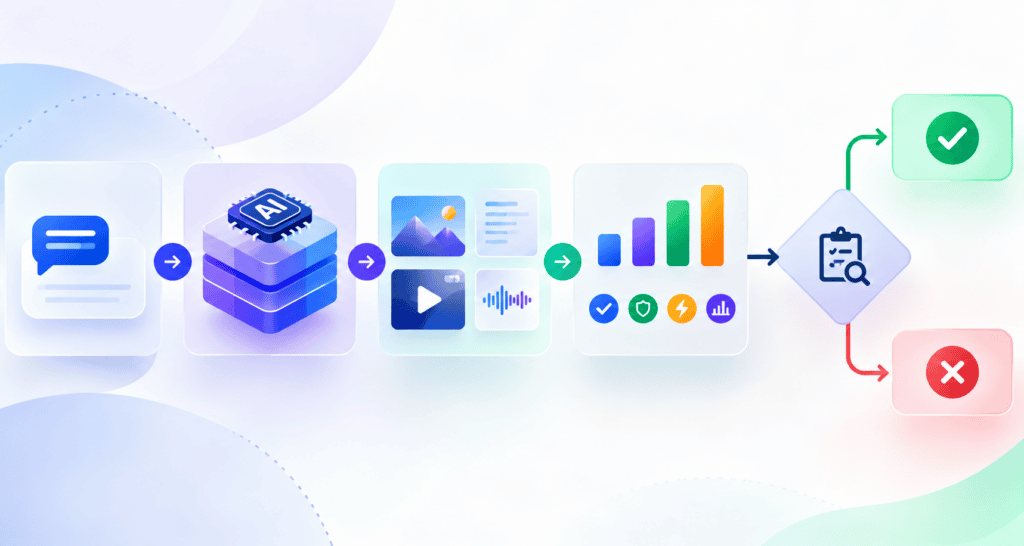
Use this quick map to choose a starting point based on your task and deployment needs.
• Use case: Coding and agents
Recommended Models: DeepSeek update
Why: Stronger code, tools, reliability
• Use case: Video generation
Recommended Models: Seedance 2.5
Why: More control and quality knobs
• Use case: Robotics control
Recommended Models: Gemini Robotics
Why: Multimodal to action progress
• Use case: Open weight LLM
Recommended Models: MiniMax H3
Why: Private inference potential
• Use case: Hardware choice
Recommended Models: AMD aligned models
Why: ROCm option beyond CUDA
How to evaluate the latest ai models
Use this checklist to run fair, near term trials rather than open ended pilots.
• Access model: confirm API, SDK, or open weights and license fit.
• Context window and memory: measure exact token or frame limits.
• Latency and throughput: benchmark batch sizes and concurrency.
• Video specs: duration, resolution, fps, edit points, and seed controls.
• Robotics hooks: ROS 2, controller interfaces, and sim to real options.
• Tool use: function calling, JSON mode, and tool timeout handling.
• Hardware paths: AMD ROCm vs NVIDIA CUDA, kernel maturity, and drivers.
• Cost and guardrails: rate limits, safety filters, and observability.
• Baseline: compare against open ai latest models for each workload.
• Documentation: rely on official release notes for constraints.
Adoption timeline and risk management
Pilot new models behind clear gates: success metrics, budget caps, and rollback plans. Start with shadow trials against your production baseline, then A\B test narrow cohorts. Maintain at least one stable fallback, and separate experimentation from customer facing paths with feature flags and circuit breakers. Update your model cards and data governance as you graduate pilots.
Create With VidAU
Turn scripts, product URLs, and creative ideas into ad-ready video assets with a structured AI workflow.
Key takeaway
Final Thoughts
The newest ai models bring tangible gains in coding reliability, controllable video, robotics, and deployment flexibility. Make fast, fair comparisons to OpenAI latest models, trial on your exact tasks, and keep strong fallbacks. If you need ad ready outputs while testing video models, VidAU AI can turn product URLs, images, or scripts into short form drafts for quick creative evaluation.
Frequently asked questions
What are the latest ai models covered here?
This roundup covers DeepSeek’s coding focused update, ByteDance’s Seedance 2.5 for video generation, MiniMax H3 as an open weight contender, Google’s Gemini Robotics progress for robot control, and AMD’s model and ROCm alignment. Each targets a different workload spanning code, multimodal video, robotics, and deployment flexibility.
How should I compare these to OpenAI latest models?
Use OpenAI latest models as a strong baseline for reasoning, tool use, and multimodal tasks. Run the same prompts or tasks across both, measure accuracy, latency, and cost, and check safety behavior. Choose the model that best fits your workload constraints, not headlines or generalized benchmarks.
Is Seedance 2.5 ready for production video pipelines?
Treat Seedance 2.5 as a candidate for controlled pilots. Validate duration limits, resolution and fps, motion consistency, and editability. Check how prompts map to styles, whether seeds are reproducible, and how well outputs slot into your post production or ad assembly workflow before scaling.
When does MiniMax H3 make sense over hosted APIs?
MiniMax H3 can fit when you need open weights, private inference, tighter cost control, or fine tuning on domain data. Verify license terms, quantization options, context size, and serving stack readiness. If managed latency and guardrails matter more, a hosted API baseline may still be preferable.
What should robotics teams test with Gemini Robotics?
Focus on instruction following fidelity, error recovery, and safety within your environment. Validate ROS 2 touchpoints, sensor fusion, sim to real transfer, and policy robustness under noisy inputs. Measure end to end latency from perception to actuation against your task and hardware constraints.
How do AMD’s model announcements affect deployment planning?
They expand your options beyond NVIDIA centric stacks. Confirm ROCm versions, framework support, kernel maturity, and mixed precision behavior on target GPUs. Test inference throughput with your real prompts or videos, and ensure observability, autoscaling, and container images meet production needs.
What metrics matter most for coding model evaluations?
Prioritize pass rate on unit tests, compile success, function calling reliability, hallucination rate on APIs, and latency under concurrency. Include repo aware context, bug fix diffs, and tool use. Compare these metrics head to head with your baseline models to determine upgrade value.
How do I avoid hype driven adoption of the newest ai models?
Define workload aligned success criteria, run short time boxed pilots, compare to a trusted baseline, and require clear wins on accuracy, latency, or cost. Maintain fallbacks, monitor safety and drift, and follow official release notes for constraints rather than extrapolating from social demos.