

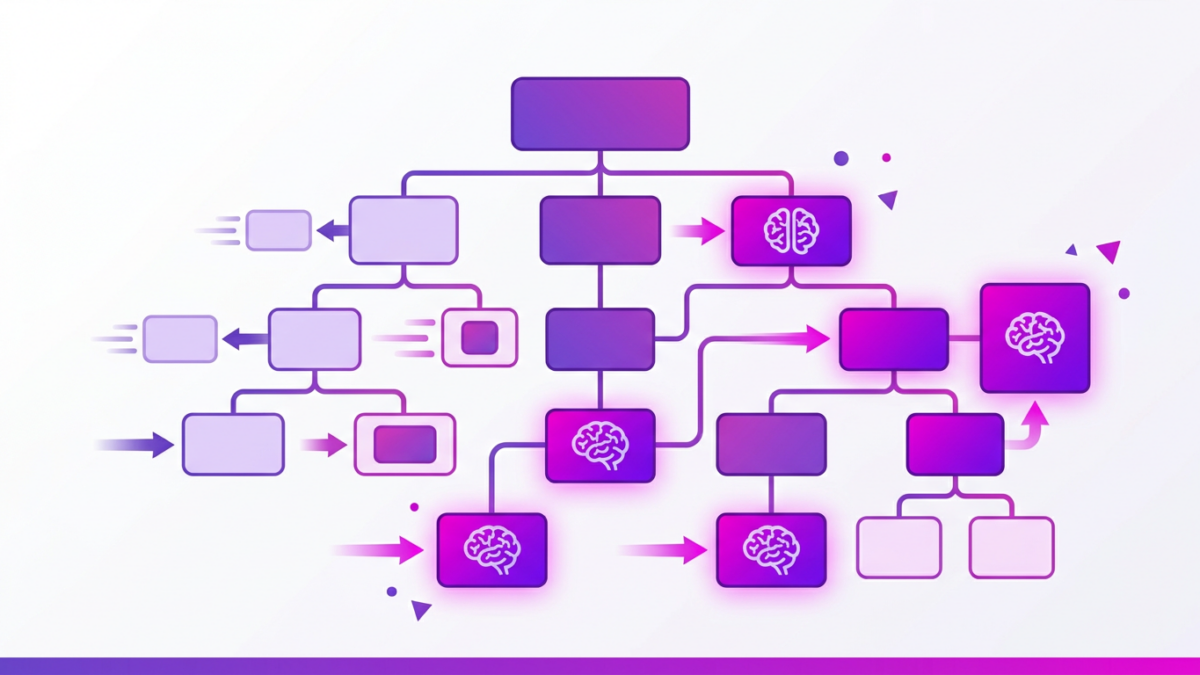
Most marketing team structures were built around a division of labor that assumed content production, campaign execution, and analysis each needed dedicated headcount. AI has compressed the execution layer enough that the old structure now has redundant capacity in some places and real gaps in others xE2x80x94 specifically, a shortage of people whose job is judging and directing AI output rather than producing things by hand.
What “AI-Native” Structure Actually Means
An AI-native marketing team isn’t defined by headcount or tools xE2x80x94 it’s defined by where judgment sits in the workflow. Mechanical production tasks route through AI by default, with human roles concentrated at the points that require strategic judgment, quality control, and AI-output evaluation, rather than spread evenly across a full production pipeline the way legacy team structures assumed.
What Changes and What Doesn’t
| Function | Direction | Why |
|---|---|---|
| Content drafting | Shrinks | AI handles first-pass production |
| Editorial/quality judgment | Stays or grows | Bottleneck moved here, not away |
| Strategy and positioning | Stays flat | Never was a production bottleneck |
| AI workflow ownership | New role needed | Someone must own tool selection and process |
Roles Worth Adding or Redefining
AI workflow owner
xE2x86x92 New, often overlooked
One accountable person for tool selection, integration, and process xE2x80x94 prevents the tool sprawl that fragments a team’s AI adoption.
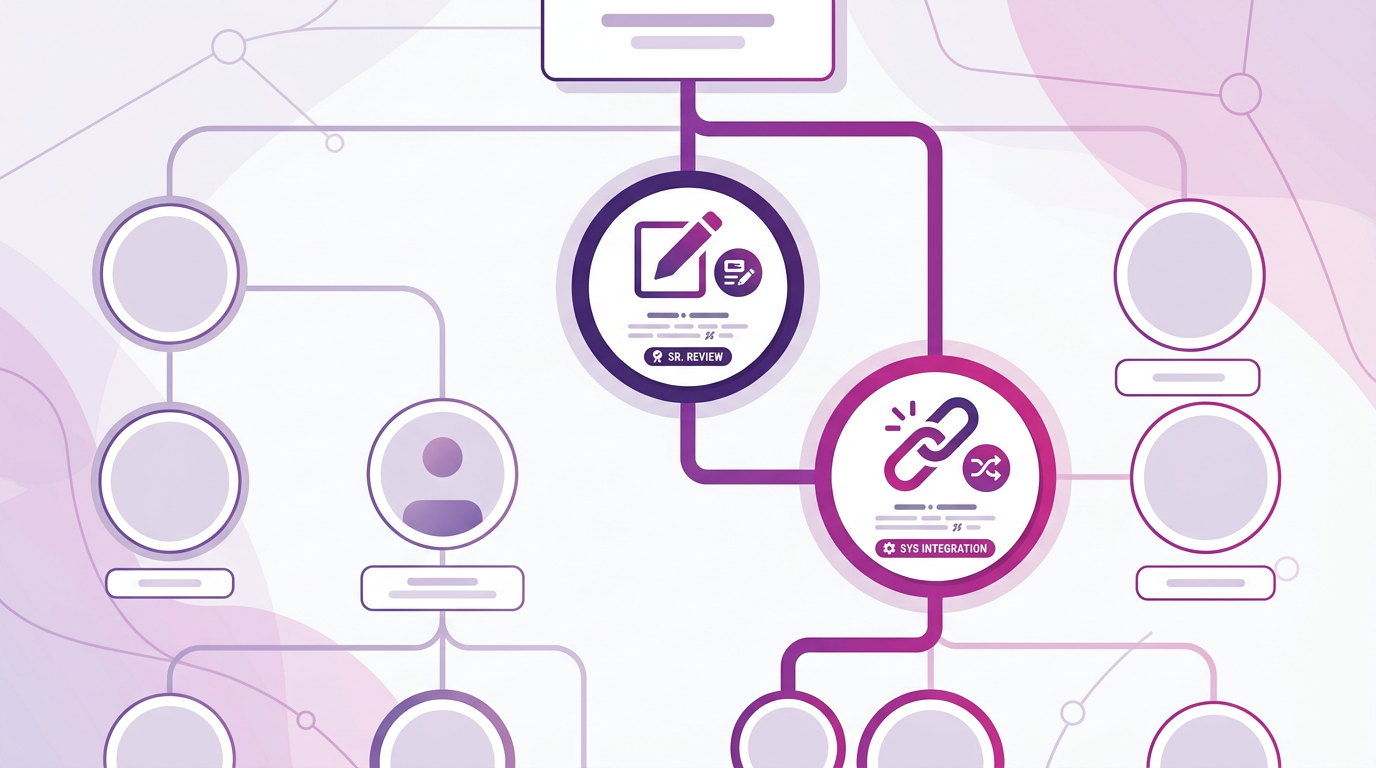
Senior editorial reviewer
xE2x86x92 Elevated, not eliminated
What used to be a junior writing role becomes a senior judgment role, reviewing AI output for accuracy and voice at higher volume.
Systems integrator
xE2x86x92 Increasingly essential
Someone wiring together the team’s AI tools so output flows between them without manual handoffs xE2x80x94 a distinct skill from either marketing or engineering alone.
Cutting production headcount without adding judgment/oversight capacity, assuming AI output needs no review. This is how quality problems compound quietly until a visible failure forces a correction.
Building a leaner production pipeline? Team

Reporting Lines and Coordination
AI tool sprawl happens fastest when every functional lead picks their own tools independently. A single accountable owner for AI workflow xE2x80x94 not necessarily a full-time role at smaller teams, but a clear point of accountability xE2x80x94 keeps tool selection coordinated and prevents the same integration problems that plague uncoordinated adoption.
The gain comes from restructuring judgment, not faster production alone
Move headcount toward oversight and strategy as mechanical tasks shrink.
Built for AI-native production workflows
Does an AI-native team need fewer people overall?
Not necessarily fewer, but differently allocated xE2x80x94 mechanical roles shrink while judgment and oversight roles grow.
Who should own AI tool selection on a marketing team?
A single accountable owner, not a committee xE2x80x94 sprawl happens fastest without central coordination.
Should every marketer on the team be expected to use AI tools directly?
Yes, at a basic level xE2x80x94 AI fluency is becoming baseline, similar to spreadsheet literacy.
Key Takeaways
- AI-native structure is about where judgment sits, not just which tools are deployed.
- Mechanical production roles shrink; judgment and oversight roles grow xE2x80x94 headcount often stays similar with a different mix.
- A single accountable AI workflow owner prevents the tool sprawl that comes from uncoordinated adoption.
- Cutting production without adding oversight capacity is the most common restructuring mistake.
- AI fluency is becoming a baseline expectation across all marketing roles, not just specialists.
Sources: Marketing org structure surveys and workforce planning research, as of 2026.