Claude Agentic AI · Orchestrator, Agent Registry, MCP & JSON-RPC
Claude Agentic AI: Build a Scalable Multi-Agent System (Orchestrator, Registry, MCP/JSON-RPC)
Learn how to build a Claude agentic AI system with orchestrators, registries, MCP and JSON-RPC. Explore Claude AI agents, developing an agentic AI system, and custom AI agent development services.
By the VidAU Editorial Team · Claude agentic AI guide · Orchestrator, Agent Registry, MCP, JSON-RPC, Python, Flask, Azure App Services, Terraform, Firebase, telemetry, trace IDs, guardrails, and heavy-vs-light model pairing
If you’re developing an Agentic AI system with Claude, this build-first blueprint shows how to wire an Orchestrator, an Agent Registry, and an MCP/JSON-RPC tool layer into a production loop with planning, memory, telemetry, and guardrails. You’ll also see a pragmatic heavy-vs-light model pairing to control cost without sacrificing task accuracy for Claude AI agents.
I’ll show you how to implement Claude Agentic AI with an orchestrator coordinating specialized Claude AI agents through an Agent Registry and an MCP/JSON-RPC tool layer. The goal is a production-ready loop: planning, memory, observability, security, and cost-aware heavy-vs-light model pairing.
I reviewed real multi-agent patterns (orchestrator → registry → agent → MCP → tools) and recent MCP momentum, including Runway’s push to make generation callable from assistants. For agent-triggered video creation, VidAU is an AI video ad platform that generates video ads from product URLs, images, or scripts in 49 languages.
Quick Summary
- A central Orchestrator plus an Agent Registry and MCP/JSON-RPC tools is the fastest path to a scalable Claude Agentic AI system in 2026.
- A Python/Flask orchestrator on Azure App Services with Terraform and Firebase is a pragmatic alternative to heavyweight Kubernetes for most teams.
- Standardize JSON-RPC contracts, enforce timeouts/retries, attach trace IDs to every call, and allowlist tools per agent with audit logs.
- AI engineers and product leaders building multi-agent apps with strict cost, security, and observability needs get the most value from this blueprint.
In This Guide
- What claude agentic AI is and how it works
- Who should build with this blueprint
- Step-by-step orchestrator and Agent Registry design
- Implementing MCP/JSON-RPC tool adapters in Python/Flask
- Observability, telemetry, and security from day one
- Deployment options with Azure App Services, Terraform, Firebase
- When to use custom AI Agent development services
- Common mistakes when developing an Agentic AI system
- Final Thoughts
- FAQ
What is Claude Agentic AI?
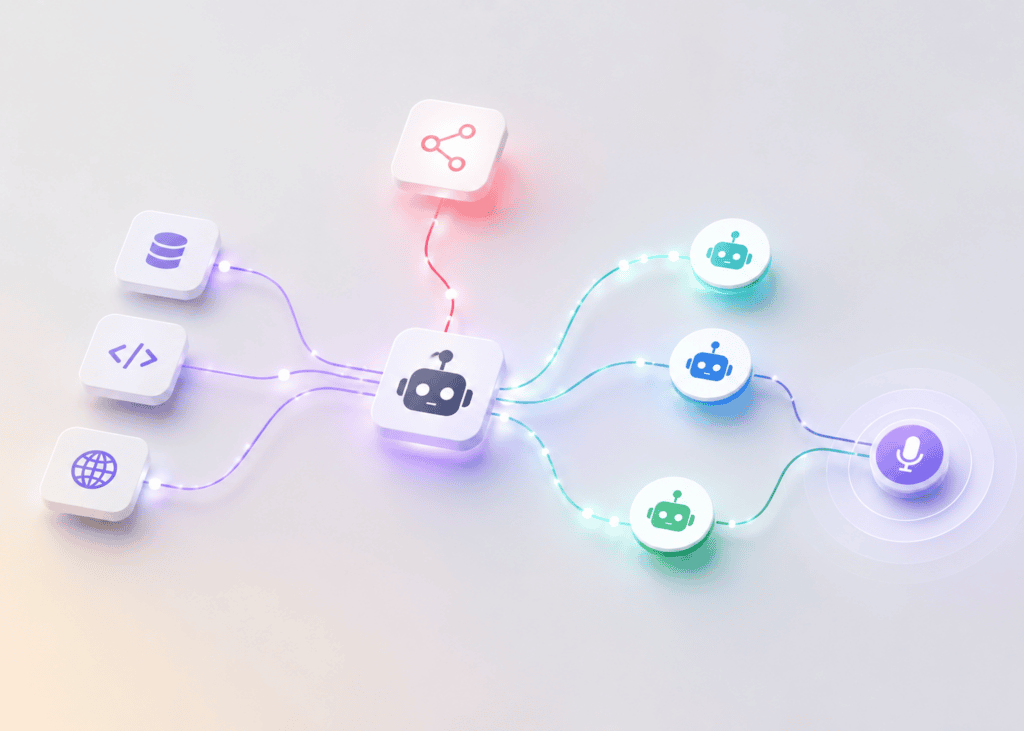
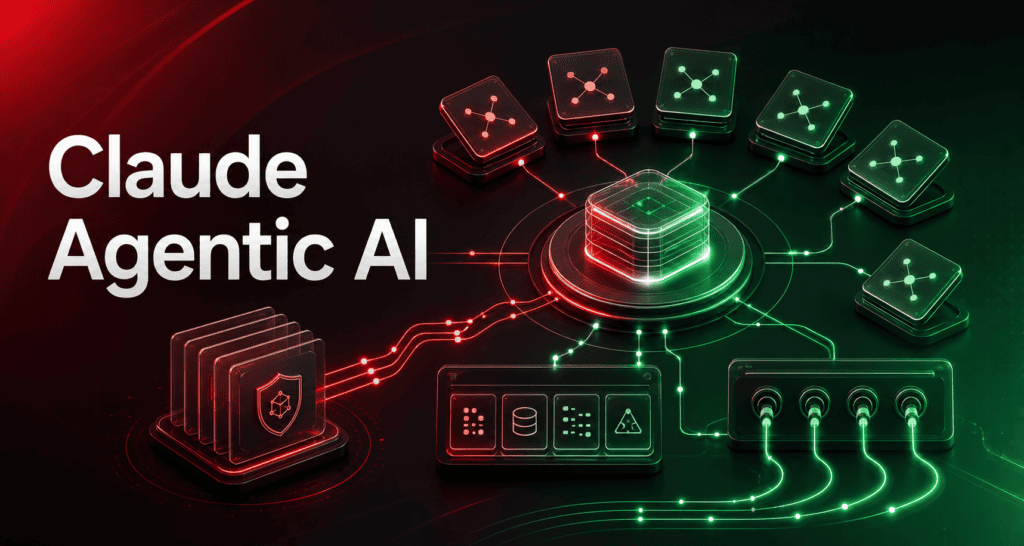
Claude Agentic AI is a system pattern where an orchestrator delegates work to specialized Claude AI agents, each with scoped tools accessed through a standard protocol like MCP over JSON-RPC. The orchestrator handles task decomposition, memory, planning, and routing; agents execute domain steps via tool adapters with strict contracts, telemetry, and guardrails.
Definition
Claude Agentic AI is a system pattern where an orchestrator delegates work to specialized Claude AI agents, each with scoped tools accessed through a standard protocol like MCP over JSON-RPC.
Who This Is For
This guide is for AI engineers, solution architects, and product leaders who need production-grade multi-agent behavior, tight cost/performance control, and audit-friendly operations in the US market. If you’re actively developing an Agentic AI system for real users, this blueprint keeps your design practical and deployable.
Best fit
This blueprint fits AI engineers, solution architects, and product leaders who need production-grade multi-agent behavior, tight cost/performance control, audit-friendly operations, and a practical deployment path for real users.
How do you architect Claude Agentic AI with an Orchestrator and Agent Registry?
The orchestrator does four jobs: interpret intent, plan steps, select agents, and supervise execution. It runs a heavy model for reasoning and a lighter model for iterative tool selection or summarization to keep cost in check.
Design the Agent Registry as your system’s source of truth. Suggested fields:
- agent_id (string), name (string), description (string)
- capabilities (list of verbs or skills)
- tools (list of tool_ids allowed)
- auth_mode (e.g., service account, OAuth)
- rate_limits and SLAs (per minute, p95 latency goals)
- memory_scopes (ephemeral, session, long-term)
- safety_policies (PII rules, content filters)
- last_healthcheck_at, status
Routing logic checklist:
- Map plan steps to capabilities, then filter by tool allowlist.
- Prefer agents with healthy status and SLA headroom.
- Use heavy model for initial plan; light model for retries and follow-ups.
- Persist step state and attach trace_id to every subcall.
Key Takeaways
- The orchestrator interprets intent, plans steps, selects agents, and supervises execution.
- The Agent Registry is the source of truth for capabilities, tools, auth, SLAs, memory scopes, safety policies, and health.
- Use a heavy model for planning and a lighter model for retries, routing, and summaries to control cost.
How do you implement MCP/JSON-RPC tool adapters in Python/Flask?
I reviewed working examples that expose tools as JSON-RPC methods behind stable contracts. A minimal adapter in Python/Flask typically provides:
- POST /rpc endpoint
- method (string), params (object), id (string), trace_id (string)
- timeouts, retries with backoff, and circuit breakers
- input validation, content safety filters, and output schemas
Example contract (conceptual):
- Request: { method: ‘search.docs’, params: { q, top_k }, id, trace_id }
- Response: { result: { items: […] }, id, trace_id, duration_ms }
- Error: { error: { code, message }, id, trace_id }
Tool boundaries are where most incidents happen. Enforce:
- Hard timeouts per method; retry only idempotent methods.
- PII redaction and domain allowlists for outbound calls.
- Structured logs on every invocation with status, latency, and token usage (if applicable).
If your agents need video workflows, expose adapters that call:
- Text to Video for script-to-clip generation
- URL to Video for turning product pages into drafts
- UGC Avatars for spokesperson-style explainers
- Video Enhancer and Object Remover (https://www.vidau.ai/object-remover/) for post-processing
- Text to Speech and Video to Audio for narration and assets
From our review of MCP adoption, tools are becoming first-class citizens callable from assistants. Design adapters as products: versioned methods, change logs, and clear SLAs.
Key Takeaways
- Keep adapters small and single-purpose.
- Standardize JSON-RPC envelopes and error codes.
- Add retries only where operations are idempotent.
How do you add observability, telemetry, and security on day one?
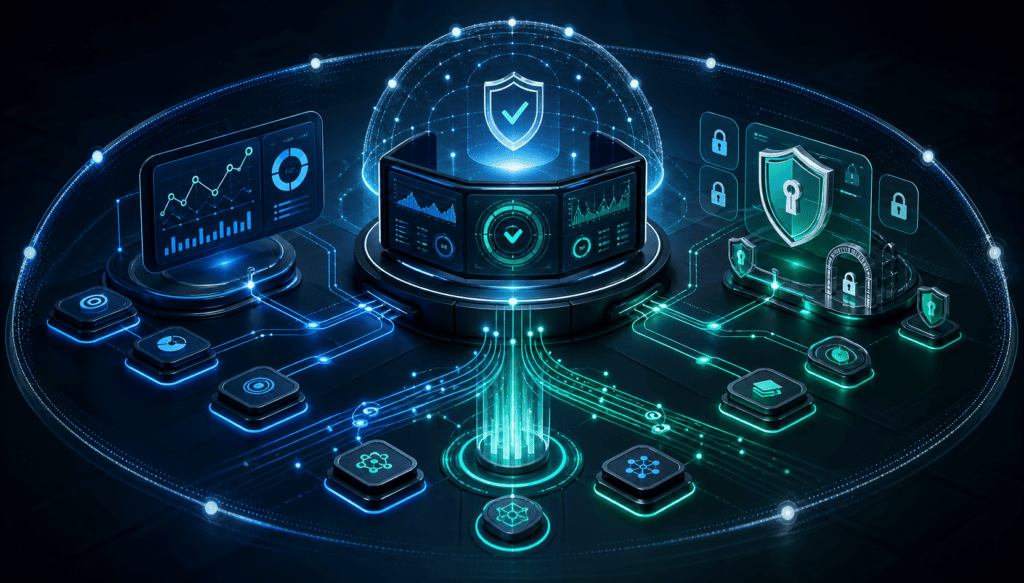
Our team analysed successful deployments and found the winning pattern is to treat every hop as an event with a shared trace_id.
Minimum telemetry fields:
- trace_id, parent_id, user_id/session_id (hashed)
- agent_id, tool_id, method, status
- tokens_in/tokens_out (if tracked), latency_ms, retries
- safety_filter_hits, redactions_applied, error.code
Security checklist:
- Secrets isolation via environment stores or vaults; never pass keys through model prompts.
- Tool allowlists per agent; capability-based access control.
- Input sanitation and PII redaction before tool calls.
- Tamper-evident audit logs for regulated flows.
Security warning
Never pass secrets through model prompts. Use server-side signing, isolated stores or vaults, tool allowlists per agent, PII redaction before tool calls, and tamper-evident audit logs for regulated flows.
What are pragmatic deployment options (Python, Flask, Azure App Services, Terraform, Firebase)?
A simple, reliable path we’ve seen work:
- Python + Flask for the orchestrator and adapters
- Azure App Services for managed web workloads
- Terraform to stamp environments (dev/stage/prod)
- Firebase Auth/Firestore for lightweight auth, rate limits, or event sinks
| Stage | Recommended Tools | Why |
|---|---|---|
| Orchestrator | Python, Flask | Fast to ship, easy to debug |
| Hosting | Azure App Services | Managed, autoscale basics |
| IaC | Terraform | Reproducible environments |
| Persistence | Firebase | Low-ops session/memory store |
| Video tools | VidAU, Runway MCP | Agent-callable generation |
Mid-article CTA: If you need agent-callable video ad creation, explore VidAU AI Video and Product Sample to Video as adapters you can expose behind MCP/JSON-RPC.
Build Agent-Callable Video Workflows With VidAU AI
Expose VidAU AI Video, Product Sample to Video, Text to Video, URL to Video, UGC Avatars, Video Enhancer, Object Remover, Text to Speech, and Video to Audio behind MCP/JSON-RPC adapters so Claude AI agents can call video creation and post-processing inside production flows.
VidAU workflow
Where VidAU Fits In Claude Agentic AI Systems
- Use the Orchestrator for planning and routing: Let the heavy model interpret intent, plan steps, and select specialized Claude AI agents through the Agent Registry.
- Use the Agent Registry as the source of truth: Store capabilities, tool allowlists, auth modes, SLAs, memory scopes, safety policies, and health status for each agent.
- Use MCP/JSON-RPC adapters for tool execution: Keep adapters small, versioned, single-purpose, instrumented, and protected by validation, timeouts, retries, circuit breakers, and audit logs.
- Use VidAU adapters for video generation and post-processing: Expose Text to Video, URL to Video, UGC Avatars, Video Enhancer, Object Remover, Text to Speech, Video to Audio, VidAU AI Video, and VidAU Vid Remix as callable tools.
- Use telemetry and guardrails for every hop: Attach trace_id, parent_id, agent_id, tool_id, method, status, latency, retries, redaction events, and error codes so video workflows are observable and secure.
When should you use custom AI Agent development services?
Use custom AI Agent development services when:
- You need enterprise integrations (ERP/CRM) under strict SLAs.
- You have regulated data with audit and SOC2/ISO requirements.
- You’re scaling beyond one orchestrator and need async queues and backpressure.
Vendor criteria:
- Show a reference architecture with registry, MCP adapters, and telemetry events.
- Provide threat model, redaction strategy, and cost/perf playbook (heavy-vs-light pairing).
- Commit to deliverables: registry schema, adapter contracts, runbooks, and incident playbooks.
Vendor selection tip
Ask vendors for a reference architecture with registry, MCP adapters, telemetry events, threat model, redaction strategy, heavy-vs-light model pairing, registry schema, adapter contracts, runbooks, and incident playbooks.
Common mistakes when developing an Agentic AI system
- Using a heavy model for every hop. Solution: heavy for plan, light for tool routing and summaries.
- Skipping the Agent Registry. Solution: centralize capabilities, SLAs, and allowlists.
- No standard JSON-RPC envelope. Solution: one shared contract and error taxonomy.
- Weak observability. Solution: trace_id everywhere, structured events, and audit logs.
- Pushing secrets into prompts. Solution: server-side signing and isolated stores.
Mistake to avoid
Do not use a heavy model for every hop, skip the Agent Registry, omit a shared JSON-RPC contract, weaken observability, or push secrets into prompts.
Key takeaway
Final Thoughts
The fastest path to reliable Claude Agentic AI is an orchestrator that plans with a heavy model, routes through an Agent Registry, and executes via small MCP/JSON-RPC adapters instrumented with telemetry and guardrails. Start small, standardize envelopes, and scale with Terraformed environments.
If your agents need video creation or post-processing, wrap tools like VidAU AI Video or VidAU Vid Remix behind adapters so they are callable inside your flows.
FAQ
Here are answers to common questions about Claude Agentic AI, Agent Registries, MCP/JSON-RPC, heavy-vs-light model pairing, telemetry, Python/Flask deployment stacks, custom AI agent development services, Claude AI agents, memory, and video tool integration.
What is Claude Agentic in simple terms?
Claude Agentic AI is a pattern where a central orchestrator delegates tasks to specialized Claude AI agents. Each agent uses scoped tools through MCP/JSON-RPC with strict contracts. The orchestrator plans, routes, and supervises execution while preserving memory, telemetry, and security across calls.
Why use an Agent Registry instead of hard-coding routes?
A registry centralizes capabilities, SLAs, auth modes, and allowlists so routing stays accurate as agents change. It enables health-based selection, predictable SLAs, and auditable decisions. Hard-coding quickly breaks at scale and makes cost, performance, and security harder to manage.
What is MCP/JSON-RPC and why does it matter here?
MCP is a model communication pattern; JSON-RPC is a simple, language-agnostic RPC envelope. Together they provide predictable method calls, structured errors, and easy tracing. That stability lets you treat tools as products with versioned contracts, which is vital for multi-agent reliability.
How should I pair heavy and light models in this architecture?
Use a heavy model for initial intent interpretation and multi-step planning, then switch to a lighter model for iterative tool selection, monitoring, and short summaries. This preserves answer quality while cutting token costs and latency on routine hops inside Claude AI agents.
What telemetry should every tool adapter emit?
At minimum: trace_id, parent_id, agent_id, tool_id, method, status, latency_ms, retries, and any safety_filter_hits. Include token usage if available and redact PII before logging. Emit consistent JSON so dashboards and alerts can track health, errors, and SLO compliance.
What’s a pragmatic deployment stack for small teams?
Python and Flask for the orchestrator and adapters, Azure App Services for hosting, Terraform for IaC, and Firebase for lightweight auth and state are a balanced starting point. This stack keeps ops simple while supporting autoscale, staging, and structured logging.
When do I need custom AI agent development services?
Bring in a vendor when you face regulated data, complex enterprise integrations, or multi-region scale with strict SLAs. Ask for a registry schema, adapter contracts, a security model with redaction, and runbooks. Ensure they show cost/perf controls like heavy-vs-light pairing.
How do Claude AI agents handle memory safely?
Scope memory to the task. Use short-term session memory for local context, and designate specific fields for long-term storage with PII redaction. Store memory in controlled services (for example, Firebase or a database) and attach retention policies and access controls.
Can I integrate video tools into my agent system?
Yes. Expose video generation and post-processing as JSON-RPC adapters. For example, adapters around Text to Video, URL to Video, UGC Avatars, Video Enhancer, or Object Remover make video steps callable inside agent plans.