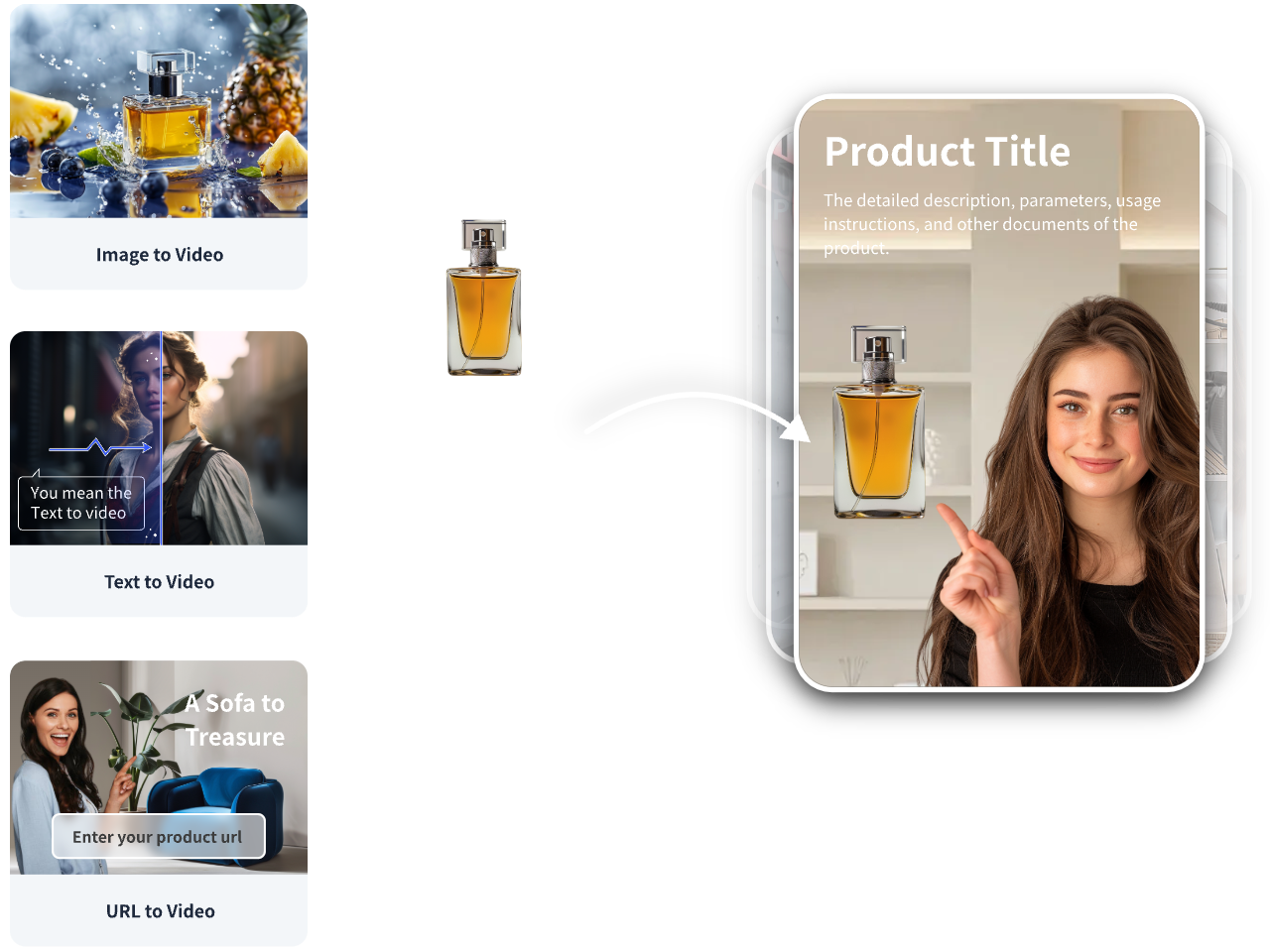
100% free Text to Video ai generators in 2026 (Over 18 tools)
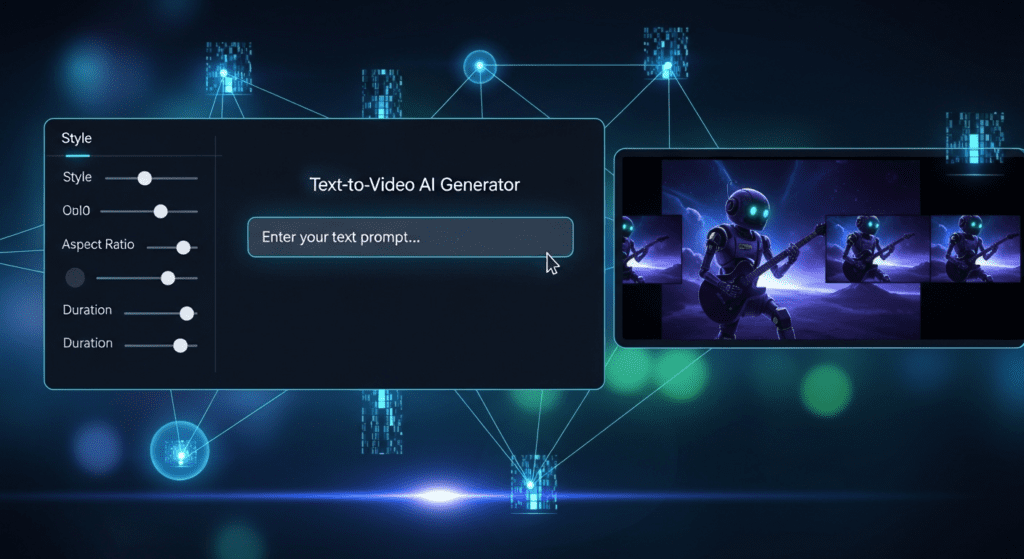
You open TikTok, Instagram, or YouTube, and one thing stands out. The people getting views post more often, stay consistent, and keep their visuals clean. That shift explains why text to video ai keeps growing in 2026. You type a simple script, and within minutes, you get a full video ready for publishing. No camera, no editing stress, no waiting.
At the same time, tools like VidAU help you move faster. You convert product descriptions, ideas, or short scripts into videos that match current trends and platform formats.
This guide breaks down how text to video ai works, which free tools give real value, and how you can use them to stay consistent without burning out.
- 100% free Text to Video ai generators in 2026 (Over 18 tools)
- Free text to video ai tools worth using in 2026
- What "Free" Actually Means for Each Tool in 2026
- All 21 Tools Compared for Text-to-Video Performance
- 100% free text to video ai tools in 2026 Compared
- How does VidAU improve text to video ai results for creators?
- How to choose the best text to video ai for your content goals
- Best Text-to-Video AI by Use Case
- How to Write Scripts That Produce Better AI Videos
- Conclusion
- Frequently Asked Questions
- What is text to video AI and how does it actually work in practice?
- Are 100% free text to video AI tools enough for professional content?
- How long does it take to generate a video using text to video AI?
- Can beginners use text to video AI without any editing experience?
- What type of content works best with text to video AI?
- Why is VidAU considered effective for text to video AI?
- What type of content performs best when using VidAU?
- How does VidAU improve consistency across multiple videos?
- Can I scale content production using VidAU?
- When should I choose VidAU over other text to video AI tools?
- What is the fastest way to scale using text to video AI?
- Are AI-generated videos suitable for monetization?
Free text to video ai tools worth using in 2026
A simple list of tools will not help you choose the right one. You need to understand how each tool works, what results you get from it, and how it fits into your content workflow. Below is a clear breakdown of over 18 text to video ai tools with deeper insight into their strengths, limitations, and pricing.
1. VidAU
VidAU focuses on speed, structure, and consistency. It turns scripts, product descriptions, and short ideas into clean, ready-to-publish videos.
How it works: You input a script or product text. The system breaks it into scenes, assigns visuals, adds motion, and renders a complete video.
Benefits:
- Clean video structure without manual editing
- Strong consistency across multiple videos
- Works well for ads, UGC, and social content
- Fast rendering speed
Limitations:
- Advanced cinematic control is limited compared to film-focused tools
Pricing:
- Free plan available
- Paid plans unlock higher volume and longer videos
2. Runway Gen-3
Runway Gen-3 focuses on cinematic video generation with better scene control and motion realism.
How it works: You input detailed prompts, and the system generates realistic scenes with camera movement and transitions.
Benefits:
- High visual quality
- Better control over camera angles and motion
- Suitable for storytelling and creative projects
Limitations:
- Requires strong prompts for best results
- Free plan has limited credits
Pricing:
- Free credits available
- Paid plans for extended use
3. Pika Labs
Pika Labs generates short-form videos quickly. It works best for social media clips.
How it works: You enter a short prompt, and it generates animated or stylized clips within seconds.
Benefits:
- Very fast generation
- Great for viral content
- Simple interface
Limitations:
- Limited control over detailed scenes
- Output length is short
Pricing:
- Free plan available
4. Sora
Sora generates detailed, realistic scenes from text prompts.
How it works: You describe a scene in detail, and it builds a full visual sequence with motion and depth.
Benefits:
- Strong realism
- Better scene understanding
Limitations:
- Limited access
- High compute usage
Pricing:
- Limited free access
5. Kling
Kling focuses on motion-heavy content and dynamic actions.
How it works: You input prompts, and it generates sequences with smooth motion and transitions.
Benefits:
- Smooth animation
- Strong motion handling
Limitations:
- Prompt tuning needed for best output
Pricing:
- Free access with limits
6. InVideo AI
InVideo AI converts scripts into structured marketing videos.
How it works: You input text, and it builds scenes, adds stock footage, and includes voiceover.
Benefits:
- Easy for beginners
- Good for marketing content
Limitations:
- Uses stock-style visuals
- Watermark on free plan
Pricing:
- Free plan available
7. Luma AI
Luma AI focuses on realistic 3D scene generation.
How it works: It builds scenes with depth and spatial awareness from text prompts.
Benefits:
- Strong depth and realism
Limitations:
- Not optimized for short social videos
Pricing:
- Free access available
8. DomoAI
DomoAI converts images and text into animated visuals.
How it works: You upload images or text, and it animates them into video.
Benefits:
- Good for avatar and animation content
Limitations:
- Less control over complex scenes
Pricing:
- Free plan available
9. Synthesia
Synthesia focuses on avatar-based videos for presentations.
How it works: You input a script, and an AI presenter delivers it on screen.
Benefits:
- Ideal for training and business videos
Limitations:
- Limited creative visuals
Pricing:
- Free demo available
10. HeyGen
HeyGen generates realistic avatar videos with voice sync.
How it works: You type a script, select an avatar, and generate a talking video.
Benefits:
- Realistic voice and lip sync
Limitations:
- Focused on avatar content only
Pricing:
- Free trial available
11. Veed AI
Veed AI combines text to video generation with editing tools.
How it works: You generate a video and edit it inside the same platform.
Benefits:
- Built-in editing features
Limitations:
- Watermark on free plan
Pricing:
- Free plan available
12. FlexClip
FlexClip creates simple videos from text inputs.
How it works: It converts text into slides with visuals and transitions.
Benefits:
- Beginner-friendly
Limitations:
- Basic visuals
Pricing:
- Free version available
13. Designs AI
Designs AI generates videos quickly from short prompts.
How it works: You input a short idea, and it creates a structured video.
Benefits:
- Fast output
Limitations:
- Limited customization
Pricing:
- Free trial
14. DeepBrain AI
DeepBrain AI focuses on AI presenters and training content.
How it works: It generates presenter-led videos from scripts.
Benefits:
- Good for corporate content
Limitations:
- Not suited for social media content
Pricing:
- Limited free plan
15. Colossyan
Colossyan creates structured training videos with avatars.
How it works: You input scripts, and it generates presenter-style videos.
Benefits:
- Clean and professional output
Limitations:
- Limited creative flexibility
Pricing:
- Free trial
16. Elai.io
Elai.io converts scripts into presenter videos.
How it works: It uses avatars to deliver your script in video format.
Benefits:
- Multiple avatar options
Limitations:
- Less creative scene control
Pricing:
- Free demo
17. Kapwing AI
Kapwing AI combines video generation with collaboration tools.
How it works: You generate videos and edit them with a team.
Benefits:
- Collaboration features
Limitations:
- Limited advanced generation
Pricing:
- Free plan available
18. Canva Video AI
Canva integrates text to video ai features into design workflows.
Benefits:
- Easy drag-and-drop editing
Pricing:
- Free plan available
19. Steve AI
Steve AI converts scripts into animated or live-action style videos.
How it works: You input text, and it builds scenes using stock visuals or animations.
Benefits:
- Supports multiple video styles
- Good for explainer content
Limitations:
- Visuals depend on stock assets
Pricing:
- Free plan available
20. Animoto AI
Animoto AI focuses on quick marketing video creation from text.
How it works: You input text and media, and it generates structured video slides.
Benefits:
- Fast setup
- Good for promo content
Limitations:
- Limited creative control
Pricing:
- Free plan available
21. Wisecut AI
Wisecut AI edits and generates videos from scripts and voice.
How it works: It converts text or speech into edited video with cuts and subtitles.
Benefits:
- Auto editing and subtitles
- Saves time on post-production
Limitations:
- Less control over visual scenes
Pricing:
- Free plan available
What “Free” Actually Means for Each Tool in 2026
The word “free” varies dramatically across text-to-video tools. Here is exactly what you get for free from each:
| Tool | Truly Free | Watermark | Generation Limit | Credit Card Needed |
|---|---|---|---|---|
| VidAU | Yes | No | Generous | No |
| Pika Labs | Yes | No | Limited credits | No |
| Kling | Yes | No | 66 credits/day | No |
| Canva Video AI | Yes (basic) | No | Unlimited basic | No |
| Kapwing AI | Yes | Yes | 3 exports/month | No |
| Wisecut AI | Yes | Yes | Limited | No |
| InVideo AI | Yes | Yes | 4 exports/week | No |
| FlexClip | Yes | Yes | Unlimited | No |
| Veed AI | Yes | Yes | 10 min/month | No |
| Animoto AI | Trial only | Yes | Trial period | Yes |
| DomoAI | Yes | Yes | Limited | No |
| Steve AI | Yes | Yes | 1 video/month | No |
| Designs AI | Trial only | Yes | Trial | Yes |
| Runway Gen-3 | Limited credits | No | 125 credits/month | No |
| Luma AI | Limited credits | No | 30/month | No |
| Sora | ChatGPT Plus | No | Usage limits | Yes ($20/mo) |
| Synthesia | Demo only | Yes | 1 video | Yes |
| HeyGen | 1 free video/month | Yes | 1/month | No |
| DeepBrain AI | Demo only | Yes | Trial | Yes |
| Colossyan | Trial only | Yes | Trial | Yes |
| Elai.io | Demo only | Yes | Trial | Yes |
Genuinely free, no watermark, no credit card: VidAU, Pika Labs, Kling (limited), Canva (basic)
Note: Tools listed as “trial only” or requiring credit cards are not 100% free — they offer free trials with conversion intent built in.
All 21 Tools Compared for Text-to-Video Performance
| Tool | Free Tier | Text Input | Output Quality | Best For | Watermark |
|---|---|---|---|---|---|
| VidAU | Yes | Script, URL, product desc | High — commercial | Product ads, social | No |
| Runway Gen-3 | 125 credits | Detailed prompts | Very high — cinematic | Creative, storytelling | No (free) |
| Pika Labs | Limited credits | Short prompts | Good | Viral shorts | No |
| Sora | Paid only | Detailed prompts | Very high | Story scenes | No |
| Kling | 66 credits/day | Prompts | High | Motion-heavy | No |
| InVideo AI | Yes (watermarked) | Script | Good | Marketing videos | Yes on free |
| Luma AI | 30 credits/month | Prompts | High — 3D | Product 3D | No |
| DomoAI | Limited free | Text + image | Good | Avatar, animation | Yes |
| Synthesia | Demo only | Script | High | Corporate training | Yes on free |
| HeyGen | 1/month | Script | High | Multilingual avatar | Yes on free |
| Veed AI | Limited | Script | Good | Social + captions | Yes on free |
| FlexClip | Yes (watermarked) | Script + template | Basic | Beginners | Yes |
| Designs AI | Trial only | Short text | Medium | Quick ads | Yes |
| DeepBrain AI | Demo only | Script | High | Corporate presenter | Yes |
| Colossyan | Trial only | Script | High | Training | Yes |
| Elai.io | Demo only | Script | High | Education | Yes |
| Kapwing AI | Limited free | Script | Good | Collaboration | Yes |
| Canva Video AI | Yes | Text + template | Basic | Brand content | No |
| Steve AI | Limited free | Script | Good | Explainer | Yes |
| Animoto AI | Trial | Text + media | Good | Promos | Yes |
| Wisecut AI | Limited free | Voice + text | Good | Auto-editing | Yes |
100% free text to video ai tools in 2026 Compared
Before choosing a tool, you need a quick overview. This table shows what each text to video ai generator offers.
| Tool | Free Plan | Best Use Case | Output Quality | Watermark |
| VidAU | Yes | Ads, UGC videos | High | No |
| Runway Gen-3 | Yes | Cinematic clips | High | Yes |
| Pika Labs | Yes | Short viral videos | Medium | Yes |
| Sora | Limited | Story scenes | High | Yes |
| Kling | Yes | Motion-heavy videos | High | Yes |
| InVideo AI | Yes | Marketing videos | Medium | Yes |
| Luma AI | Yes | 3D scenes | High | Yes |
How does VidAU improve text to video ai results for creators?
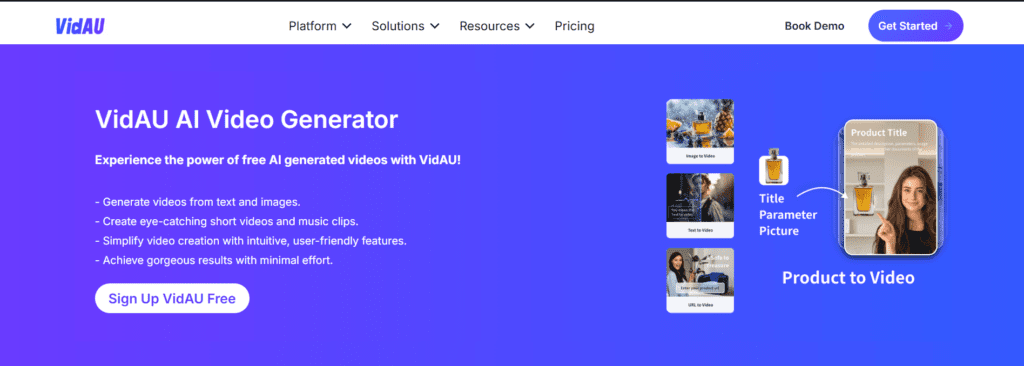
VidAU improves output by keeping video structure clean and consistent from start to finish. It reduces the need for manual editing.
It helps you:
- Turn product descriptions into ad videos
- Create UGC-style content at scale
- Maintain consistent visuals across campaigns
- Generate videos faster than traditional tools
Because of this, many creators now use VidAU as their main content engine.
How to choose the best text to video ai for your content goals
Choosing the right tool depends on your content type. Each text to video ai tool focuses on a specific use case.
Use this guide to decide:
- Ads and product videos → VidAU
- Cinematic scenes → Runway or Sora
- Viral short clips → Pika Labs
- Avatar videos → Synthesia or HeyGen
So, instead of testing everything blindly, match your goal to the tool.
Best Text-to-Video AI by Use Case
E-commerce product ads (TikTok Shop, Facebook Ads, Instagram) VidAU is purpose-built for this — URL-to-Video Ad converts product listings to finished video ads without writing a script. For sellers on TikTok Shop, this is the most direct path from product page to published video ad.
Faceless YouTube channels Combine Sora or Runway Gen-3 for cinematic scene generation with VidAU’s Text-to-Speech for narration and Kapwing or Veed for final assembly. VidAU’s built-in workflow handles this in one place for simpler content categories.
Corporate training and explainer videos Synthesia, HeyGen, or Colossyan for professional presenter-style content at scale. These tools excel when the primary need is a human spokesperson delivering structured information rather than cinematic visuals.
Social media content at scale VidAU for product and brand content. CapCut for organic TikTok. InVideo AI for template-based marketing content. Canva for brand-consistent designed content.
Creative and storytelling content Runway Gen-3 or Sora for the highest visual quality. Pika Labs for fast creative short content. Kling for motion-heavy dynamic sequences.
Educational content Elai.io or DeepBrain AI for structured lesson delivery. Colossyan for multilingual corporate learning. Wisecut AI for editing spoken content into clean educational clips
How to Write Scripts That Produce Better AI Videos
The quality of your text-to-video output depends heavily on how you write your script or prompt. Here is what works:
For product ad videos (VidAU, Runway, Pika): Bad: “Show my product” Good: “Open on a close-up of a skincare bottle on a clean white surface. Camera slowly pulls back. Bold text overlay: ‘Your skin, transformed in 7 days.’ Cut to lifestyle shot. End on product with CTA.”
For TikTok and Reels (under 30 seconds): Structure your script in three parts: Hook (0 to 3 seconds) — Problem (3 to 12 seconds) — Solution + CTA (12 to 30 seconds). Keep sentences short. Each sentence should be its own visual beat.
For YouTube (2 to 10 minutes): Break your script into clearly labelled sections: Intro hook, Problem statement, Main content blocks (3 to 5), Summary, Call to action. Label each section when inputting to tools that support structured long-form generation like VidAU and Pictory.
For avatar-based videos (Synthesia, HeyGen, VidAU UGC Avatar): Write in natural spoken language, not written prose. Short sentences. Active voice. Pause markers help: “Our product [pause] does one thing really well.” Avoid complex punctuation — it disrupts text-to-speech timing.
Universal rules: Write what you want to see visually, not just what you want to say. Every sentence should be a visual instruction. Replace abstract concepts with concrete images. “Customers love it” becomes “A woman smiling at her phone after receiving her order.”
Conclusion
Text to video ai has changed how creators produce videos. It reduces effort, increases output, and keeps quality consistent.
If you want to grow faster, you need a system that works daily. That is why many creators now depend on tools like VidAU to produce content at scale.
Frequently Asked Questions
What is text to video AI and how does it actually work in practice?
Text to video AI converts written input into structured video scenes. You provide a script or idea, and the system breaks it into segments, assigns visuals, adds motion, and sometimes includes voiceover. The result is a ready-to-publish video without manual editing.
Are 100% free text to video AI tools enough for professional content?
They are strong enough for social media, ads, and testing ideas. However, free plans often include limits like watermarks, shorter video length, or fewer exports. For consistent professional output, creators usually upgrade once they validate their workflow.
How long does it take to generate a video using text to video AI?
Most tools generate videos within 1 to 5 minutes. The exact time depends on video length, complexity, and the platform’s processing speed.
Can beginners use text to video AI without any editing experience?
Yes. Most tools are designed for ease of use, allowing beginners to create videos by simply typing prompts or scripts. The system handles editing, transitions, and formatting automatically.
What type of content works best with text to video AI?
Ads, social media videos, explainer content, and UGC-style videos perform best. These formats rely on clear structure rather than complex cinematic storytelling.
Why is VidAU considered effective for text to video AI?
VidAU focuses on structured output, meaning it automatically organizes scripts into clean scenes with motion and flow. This reduces the need for manual editing and helps creators produce ready-to-publish videos faster.
What type of content performs best when using VidAU?
VidAU works best for ads, product videos, and UGC-style content. Its structured approach makes it ideal for content that needs clarity, speed, and consistency rather than complex cinematic visuals.
How does VidAU improve consistency across multiple videos?
It maintains a uniform structure across outputs, keeping scenes, transitions, and formatting aligned. This helps creators build recognizable content without starting from scratch each time.
Can I scale content production using VidAU?
Yes. VidAU allows you to generate multiple videos quickly from similar inputs, making it easier to create variations and maintain a consistent posting schedule.
When should I choose VidAU over other text to video AI tools?
Choose VidAU when your priority is speed, simplicity, and structured output. It’s especially useful when you need to produce content regularly without managing complex workflows.
What is the fastest way to scale using text to video AI?
Create multiple variations from one idea, reuse proven formats, and batch your content production. This approach increases output without increasing effort significantly.
Are AI-generated videos suitable for monetization?
Yes. Many creators monetize AI-generated videos through ads, affiliate marketing, and brand deals. Success depends on content quality and consistency.