
The golden era of low-friction, amateur-hour retail arbitrage on Amazon is officially over. If your business plan for this year involves scraping product listings from retail sites, copying them onto Seller Central, and hoping to pocket the difference, you are building on a structural trap. The algorithms are too smart, the brand registries are too aggressive, and the platform’s policy enforcement is absolute. Yet, the underlying promise of a zero-inventory fulfillment model remains one of the most powerful leverage points in commerce. The game has not died; it has simply evolved from a simple pricing arbitrage into a professional wholesale partnership system.
To successfully execute how to start dropshipping on Amazon in the next 12 months, you must abandon the outdated hacks popularized by legacy gurus. Succeeding in today’s landscape requires absolute policy compliance, direct-to-manufacturer wholesale agreements, and a sophisticated approach to off-platform customer acquisition. This guide is the operational blueprint designed to help you navigate this high-stakes transition safely and profitably.
Key Takeaways — Amazon Dropshipping Strategy 2026
- The Retail Arbitrage Sourcing Trap: Sourcing inventory from Walmart, Target, or Home Depot is a guaranteed path to immediate and permanent account suspension. Legitimate dropshipping requires verified wholesale partners.
- The Seller of Record Mandate: You must always be identified as the legal seller of record on all invoices, packing slips, and shipping labels. All traces of third-party wholesale suppliers must be completely invisible to the end consumer.
- Systematic Unit Economics: With platform fees and wholesale margins squeezing returns, profitability relies on accurate calculations of referral fees, storage costs, and shipping templates.
- Harnessing External Social Traffic: Successful sellers bypass high Amazon PPC search bidding costs by running high-velocity social video campaigns that direct qualified buyers straight to their Amazon storefront.
- Automating Creative Workflows: Leveraging advanced generative content tools allows agile sellers to produce hundreds of localized, high-converting social media ads in minutes to capture cheap external traffic.
Every professional seller is facing a dual challenge: skyrocketing internal advertising costs and a highly protective platform policy environment. On-platform Amazon PPC bids are trading at historic highs, making traditional organic search ranking strategies incredibly expensive for new products. If you are launching a listing from scratch, relying solely on internal search results often means paying more in ad costs than the lifetime value of the customer.
This reality has shifted the focus of high-performance e-commerce operators toward how to start dropshipping on Amazon using a compliance-first, highly automated approach. By combining verified wholesale supplier agreements with modern off-platform creative strategies, brands are capturing highly qualified buyers, maintaining regulatory compliance, and scaling their sales volume without the capital burden of massive physical inventory storage, adapting seamlessly to the modern e-commerce performance dynamics defining the landscape.
How to Start Dropshipping on Amazon
How to Start Dropshipping on Amazon
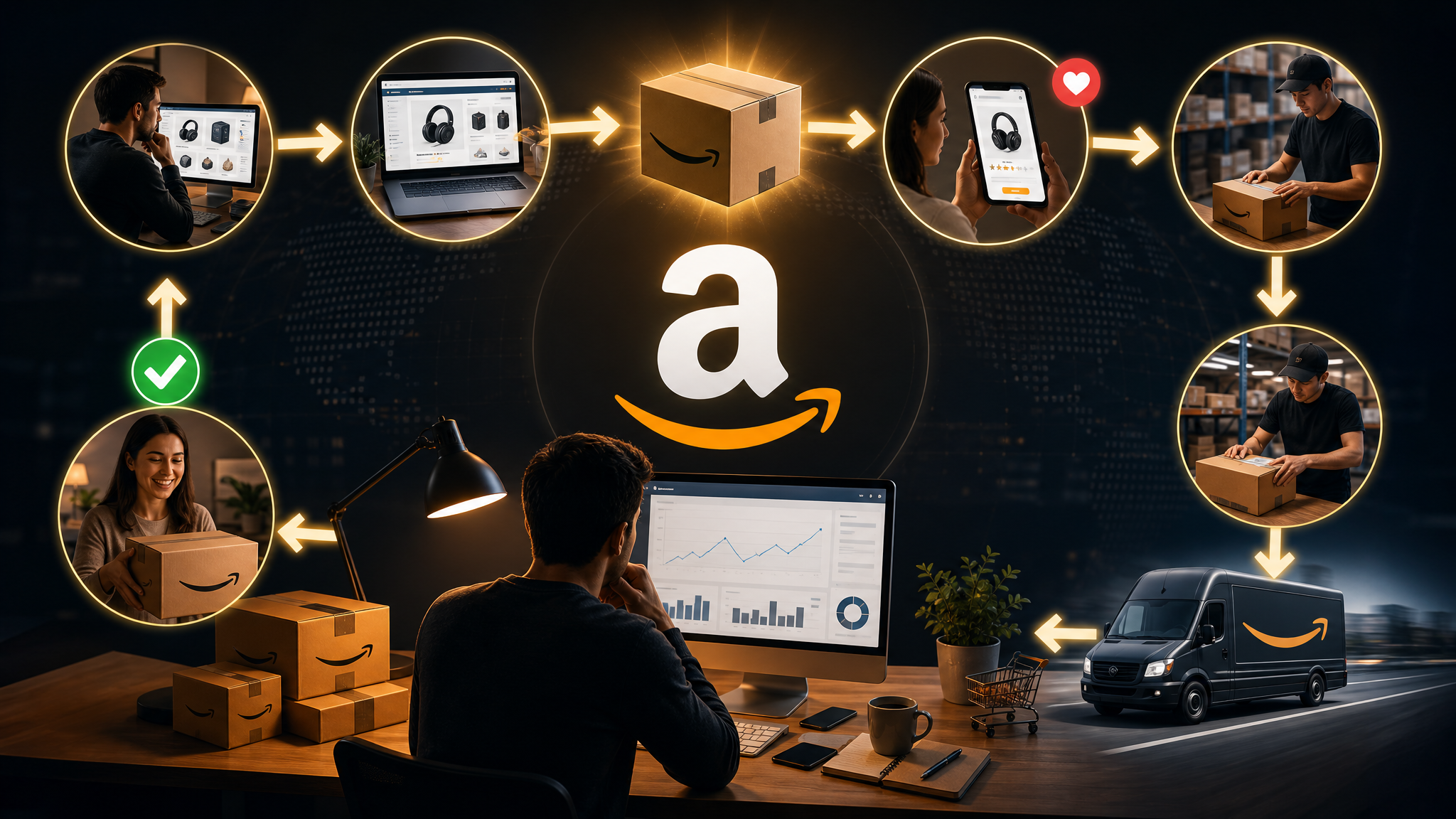
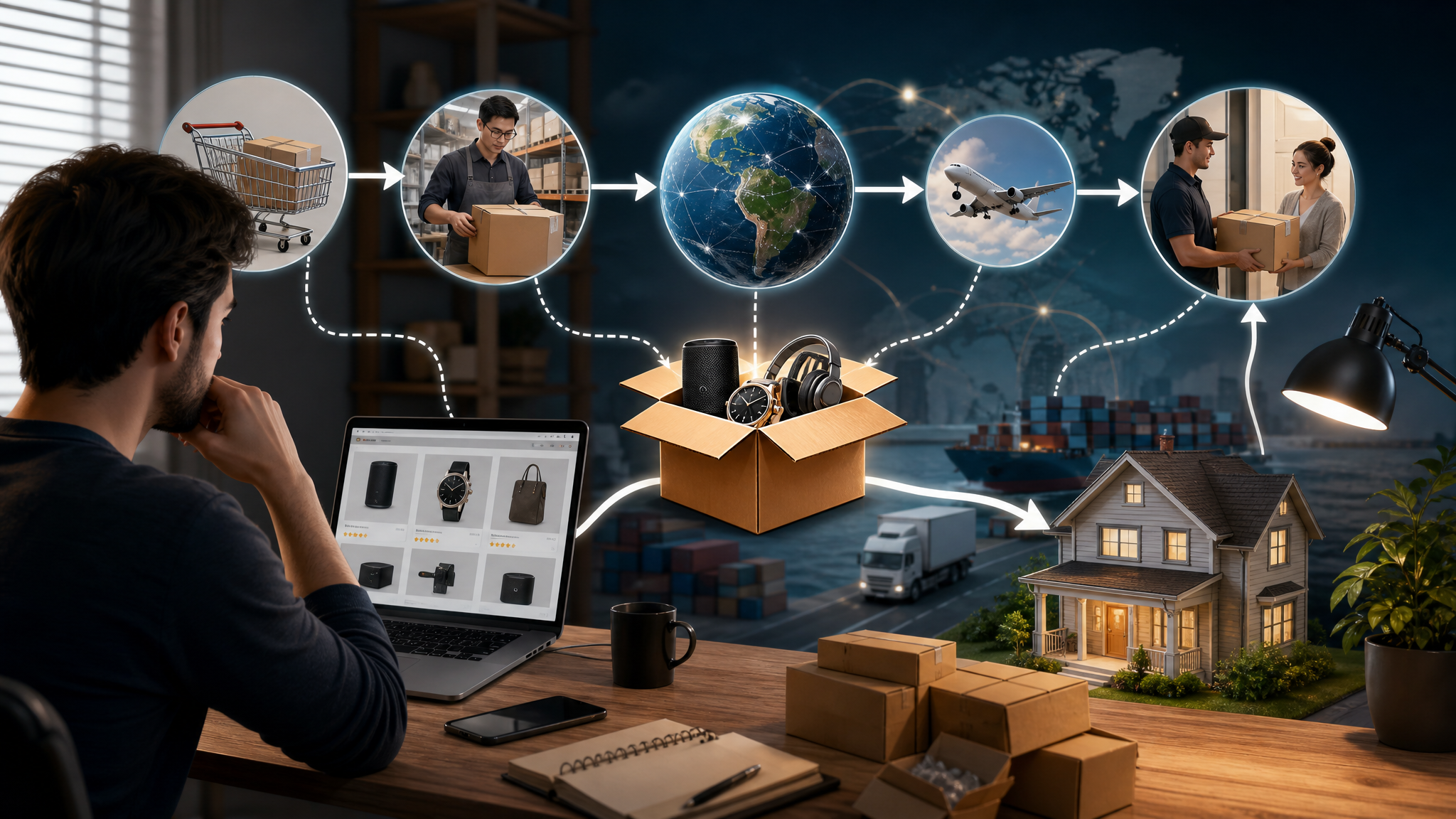
To start dropshipping on Amazon, you must establish a legitimate business entity (LLC), secure a professional seller account, and partner exclusively with verified wholesale distributors who agree to list your brand as the seller of record on all packing slips. You then list these products on Amazon and fulfill orders directly through your wholesale partner’s warehouse, strictly complying with Amazon’s Drop Shipping Policy.
When learning how to start dropshipping on Amazon, you must understand that dropshipping is not a casual side hustle; it is a legitimate operational method. Sourcing and supply chain management represent the core of this business model. Instead of storing physical inventory in your own warehouse or sending it to Amazon Fulfillment Centers (FBA), you coordinate with a backend partner who processes, packs, and ships orders on your behalf. But as the customer-facing entity, the legal and financial responsibility remains entirely yours.
The Reality of Policy Enforcement: Section 3 and the Drop Shipping Guidelines
Amazon’s attitude toward drop shippers has historically been highly skeptical. This is because the platform has spent billions of dollars building a world-class customer experience, and unverified, retail-arbitrage dropshippers frequently ruin that experience by delivering items late, using incorrect packaging, or shipping damaged goods. To protect their ecosystem, Amazon enforces their strict Amazon Drop Shipping Policy and Seller Guidelines with absolute authority under the seller agreement’s Section 3 suspension clauses.
The policy mandates three strict conditions that you must fulfill to remain active:
- Seller of Record: You must be identified as the sole seller of record on all customer-facing materials. This means the packing slips, invoices, and outer shipping boxes must display your business name and details — not those of your wholesale supplier, a manufacturer, or another retailer.
- No Retail Sourcing: Sourcing products from another online retailer (such as buying a product from Walmart or Costco and having them ship it directly to an Amazon buyer) is strictly prohibited. Your supplier must be a verified wholesaler or manufacturer.
- Responsible Return Processing: You are legally and operationally responsible for receiving, processing, and executing all customer returns. You cannot force the customer to contact the wholesaler or ship items back to an unverified third-party address without clear authorization.
Failure to meet any of these three requirements will lead to an immediate account audit. The Seller Performance team will request valid wholesale invoices, manufacturer authorization letters, and photos of your packaging. If your documentation is insufficient, your account will be permanently suspended, and your funds will be held indefinitely to cover potential customer claims. This policy reality is why understanding how to dropshipping amazon requires a professional, wholesale-first mentality.
Is Amazon Dropship Legal? Policy vs. Arbitrage
When new entrepreneurs enter the e-commerce space, the first question they ask is is amazon dropship legal. The simple, direct answer is yes. It is completely legal and explicitly permitted by Amazon’s terms of service, provided you strictly adhere to their Drop Shipping Policy.
The confusion around this topic stems from a failure to distinguish between legal, compliance-first wholesale dropshipping and illegal, prohibited retail arbitrage dropshipping. Sourcing products from another online retailer like Walmart, Best Buy, or Home Depot is a direct violation of Amazon’s terms, as it introduces third-party branding to the customer and disrupts the platform experience. This practice is heavily penalized and often leads to immediate account suspensions.
Conversely, building a direct contract with a verified wholesaler or manufacturer who agrees to pack items in plain boxes and list your brand on the shipping label is fully compliant. In this structure, you operate as an authorized digital distributor, which is a standard business model recognized across global supply chains. As long as you maintain complete visibility over your seller profile and documentation, your business stands on solid legal ground, aligning with compliant dropshipping structural regulations and models used by top modern retailers.
Is Amazon Dropshipping Profitable in the Modern Margins Era?
The next major question sellers face is is amazon dropshipping profitable with modern fee structures. Yes, it remains highly profitable, but the margin profile has compressed. The era of effortless 50% net margins is gone; success now requires running a lean, high-velocity operation that targets net margins of 10% to 20%.
To analyze profitability, you must understand the key costs that affect your unit economics:
- Amazon Referral Fees (8% to 15%): Paid to Amazon on every sale, scaling based on your product category.
- Wholesale Sourcing & Surcharges: The base cost of the item plus any fulfillment handling fees charged by your supplier.
- Shipping Template Costs: The expense of shipping the item safely to the end consumer, which must be factored into your pricing.
- Seller Account Overhead ($39.99/month): The recurring subscription cost for a professional seller account.
- Customer Acquisition Costs (CAC): The cost of running marketing campaigns to drive traffic to your product listings.
With margins compressed, relying entirely on internal Amazon PPC search bidding can quickly destroy your profits. High CPC bids for popular search terms make it difficult for new sellers to acquire customers profitably. To protect your margins, the most effective strategy is to drive low-cost external traffic to your listings, bypassing high on-platform bidding costs entirely.
Sourcing Wholesalers vs. Prohibited Retail Arbitrage Sourcing
Your business’s survival depends entirely on your sourcing pipeline. Understanding the core structural differences between compliant wholesale relationships and prohibited retail sourcing is critical:
| Operational Feature | Prohibited Retail Arbitrage Sourcing | Compliant Wholesale Dropshipping |
|---|---|---|
| Supplier Entity | B2C Retailers (Walmart, Home Depot, Costco) | B2B Wholesalers, Manufacturers, and Authorized Distributors |
| Seller of Record | Walmart or third-party retail shipper listed on packaging | Your business entity listed on packing slips and labels |
| Invoicing & Verification | Retail receipts (rejected by Amazon Seller Performance) | Official commercial invoices containing business tax IDs |
| Brand Authorization | None (high risk of Intellectual Property complaints) | Official brand authorization letters for Amazon distribution |
| Packaging Aesthetics | Branded retail shipping boxes and inserts | Plain, unbranded cardboard boxes and shipping labels |
| Margin Control | Highly compressed, volatile pricing at retail rates | Stable, structured bulk wholesale price tiers |
As this comparison shows, compliance-first wholesale dropshipping is the only viable path to long-term profitability. By establishing direct wholesale relationships and securing official reseller agreements, you protect your seller account from policy audits and build a business with stable, predictable margins.
Scale your e-commerce listings safely by driving highly profitable off-platform social traffic. Plans start from $9.99/mo
🎬 Try VidAU Now →
Driving Off-Platform Traffic: The Key to Scalable Growth
The defining characteristic of successful dropshippers is their customer acquisition strategy. While unsuccessful sellers wait for their listings to index organically or lose money on expensive Amazon PPC keywords, professional operators drive high-performance off-platform social traffic directly to their Amazon listings.
This strategy offers significant operational advantages:
- Substantially Lower CPCs: Bidding for user attention on TikTok and Meta feeds is significantly cheaper than bidding for highly competitive search keywords on Amazon.
- Algorithmic Ranking Boost: Amazon’s ranking algorithm highly rewards external traffic. Driving high-quality off-platform traffic to your product listings signals popularity, pushing your organic search rank higher.
- Direct Retargeting Opportunities: Capturing customer data through off-platform ad campaigns lets you retarget those users across social ecosystems, maximizing their lifetime value.
To capture and convert this off-platform attention, you must use high-quality, vertical-native video creative that stops the scroll. Static images and basic slideshows do not drive conversions on modern feeds; success requires engaging, fast-paced video ads that clearly highlight your product’s core value proposition, matching the exact direct-response standards outlined in our programmatic ecommerce video ads playbook.
Leveraging AI to Scale Creative Ad Volume with VidAU
The primary bottleneck in driving off-platform social traffic is creative production. To maintain a profitable campaign ROAS, you need to continuously test new ad variations. If you only run 2 or 3 ad creatives, you will face rapid creative fatigue, leading to higher ad costs and lower click-through rates.
To solve this production challenge, e-commerce brands are adopting modern, AI-powered video tools like VidAU.ai to streamline video generation and learn how to create ads for TikTok video with AI. This automated workflow lets you transform product URLs or written scripts into platform-ready 9:16 vertical ads in under ten minutes, complete with realistic AI avatar presenters, professional voiceovers, and auto-generated captions.
By leveraging these automated workflows, your marketing team can execute modular user generated video ads scaling, launching hundreds of unique social ad variations in minutes, completely bypassing the high cost and slow turnaround times of traditional creative agencies. For a broader perspective on how these automated pipelines are reshaping the industry, explore our analysis of modern e-commerce trends.
Scale your creative volume. Convert standard product links into high-fidelity video ads in minutes. From $9.99/mo
🎬 Start Generating →Technical Blueprint & Operational Settings for Amazon Seller Central
Executing dropshipping safely requires careful configuration of your Amazon Seller Central account. To maintain policy compliance and protect your seller rating, ensure your account settings are configured to this operational blueprint:
- Fulfillment Latency (Handling Time): Set your default handling time to 3 to 4 business days. Never leave this at the default 1-day setting, as any wholesale shipping delays will lead to late shipment rates, which can trigger account suspensions.
- Shipping Template Configurations: Set up precise custom shipping templates in Seller Central that match your wholesaler’s actual warehouse location, ensuring accurate transit times and shipping rates are displayed to buyers.
- Strict Invoice Matching: Keep physical copies of your wholesale invoices, manufacturer authorization letters, and brand certificates organized and accessible. If your account is audited, you must be able to submit valid documentation immediately.
- Official Return Policy Settings: Set up a dedicated, professional return address in Seller Central. Ensure all customer returns are processed, inspected, and refunded within 48 hours of receipt to maintain a healthy seller rating.
Common Strategic Mistakes to Avoid
Even the most detailed business plans can fail due to easily avoidable operational and strategic errors. Avoid these common dropshipping mistakes to keep your account safe and profitable:
Purchasing products from Walmart, Costco, or Home Depot and shipping them directly to Amazon buyers. This violates Amazon’s Drop Shipping Policy and is the single most common cause of permanent, non-appealable seller account suspensions.
- Letting Your Order Defect Rate (ODR) Spike: Ignoring shipping delays, high cancellation rates, or defective inventory. If your ODR rises above 1%, Amazon will automatically place your account under review or suspend your seller privileges.
- Ignoring Intellectual Property (IP) Complaints: Listing branded products without secured wholesale reseller agreements or manufacturer authorization. Brands actively monitor listings and will report unauthorized sellers for IP infringement.
- Relying on Outdated PPC Search Strategies: Spending your entire marketing budget on highly competitive Amazon search terms. To scale profitably, you must drive cheap off-platform social traffic using engaging vertical video ads.
- Running Video Ads Without Professional Captions: Overlooking high-contrast, animated captions in your social video campaigns. Because up to 80% of users watch social feeds with sound muted, captions are essential to keep viewers engaged.
Step-by-Step Guide: How to Start Dropshipping on Amazon Legally
If you are ready to transition your dropshipping model into a highly professional, compliance-first operation, follow this step-by-step framework to launch safely:
📋 Programmatic Wholesale Launch System
Form a Legitimate, Fully Compliant Corporate Entity
Before contacting wholesale suppliers, establish a professional business entity (such as an LLC or C-Corp), secure an Employer Identification Number (EIN), and register for a Sales Tax Resale Certificate. Legitimate wholesale distributors will only partner with registered, legal business entities.
Secure a Professional Amazon Seller Account
Register for a professional seller account in Seller Central. Set up your official bank account, provide your tax verification, and complete the mandatory identity verification steps to ensure your seller profile is fully validated.
Partner and Secure Wholesale reseller Agreements
Reach out to verified manufacturers or authorized wholesale distributors. Secure written, official agreements stating that your business is the sole Seller of Record (SoR) and that all packages will be shipped in plain packaging with no third-party invoices.
List and Optimize Your Product Pages on Seller Central
Set up your product listings with clear, high-quality images, accurate sizing details, and optimized bullet points. Configure your shipping templates and fulfillment handling latency to match your wholesaler’s actual fulfillment turnaround times.
Build and Launch Your Off-Platform Customer Acquisition Funnels
Convert your product listings into high-converting social media ads using automated video generators like VidAU.ai. Launch vertical video campaigns on TikTok and Instagram to drive highly qualified, low-cost external traffic directly to your Amazon listings, boosting your sales volume and organic rankings.
The Next Frontier: Automated Marketplace Sourcing and Programmatic Distribution
The future of marketplace dropshipping belongs to systems-driven operators who treat creative production and supply chain logistics as unified software networks. As we move past 2026, the brands that scale sustainably will be those that automate manual tasks and leverage programmatic technologies to optimize their pricing, inventory tracking, and ad generation, transforming manual pipelines into dynamic assets.
By moving from slow, manual creative pipelines to high-velocity, AI-assisted video workflows today, your brand can build a highly efficient, compliance-first dropshipping engine. Drive consistent customer conversions, protect your seller account from policy audits, and establish a compounding competitive advantage that secures long-term e-commerce growth.
Related Resources
Scale Your Creative Sourcing with VidAU
VidAU.ai converts any product URL or written script into high-converting, vertical 9:16 social ads in minutes — complete with photorealistic AI avatar presenters, professional synthetic voices, and auto-generated captions.
🎬 Try VidAU Now →Plans start from $9.99/month · No credit card required · High-fidelity video output
FAQ — Frequently Asked Questions
How to start dropshipping on Amazon in 2026?
To start dropshipping on Amazon, you must establish a legitimate business entity (LLC), secure a professional seller account, and partner exclusively with verified wholesale distributors who agree to list your brand as the seller of record on all packing slips. You then list these products on Amazon and fulfill orders directly through your wholesale partner’s warehouse, strictly complying with Amazon’s Drop Shipping Policy.
Is dropshipping on Amazon actually legal?
Yes, dropshipping on Amazon is entirely legal and explicitly permitted under Amazon’s terms of service, provided you strictly adhere to their Drop Shipping Policy. The policy mandates that you must always be the seller of record, and your packaging, invoices, and slips must not contain any branding or information from another retailer like Walmart or Home Depot.
Can I dropship products from retail sites like Walmart to Amazon?
No, purchasing products from another online retailer and having them shipped directly to your Amazon customers is strictly prohibited. Doing so is the most common reason for immediate, permanent account suspensions. All dropshipped inventory must be sourced directly from legitimate wholesale suppliers or manufacturers.
How much capital do I need to start dropshipping on Amazon?
While dropshipping requires no upfront inventory purchases, you should expect to spend between $500 and $2,000 to start. These funds cover legal business formation, professional seller fees ($39.99/month), initial wholesale directory access, product research software, and cash flow to pay your wholesale suppliers before Amazon releases your payouts.
How does Amazon pay dropshippers and what is the payout cycle?
Amazon operates on a bi-weekly payout cycle, releasing funds to your linked bank account every 14 days. However, new seller accounts are typically subject to an ‘Account Level Reserve’ (temporary fund hold) to cover potential customer returns or chargebacks, meaning you need starting capital to fulfill new orders in the interim.
What happens if a customer wants to return a dropshipped product?
As the seller of record, you must accept and process all customer returns. You must set up a return address in Seller Central (either your own office/home or your wholesale partner’s warehouse if they offer return handling). Once the item is returned and inspected, you issue a refund to the customer directly through Amazon.
Is Amazon dropshipping profitable with modern ad costs?
Amazon dropshipping can be profitable, but margins are highly compressed (typically 10% to 20%). Success requires bypassing expensive Amazon PPC bidding by driving low-cost external traffic to your listings. Utilizing high-performance, automated video creative allows brands to capture cheap social traffic and maintain healthy margins.
What is a Seller of Record (SoR) on Amazon?
The Seller of Record is the legal entity responsible for selling a product to the end consumer. On Amazon, you must be identified as the seller of record on all invoices, packing slips, external packaging, and other documentation included with the product. Your wholesale supplier must not be mentioned on any customer-facing materials.
How do I find verified wholesale suppliers for Amazon dropshipping?
You can find verified wholesale suppliers by attending industry trade shows, searching legitimate wholesale directories like Worldwide Brands or Inventory Source, or contacting manufacturers directly to ask for a list of their authorized distributors. Always verify that they will sign a Seller of Record agreement.
What are the primary causes of Amazon seller account suspension?
The primary causes of suspension are violating the Drop Shipping Policy (sourcing from other retailers), high Order Defect Rates (ODR) due to late shipments, listing restricted or counterfeit products without authorization, and failing to provide valid wholesale invoices when requested by Amazon’s Seller Performance team.
Sources and Performance Benchmarks: Amazon Seller drop shipping guidelines, policy documents, and compliance updates Q1-Q2 2026. E-commerce market research, merchant operational cost profiles, and cross-channel marketing reports via VidAU.ai research division.