

TikTok’s algorithm rewards content that feels native to the platform xE2x80x94 rough, fast, personality-driven xE2x80x94 over content that feels like a produced ad, regardless of production budget. That creates an unusual dynamic for AI tools: the brands getting real value aren’t using AI to make things look more polished, they’re using it to make more native-feeling variants faster, which is a different skill than most marketing teams walked in with.
What Works Differently on TikTok
TikTok’s ranking system optimizes for watch-through and engagement within the first few seconds, which favors hooks and pacing over visual polish. AI tools that help a team generate and test many hook variations quickly xE2x80x94 not the tools that make video look most cinematic xE2x80x94 are the ones producing measurable results, because the platform’s own audience and algorithm actively penalize content that reads as overproduced.

Where AI Actually Helps
Hook variant generation
xE2x86x92 The highest-leverage use
Testing 10-20 different opening hooks for the same core concept, since the first three seconds determine most of whether a video gets watched through.
AI voiceover for UGC-style content
xE2x86x92 Speeds iteration
Rapid voiceover generation for testing scripts before committing to a full production, useful for teams without an in-house creator roster.
Performance pattern detection
xE2x86x92 Speeds learning
AI analysis of which hooks, pacing, and formats are outperforming across a brand’s own test set, surfacing patterns faster than manual review.
| Approach | TikTok performance |
|---|---|
| Highly polished AI-generated ad-style video | Underperforms |
| AI-assisted, native-feeling UGC-style content | Outperforms |
| Many fast hook variants tested against each other | Outperforms single high-budget asset |
| Single expensive, highly-produced asset | Underperforms relative to cost |
Using AI to make TikTok content look more like a traditional ad. The platform’s audience and algorithm both actively work against this xE2x80x94 the investment should go toward speed and variant count, not visual polish.
Need fast video variants for testing? TikTok
Disclosure and Platform Policy
TikTok’s content policies increasingly require labeling for realistic AI-generated video, particularly anything resembling a real person. Disclosed AI content hasn’t shown a meaningful performance penalty when the creative itself is genuinely strong xE2x80x94 the risk is skipping disclosure entirely, which carries real policy enforcement risk regardless of how the content performs.
Building a Practical Workflow
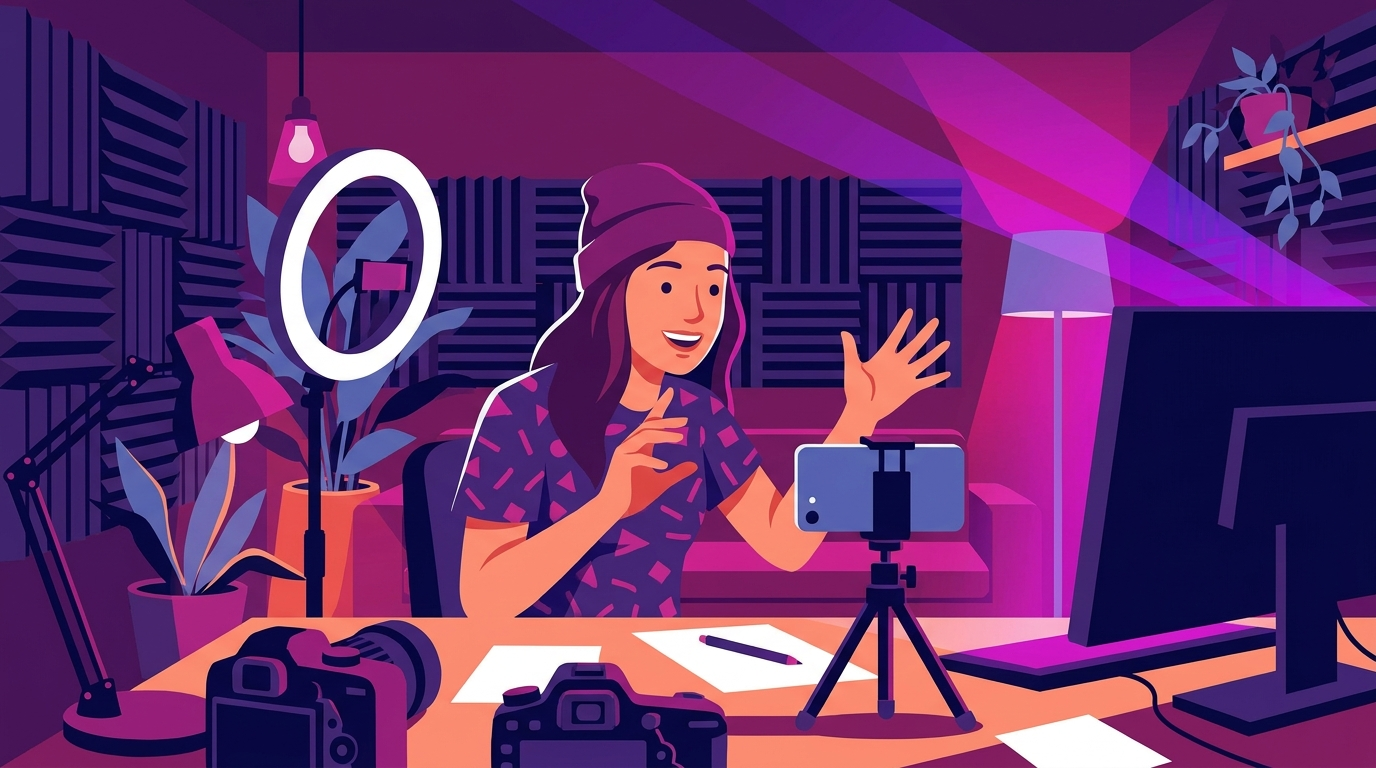
A realistic setup: generate 10-15 hook variants for a core concept using AI voiceover and quick editing, publish a small paid test set to identify the top 2-3 performers, then invest further production time only in the winners. This inverts the traditional approach of investing heavily upfront in a single asset before knowing whether the concept works at all.
Native-feeling, fast-tested content beats one polished asset
Test many hooks quickly, then invest further production only in what actually works.
Fast video production tools built for iteration
Does AI-generated video hurt performance on TikTok?
Not inherently, but overly polished AI output that reads as an ad underperforms. AI for speed with a native aesthetic works.
How many creative variants should a brand test per campaign?
10-20 variants per concept is realistic with AI production and matches the volume needed to reliably find a winning hook.
Should AI-generated TikTok content be disclosed?
Platform policy increasingly requires it for realistic AI content, and disclosure hasn’t shown meaningfully worse performance for strong creative.
Key Takeaways
- Native-feeling content beats polished production xE2x80x94 AI should serve speed and volume, not visual upgrade.
- Hook variant testing is the highest-leverage AI use case on the platform, given the 3-second decision window.
- 10-20 variants per concept is a realistic, achievable testing volume with AI-assisted production.
- Disclosure requirements are tightening, and disclosed content performs fine when the creative itself is strong.
- Invert the traditional production order: test cheap variants first, invest production budget only in proven winners.
Sources: TikTok platform policy documentation and short-form video performance research, as of 2026.