Seedance 2.0 First Test Results: A Technical Performance Review for Skeptical AI Video Creators
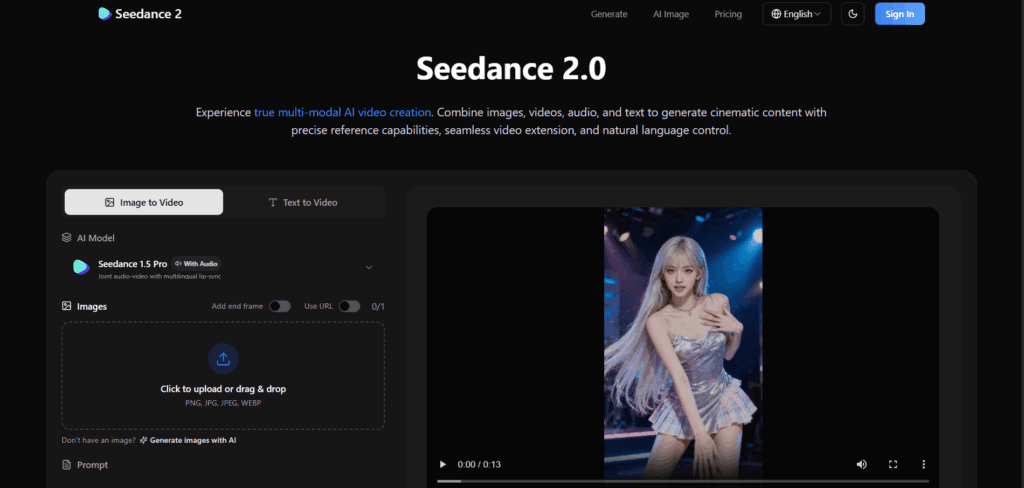
I tested Seedance 2.0 for three straight days because polished launch demos never tell the full story. Most AI video tools look impressive in cinematic trailers, but real production workflows expose the weaknesses fast. Once you move beyond curated prompts, issues like broken motion, weak prompt adherence, and inconsistent character behavior usually start showing up.
This Seedance 2.0 review focuses on actual production performance instead of marketing claims. I pushed the model through structured tests inside VidAU AI to evaluate prompt accuracy, motion realism, scene consistency, rendering efficiency, and workflow stability under repeated iterations.
The goal was simple: find out where Seedance 2.0 performs well, where it struggles, and whether creators can rely on it for scalable AI video production in 2026. This breakdown is built for creators, marketers, and AI video users who care more about usable outputs than social media hype.
How I Tested Seedance 2.0
Instead of relying on launch demos or curated promotional clips, I tested Seedance 2.0 using real-world creator workflows designed to expose both its strengths and weaknesses under practical conditions.
The goal was not just to see whether Seedance could generate visually impressive scenes, but to evaluate how consistently it handled cinematic motion, prompt accuracy, character stability, camera movement, and complex creative instructions compared to other leading AI video models.
To make the testing process more reliable, I used multiple prompt categories that reflect the kinds of videos creators are actually producing today across TikTok, YouTube Shorts, AI ads, cinematic storytelling, and social content production.1
The evaluation focused on several core areas:
- Motion realism and fluidity
- Character and identity consistency
- Camera movement interpretation
- Prompt responsiveness
- Scene coherence under complex instructions
- Render speed and iteration efficiency
- Visual quality across cinematic and fast-paced sequences
Rather than testing only simple prompts, I intentionally used layered instructions involving:
- multi-subject scenes
- cinematic camera directions
- emotional tone shifts
- lighting conditions
- environmental motion
- rapid transitions
- style-specific rendering requests
The testing scenarios were structured to simulate how actual creators, marketers, and editors would use Seedance 2.0 in production workflows — especially for short-form viral videos, AI commercials, storytelling content, and cinematic social media clips.
This approach made it easier to identify where Seedance 2.0 genuinely outperforms competing AI video tools, and where limitations still appear under more demanding creative conditions.
What Seedance 2.0 Does Better Than Other AI Video Tools
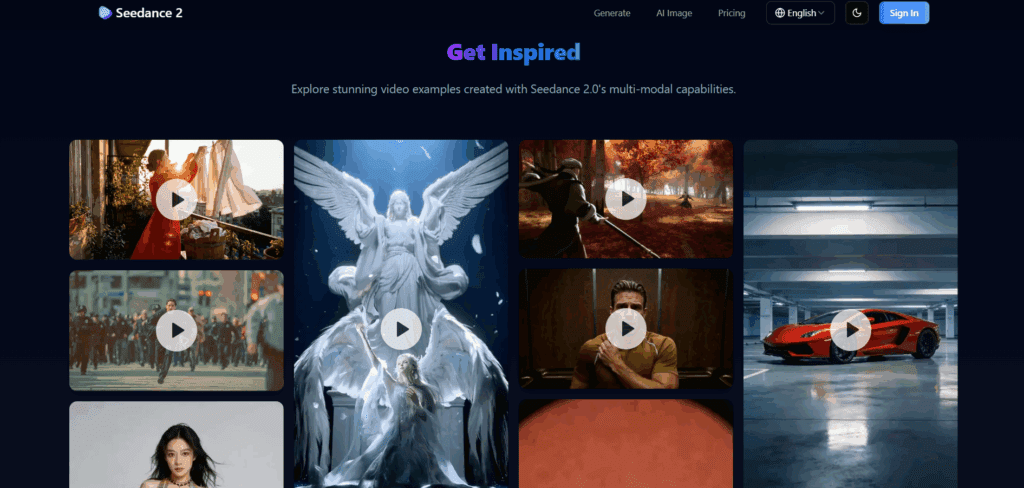
Let’s talk about the wins.
1. Motion Quality
Seedance 2.0’s motion is its strongest asset.
Unlike systems that generate motion as post-hoc frame interpolation, this feels natively temporal.
Strengths:
– Reduced jitter
– Lower frame-to-frame warping
– Better temporal latent locking
– Smoother motion arcs
Fast gestures (running, fabric movement, camera pans) feel significantly more coherent than previous generation diffusion-video hybrids.
It appears the model uses stronger temporal attention coupling, minimizing frame independence artifacts.
For action shots, this matters.
2. Seedance 2.0 Character Consistency Test
Character drift is a plague in AI video.
Seedance 2.0 improves on this.
Across 5–7 second clips:
– Facial structure largely holds
– Hairstyle remains stable
– Clothing stays consistent (unless high motion blur)
This indicates improved latent anchoring across time steps.
However, beyond ~8 seconds, identity degradation becomes noticeable.
This suggests a temporal coherence window limitation — possibly due to internal memory compression rather than full sequence modeling.
For short-form creators? Excellent.
For long narrative sequences? Still fragmented.
3. Efficiency and Iteration Speed
One of the most underrated aspects: iteration speed.
Compared to ComfyUI diffusion pipelines with heavy ControlNet stacks, Seedance 2.0 feels streamlined.
– Faster generation cycles
– Less parameter micromanagement
– More predictable seed behavior
Seed parity testing showed moderate stability. While not pixel-identical (as expected), reusing seeds produced directionally similar motion.
That’s crucial for controlled iteration.
If you’re building repeatable workflows, this is usable.
Where It Stumbles
Now the part marketing videos won’t show you.
1. Edge-Case Physics
When prompts involve:
– Complex hand-object interactions
– Transparent materials
– Reflections within reflections
– Liquids under rapid motion
Failure rates increase significantly.
Hands gripping objects often partially fuse.
Liquids lose volume continuity.
Reflections decouple from geometry.
These are classic generative model weaknesses tied to insufficient physical priors.
Seedance 2.0 improves smoothness — not physics accuracy.
2. Long Prompt Memory Decay
Prompts exceeding ~120–150 tokens show instruction loss.
Later clauses become weakly represented in output.
This implies:
– Either token weighting diminishes with depth
– Or attention allocation prioritizes early prompt components
Workaround: front-load critical constraints.
3. Style Lock-In
When attempting radical mid-scene stylistic changes:
> Scene shifts from realism to anime style halfway through.
The model struggles.
It prefers stylistic continuity.
This suggests strong global latent stabilization good for coherence, bad for stylized transitions.
4. Brand-Specific Control
For commercial creators:
Precise logo rendering and typography remain unstable under motion.
Even slight camera movement introduces glyph distortion.
For high-end product visualization, you’ll still need compositing pipelines.
Seedance 2.0 vs Runway vs Kling vs Sora
AI video models now compete on more than visual quality. Creators now look at prompt accuracy, motion consistency, rendering speed, camera control, commercial usability, and scene stability. Some models perform better for cinematic storytelling, while others handle ad creation, product demos, or character motion more effectively.
Before choosing a workflow, compare where each model performs best. This breakdown highlights the strengths and limitations of Seedance 2.0, Runway, Kling, and Sora across real creator use cases.
| Feature | Seedance 2.0 | Runway Gen-3 | Kling | Sora |
|---|---|---|---|---|
| Prompt Adherence | Strong with structured prompts | Moderate | Strong | Very strong |
| Motion Consistency | Stable in short scenes | Good | Excellent | Excellent |
| Camera Control | Smooth cinematic movement | Advanced | Advanced | Advanced |
| Character Consistency | Good with reference frames | Moderate | Strong | Strong |
| Rendering Speed | Fast | Moderate | Slower | Moderate |
| Product Ad Creation | Excellent | Good | Moderate | Moderate |
| Realism | High | High | Very high | Extremely high |
| Best For | Ads, UGC, TikTok videos | Cinematic edits | Realistic storytelling | Large-scale cinematic generation |
| Learning Curve | Easy | Moderate | Moderate | Advanced |
| Commercial Workflow Fit | Strong | Strong | Moderate | Limited public access |
Best Use Cases for Seedance 2.0
Seedance 2.0 performs best in structured commercial workflows where speed, consistency, and visual control matter. The model handles short-form content especially well, making it useful for creators, marketers, and brands producing high-volume video assets.
Here are the strongest use cases for Seedance 2.0:
- TikTok product ads
- UGC-style video generation
- AI skincare commercials
- Fashion and beauty campaigns
- Short cinematic promo videos
- Product showcase videos
- AI influencer content
- Story-driven social ads
- First-frame controlled video generation
- Fast iteration testing for paid ads
Seedance 2.0 also works well inside workflows powered by VidAU AI, especially for creators producing multiple ad variations quickly. You upload reference images, test prompts faster, and generate platform-ready videos without long editing cycles.
Who Should NOT Use Seedance 2.0
Seedance 2.0 is not designed for every creator workflow. Some projects require deeper scene logic, longer narrative continuity, or advanced simulation accuracy that other models currently handle better.
Seedance 2.0 may not fit your workflow if you need:
- Long-form movie generation
- Complex multi-scene storytelling
- High-end VFX simulation
- Advanced physics interactions
- Precise dialogue animation
- Ultra-long video continuity
- Open-world cinematic environments
- Heavy frame-by-frame editing control
Creators focused on Hollywood-style production pipelines or long cinematic sequences may prefer tools like Runway or Sora for deeper scene generation capabilities. Meanwhile, creators focused on fast ad production and repeatable content workflows often find Seedance 2.0 more efficient for daily output.
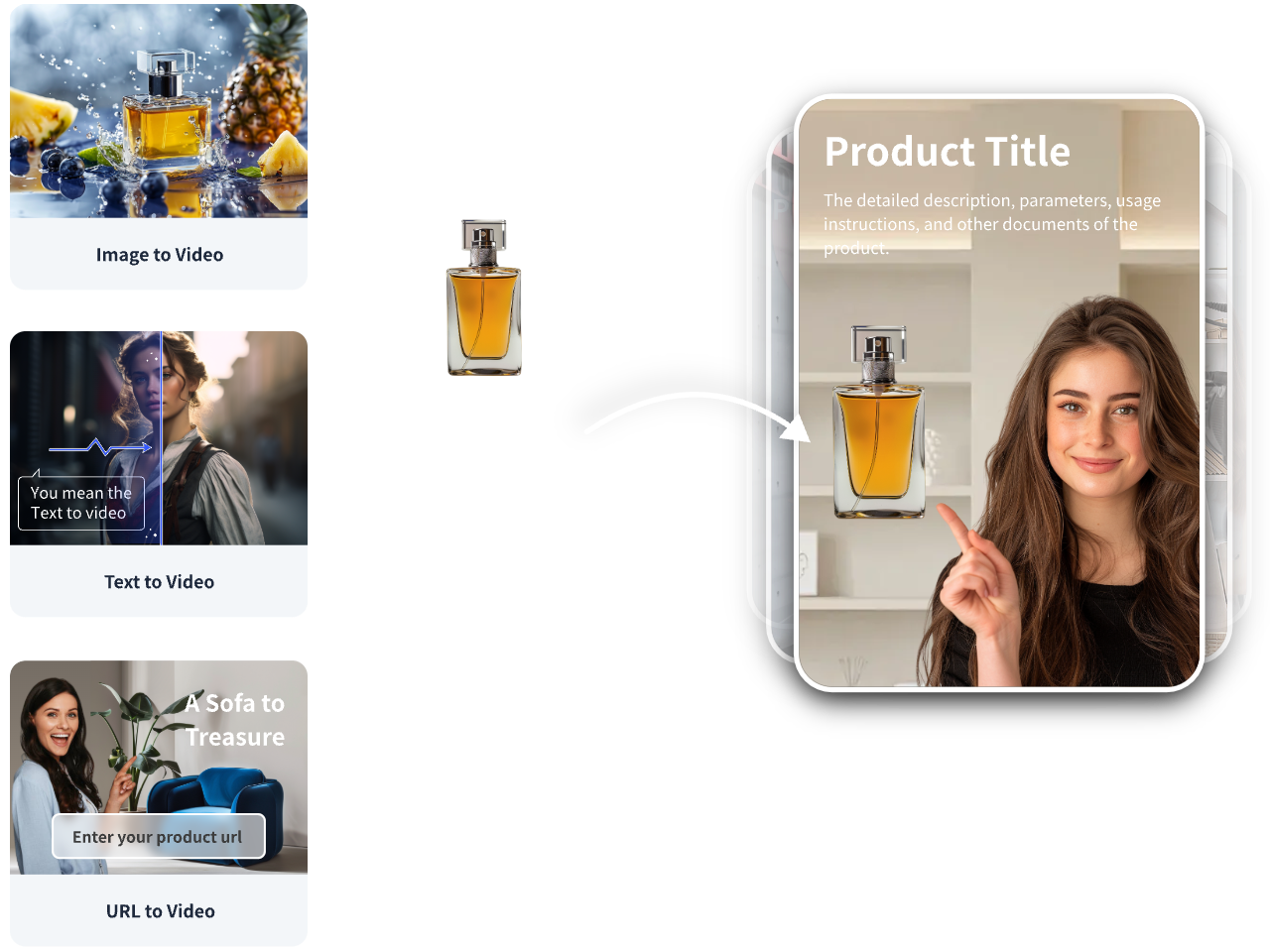
How to Use Seedance 2.0 with the VidAU Workflow
Using Seedance 2.0 inside the VidAU AI workflow helps creators produce ads, UGC videos, and short-form content faster without rebuilding every scene manually.
Step 1: Upload Your Visual Assets
Start by uploading:
- Product images
- Reference photos
- Brand visuals
- First-frame images
Reference images improve consistency across multiple scenes.
Step 2: Write Structured Seedance 2.0 Prompts
Inside the workflow, use clear visual prompts with:
- Subject
- Action
- Environment
- Camera movement
- Lighting style
Short and direct prompts usually perform better.
Step 3: Generate Multiple Scene Variations
Instead of creating one long video, generate:
- Hook scenes
- Product close-ups
- Lifestyle shots
- CTA scenes
This workflow improves stability and speeds up rendering.
Step 4: Add Motion and Camera Direction
Use simple cinematic instructions like:
- Slow push-in
- Side tracking shot
- Gentle handheld movement
Controlled motion creates smoother results.
Step 5: Combine and Export Final Videos
After generating scenes, organize and combine clips inside VidAU for:
- TikTok ads
- Instagram Reels
- UGC campaigns
- Product promo videos
This workflow helps creators test multiple ad versions faster while keeping visual consistency across campaigns.
Conclusion
After testing Seedance 2.0 across cinematic prompts, motion-heavy scenes, character consistency, and structured creator workflows, the model stands out as one of the strongest AI video tools currently available for short-form content creation.
Its biggest strengths are motion realism, smooth camera movement, fast rendering, and strong prompt interpretation. Seedance 2.0 performs especially well for TikTok videos, YouTube Shorts, cinematic ads, faceless content, and product-focused social media campaigns.
The model still has limitations. Longer storytelling sequences, complex physics interactions, text generation, and detailed object consistency may break during more demanding scenes. High-end production teams may still require additional editing and post-production cleanup.
For creators focused on viral AI videos, cinematic short-form content, UGC ads, and fast-turnaround workflows, Seedance 2.0 already feels practical for daily production use. Many creators now combine Seedance 2.0 with VidAU AI to generate multiple ad variations, organize scene-based workflows, and speed up social video production across TikTok, Instagram Reels, and YouTube Shorts.
The biggest takeaway is simple: Seedance 2.0 delivers more than launch hype. In key areas like motion quality, cinematic scene generation, and creator-focused workflows, the model pushes AI video creation forward in a meaningful way.
Frequently Asked Questions
Q: How does Seedance 2.0 compare to diffusion-based workflows in ComfyUI?
A: Seedance 2.0 offers stronger native temporal coherence and smoother motion out of the box, while ComfyUI diffusion pipelines provide more granular control via schedulers, ControlNet, and custom node graphs. For experimentation and precision control, ComfyUI still wins. For speed and production efficiency, Seedance 2.0 is more streamlined.
Q: Is Seedance 2.0 reliable for commercial brand work?
A: It can be used for concept ads and mood-driven visuals, but precise logo rendering, typography stability, and strict brand compliance remain weak under motion. For high-stakes brand work, compositing and post-production are still necessary.
Q: Does Seedance 2.0 maintain character identity over long sequences?
A: Identity consistency is strong within short clips (5–8 seconds). Beyond that range, gradual drift appears. For longer sequences, creators should segment scenes and maintain visual continuity in post.
Q: What is the biggest improvement in Seedance 2.0 over previous versions?
A: The most significant improvement is temporal smoothness and motion coherence. Frame-to-frame jitter is reduced, motion arcs feel more natural, and identity drift occurs less frequently within short clips.