
AI has made it nearly free to generate dozens of email variants and send highly segmented campaigns, and that’s created a new failure mode alongside the old ones: teams sending more email, more often, simply because production cost stopped being the constraint. Deliverability and subscriber fatigue don’t care that the content was cheap to make xE2x80x94 they respond to volume and relevance exactly as they always have.
What “AI Personalization” Should Actually Mean
Real AI-powered email personalization segments by actual subscriber behavior xE2x80x94 what they’ve clicked, browsed, or purchased xE2x80x94 and tailors content accordingly. Superficial personalization, like inserting a first name into a generic template, has minimal impact on its own and isn’t what’s driving the real performance gains teams report. The distinction matters because AI makes the superficial version very easy to scale without improving anything that matters.
Where AI Genuinely Helps
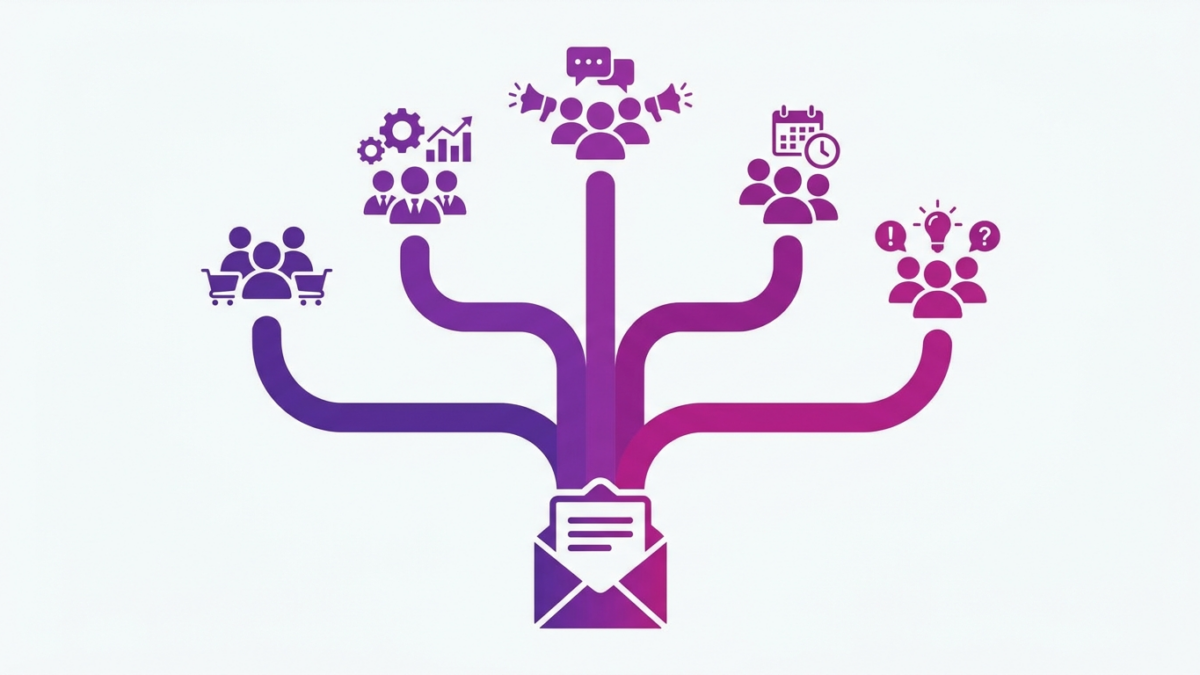
Behavioral segment content
xE2x86x92 The real value
Generating tailored content variants for genuinely different behavioral segments, rather than one-size-fits-all copy with a name swapped in.
Send-time optimization
xE2x86x92 Individual-level timing
AI models predicting the best send time per subscriber based on their own historical open patterns, rather than a single blast time for the whole list.
Deliverability monitoring
xE2x86x92 Prevents the real risk
AI tools that watch spam-complaint rate and sender reputation signals in real time, flagging before a sending pattern causes lasting damage.
| Personalization type | Impact on performance |
|---|---|
| First-name insertion only | Minimal |
| Behavioral segment-based content | Meaningful |
| Individual send-time optimization | Moderate, compounds over time |
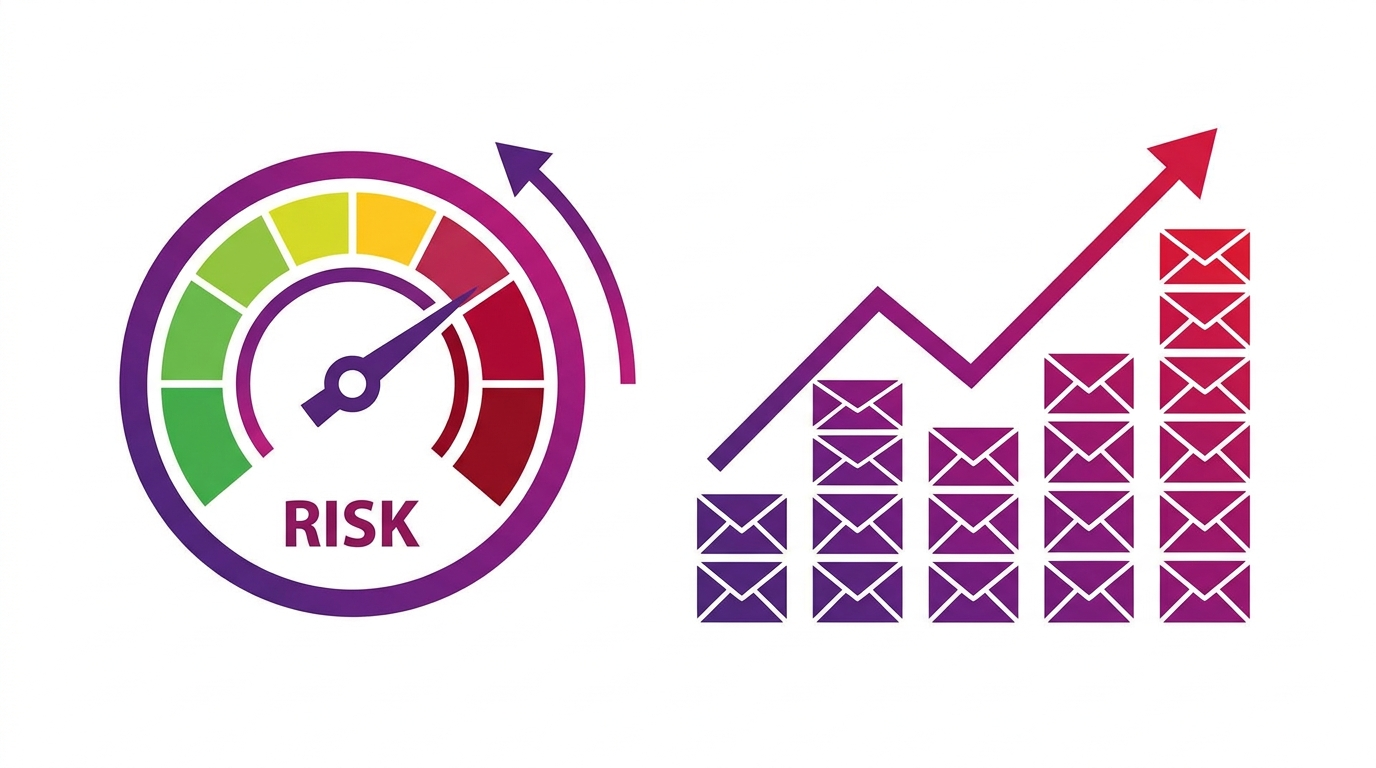
| Volume increase without engagement basis | Negative xE2x80x94 deliverability risk |
Increasing send frequency because AI made content production cheap, without checking whether subscriber engagement actually supports the higher cadence. Rising spam complaints and declining sender reputation are slow to notice and slow to recover from.
Need product video content for email campaigns? Email
Setting Frequency the Right Way
Let engagement signals, not production capacity, set send frequency: subscribers with high recent engagement can tolerate more frequent sends, while low-engagement segments should get fewer, more targeted emails rather than the same cadence as everyone else. This engagement-based approach protects deliverability precisely because it doesn’t treat cheap production as a reason to increase volume uniformly.
Deliverability responds to relevance and volume, not production cost
Behavioral segmentation and engagement-based frequency are where the real gains are.
Video content tools for email campaign creative
Does AI-personalized email actually improve open rates?
Genuine behavioral personalization does; superficial personalization like a first name has minimal effect on its own.
Can AI hurt email deliverability?
Yes, indirectly xE2x80x94 cheap AI production enabling higher send volume can trigger spam thresholds if not managed deliberately.
How often should AI-personalized email actually go out?
Frequency should be set by engagement signals, not by how cheap production has become.
Key Takeaways
- Behavioral segmentation drives real gains; superficial name-insertion personalization mostly doesn’t.
- Cheap AI production is not a reason to increase send volume xE2x80x94 deliverability still responds to relevance and frequency.
- Send-time optimization and deliverability monitoring are genuinely useful, underused AI applications.
- Let engagement signals set frequency, not production capacity.
- Sender reputation damage from over-sending is slow to notice and slow to recover xE2x80x94 manage volume deliberately.
Sources: Email deliverability standards and marketing automation platform documentation, as of 2026.