


Take a hard look at your analytics from the last twelve months. Top-of-funnel traffic is likely plunging, yet your core conversions might be mysteriously stable. If you are panicking over lost clicks, you are measuring the wrong metric. The reality is simple: modern consumers are no longer typing fragmented keywords into a search bar and hunting through ten blue links. They are having a conversation with an AI, and the AI is delivering the final answer.
For over two decades, digital marketers played a highly predictable game. We built massive, interconnected content webs, stuffed them with semantically relevant phrases, and begged for backlinks just to satisfy a web crawler. But as Google Overviews, Perplexity, and ChatGPT search replace traditional search behavior, the game is over. These generative engines do not care about your keyword density. They care about entity authority, factual accuracy, and immediate data extraction.
This transition necessitates an entirely new marketing discipline. We are moving past traditional SEO and entering the era of Generative Engine Optimization (GEO). The brands that understand this shift are restructuring their digital footprint to be machine-readable right now. The brands that don’t will simply vanish from the conversations their customers are having with AI.
What is ai search optimization?
AI search optimization (also known as GEO) is the process of structuring digital content so that generative AI answer engines—like ChatGPT, Perplexity, and Google Overviews—extract, trust, and cite your brand as the definitive source of truth in their conversational responses, shifting focus from ranking hyperlinks to providing authoritative answers.
Key Takeaways for 2026
- Zero-Click is the New Standard: Driving raw traffic is secondary (as Gartner predicts a 25% drop in traditional search volume by 2026). The primary goal is getting your brand cited as the authoritative source inside the AI’s generated response.
- Information Density Defeats Word Count: LLMs actively penalize fluff. Generative models prioritize dense, factual content formatted in tables, bulleted lists, and direct answers.
- Keywords Replaced by Entities: Optimization is no longer about repeating a phrase. It’s about cementing your brand as a recognized “entity” connected to a specific topic across the internet.
- Multimodal Context is King: Because AI is multimodal, embedding relevant video, clean imagery, and structured schema gives models a much deeper understanding of your authority.
- Primary Sources Dominate: AI traces facts back to their origin. Original research, proprietary data, and unique statistics are cited significantly more often than aggregator content.
Quick Summary
- Traditional keyword stuffing is ineffective against generative models that rely on semantic context.
- Retrieval-Augmented Generation (RAG) determines what an AI engine knows about your brand in real-time.
- Brands must shift from “persuasive copywriting” to “machine-readable factual structuring.”
- Unlinked brand mentions across the web carry massive weight in building entity authority.
- Providing data via JSON-LD schema is mandatory, not optional, in the AI search era.
- Agents are taking over the research phase of the buyer journey, entirely bypassing traditional SERPs.
The Silent Death of Traditional Search
If you ask a user how they research a new B2B software tool or plan a vacation today, their behavior looks drastically different than it did three years ago. The tolerance for opening multiple browser tabs, dodging pop-up ads, and reading 2,000-word recipe blogs has vanished.
We have fully entered the era of the “Answer Engine.” Platforms like Perplexity AI, ChatGPT, and Claude are bypassing the traditional search engine results page entirely. Instead of providing a directory of places where an answer might exist, these engines synthesize data in real-time, generate a bespoke response, and offer small footnote citations for the sources they used.
For brands, the implication is jarring: if your content is not structured in a way that a Large Language Model (LLM) can easily extract and trust, you simply do not exist in this new ecosystem.
Marketers often panic when they see organic traffic dropping. In an AI-driven world, a drop in top-of-funnel traffic might actually be a success metric, provided your brand is the primary citation in the AI answers that are preventing those clicks.
Traditional SEO vs. AI Search Optimization: The Core Shift
Traditional SEO was a game of signals intended for an algorithm running on rules. GEO is a game of context intended for an algorithm running on probability.
| Optimization Metric | Traditional SEO (The Past) | AI Search Optimization (The Future) |
|---|---|---|
| Primary Goal | Drive clicks to a website via high SERP rankings. | Ensure the brand is cited as the definitive answer in AI summaries. |
| Content Strategy | Long-form content, keyword density, and matched search intent. | High information density, direct answers, proprietary statistics. |
| Authority Signals | Quantity and quality of external backlinks. | Entity recognition, brand mentions, and primary source citations. |
| Formatting | H-tags, meta descriptions, and keyword placement. | Markdown elements (tables, lists), clean JSON-LD schema. |
| User Journey | Search → Click → Read → Convert | Prompt → Read AI Answer (Citation) → Direct Conversion |
The difference laid out above highlights why applying 2015 SEO tactics in 2026 is failing. AI engines do not reward you for keeping a user on your page for 10 minutes with lengthy anecdotes. They reward you for giving them the most concise, accurate data point they need to satisfy the user’s prompt immediately.
How Answer Engines Read and Rank Content
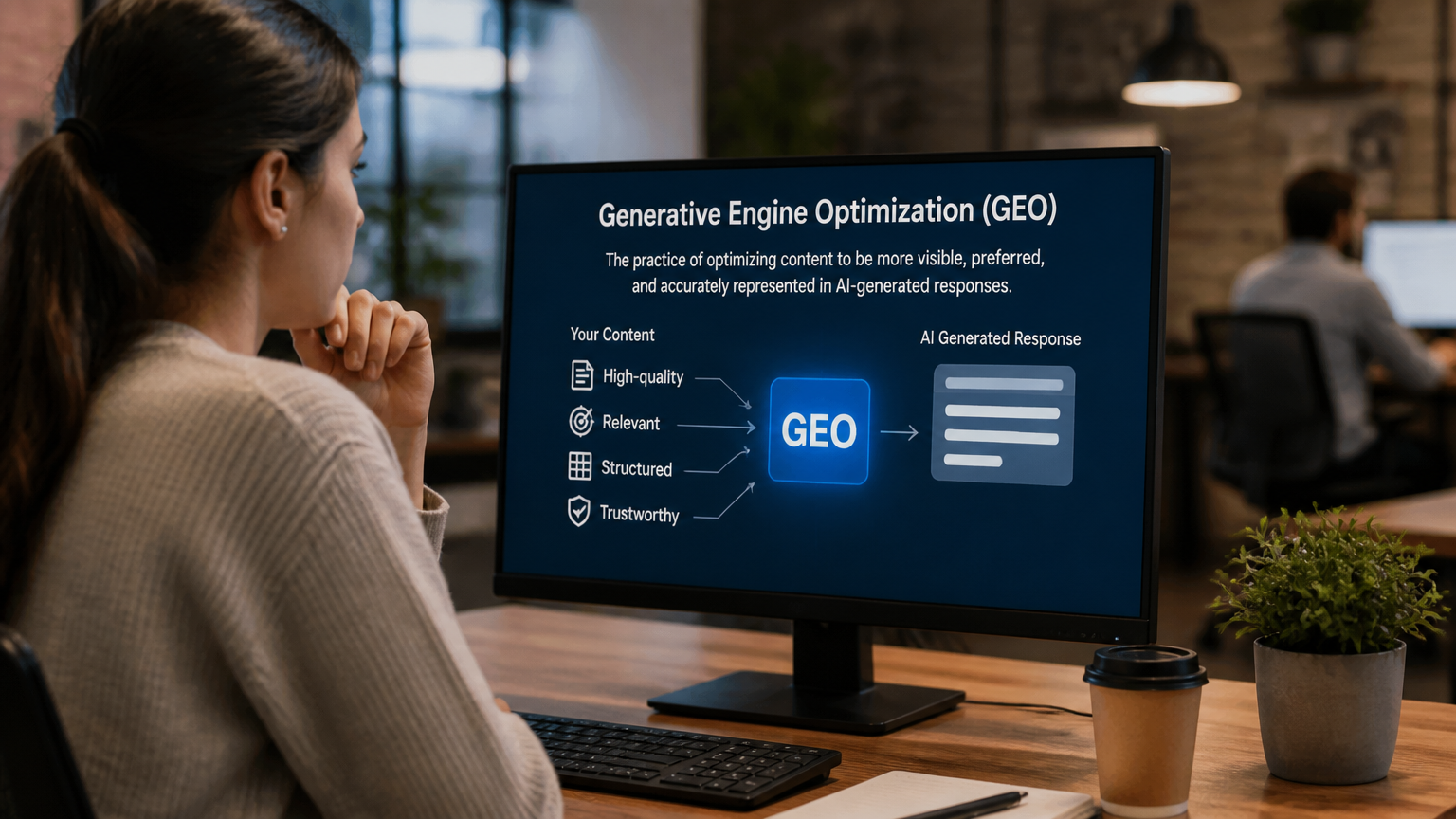
To optimize for an AI, you must understand how it parses the internet. Modern generative engines utilize a framework known as Retrieval-Augmented Generation (RAG). When a user asks a question, the AI does not simply guess based on its static training data.
Instead, it runs a background search, retrieves the top relevant documents from a vector database, reads them instantly, and generates an answer grounded in that real-time context. When an LLM reads your page, it is actively trying to summarize it. If your primary answer is buried under four paragraphs of marketing fluff, the LLM’s attention mechanism will drop the context, skip your page, and move on to a competitor’s site that provides a clear, bulleted answer at the top.
The Role of Agentic AI in the Search Ecosystem
The conversation around optimization gets vastly more complicated when we introduce AI agents. We are rapidly moving from humans querying answer engines to AI agents autonomously browsing the web on our behalf.
If you tell a shopping agent to “Find me the best B2B software for automated video editing, compare their pricing, and give me a summary of features,” that agent will scour the web. It will not read your persuasive sales copy. It will read your technical documentation, your pricing API, and your feature schemas. Understanding how autonomous digital workers differ from chatbots is crucial here. If your data is not machine-readable, the agent simply ignores your product entirely, highlighting exactly how AI agents are already reshaping core business functions.
📋 How to Prepare for AI Search Optimization
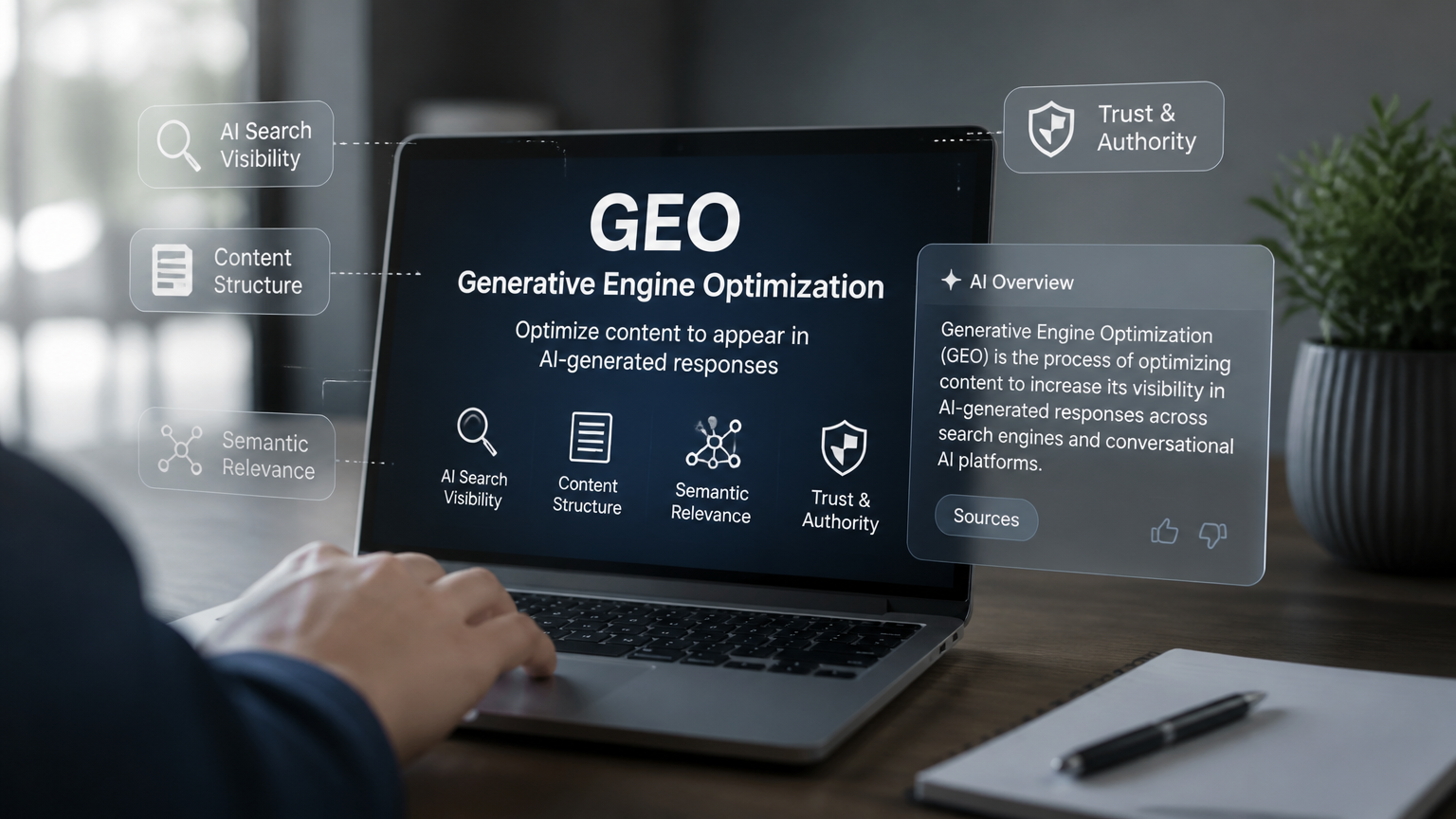
Front-Load the Direct Answer
Never bury the lead. If you are writing an article explaining a concept, the very first paragraph beneath the heading should be a 40-60 word, definitive, dictionary-style answer. Make it effortless for the LLM to extract the absolute truth immediately.
Restructure into Tables and Lists
LLMs excel at parsing structured markdown. If you are comparing two products, do not write a wall of text. Use a semantic HTML table. If you are explaining a step-by-step process, use a strictly formatted numbered list.
Publish Primary Source Data
Stop rewriting what everyone else has already said. AI engines trace facts back to their source. Run original surveys, publish your own company data, and provide unique statistics. You want to be the source that the AI cites, not just another aggregator.
Adopt Comprehensive JSON-LD Schema
Your website’s code must speak directly to the machine. Ensure every page has flawless FAQ schema, Article schema, and Breadcrumb structures. This acts as a literal map for the AI to understand exactly what entities exist on your page without having to infer them.
Optimize Technical Infrastructure
Because these new architectures require specialized backend alignment, forward-thinking teams are investing in agentic AI engineering tracks to ensure their developers understand how to build systems that interact securely with external RAG pipelines and web scrapers.
The Importance of Entity Authority
In traditional SEO, authority was largely determined by PageRank—how many high-quality websites physically linked back to yours. While links still matter, GEO introduces the massive concept of “Entity Authority.”
When an AI generates an answer, it assesses confidence. If 50 different high-quality documents across the web all mention that your software is the fastest in the industry, the AI builds a strong relational tie between your brand (the entity) and the concept of “fastest software.” It will cite you even if those 50 documents don’t link to your website. Unlinked brand mentions, positive sentiment in reviews, and appearances on major industry podcasts all feed the LLM’s understanding of your entity’s authority.
Multimodal Search: Why Video is Essential
A massive, often-ignored component of modern optimization is rich media. As generative engines become fully multimodal—capable of understanding text, image, and video simultaneously—they are beginning to embed video clips directly into their generated answers to provide better context to users.
Static text is no longer enough to dominate an answer engine. As more ecommerce teams move toward scalable content production, some are adopting AI-powered creative tools like VidAU.ai to streamline video generation and adapt campaigns faster across platforms. Having high-quality, relevant video assets embedded on your pages—complete with accurate transcripts and VideoObject schema—gives the AI engine a highly engaging asset to pull into its final response.
Common Strategic Mistakes in AISO
Writing a 2,000-word article to answer a simple question was standard practice in 2018 to artificially increase “dwell time.” In 2026, AI engines view fluff as noise. If an LLM has to parse through excessive storytelling to find your core data, it will abandon your page.
Many PR teams still beg publishers strictly for backlinks. Failing to realize that an unlinked brand mention on a highly authoritative site is just as valuable for training an LLM’s entity mapping is a massive missed opportunity.
Expecting an AI to perfectly infer your product’s price, rating, or stock status from raw text is a gamble. Following Google’s structured data guidelines and using JSON-LD ensures the AI pulls that data confidently over a competitor.
People speak to AI engines differently than they type into traditional search bars. They ask full, complex questions. Frame your subheadings as exact conversational questions to directly match this emerging intent.
Adapting to Agent-to-Agent Transactions
The transition from manual SEO to generative optimization is happening concurrently with a massive shift in enterprise software overall. We are watching agentic AI companies replacing traditional SaaS workflows by moving from simple tools to autonomous execution. Answer engines are mirroring this by moving from directories to direct answers.
The brands that survive this transition will be the ones that recognize the fundamental difference. You are no longer marketing to humans scrolling a list of blue links. You are marketing to a synthetic intelligence that makes recommendations on the user’s behalf.
What the Next 12 Months Look Like
As we push deeper into 2026, a few stark realities will become apparent:
- Traffic metrics will decouple from revenue metrics: Top-of-funnel traffic will continue to drop for informational queries, but conversion rates on remaining traffic will skyrocket as answer engines filter out non-buyers.
- RAG poisoning will become a threat: Brands will attempt to artificially manipulate LLM outputs by spamming vector databases with false entity connections, prompting engines to heavily weigh primary, verified sources.
- Visual search will dominate mobile: Users will increasingly point their cameras at objects rather than typing queries, placing immense value on multimodal SEO and image recognition data.
- The death of the aggregator: Sites that simply scrape and reword other people’s content will be entirely ignored by LLMs that prefer to fetch the original source data directly.
Ready to structure your video and media assets for the generative era? Start Scaling
🚀 Explore AI Video Tools →Stop Hacking Algorithms. Start Structuring Truth.
If your digital presence isn’t built for AI extraction, you are already invisible. Equip your marketing stack with the AI-powered workflows needed to dominate multimodal search.
💻 Upgrade Your Workflow →Embrace the shift from search to synthesis today.
Frequently Asked Questions
What is AI search optimization?
AI search optimization is the process of structuring digital content so that generative AI answer engines like ChatGPT, Perplexity, and Google Overviews can easily extract, trust, and cite your brand as the definitive source of truth in their conversational responses.
How does AI search optimization differ from traditional SEO?
Traditional SEO optimizes for keyword matching and backlinks to rank ten blue links on a search page. AI optimization focuses on entity authority, high information density, and structured primary source data to provide direct answers for Large Language Models.
Why is structured data so important for answer engines?
Answer engines use Retrieval-Augmented Generation (RAG) to find facts. Unstructured paragraphs require heavy processing and are often ignored. Structured data like JSON-LD, tables, and lists provide immediate, machine-readable facts that models confidently cite.
Can multimedia affect AI search rankings?
Yes. Modern AI models are multimodal, meaning they parse video, audio, and images alongside text. Providing rich media with properly marked-up transcripts gives AI engines a broader context map of your entity’s authority.
Conclusion
The transition from traditional SEO to AI search optimization is happening concurrently with a massive shift in how humans interact with technology. We are abandoning the fragmented directory of the internet in favor of direct, synthesized answers.
The brands that survive this transition will be the ones that recognize the fundamental difference in audience. You are no longer trying to persuade a human to click a link; you are providing irrefutable, structured truth to a machine that makes recommendations on that human’s behalf. Stop trying to hack the algorithm with obsolete keyword tricks. Start structuring your data, building real entity authority, and feeding the generative engines exactly what they crave.
Sources: AI search engine market research 2026 · Perplexity, ChatGPT, and Google AI Overviews platform documentation · GEO optimization studies and practitioner data.
n