


A growing share of searches never produce a click at all xE2x80x94 the answer arrives directly inside an AI Overview, a ChatGPT response, or a Perplexity summary, citing (or not citing) a handful of sources along the way. Ranking #1 in traditional search results is worth less than it used to be if your brand is never one of the sources an AI answer actually cites. AI share of voice is the metric built to measure that gap directly, and in 2026 it’s becoming as important to track as traditional ranking position.
What AI Share of Voice Actually Measures
AI share of voice is the percentage of relevant AI-generated answers xE2x80x94 across tools like ChatGPT, Perplexity, Google AI Overviews, and Claude xE2x80x94 in which your brand or content is cited as a source, weighted by how prominently. It’s measured by running a defined set of representative queries against these tools repeatedly and tracking citation frequency and position over time, similar in spirit to traditional share-of-voice tracking but measuring a fundamentally different surface.
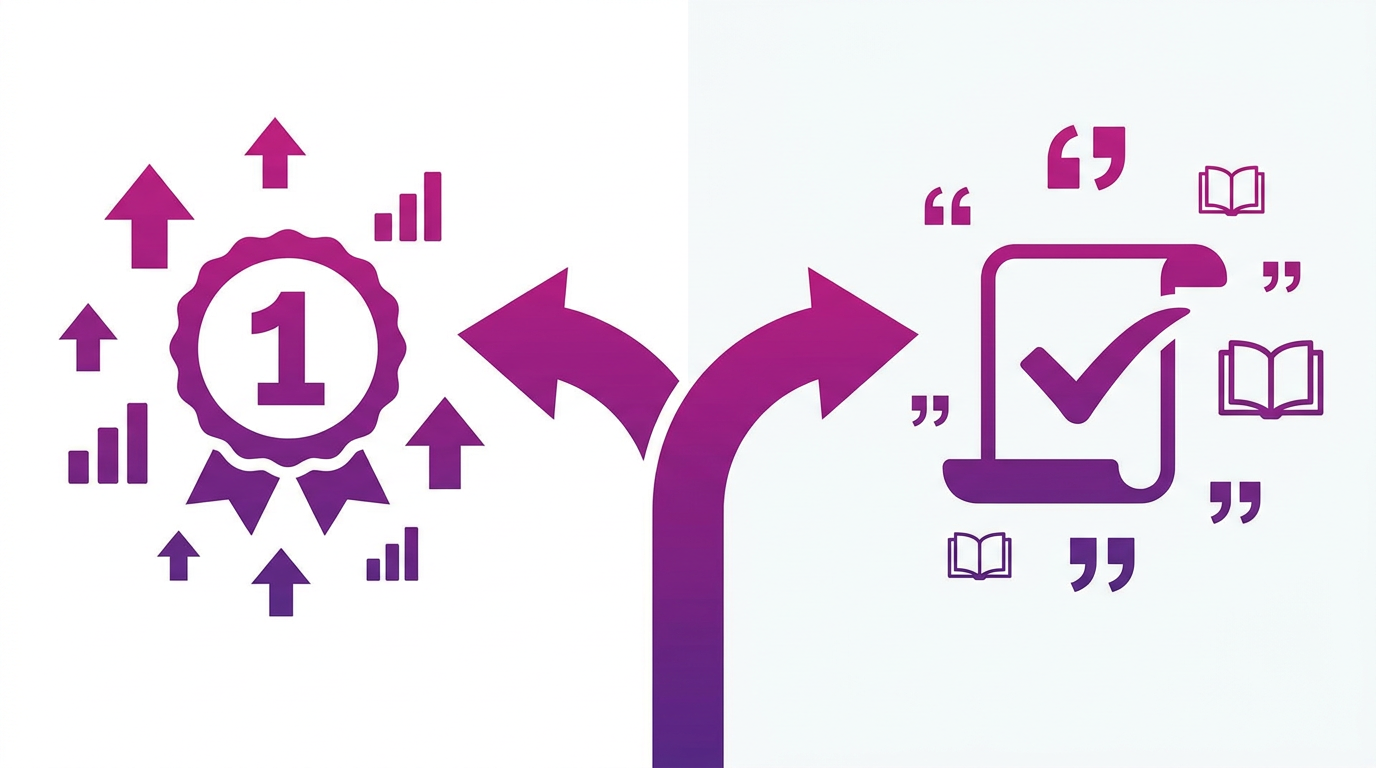
Why Ranking Position and AI Citation Diverge
Traditional ranking algorithms and AI retrieval systems weight content differently. A page can rank first for a keyword through strong backlink profile and domain authority while a lower-ranked competitor page gets cited more often in AI answers because it’s structured as clean, directly-quotable, well-sourced statements the AI model can extract confidently. This divergence is the whole reason AI share of voice needs its own measurement xE2x80x94 tracking rank alone now misses a real and growing part of visibility.
| Factor | Traditional ranking weight | AI citation weight |
|---|---|---|
| Backlink authority | High | Low-Medium |
| Structured, quotable statements | Medium | High |
| Clear sourcing and citations | Low | High |
| Content freshness | Medium | Medium-High |
| FAQ/schema structured data | Low-Medium | High |
How to Actually Measure It
Build a query set
xE2x86x92 20-50 representative questions
Real questions your audience asks, covering both branded and category-level queries, run consistently across measurement periods.
Run repeatedly, log citations
xE2x86x92 Manual or tool-assisted
Run the query set against each AI surface, logging whether and how prominently your domain appears as a cited source.
Track trend, not snapshot
xE2x86x92 Monthly minimum
A single measurement is a snapshot; AI models and retrieval behavior shift often enough that trend over time is what actually matters.
A 20-question set run monthly across 4 AI surfaces produces useful trend data without requiring a large tooling investment xE2x80x94 expand the query set once the measurement habit and process are established.
Want video content structured for AI citation? GEO
What Actually Improves AI Share of Voice
Beyond structured schema and quotable statements, three practices consistently correlate with higher citation rates: leading sections with a direct, self-contained answer before elaborating (AI models extract the direct answer more reliably than a buried one), including specific numbers and named sources rather than vague claims, and maintaining genuinely current content, since AI answer engines show a measurable preference for recently-verified information on fast-changing topics.

Where This Is Heading
As more search volume shifts to zero-click AI answers, AI share of voice is likely to become a standard reporting metric alongside traditional ranking position within marketing dashboards, not a niche add-on. Teams building the measurement habit now xE2x80x94 even with a small query set xE2x80x94 will have a real trend line to act on well before this becomes a standard, commoditized reporting category.
Ranking #1 means less if AI answers never cite you
Structured, quotable, well-sourced content is the current highest-leverage lever for AI citation.
Content and video tools built with GEO structure in mind
Is AI share of voice the same thing as traditional SEO share of voice?
They’re related but distinct. Traditional share of voice tracks ranking positions; AI share of voice tracks citation frequency inside AI-generated answers.
Can you rank well in Google but have low AI share of voice?
Yes, and it happens often xE2x80x94 AI answer engines weight structured, well-sourced content differently than traditional ranking factors.
How often should AI share of voice be measured?
Monthly at minimum xE2x80x94 AI answer engines change more frequently than search algorithms historically did.
Key Takeaways
- Ranking position no longer guarantees AI visibility xE2x80x94 the two now need separate measurement.
- Structured, quotable, well-sourced content gets cited more, independent of traditional ranking factors.
- A 20-question tracked set run monthly is enough to start building a real trend line.
- Leading with a direct, self-contained answer before elaborating improves extraction and citation rate.
- AI share of voice is heading toward becoming a standard dashboard metric, not a niche add-on.
Sources: AI search behavior studies and GEO (Generative Engine Optimization) industry research, as of 2026.