


Most 2026 marketing budgets still have an “AI tools” line item bolted onto last year’s structure, rather than a budget rebuilt around what AI has actually changed. That’s a missed opportunity, because the real budgeting question isn’t how much to add for AI xE2x80x94 it’s which existing line items AI has made partially redundant, and how much of that freed-up spend should move to testing versus straight back to the bottom line.
What “AI Marketing Budget” Should Actually Mean
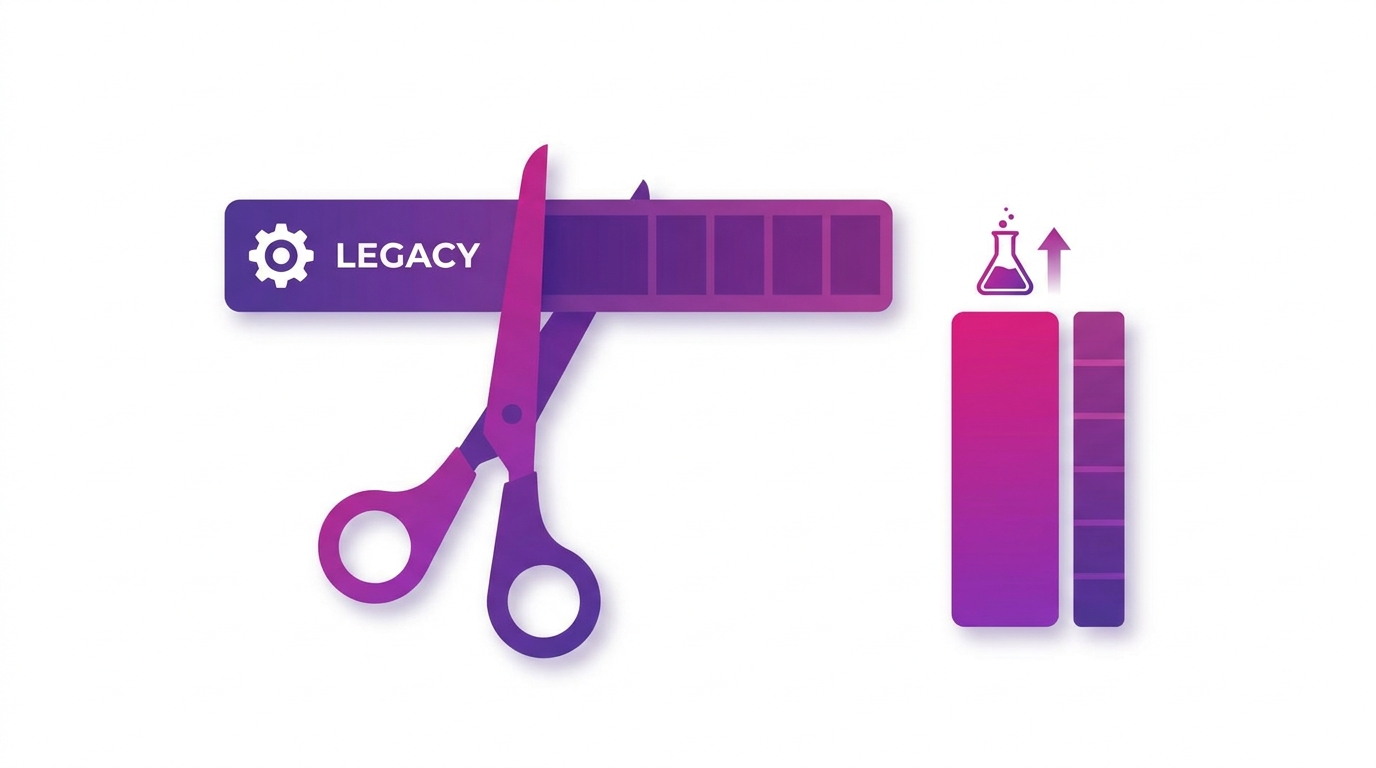
A well-built AI marketing budget isn’t a new category sitting alongside the old ones xE2x80x94 it’s a rebuilt version of the existing budget where line items get resized based on what AI has changed. Some categories shrink (manual content production, certain research subscriptions), some stay flat (strategic and creative judgment work), and a smaller new category funds testing tools that haven’t proven out yet.
What to Cut, Keep, and Test
The clearest cuts are in categories where AI tools now do the mechanical work at a fraction of the previous cost: template-based content production, basic image editing, first-pass copywriting. The clearest keeps are anything requiring real strategic or creative judgment xE2x80x94 that spend hasn’t gotten cheaper, because the bottleneck was never really the mechanical execution. The testing category is where new AI-specific tools live until they’ve proven ROI, at which point they either graduate into a permanent line or get cut.
| Category | Direction | Why |
|---|---|---|
| Template-based content production | Cut/shrink | AI handles this at a fraction of prior cost |
| Strategic and creative judgment work | Keep flat | Bottleneck was never mechanical execution |
| New AI tool experimentation | New, capped | Fund testing without overcommitting before proof |
| Manual research subscriptions | Cut/shrink | AI monitoring tools cover much of this now |
Building the Testing Line
Set a hard cap
xE2x86x92 5-10% of total budget
A defined ceiling keeps experimentation from quietly growing into an unaccountable spend category over the year.
Set a proof deadline
xE2x86x92 Usually one quarter
Every tool funded from the testing line gets a defined window to show measurable value before it either graduates or gets cut.
Define graduation criteria upfront
xE2x86x92 Before, not after, testing
Agree on what “proved out” means before the test starts, so the decision to graduate or cut a tool isn’t argued after the fact.
Cutting mechanical-production spend and quietly pocketing the savings without reinvesting any of it into testing. Teams that do this save money short-term but fall behind on the tools that would have compounded that saving further.
Need to see AI video production cost in practice? Budget

Presenting the New Budget Structure
When presenting a rebuilt budget to leadership, lead with the reallocation logic, not just a bigger number for “AI.” Show specifically which legacy line items shrank, why, and where that freed spend is going. A budget framed as “here’s what got more efficient, and here’s where we’re reinvesting the savings” gets approved faster than one framed as a request for new money on top of the old structure.
The real AI budgeting question is reallocation, not addition
Show what got more efficient and where the savings are being reinvested.
Transparent pricing built for budget planning
What percentage of a marketing budget should go to AI tools in 2026?
No universal number, but most teams find 10-20% of martech budget reallocatable without cutting anything essential.
Should AI tool spend come from a separate budget line or be absorbed into existing categories?
A separate testing line for the first year is clearer for reporting; proven tools then absorb into their functional category.
How much should be set aside purely for experimentation?
A common range is 5-10% of the total marketing budget, kept separate from proven, committed spend.
Key Takeaways
- Rebuild the budget, don’t just add an AI line xE2x80x94 resize existing categories based on what AI has actually changed.
- A capped, separate testing line (5-10% of total budget) keeps experimentation accountable without stifling it.
- Define graduation criteria before testing starts, not after, to avoid post-hoc arguments.
- Reinvest cut savings into testing, don’t just pocket them xE2x80x94 short-term savings without reinvestment falls behind.
- Present reallocation logic, not just a bigger ask, for faster budget approval.
Sources: Marketing budget benchmark reports and martech spend surveys, as of 2026.