


Product marketing at an AI company looks like traditional PMM on the org chart xE2x80x94 positioning, messaging, launches, sales enablement xE2x80x94 but the day-to-day is different in ways that are reshaping who gets hired and what gets rewarded. Capabilities change monthly instead of yearly. Competitive positioning has to account for a model update changing the comparison overnight. And the audience is often evaluating a product they don’t fully understand yet, which makes explaining what the thing actually does as important as any traditional value-prop work.
What Makes AI Company PMM Different
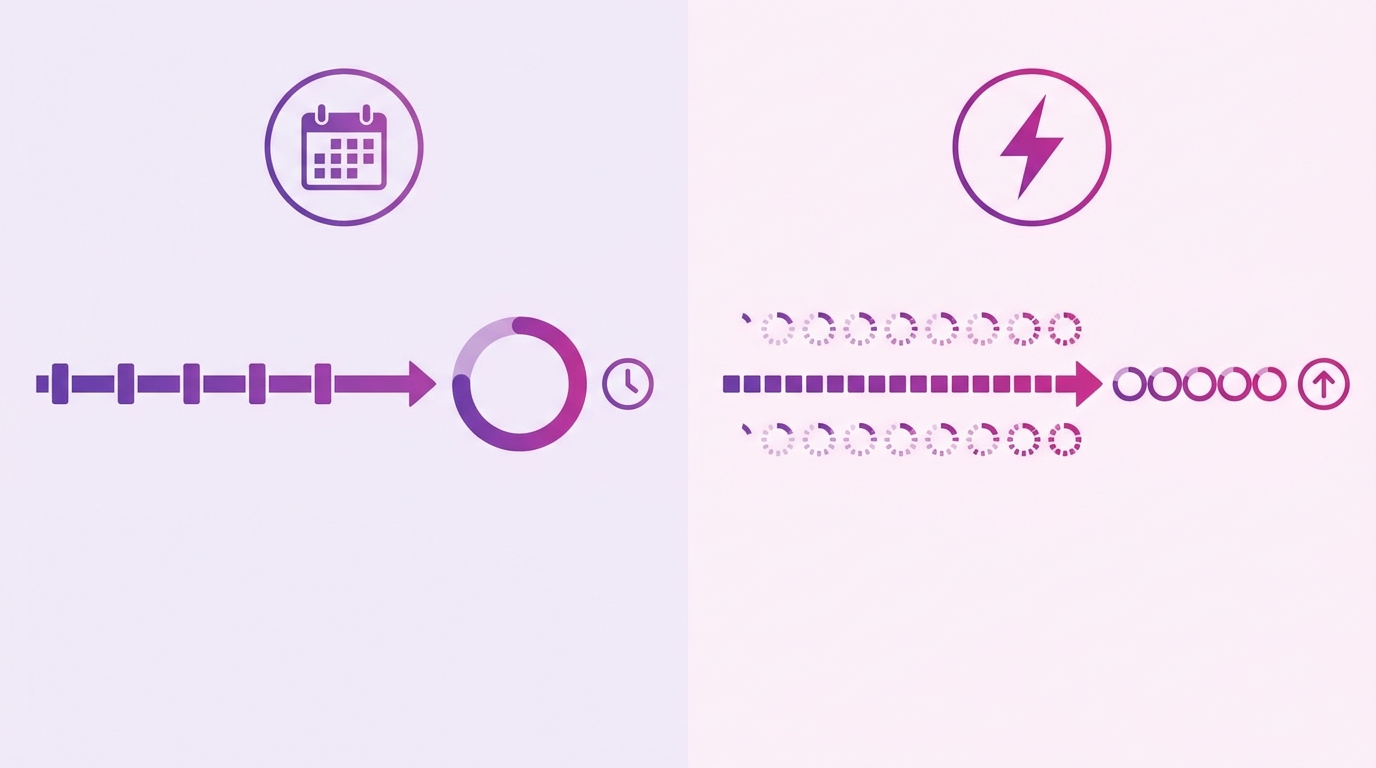
Traditional SaaS product marketing optimizes for a relatively stable feature set and a well-understood buyer. AI company product marketing operates against a capability set that shifts with every model update, a competitive landscape that can reorder in a single announcement, and a buyer who frequently needs the underlying technology explained before they can evaluate the product claim. The skill that separates strong AI PMMs isn’t different from traditional PMM xE2x80x94 it’s applied under much faster-changing conditions.
Why Demand Is Growing So Fast
Every AI company launching a new model or feature needs someone who can translate what it technically does into a claim customers will actually understand and believe xE2x80x94 without overpromising in a way that erodes trust when the limitation becomes obvious. That specific skill, translating capability into honest positioning at a pace traditional product marketing never had to sustain, is in short supply relative to how many AI companies are now hiring for it.
| Skill | Traditional SaaS PMM | AI Company PMM |
|---|---|---|
| Positioning cadence | Quarterly/yearly refresh | Monthly or faster |
| Competitive landscape stability | Relatively stable | Can shift overnight |
| Technical fluency needed | Feature-level | Model capability-level |
| Core enablement/launch skills | Same | Same |
What Hiring Managers Actually Screen For
Technical curiosity
xE2x86x92 Not technical expertise
Comfort asking an engineer clarifying questions until a capability is genuinely understood, rather than nodding along and guessing at the messaging.
Speed without sloppiness
xE2x86x92 The core differentiator
Turning around positioning for a launch in days, not weeks, without the honesty and precision that traditional PMM timelines allowed more room for.
Honest limitation framing
xE2x86x92 Builds long-term trust
Positioning that acknowledges what a model can’t yet do, rather than overselling capability that erodes trust the first time a customer hits the limit.
Write a public positioning teardown of an AI product you actually use xE2x80x94 what its messaging gets right, where it overpromises, how you’d reposition it. This demonstrates the exact skill hiring managers are screening for, in a way a generic resume can’t.
Building launch content for an AI product? Launch

Where the Role Is Headed
As more companies embed AI features into existing products rather than launching standalone AI products, the “AI company PMM” skill set is spreading into traditional PMM roles rather than staying a separate specialization. Positioning an AI feature honestly within a broader product, without either overselling it or burying it, is becoming a baseline PMM expectation, not a niche skill xE2x80x94 which means the career intersection described here is likely to widen rather than stay a narrow lane.
Translating AI capability into honest positioning is the differentiator
The PMMs who can do this well are in demand well beyond pure AI companies now.
Video tools built for fast-moving product launches
Do I need a technical background to do product marketing at an AI company?
Not an engineering background, but enough fluency to understand model capabilities and limitations well enough to position them honestly is close to essential.
Is this role different from traditional SaaS product marketing?
Core PMM skills transfer, but the pace of change and the need to communicate capability and limitation together are meaningfully different.
How do I demonstrate AI-specific PMM skill without prior AI company experience?
Write a positioning teardown of an AI product you use, showing you can translate model capability into a customer-facing value proposition.
Key Takeaways
- Product marketing at AI companies is the fastest-growing PMM specialization by job posting volume in 2026.
- The core PMM skills transfer xE2x80x94 positioning, launches, enablement xE2x80x94 but the pace of change is monthly, not yearly.
- Translating capability into honest, defensible claims is the specific skill hiring managers screen hardest for.
- Technical curiosity beats technical expertise xE2x80x94 the ability to ask good questions matters more than an engineering background.
- This skill set is spreading into mainstream PMM roles as AI features get embedded into non-AI products.
Sources: Job posting trend data and public product marketing hiring reports, as of 2026.