

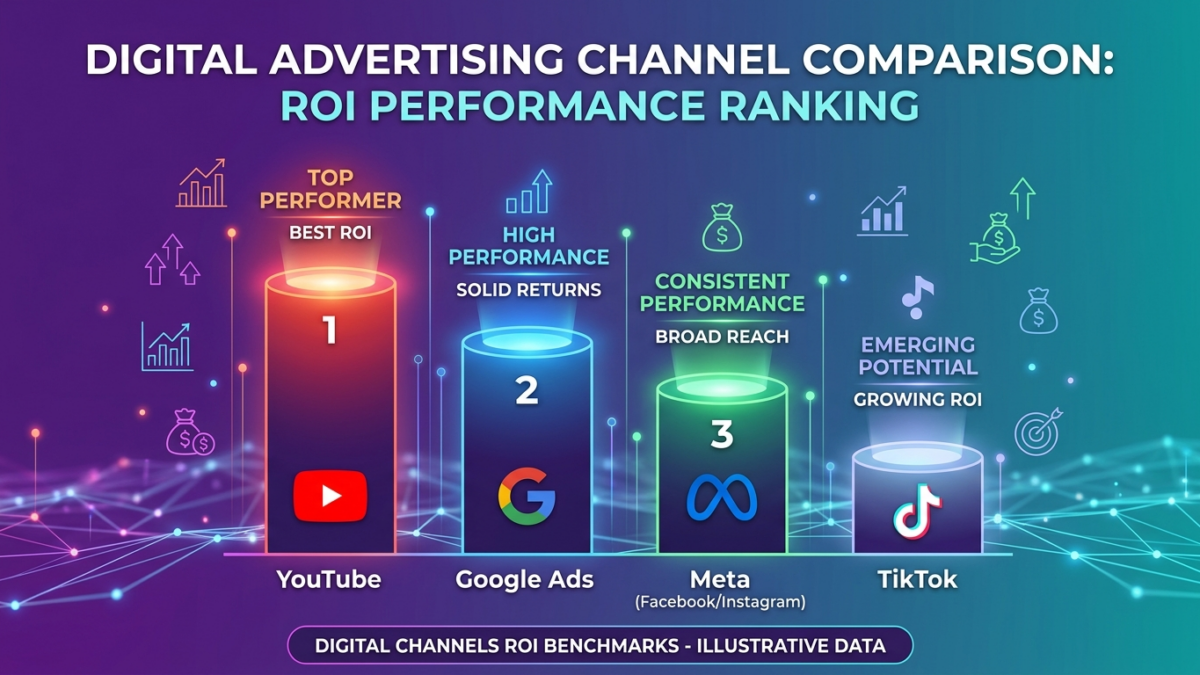
Every year, someone publishes a digital advertising channel ranking that reflects last year’s data and presents it as a guide for next year’s strategy. The channels are the same, the order is predictable, and the advice is generic. This is not that ranking. This is a 2026 assessment of where real advertising ROI is being generated right now, for AI product marketing specifically, based on what is actually happening in ad accounts and on platform dashboards.
The landscape shifted materially in the last eighteen months. TikTok Shop’s social commerce integration changed the economics of the platform for product advertisers. Meta’s Advantage+ system reached a level of autonomous optimisation that outperforms manual campaign management in most ecommerce categories. Google’s AI Overviews changed the paid search landscape by pushing organic results further down the page, making paid Shopping placements more valuable. YouTube’s shopping integration matured. And entirely new surfaces — AI answer engines like Perplexity and ChatGPT — emerged as meaningful discovery channels outside the traditional ad platform ecosystem.
Top Digital Ad Channels for AI Product Marketing in 2026
Ranked by real ROI for AI product marketing: TikTok (Tier 1 for impulse products with video creative), Meta Advantage+ (Tier 1 for DTC ecommerce), Google Performance Max (Tier 1 for high-intent search), YouTube (Tier 2 for consideration and brand), Pinterest (Tier 2 for discovery categories), Amazon DSP (Tier 2 for Amazon-native products), and Snapchat (Tier 3 for specific demographics). Channel selection depends on product type, audience, and creative capability.
Key Takeaways
- →No single channel wins for all products. The right channel depends on where your audience discovers and buys products like yours.
- →TikTok and Meta are Tier 1 for most ecommerce product categories with strong video creative. Google is Tier 1 for high-intent search.
- →Creative quality and volume determine channel performance more than budget in 2026. Agentic platforms reward creative richness, not spend size.
- →2-3 channels is the optimal configuration for most brands. Spreading too thin destroys data quality and creative focus.
- →AI Overviews and LLM answer engines are emerging as a zero-cost discovery channel that requires content investment, not ad spend.
Tier 1: TikTok, Meta, and Google
TikTok — Highest ROI for Product-Led Video Marketing
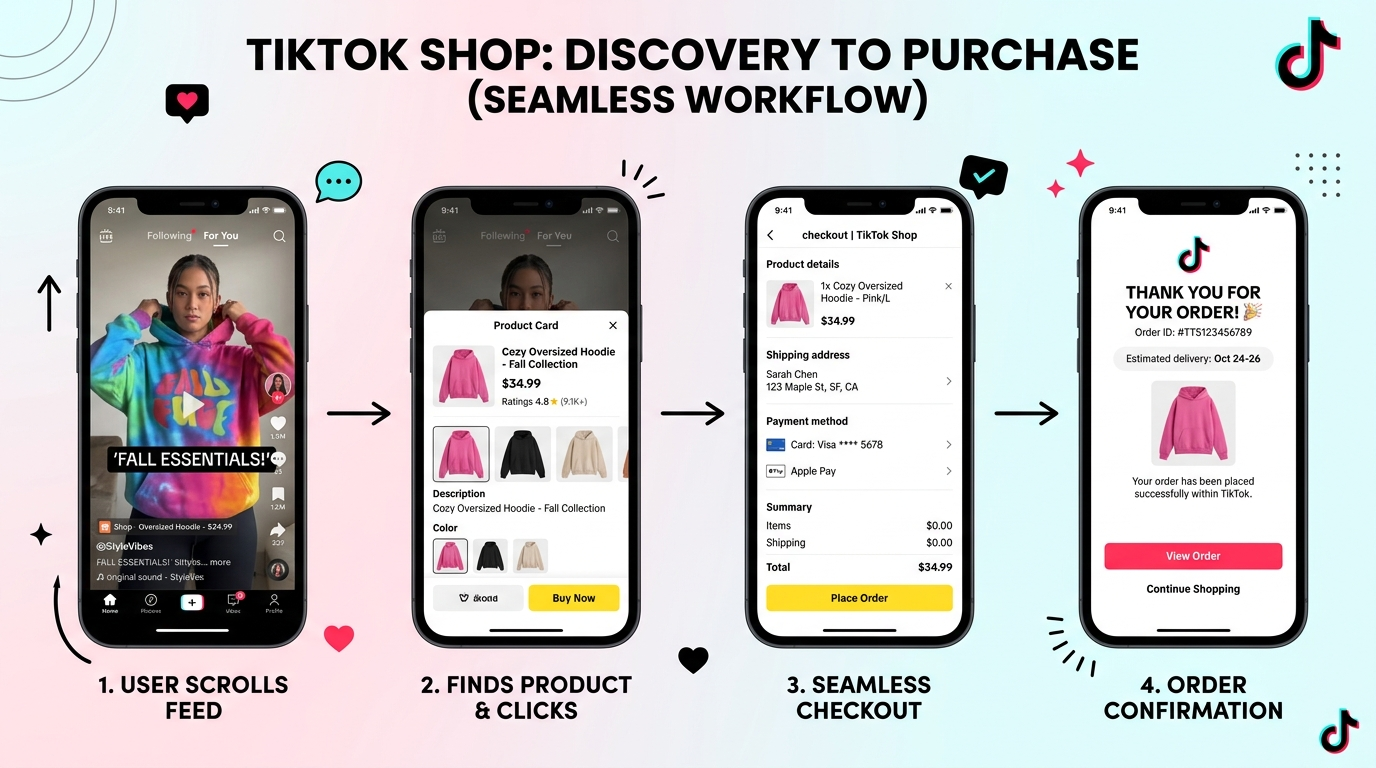
TikTok is the highest-ROI channel for product-led marketing in 2026 for brands with the right products and creative approach. The combination of native social commerce (TikTok Shop), an algorithm that surfaces products to non-followers, and an audience that has demonstrated willingness to purchase within the platform makes TikTok categorically different from other social ad channels.
The products that work best on TikTok have three characteristics: visual appeal that demonstrates well in 15-30 seconds, a price point in the $20-80 impulse purchase range, and a novelty or wow factor that encourages sharing. Products outside these parameters can still perform, but they require more sophisticated creative and a longer warm-up period before the algorithm accumulates sufficient conversion signal.
The creative requirement is the primary barrier. TikTok rewards authentic, UGC-style content over polished production. A brand that cannot produce high volumes of authentic-feeling product video content will underperform its potential on TikTok regardless of budget. AI video tools that produce UGC-style content at scale — like VidAU’s URL-to-Video — are the unlock for brands that want TikTok’s ROI without the cost and logistics of managing a large creator network.
Meta Advantage+ — Most Consistent ROI for DTC Ecommerce
Meta’s Advantage+ Shopping Campaigns have become the default recommendation for DTC ecommerce advertisers in 2026 and the data supports why. Brands switching from manual campaign management to Advantage+ report an average 40% improvement in ROAS across categories including apparel, beauty, home, and electronics. The system’s ability to process hundreds of audience signals simultaneously and optimise creative rotation continuously produces outcomes that manual campaign management cannot replicate.
The creative requirement on Meta has evolved. Static image ads still function but video consistently outperforms in most categories, and creative freshness matters more than it did two years ago. Advantage+ works best when it has a rich creative library to select from — multiple video formats, aspect ratios, copy variations, and product angles. Brands supplying this library at volume are seeing the strongest Advantage+ performance.
Google Performance Max — Best for High-Intent Purchase Queries
Google Performance Max has matured into the recommended campaign type for most ecommerce advertisers running on Google in 2026. It combines Shopping, Search, Display, YouTube, Gmail, and Maps placements into a single AI-optimised campaign that allocates budget across inventory types based on conversion likelihood. For advertisers with good conversion data and strong product feeds, Performance Max consistently outperforms segmented manual campaigns.
The shift toward Google AI Overviews in organic search has increased the value of paid Shopping placements. As organic results move further down the page on product queries, paid Shopping positions above the fold capture more of the high-intent traffic that previously went to organic. This dynamic makes Google paid advertising more important in 2026 than it was when organic results appeared immediately.
Tier 2: YouTube, Pinterest, and Amazon DSP
YouTube
Consideration stage
YouTube remains the strongest channel for mid-funnel brand content — product demonstrations, tutorials, and longer-form review content that drives purchase consideration rather than immediate impulse conversion. YouTube Shopping integration has improved significantly, allowing product tags and in-video shopping links that compress the funnel. Best for products requiring demonstration or explanation before purchase.
Discovery categories
Pinterest delivers strong ROI for home decor, fashion, food, and wedding categories where visual discovery drives intent. Shopping ads on Pinterest convert well because Pinterest users are often in active planning mode. The platform is underutilised by most brands, creating lower competition and lower CPMs than equivalent categories on Meta or TikTok.
Amazon DSP
Amazon-native products
Amazon DSP delivers strong ROI specifically for products that are actively sold and ranked on Amazon. It retargets Amazon shoppers based on purchase intent signals and drives traffic back to Amazon listings. For brands outside the Amazon ecosystem, the ROI case is weaker. For brands with strong Amazon presence, DSP is a direct margin-positive channel.
Email and SMS
Retention channel
Not a traditional digital ad channel but increasingly relevant as a retention layer. AI-personalised email sequences and SMS flows deliver the highest ROAS of any channel for existing customers. The caveat is that email and SMS require a list — they are retention channels, not acquisition channels. Pair with acquisition channels for a complete stack.
Tier 3 and Emerging Channels
Snapchat remains relevant for brands targeting 18-24 demographics with strong video creative, but its ecommerce integration lags TikTok and Meta. LinkedIn delivers strong B2B ROI but high CPMs make it cost-prohibitive for most product categories. Reddit has improved its ad product but remains niche. Connected TV (CTV) is growing rapidly and delivering strong upper-funnel results for brands with video production capability, with AI-generated ads beginning to test well in this format.
The truly emerging channel is AI answer engines as a discovery surface. Perplexity now carries sponsored results. OpenAI has signalled advertising integration. These are not yet mature ad channels but they represent the next frontier of paid discovery — brands that build organic presence in AI answers today will be positioned to extend into paid placements as these surfaces commercialise.
Full Channel Comparison 2026
| Channel | Best For | Creative Format | Avg CPM | ROI Tier |
|---|---|---|---|---|
| TikTok | Impulse products, social commerce | UGC video 9:16 | $3-8 | Tier 1 |
| Meta Advantage+ | DTC ecommerce, broad categories | Video + carousel | $8-15 | Tier 1 |
| Google Perf Max | High-intent search + shopping | Multi-format assets | $2-12 | Tier 1 |
| YouTube | Consideration, demonstration | In-stream video | $6-14 | Tier 2 |
| Home, fashion, food discovery | Static + video pins | $4-10 | Tier 2 | |
| Amazon DSP | Amazon-native products | Display + video | $8-18 | Tier 2 |
| Snapchat | 18-24 demographic | Vertical video | $3-7 | Tier 3 |
| B2B SaaS, enterprise | Native, sponsored | $40-80 | Tier 3 (B2B only) | |
| CTV / Streaming | Brand awareness, upper funnel | 15-30s video | $15-35 | Tier 2 (growing) |
How to Choose Your 2026 Channel Stack
- Start with where your audience already buys. If your target customers buy on TikTok Shop, start with TikTok. If they search with purchase intent on Google, start with Performance Max. Channel selection should follow customer behaviour, not industry fashion.
- Match your creative capability to the channel. TikTok requires video. Pinterest requires strong visual static. Google requires structured product data. Choose channels where you can produce the required creative at volume. AI tools remove most creative format barriers.
- Limit to 2-3 primary channels initially. Each channel requires its own creative format, optimisation logic, and performance benchmark. Spreading budget across five channels before mastering two produces weak results on all of them.
- Measure incrementally, not in aggregate. Use holdout testing or geo-based incrementality measurement to understand what each channel is actually driving. Last-click attribution will tell you Meta is driving most conversions; incrementality testing may tell you TikTok is driving the demand that Meta is capturing.
Creative Requirements by Channel
Each platform has specific creative requirements that affect performance significantly. A Meta carousel does not perform on TikTok. A TikTok vertical video does not fit YouTube in-stream. AI video tools like VidAU allow you to produce the same product story in multiple formats simultaneously, covering all channels in one production session.
Frequently Asked Questions
What are the top digital ad channels in 2026?
By ROI for AI product marketing: TikTok (Tier 1 for social commerce and impulse products), Meta Advantage+ (Tier 1 for DTC ecommerce), and Google Performance Max (Tier 1 for high-intent search) are the primary channels. YouTube, Pinterest, and Amazon DSP follow as strong Tier 2 options depending on product and audience.
Which digital ad channel has the best ROI?
TikTok delivers the highest ROI for product-led brands with strong short-form video creative and impulse-price products. Meta Advantage+ delivers the most consistent ROI across DTC ecommerce categories. Google Performance Max delivers the highest ROI for capturing high-intent purchase queries. The best channel depends on your specific product, audience, and creative capability.
Is TikTok advertising worth it in 2026?
Yes, for the right products and creative approach. TikTok delivers 3-5x higher CTR than most other channels for strong UGC-style video creative on products with visual appeal and impulse purchase price points. TikTok Shop integration means the entire transaction can happen within the platform. The creative volume requirement is the main barrier — AI video tools solve this.
How many digital ad channels should I use?
2-3 primary channels is optimal for most brands. Each channel requires dedicated creative, optimisation learning, and performance benchmarking. Spreading budget across too many channels before mastering a core 2-3 produces weak, diluted results. Start with the 1-2 channels that best match your audience and product, prove the model, then expand.
What creative format works best across digital channels in 2026?
Short-form vertical video (9:16) is the highest-performing format across TikTok, Meta Reels, and YouTube Shorts. UGC-style authentic presentation outperforms polished production in most ecommerce categories. AI video tools like VidAU produce platform-ready vertical video from a product URL in under 5 minutes, removing the creative production barrier to high-volume testing.
Final Verdict — Digital Ad Channels 2026
- →TikTok, Meta, and Google are Tier 1 for most ecommerce product categories. Start here before expanding to Tier 2.
- →Creative volume determines performance more than budget. Agentic platforms need 10+ variants to optimise effectively. AI production is the unlock.
- →2-3 channels done well beats 6 channels done poorly. Channel discipline builds compounding advantage.
- →AI answer engines are the next frontier. Brands building organic presence there now will be positioned for paid placement as these surfaces commercialise.
Produce Platform-Ready Video Ads for Every Channel
TikTok 9:16, Meta 1:1, YouTube 16:9 — VidAU produces the right format for every channel from one product URL in under 5 minutes.
No credit card required · From $9.99/month
Ecommerce Video Ads 2026Creative velocity guide
TikTok AI Ads 2026Hook framework and workflow
UGC Ads 2026The creative war guide
Sources: Meta Advantage+ performance benchmarks 2026 · TikTok for Business advertising data and Shop GMV projections 2026 · Google Performance Max documentation 2026 · eMarketer digital advertising channel report 2026 · Insider Intelligence social commerce data 2026.