
What Are the Facebook Ad Benchmarks in 2026?
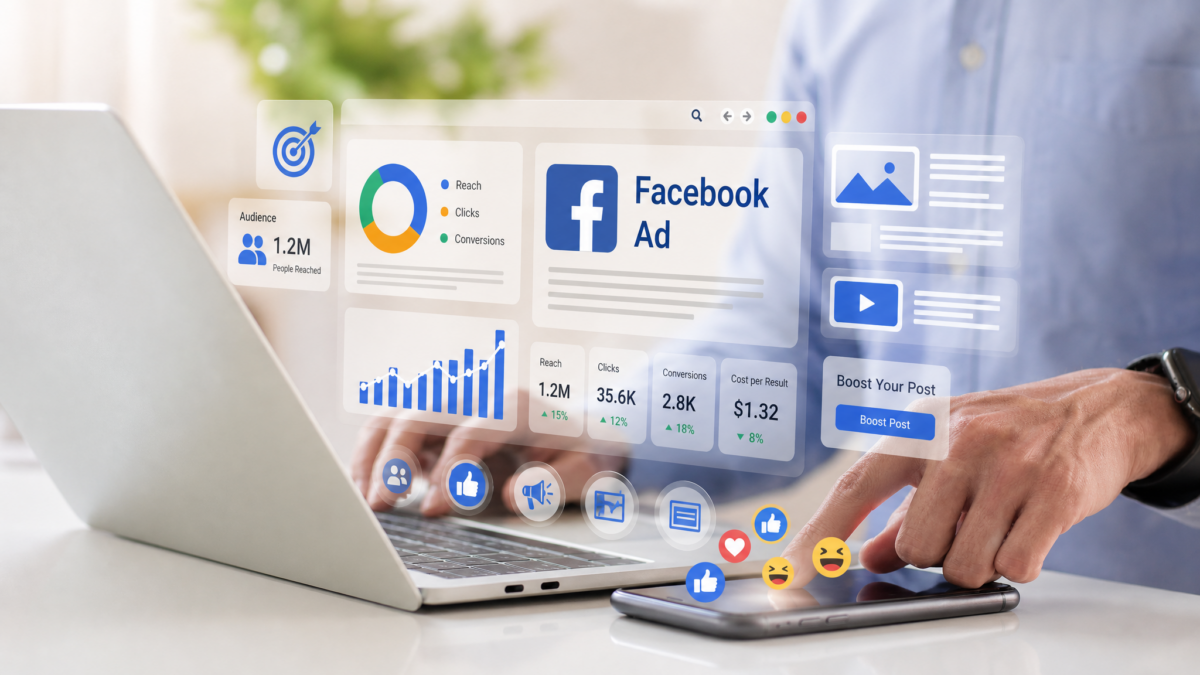
CTR: Most industries average 2–3% (up from 0.9% in 2024) — Art & Home Decor leads at 2.92%, Clothing & Fashion at 2.84%. Lead Gen campaigns average 2.59% CTR; Traffic campaigns 1.71%.
CPA: Median $38.17 across all industries (Triple Whale, 20,000+ DTC brands). Advantage+ Shopping delivers 32% lower CPA vs. manual campaigns.
ROAS: Median 1.93x. A 3–4x target is healthy for e-commerce. Advantage+ delivers 22% higher ROAS vs. manual targeting.
CPM: Median ~$13.48 across industries. Reels CPC is 26% lower than Feed CPC — the most cost-efficient placement in 2026.
Meta is the dominant paid channel for DTC brands, capturing 68.31% of total e-commerce advertising budgets and generating $200.97 billion in full-year 2025 revenue. Triple Whale’s analysis of 20,000+ brands confirms the platform still delivers meaningful ROI when creative, strategy, and testing are executed well.
But costs are rising. CPC rose 11% year-over-year to $1.72 in 2026. The brands winning are not spending more — they are producing better creative, testing more variants, and using AI tools to make that volume economically viable. This guide gives you the exact frameworks to do the same.
What Makes a High-Converting Facebook Ad?
A high-converting Facebook ad is one that produces a meaningful business outcome (purchase, lead, signup) at a cost that makes the campaign profitable at scale. The three key metrics: CTR (is the creative compelling enough to stop the scroll?), CVR (does the landing page convert the click?), and CPA/ROAS (is the overall unit economics of the campaign profitable?). A high CTR with a low CVR indicates a creative-landing page mismatch — not a targeting problem.
The core components of a high-converting Facebook ad, ranked by impact:
- Hook (first 1.5 seconds): The single highest-leverage element. If you lose users here, nothing else matters.
- Creative format: Whether the visual pattern matches the placement (Feed, Reels, Stories) and audience intent.
- Copy & CTA: Short, benefit-led, with a clear action that matches the funnel stage.
- Offer clarity: What are you selling, for how much, and why now? Visible within 3 seconds.
- Landing page match: The post-click experience must deliver exactly what the ad promised.
Facebook Ad Creative Best Practices (2026)
Mobile-First Is Non-Negotiable
94–98% of Meta traffic comes from mobile devices in 2026. Mobile campaigns deliver 52% higher CTR than desktop. This means every creative decision — aspect ratio, font size, visual hierarchy, audio mixing — must be optimised for a 6-inch screen before anything else. Vertical (9:16) is the default format for Reels and Stories; 4:5 performs well for Feed. Creating desktop-first or square creative for Meta in 2026 is a structural disadvantage.
Video Dominates — But Length Matters
Short-form video (15–30 seconds) consistently outperforms both longer video and static images in CTR and conversion rate for acquisition campaigns. The reasons are algorithmic and behavioural: Meta prioritises content that retains watch time, and shorter videos are more likely to be watched in full — which signals quality to the delivery system. 85% of Facebook videos are watched without sound — captions are not optional. Every video ad needs on-screen text that communicates the core message independently of audio.
Thumb-Stopping Visuals: The 3-Second Test
Test every creative with a simple rule: if you play the first 3 seconds on mute, would a person who has never heard of your brand understand what you sell and why it matters? If no, the hook needs work. High-performing hooks in 2026 use:
- Bold on-screen text questions: “Why are 40,000 people buying this?”
- Product in use in the first second: Show the outcome before the explanation
- Pattern interrupts: Unexpected visual cuts, color contrast, or unconventional framing
- Social proof openers: “After 3 years of back pain, I found this”
Frequency above 3.4 causes CTR to drop by 41%. Sovran’s 2026 benchmark report recommends testing 15–25 new creatives per week at top-performing account level. At $800+ per traditional production, that’s financially impossible without AI creative tools. With VidAU, the same 15–25 weekly variants cost under $100.
Best Facebook Ad Formats (With Examples) in 2026
| Format | Avg CTR | Best For | Key Advantage | Watch Out For |
|---|---|---|---|---|
| Video Ads (Reels) Best ROI | 2.5–3%+ | Acquisition, awareness, DTC | 26% lower CPC than Feed; 28.1% of video views | Must hook in 1.5 seconds |
| Dynamic Product Ads (DPA) | 1.5–2.5% | E-commerce retargeting | 20–60% higher ROAS vs. static | Requires clean product feed |
| Carousel Ads | 0.49% | Multi-product showcase, feature demos | Higher purchase intent from swipe-through users | Each card needs own hook |
| Image Ads (Static) | 0.5–0.7% | Retargeting, simple offers, text-heavy messages | Fastest to produce; cheapest | Lower engagement than video |
| Lead Ads | 2.59% | B2B, service businesses, subscriptions | $27.66 avg CPL; highest CTR format | 7.72% avg CVR; test landing pages |
| Stories Ads | 1.34% | Brand awareness, retargeting | Lowest CPC ($1.83) of all placements | Less intent-driven than Feed |
For most e-commerce brands, the recommended format stack is: Reels (prospecting, acquisition) + Dynamic Product Ads (retargeting warm audiences) + Lead Ads (capturing email/phone for owned channels). This three-format approach covers the full funnel and leverages the cost efficiency of each placement.
Facebook Ad Copywriting Framework That Converts
Most Facebook ad copy fails for one of three reasons: it leads with features instead of outcomes, it’s too long for the scroll environment, or it has a weak CTA. Here is the framework that addresses all three.
✎ The HPSPC Framework — Hook, Problem, Solution, Proof, CTA
Hook — Stop the Scroll (1 sentence or visual)
Lead with a result, a question, or a pattern interrupt. Never lead with your brand name. Example: “I went from 3 hours editing to 15 minutes.” or “This one change increased our ROAS by 2.7x.”
Problem — Name the Pain (1–2 sentences)
Describe the situation your audience is in. The more specific and validating, the stronger the connection. Example: “Most small brands are paying $1,200–$3,000 per video ad. They can’t afford to test, so they guess — and guess wrong.”
Solution — Introduce Your Offer (1–2 sentences)
What you do, what it produces, who it’s for. Specificity wins over generality. Example: “VidAU generates a complete video ad from a product URL in under 10 minutes — AI voiceover, avatars, and TikTok/Meta export included.”
Proof — Add Evidence (1 data point or testimonial)
One specific claim or quote beats five generic ones. Example: “20,000+ brands have already replaced their agency workflow with VidAU.” or “Their ROAS went from 2.1x to 4.6x in 90 days.”
CTA — One Clear Action
Match the CTA to the funnel stage. Cold audiences: low-friction CTAs (“See how it works”, “Watch demo”). Warm/retargeting audiences: direct CTAs (“Start free trial”, “Buy now — free shipping”).
How to Hook Users in the First 3 Seconds
The hook is not the first sentence of your ad. It is the first experience of your ad. Before anyone reads your copy, their thumb is already mid-scroll and their brain is running an unconscious relevance filter at full speed. You have 1.5 seconds to register as worth stopping for.
7 Scroll-Stopping Hook Patterns (With Examples)
| Hook Type | Example | Best For |
|---|---|---|
| Contrarian claim | “Your Facebook ads don’t need a bigger budget. They need better hooks.” | SaaS, education, marketing tools |
| Specific result | “I went from $12K/month agency fees to $200/month with this.” | DTC, e-commerce, productivity tools |
| Social proof opener | “40,000 brands are generating ads in under 10 minutes with this.” | Consumer apps, SaaS |
| Problem validation | “Still paying $1,500 per video ad? Most brands don’t know there’s a faster way.” | Competitive markets |
| Curiosity gap | “This 23-second ad doubled a DTC brand’s ROAS. Here’s what made it work.” | B2B, agencies, media |
| Direct product demo | Product in use within first 1 second, outcome visible by second 3 | E-commerce, physical products |
| Emotional opening | “I was embarrassed every time someone asked what I do for work.” | Health, wellness, lifestyle |
Before publishing any video ad, play the first 3 seconds with no sound. Ask: Does someone who has never heard of my brand understand what this is, who it’s for, and why it matters? If no — add on-screen text, change the visual opening, or recut the hook. This test alone will improve your average CTR by 15–30% when applied systematically.
UGC vs Studio Ads: Which Performs Better in 2026?
This is one of the most consequential creative decisions you make for Facebook ads — and most brands get it wrong by choosing polish over performance.
| Factor | UGC-Style Ads | Studio/Polished Ads |
|---|---|---|
| Trust & Authenticity | ✓ High — feels like a recommendation from a real person | Lower — perceived as advertising |
| CTR Performance | ✓ Typically 2–4x higher for cold audiences | Lower for cold; better for branded retargeting |
| Production Cost | ✓ Low ($0 with AI avatars like VidAU) | High ($500–$5,000+ per video) |
| Creative Volume | ✓ High — easy to produce 20+ variants/week | Low — expensive to iterate |
| Brand Safety | Lower control over tone and presentation | ✓ Full control |
| Long-Term Brand Building | Weaker | ✓ Stronger narrative and production quality |
| Best Funnel Stage | Top of funnel (cold prospecting) | Middle/bottom of funnel (consideration, retargeting) |
The practical recommendation for 2026: Run UGC-style video (or AI-generated avatar videos via VidAU) for all prospecting campaigns and new audience testing. Reserve studio-quality production for retargeting campaigns, high-AOV purchase journeys, and brand awareness goals. This split typically reduces blended CPA by 25–40% vs. running polished-only creative across all funnel stages.
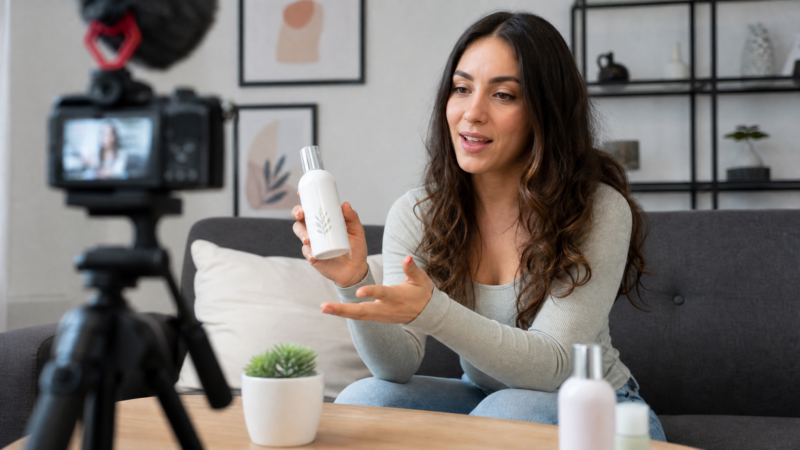
AI avatar tools like VidAU’s AI avatar spokespeople generate UGC-style presenter videos — realistic human avatars delivering a script with natural-looking mouth movements and varied expression — without casting, booking, or filming. Output looks native to Meta’s feed environment. For high-volume creative testing, this is the closest equivalent to having an in-house UGC creator producing content daily.
Facebook Ads Strategy: E-Commerce vs SaaS
E-Commerce Facebook Ads Strategy
E-commerce campaigns run on a product-outcome model: show the product in use, demonstrate the result, remove purchase friction with price + offer visibility.
- Creative: UGC-style product demos, before/after visuals, lifestyle imagery in native feed format
- Funnel structure: Broad prospecting (Reels) → Engagement retargeting (Carousel/Video) → Cart abandonment (DPA with offer)
- CTA: “Shop now — free shipping” or “Get 30% off today only” — friction-reduced, offer-led
- Budget: Minimum $20/day per ad set; scale winning creative at 20–30% budget increase per 3–5 days
- Key metric: ROAS (target 3–4x); DPAs typically deliver 20–60% higher ROAS than static single-image
SaaS / Lead Generation Facebook Ads Strategy
SaaS campaigns run on a trust-building model: lead with a pain point, demonstrate the solution with specificity, offer a low-friction entry point (free trial, demo).
- Creative: Founder/team-led testimonial videos, problem-validation copy, screen recordings of the product in action
- Funnel structure: Awareness (video ad, measure VTR) → Consideration (retarget video viewers with case study) → Conversion (Lead Ad or landing page with trial CTA)
- CTA: “Start free trial” or “Watch 2-minute demo” — low-risk, specific time investment
- Key metric: CPL (target: $27.66 industry avg) and MQL-to-trial conversion rate
- Budget: $35–$50+/day minimum for lead volume sufficient to exit learning phase
A/B Testing Strategy for Facebook Ads
Most advertisers test the wrong things. Changing your background color while keeping the same weak hook does not give you actionable data. Here is the testing hierarchy that produces meaningful insights:
📊 The Testing Priority Framework
Test the Hook (Highest Impact)
Keep everything identical — same product, same offer, same CTA — and test 3 different opening hooks (question vs. result vs. social proof). This tells you how your audience prefers to be engaged before they know what you’re selling.
Test the Format (Video vs Image vs Carousel)
For the same offer, test a 20-second video vs. a single-image static vs. a 5-card carousel. Let performance data — not assumption — tell you which format the algorithm delivers most efficiently for your specific audience.
Test the Offer (Not the Creative)
Same creative, different offers: free trial vs. 20% discount vs. free shipping. Offer testing often reveals the highest-leverage conversion variable in the entire funnel.
Test the CTA (Small but Real)
Direct CTAs (“Buy now”) vs. curiosity CTAs (“See how it works”) vs. social proof CTAs (“Join 20,000 brands”). Even small CTA changes produce measurable impact on CVR.
Scale Winners, Kill Fast Losers
After 7 days minimum, pause creatives performing 30%+ below your average CPA. Increase budget on winners by 20–30% at a time to avoid re-entering the learning phase. Do not touch winning campaigns for at least 48–72 hours after a budget change.
Top-performing accounts test 15–25 new creatives per week. At traditional production costs ($500+/video), this is impossible for most brands. With VidAU’s URL-to-Video and AI avatar tools, 25 creative variants cost under $125 in total. Brands using this model report finding a winning creative 3.2× faster than those testing 3–5 creatives per month.
Common Facebook Ad Mistakes to Avoid in 2026
| Mistake | Why It’s Damaging | Fix |
|---|---|---|
| Weak or slow hook | Kills CTR. If CTR falls below 0.9%, Meta raises your CPM as a penalty. | Test 3 hooks per creative batch. Use the 3-second mute test before publishing. |
| Editing during learning phase | Resets the learning phase, wasting 7–14 days of algorithm optimization | Set and forget for minimum 7 days. Only edit if CPA exceeds 2x your target. |
| Same creative for all placements | Square/landscape creative on Reels loses 30–40% of available screen space | Use 9:16 for Reels/Stories, 4:5 for Feed, 1:1 for Instagram Feed. |
| No captions on video ads | 85% of videos watched without sound; losing half the message | Add auto-captions in Meta or include on-screen text in creative production. |
| Over-polished creative for cold audiences | High-production content triggers “this is an ad” recognition that reduces CTR by 40–60% vs. UGC | Use AI avatar/UGC for cold prospecting. Reserve studio creative for retargeting. |
| Not using Advantage+ | Manual campaigns produce 32% higher CPA than Advantage+ Shopping on average | Use Advantage+ Shopping for prospecting; manual for specific audience segments. |
| Scaling budgets too fast | Budget increases above 30–50% in one edit trigger learning phase reset | Increase by 20–30% maximum every 48–72 hours after confirming stable performance. |
Real Facebook Ad Examples (Deconstructed)
The “Problem-Before-Product” UGC Video Ad
Format: 22-second vertical video, real creator, phone-quality footage. Hook: Creator looks directly at camera: “I spent $400 on serums before someone told me about this.” Product appears at second 4. Demo takes 10 seconds. Price shown at second 18. CTA: “Link in description — free shipping today.”
Why it works: The hook leads with relatability and budget waste (emotional trigger). The creator’s authenticity reduces “this is an ad” resistance. Product demo is specific and quick. Price removes purchase anxiety. CTA is low-friction.
The “Specific Result + Screen Recording” Lead Gen Ad
Format: 28-second horizontal video (Feed). Hook: “Our team cuts reporting time from 4 hours to 12 minutes. Here’s exactly how.” Screen recording follows showing dashboard. Specific feature demonstrated in 15 seconds. Final 8 seconds: founder explains the outcome. CTA: “Start free trial — no credit card.”
Why it works: The specific time claim (4 hours → 12 minutes) is credible and outcome-oriented. Screen recordings are trusted because they are visually demonstrable. The founder appearing adds human trust. “No credit card” removes the largest B2B objection.
The Dynamic Product Ad with Offer Layer
Format: Dynamic Carousel (auto-populates from product catalog). Audience: Product page visitors, 7-day window. Copy: “Still thinking about it? Free shipping ends tonight.” Each carousel card: product image, name, price, and a “Shop Now” button.
Why it works: The copy acknowledges the visitor’s existing intent without being intrusive. The urgency (“ends tonight”) provides a genuine reason to act now. Showing the exact product they viewed produces the highest relevance score possible. DPAs consistently deliver 20–60% higher ROAS vs. static product ads for retargeting.
Tools to Create High-Converting Facebook Ads Faster
The brands producing 15–25 new creatives per week — the volume required for systematic testing and algorithm optimization — have one thing in common: they have replaced or augmented traditional video production with AI creative tools.
| Tool | Best For | Unique Advantage | Starting Cost |
|---|---|---|---|
| VidAU Editor’s Pick | URL-to-video, AI avatars, multi-platform export | Product URL → Facebook ad in 10 min; auto-formats for Feed, Reels, Stories | Free tier available |
| Meta Advantage+ | Campaign management, targeting automation | 32% lower CPA vs. manual; 17% higher ROAS | Free (within Ads Manager) |
| Canva Pro | Static image ads, branded templates | Fast iteration on image formats; brand kit integration | $12.99/month |
| CapCut for Business | Quick video editing, social-first format | Auto-caption, trending templates, TikTok-to-Meta repurposing | Free tier + paid |
| Superads / Motion | Creative performance analytics | Shows which creative elements drive performance by hook type and format | From $99/month |
VidAU’s role in a Facebook ad workflow:
- URL-to-Video: Paste any product URL and receive a complete 15–30 second Facebook video ad with AI voiceover, product highlights, and CTA. Auto-formats to all Meta placements in one export.
- AI Avatar Ads: Generate UGC-style presenter videos using 100+ AI avatars in 120+ languages — at a fraction of the cost of real creator production.
- Batch Generation: Produce 15–25 creative variants per session (different hooks, tones, CTAs) in the time one traditional video edit would take.
Key Takeaways: Facebook Ad Best Practices 2026
- CTR benchmarks have risen significantly: most industries average 2–3% CTR in 2026 (vs. 0.9% in 2024). If you’re below industry average, it’s a creative problem, not a targeting problem.
- Advantage+ Shopping delivers 32% lower CPA vs. manual campaigns. 82% of advertisers already use it. If you’re not, you’re running a self-imposed cost handicap.
- The first 1.5 seconds of your video determine everything. Test the HPSPC framework and use the 3-second mute test on every creative before publishing.
- UGC-style video produces 2–4x higher CTR vs. polished studio ads for cold prospecting. Use UGC for acquisition; use studio creative for retargeting and brand building.
- Creative fatigue hits at frequency 3.4 — CTR drops 41% beyond that threshold. Top-performing accounts test 15–25 new creatives per week. AI tools make this economically viable at under $5 per video.
- The Reels placement offers 26% lower CPC than Facebook Feed and accounts for 28.1% of video ad views. If you’re not allocating meaningful budget to Reels, you are overpaying for reach.
- For e-commerce: Dynamic Product Ads (DPAs) deliver 20–60% higher ROAS than static product ads for retargeting. This is the single highest-ROI format change most e-commerce brands can make immediately.
FAQ — Facebook Ads Explained
What is a good CTR for Facebook ads in 2026?
In 2026, most industries average Facebook CTRs between 2% and 3%. Art & Home Decor leads at 2.92% CTR; Clothing & Fashion at 2.84%. Traffic campaigns average 1.71% CTR; Lead Generation campaigns average 2.59%. If your CTR falls below 0.9%, the Meta algorithm penalizes you with higher CPMs. Data source: Lebesgue 2026 Benchmark Report.
What is the average Facebook ads CPA in 2026?
The median CPA across all industries on Facebook in 2026 is $38.17 based on Triple Whale’s analysis of 20,000+ DTC brands. CPAs vary significantly by vertical: Pets & Animals averages $58.42; Finance $45.67; Food & Drink $13.27. Using Advantage+ Shopping campaigns reduces CPA by 32% compared to manual configuration.
Are Facebook video ads better than image ads?
For most acquisition and cold audience campaigns in 2026, yes. Short-form video ads (15–30 seconds) in Reels format offer 26% lower CPC than Feed and account for 28.1% of video ad views. Static image ads remain competitive for retargeting warm audiences and direct-response campaigns with simple offers.
What is the best Facebook ad format?
By objective: Reels video ads for acquisition (lowest CPC, highest CTR for visual verticals). Dynamic Product Ads (DPAs) for e-commerce retargeting (20–60% higher ROAS vs. static). Lead Ads for lead generation (2.59% avg CTR, $27.66 avg CPL). Stories Ads for brand awareness (lowest CPC at $1.83). Most brands should use a combination rather than a single format.
How much should I spend on Facebook ads?
Meta recommends enough budget to generate 50 conversion events per week per ad set (to exit the learning phase). At a $38 median CPA, that implies $1,900/week minimum per active ad set for purchase-objective campaigns. Minimum practical daily budget: $20–$30 per active ad set. For lead generation campaigns at $27.66 avg CPL, $200–$300/week per ad set is sufficient for learning phase data.
What is Meta Advantage+ and does it actually improve performance?
Meta Advantage+ is Meta’s AI-powered campaign automation suite. Advantage+ Shopping campaigns deliver 32% lower CPA and 22% higher ROAS compared to manually configured campaigns in 2026. 82% of Facebook advertisers now use Advantage+ automation. Use Advantage+ for broad prospecting; use manual campaigns when you have specific high-value audience segments to protect.
How do I reduce Facebook ad creative fatigue?
Creative fatigue begins when frequency reaches 3.4 — beyond that threshold, CTR drops by 41%. To prevent fatigue: (1) Monitor frequency in Ads Manager weekly. (2) Rotate creative every 7–14 days. (3) Target 15–25 new creatives per week. AI creative tools like VidAU make this volume economically viable at under $5 per video variant.
Sources: Triple Whale 2026 (20,000+ brands) · Lebesgue 2026 CTR Benchmarks · Digital Applied 2026 CPC/CPM Data · Sovran Meta Ads Benchmarks · WordStream/LocaliQ 2025–2026. All data verified April 2026.