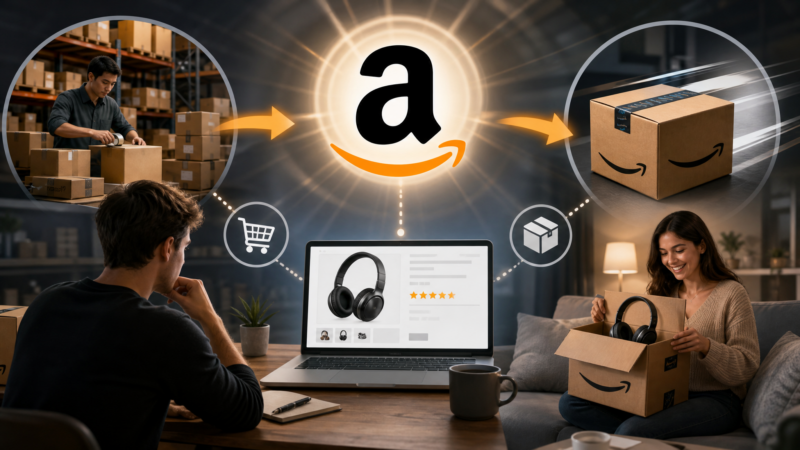


The complete ecommerce marketing guide for 2026 — real stats, video-first strategies, UGC content, automation tools, ad spend benchmarks, and a step-by-step framework for building campaigns that actually scale.
What Are the Ecommerce Marketing Benchmarks in 2026?
There are now more online stores than at any point in history. Paid ad costs rose 11–13% year-over-year in 2025. Creative fatigue is accelerating — 69% of brands say it happens faster than before. And still, the ecommerce brands worth studying are growing revenue, improving ROAS, and acquiring customers more efficiently than their competitors.
The difference is not budget. It is not the platform. It is how fast they can create, test, and scale content. In 2026, ecommerce marketing is a speed-and-creativity game dressed up as a data problem. This guide covers what is actually working — not theory, but the strategies, channels, and frameworks that show up consistently in the results of brands that are winning. For the paid-ads specific playbook, see our Facebook Ad Best Practices 2026 guide.
What Is Ecommerce Marketing?
Ecommerce marketing is the practice of driving traffic to an online store and converting that traffic into buyers using digital channels — SEO, paid advertising, email, social media, and content. In 2026, effective ecommerce marketing combines multi-channel acquisition, video-first creative, automation for retention, and data-driven creative testing at scale.
📋 Ecommerce Marketing Strategies That Work in 2026 (Quick List)
- Short-form video ads on TikTok, Meta Reels, and YouTube Shorts
- UGC-style content that builds trust with cold audiences
- Meta Advantage+ Shopping Campaigns for automated targeting
- Google Shopping and Performance Max for high-intent traffic
- Email and SMS automation for customer retention and LTV growth
- High-volume creative testing (10+ variants per campaign)
- SEO content targeting commercial and product-comparison keywords
- Retargeting sequences with dynamic product ads
- TikTok Shop integration for native social commerce
- First-party data collection to reduce paid acquisition dependency
Why Ecommerce Marketing Has Changed in 2026
Global ecommerce sales are projected to exceed $7.4 trillion in 2025, growing 10–12% YoY. By 2027, ecommerce is expected to account for 41% of total global retail sales. The opportunity is real. The challenge is that every seller in every category sees the same data and targets the same audiences — which is why creative differentiation, not budget, has become the primary competitive lever.

Ecommerce Digital Marketing Fundamentals
The core channels of ecommerce digital marketing have not changed. How you execute within them has. Here is an honest snapshot of each:
Search Engine Optimization (SEO)
93% of internet users start their online experience with a search engine. Ecommerce sites ranking on page one for commercial keywords capture 71% of organic clicks. SEO is the only channel that compounds — traffic built today generates revenue indefinitely without additional spend.
Paid Advertising
62% of total ecommerce ad budgets now go to performance marketing. The average ecommerce ROAS across all platforms is 3.2x, with retargeting producing 5–10x higher ROAS than cold traffic. Multi-channel brands generate around 26% more qualified traffic than single-channel operators. For a deep dive into Meta and TikTok creative frameworks, see our Facebook Ad Best Practices 2026.
Email Marketing
Email remains the most underrated ecommerce channel. It drives roughly 16% of repeat sessions and delivers 20–40x ROAS — among the highest of any digital channel. Repeat customers contribute around 42% of revenue for high-performing stores. Email is how you turn a one-time buyer into a high-LTV customer without paying for each acquisition twice.
Turn any product URL into a high-converting ecommerce video ad. From $9.99/mo
🎬 Start Creating →Video-First Ecommerce Marketing Strategy
This is no longer a trend. It is the operating condition of ecommerce marketing in 2026.
78% of consumers say they would most like to learn about a product by watching a short video — compared to just 9% who prefer text articles. Wyzowl’s 2026 report confirms 91% of businesses now use video as a marketing tool, and 83% say it has directly increased sales.
- Meta video ads receive 52% more engagement than static ads
- Short-form video generates 1.7× higher CTR than static social ads
- TikTok UGC-style ads increase conversions by 38%
- 64% of consumers are more likely to buy a product featured in a video
- Video reduces product returns by 35% — buyers who watch a demo have more accurate expectations
UGC vs. Studio Content: Which Performs Better in 2026?
This is one of the most consequential creative decisions in ecommerce marketing — and most brands get it wrong by choosing polish over performance.
| Factor | UGC-Style Ads | Studio / Polished Ads |
|---|---|---|
| Trust & Authenticity | ✓ High — feels like a real recommendation | Lower — perceived as advertising |
| CTR Performance | ✓ Typically 2–4× higher for cold audiences | Lower for cold; better for retargeting |
| Production Cost | ✓ Low — from $9.99/mo with VidAU AI avatars | High ($500–$5,000+ per video) |
| Creative Volume | ✓ High — 20+ variants/week feasible | Low — expensive to iterate |
| Best Funnel Stage | Top of funnel (cold prospecting) | Middle/bottom (consideration, retargeting) |
| Long-Term Brand Building | Weaker | ✓ Stronger narrative & production quality |
The practical recommendation for 2026: Run UGC-style video for all prospecting and new audience testing. Reserve studio-quality production for retargeting and high-AOV journeys. This split typically reduces blended CPA by 25–40% versus running polished-only creative across all funnel stages.

Generate UGC-Style Ecommerce Video Ads in Minutes
VidAU converts any product URL into a TikTok and Meta-ready video ad with AI avatars, voiceover, and auto-format export. No studio. No crew. No waiting.
🎬 Get Started from $9.99 →No credit card required to explore · Paid plans from $9.99/month
Ecommerce Automation: Scaling Without Burnout
The gap between a $1M/year and a $10M/year ecommerce brand is usually not ideas — it is systems. Automation removes the manual work that consumes time without generating proportional revenue.
Email and SMS Automation
- Abandoned cart sequences: Recover 5–15% of lost checkouts. The first email within 1 hour has the highest recovery rate.
- Welcome sequences: A 3–5 email welcome sequence with a clear offer converts new subscribers significantly higher within the first 7 days.
- Post-purchase flows: Upsell, cross-sell, and review request emails sent 3–14 days after purchase increase LTV without additional acquisition cost.
Ad Optimization Automation
- Meta Advantage+ Shopping Campaigns: Automate targeting and creative testing. Reduce CPA by 17% on average vs. manually configured campaigns.
- Google Performance Max: Increase conversion value by 18% versus standard Shopping campaigns. Used by 72% of ecommerce brands as their primary Google campaign type.
- Budget rules and alerts: Set automatic budget increase rules for winning ad sets and kill rules for underperformers — prevents wasted spend when campaigns are unmonitored.
How to Create High-Converting Ecommerce Ads in 2026
Ad creative is the single highest-leverage variable in ecommerce marketing performance. Targeting is increasingly automated by platform AI (Meta Advantage+, TikTok Smart+, Google PMax). The remaining human advantage is creative quality and volume.
📊 The Creative Testing Framework — Volume, Variant, Scale
Test the Hook (Highest Impact)
Keep everything identical — same product, same offer, same CTA — and test 3 different opening hooks (question vs. result vs. social proof). A hook that communicates what the product is and creates desire within 1.5 seconds is the single highest-leverage creative variable.
Test the Format (Video vs. Static)
For the same offer, test a 20-second UGC video vs. a single-image static vs. a carousel. Platform data — not assumption — should tell you which format the algorithm delivers most efficiently for your audience.
Test the Offer
Same creative, different offers: free shipping vs. 20% discount vs. buy-two-get-one. Offer testing often reveals the highest-leverage conversion variable in the entire funnel.
Scale Winners, Kill Losers Fast
After 7 days minimum, pause creatives performing 30%+ below your average CPA. Increase budget on winners by 20–30% at a time. Do not touch winning campaigns for at least 48–72 hours after a budget change.
Systematize with AI Production
Top-performing advertisers test 15–25 new creatives per week. With VidAU’s URL-to-Video (plans from $9.99/mo), 25 creative variants cost a fraction of traditional production — and brands using this model find winning creatives 3.2× faster.
CTR drops significantly when ad frequency exceeds 3–4. The standard for top-performing accounts is 15–25 new creatives per week — a volume that requires AI production tools to be economically viable at most budget levels.
Paid Advertising Strategies That Scale in 2026
TikTok Ads
TikTok ecommerce ad spend grew 32% YoY in 2024. Average TikTok CPM is $8.10 — 1.4× cheaper than Meta. TikTok Shop accounted for $17 billion in sales in 2024 and is forecast to exceed $20 billion in 2026. The platform rewards content that feels organic — lower production quality that reads as native consistently outperforms polished brand creative. The same UGC principles covered in our Facebook Ad Best Practices guide apply directly to TikTok hook and copy frameworks.
Meta Ads (Facebook & Instagram)
Facebook retains the #1 position for paid ecommerce with 33% market share. Average Meta CPM is $12.40. 72% of DTC brands use Meta as their primary ad platform. Advantage+ Shopping Campaigns reduce CPA by 17% on average. Retargeting on Meta averages 7.1× ROAS. Reels placements offer lower CPCs than Feed for video-first content.
Google Shopping
Google Shopping ads drive 66% of all Google retail clicks. Performance Max increases conversion value by 18% versus standard campaigns. 82% of online retail sales involve a Google search at some point. Branded search terms generate 4–12× ROAS.
Need UGC-style ads without the creator cost? VidAU’s AI avatars produce authentic presenter videos in 120+ languages. From $9.99/mo
🧑 Try AI Avatars →Ecommerce Tools You Need in 2026
📈 Analytics
Google Analytics 4, Triple Whale (DTC attribution). Track LTV alongside CAC — not just ROAS.
📧 Email & SMS
Klaviyo for email and SMS automation. Postscript for SMS-heavy strategies. Both integrate natively with Shopify and WooCommerce.
🔥 Ad Creative
CapCut for manual editing, Canva for static assets, VidAU for AI video ads at volume — plans from $9.99/mo. 63% of video marketers now use AI tools (Wyzowl, 2026).
🎉 UGC Collection
Billo and JoinBrands for micro-creators. Loox and Judge.me for photo and video reviews from existing customers.
🔍 SEO
Semrush or Ahrefs for keyword research. Surfer SEO for content optimization. Google Search Console for monitoring real search performance.
🛒 CRO
Hotjar or Microsoft Clarity for session recording and heatmaps. Every 1-second load time improvement increases conversion by 17%.
Real Costs and ROI in Ecommerce Marketing
| Channel | Typical Monthly Cost | Avg. ROAS | Payback Speed | Best Use Case |
|---|---|---|---|---|
| Meta Ads | $1,000–$50,000+ | 3.2x cold, 7.1x retargeting | Days–weeks | Acquisition + retargeting |
| TikTok Ads | $500–$20,000+ | 2.5–4x | Days–weeks | Cold audience acquisition |
| Google Shopping | $500–$30,000+ | 4–12x branded | Days | High-intent buyers |
| SEO | $500–$5,000/mo or time | N/A (organic) | Months | Long-term compounding |
| Email / SMS | $100–$1,500/mo platform | 20–40x | Ongoing | Retention and LTV |
| AI Video Ads (VidAU) | From $9.99/mo | Varies by channel | Days | Creative testing at scale |
Repeat customers contribute ~42% of ecommerce revenue for high-performing stores. If your LTV:CAC ratio is below 3:1, you have a retention problem — not an acquisition problem — and spending more on ads will not fix it.
Ecommerce Marketing Strategy Comparison
| Strategy | Cost | Speed to Results | Best For | Key Metric |
|---|---|---|---|---|
| SEO | Low (time investment) | Slow (3–12 months) | Long-term organic growth | Organic traffic, rankings |
| Paid Ads (Meta/TikTok) | Medium–High | Fast (days) | Scaling acquisition | ROAS, CPA |
| Email / SMS | Low | Medium | Retention, LTV growth | Revenue per email, LTV |
| UGC Content | Medium | Medium | Trust & conversion | CVR, CTR |
| AI Video Ads | From $9.99/mo | Fast (<1 hr per variant) | Creative testing at scale | CTR, CPA, ROAS |

How to Build an Ecommerce Marketing Strategy (2026)
📋 The 7-Step Ecommerce Marketing Strategy Framework
Define Your Audience and Unit Economics
Before choosing a single channel, know your target customer and unit economics — product cost, target margin, maximum CAC your LTV can support. No strategy works if the math does not work first.
Choose 2 Channels to Master First
Multi-channel brands outperform single-channel ones, but spreading too thin early produces mediocre results everywhere. Start with one paid (Meta or TikTok) and one owned (email). Add channels as each one reaches consistent positive ROAS.
Create a Content Production System
Video-first content requires consistent output. Build a repeatable workflow: weekly content brief → creative brief per product → production (filming or AI generation) → review → publish. Target 5–10 new ad creative variants per week minimum.
Launch Campaigns with Structured Testing
Deploy 5–10 creative variations per campaign at $20–$30/day per ad set. Use Meta Advantage+ or TikTok Smart+ for targeting automation. Do not edit campaigns for at least 7 days after launch.
Identify Winners and Kill Losers Fast
After 7 days, pause creatives performing 30%+ above your target CPA. Scale winning creatives by 20–30% budget increases every 48–72 hours.
Build Retention Systems in Parallel
While paid acquisition runs, build your email welcome sequence, abandoned cart flow, and post-purchase sequence. Email drives 16% of repeat ecommerce sessions — compounding revenue from a one-time acquisition investment.
Scale Winners and Diversify Channels
Once a channel produces consistent 3x+ ROAS and a retention system is in place, scale acquisition budget and add a second channel. Add SEO as a long-term organic play. Each additional channel reduces platform dependence.
Test 25 ecommerce ad creatives this week — hook variants, format variants, and CTA variants in one session. Plans from $9.99/mo
🔗 URL to Video →Ecommerce Marketing Mistakes to Avoid in 2026
| Mistake | Why It Hurts | The Fix |
|---|---|---|
| Launching with 1–2 ad creatives | You miss the winning angle. Algorithms can’t optimize without creative variety. | Test 5–10 variants per campaign. Let data choose the winner. |
| Ignoring video content | Static ads see 52% less engagement than video on Meta. TikTok penalizes non-video in feed. | Make short-form video the default. Static works for retargeting only. |
| Over-relying on one channel | Platform CPM spikes or algorithm changes can eliminate revenue overnight. | Build a second acquisition channel before you need one. |
| No retention system | 42% of revenue for top brands comes from repeat customers — not paying for them is margin left on the table. | Build email flows before scaling paid spend. |
| Not tracking LTV vs CAC | A 2.5x ROAS campaign might be unprofitable if LTV is too low. | Set up LTV tracking (Triple Whale, Klaviyo, or native Shopify) before scaling. |
| Treating SEO as optional | Organic traffic is the only acquisition channel that gets cheaper over time. | Start an SEO program from month one, even if it takes 6–12 months to pay off. |
Related Articles on VidAU Blog
Ecommerce Marketing in 2026: Key Takeaways
- Video dominates conversions. Meta video ads receive 52% more engagement than static. TikTok UGC-style ads increase conversions by 38%. Video is no longer optional.
- Creative testing is the primary competitive lever. Top advertisers test 15–25 new creatives per week. The 8.4x vs 3.2x ROAS gap is almost entirely explained by creative testing volume.
- Speed is a competitive advantage. The brand that can produce, test, and scale a winning creative in 48 hours outcompetes the brand that needs 3 weeks per production cycle.
- Automation is not optional at scale. Meta Advantage+ reduces CPA by 17%. Performance Max increases conversion value by 18%. Email automation recovers 5–15% of abandoned carts — with no headcount.
- Retention is your margin protector. Repeat customers generate 42% of revenue for top stores. Build retention before scaling acquisition spend.
- Multi-channel brands generate 26% more qualified traffic. Platform dependence is a structural disadvantage against operators with diverse acquisition portfolios.
Build Your Ecommerce Video Ad Engine Today
VidAU converts product URLs into video ads for TikTok, Meta, YouTube, and Amazon. Test more creatives, find winners faster, scale with confidence.
🚀 Get Started from $9.99 →Plans from $9.99/month · No credit card required to explore
FAQ — Ecommerce Marketing 2026
Is ecommerce marketing still profitable in 2026?
Yes. Global ecommerce sales are projected to exceed $7.4 trillion in 2025, growing 10–12% YoY. Profitability requires discipline — 66% of brands say advertising is becoming less profitable without optimization. Brands winning combine multi-channel strategy, creative testing at volume, and data-driven budget allocation. Source: NEWMEDIA ecommerce statistics.
What is the best ecommerce marketing strategy?
No single strategy dominates. The best results come from combining SEO for organic traffic, paid ads (Meta, TikTok, Google Shopping) for acquisition, email and SMS for retention, and UGC video for trust and conversion. The key differentiator in 2026 is creative velocity — brands testing 10–15 ad variants per campaign find winners faster. For the ad-specific playbook, see our Facebook Ad Best Practices 2026 guide.
How important are video ads in ecommerce?
Extremely important. Meta video ads receive 52% more engagement than static. Short-form video generates 1.7× higher CTR. 83% of video marketers say video increased sales. TikTok UGC-style ads increase conversions by 38%. In 2026, video is the primary creative format for cold traffic acquisition across all major platforms. Sources: Wyzowl, Marketing LTB.
How much does ecommerce video ad production cost?
Traditional video production costs $500–$5,000+ per ad — making high-volume creative testing impossible for most brands. AI video tools like VidAU allow you to generate multiple video ad variants from a product URL starting from $9.99/month, making proper creative testing economically viable at any budget level. 63% of video marketers now use AI tools to create or edit video content (Wyzowl, 2026).
How much should I spend on ecommerce advertising?
Benchmarks: 31% of ecommerce brands spend over $100K/month; 59% allocate over 30% of revenue to advertising. For early-stage brands, a practical starting point is $1,000–$3,000/month across 1–2 channels — understand unit economics before scaling. The average ecommerce ROAS across platforms is 3.2x — validate you are consistently hitting this before increasing budgets. Source: Marketing LTB ecommerce advertising statistics.
Sources: Wyzowl Video Marketing Statistics 2026 · Marketing LTB Ecommerce Ad Statistics 2026 · NEWMEDIA Ecommerce Marketing Stats 2026 · SellersCommerce Video Marketing Stats · SeoProfy Ecommerce Marketing Statistics. All data verified April 2026.