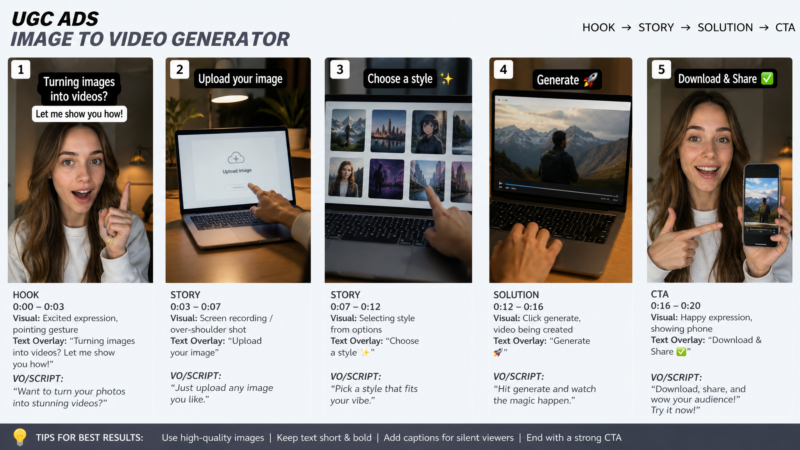


Most brands are sitting on a creative crisis they have not yet named. This guide is a direct look at the best UGC video platforms for digital marketers in 2026 — which tools actually drive performance, how HeyGen and Pictory pricing fit into a real workflow, and how to build a creative production system that compounds rather than just keeps pace.
Most brands are sitting on a creative crisis they have not yet named. They know their static ads are underperforming. They see the engagement numbers on creator content. They understand, intellectually, that UGC-style video is dominating conversion rates on TikTok, Meta, and YouTube. And yet the majority of marketing teams are still producing fewer than five ad creative variants per month — nowhere close to the 15–25 per week that top-performing advertisers run as standard.
The bottleneck is not strategy. It is production. And in 2026, the best UGC video platforms for digital marketers are not the ones with the most filters or the prettiest interface — they are the ones that let you move fast, test more, and stop losing to brands with half your budget but twice your creative output. For the paid social side of this equation, our Facebook Ad Best Practices 2026 guide covers the creative testing frameworks that sit on top of any UGC production system.
What Is a UGC Video Platform?
What Is a UGC Video Platform?
A UGC video platform is a tool or system that enables the creation, management, or sourcing of user-generated content-style video for marketing purposes — including AI-powered tools that produce authentic-looking presenter videos, creator-style ads, and testimonial content. In 2026, the category spans creator marketplaces and AI-powered UGC generators. High-performing content teams typically use both.
Best UGC Video Platforms 2026: Quick Summary
- AI-powered UGC tools now produce content that converts comparably to real creator UGC for cold traffic — the authenticity gap has narrowed considerably in 2026
- Creator marketplaces still outperform on emotional resonance and niche trust but come with logistical overhead and slower production cycles
- Creative testing velocity is the primary competitive advantage — brands testing 15–25 variants per week consistently outperform those testing 2–3
- HeyGen pricing starts at ~$29/month but scales to $89+/month — cost-prohibitive for high-volume ecommerce variant testing
- Pictory pricing starts at ~$25/month and is a blog-to-video repurposing tool, not a UGC ad creator
- AI-powered UGC platforms have dramatically reduced cost-per-variant, enabling proper A/B testing at scale for the first time
- The brands winning in 2026 treat UGC as a continuous production system, not a campaign format
Why UGC Video Became the Dominant Ad Format
Let’s be honest about why this happened. UGC-style content did not win because it was authentic. It won because it was different — it looked like the surrounding content in a way polished brand ads never did. When someone scrolled their TikTok feed in 2022 and encountered a well-placed UGC ad, they did not immediately register “advertisement.” That single distinction drove the initial surge in UGC performance.
By 2024, that advantage had partially compressed. Audiences became more sophisticated. But the underlying mechanic — native-looking, presenter-forward, spoken-word-driven video — remained structurally stronger than branded production content for cold audience acquisition. What changed in 2025–2026 was not the format but the production economics.
The Two Categories of UGC Video Platforms (And Why You Need Both)
Before reviewing specific tools, it is worth being precise about what category a platform actually belongs to — because the use cases, strengths, and failure modes differ considerably.
| Feature | Creator Marketplaces | AI-Powered UGC Generators |
|---|---|---|
| Content source | Real human creators | AI avatars, synthetic voices |
| Production time | 3–10 days per video | Under 30 minutes per video |
| Cost per video | $50–$500+ | Under $10 per variant |
| Creative volume | Low — logistics-limited | High — scalable |
| Emotional resonance | High for niche audiences | Strong for cold traffic |
| Language support | Limited by creator pool | 100+ languages (leading tools) |
| Best use case | Brand trust, testimonials, mid-funnel | Cold traffic, A/B testing, scale |
| Iteration speed | Slow | Fast |
The operational answer for most ecommerce and DTC brands in 2026: use creator marketplaces for hero content and brand trust assets; use AI-powered UGC generators for the weekly creative testing volume that drives actual performance improvement. These are complementary workflows, not competing ones.
The Best Creator Marketplace Platforms
Billo
The most approachable creator marketplace for ecommerce brands. Strong creator pool for lifestyle, beauty, and consumer products. Clean interface, minimal logistics overhead. Volume limitation: if you need 20 variants this month, the economics and approval cycles do not support it.
JoinBrands
Subscription-based access to creators with bundled content rights — predictable for brands with consistent monthly needs. Better suited for brands that have stabilized their content brief process and know which UGC angles consistently convert for them.
Insense
Sits at the intersection of influencer marketing and UGC production — handles both deliverables from the same creator pool. Reduces coordination overhead for brands running creator programs alongside paid acquisition. Best for brands that need organic creator content and paid ad UGC simultaneously.
Fiverr / Upwork (Creator Freelancers)
Underrated for early-stage testing. Freelance UGC creators on Fiverr often produce serviceable content at $15–$40 per video — fast enough to validate a hook angle before investing in higher-quality creator production. Quality control requires a structured brief and clear deliverable spec.
The Best AI-Powered UGC Video Makers for Businesses
This is where the market has moved most decisively. The top AI-powered UGC makers for businesses now produce content that is functionally indistinguishable from real creator UGC in a cold traffic context — and they do it at a fraction of the cost and in a fraction of the time.
HeyGen
The most well-known AI avatar platform. Lip-sync accuracy, facial expression range, and voice naturalness are at a high standard. Well-suited for branded content, product demos, and explainer videos. For ecommerce ad creative testing at scale, per-video economics become restrictive at higher volumes — the Business plan ($89/month) caps generation minutes.
Synthesia
Pioneered the enterprise AI avatar space. Strong for corporate training, HR communications, and internal content. For digital marketers specifically, pricing and positioning skew toward larger enterprise budgets. Less agile for rapid testing cycles; better suited to longer-form structured video than short UGC ad variants.
ElevenLabs
The leading AI voice synthesis platform — exceptional voice quality, 32 languages, natural emotional inflection. Not a video tool; it produces audio only. Best used as a voice layer within a broader video production workflow rather than as a standalone UGC ad creation platform.
Ecommerce-Native AI Ad Platforms
A newer category of AI UGC tools built specifically around ecommerce ad creative workflows — product URL input, automated variant batching, multi-format export for TikTok, Meta, and YouTube in one session. Tools like VidAU.ai reflect this orientation: built for creative testing volume at low cost-per-variant, not general-purpose video production.
Test 10+ UGC ad variants from a single product URL — without a creator or studio. From $9.99/mo
🎬 Start Creating →How to Evaluate UGC Video Platforms: The Criteria That Actually Matter
Most platform comparison articles focus on features. Here is what actually predicts whether a platform will improve your ad performance:
| Evaluation Criterion | Why It Matters | What to Look For |
|---|---|---|
| Cost per variant | Determines how many tests you can run | Time + money to produce one new creative — not monthly subscription price |
| Time to production | Faster cycles = faster learning | Brief to published ad in under 1 hour for AI tools; 5–7 days for creator content |
| Cold traffic conversion quality | Not all avatars convert equally | Realistic natural-motion avatars + expressive voice synthesis; only testable in practice |
| Ecommerce integration | Reduces brief time dramatically | Product URL input, automated feature extraction, image/video import |
| Language & market coverage | First-order constraint for multi-market brands | Native quality in all target languages — not translated with mismatched lip-sync |
| Export format coverage | Platform-native formatting drives performance | 9:16 TikTok/Reels, 16:9 YouTube, 1:1 feed — generated simultaneously |
HeyGen Pricing vs Pictory Pricing vs Alternatives: Direct Comparison
Since both platforms frequently appear in searches for AI UGC tools, here is a transparent breakdown of where they fit — and do not fit — in a performance marketing workflow.
| Platform | Starting Price | Best For | UGC Ad Creation | High Volume | Ecommerce Focus |
|---|---|---|---|---|---|
| HeyGen | ~$29/month | Avatar-led branded content | ✓ | Limited | Moderate |
| Pictory | ~$25/month | Blog-to-video repurposing | ✗ | Moderate | Low |
| Synthesia | ~$22/month | Corporate training, HR video | ✗ | Moderate | Low |
| Billo | ~$59/video | Real creator UGC | ✓ | Low | High |
| JoinBrands | Subscription | Creator marketplace, consistent UGC | ✓ | Low | High |
| Ecommerce AI platforms | From $9.99/mo | Ecommerce ad variants at scale | ✓ | High | Very High |
Pictory is frequently misclassified as a UGC ad tool. It is designed for converting written content — blog posts, articles, scripts — into clip-based video with AI visuals and text overlays. For performance marketing teams focused on ad creative, Pictory sits in a different workflow category. If you need blog-to-video repurposing, it is genuinely useful. If you need presenter-forward UGC-style ad variants, it is the wrong tool.
How to Build a UGC Video Production System for Digital Marketers
The goal is not to find the best platform. The goal is to build a creative production system that consistently generates testable content faster than your competitors. For how this connects to a full paid acquisition strategy, see our complete guide to Facebook Ad Best Practices in 2026.
📋 7-Step UGC Video Production System
Segment Your Creative Needs by Funnel Stage
Cold traffic (prospecting) requires different content than retargeting. For cold audiences, authenticity and hook strength matter most. For retargeting, product specifics, proof points, and offers drive performance. Map which creative type you need at each stage before choosing tools or briefing creators.
Define Your Weekly Creative Testing Target
Work backwards from platform benchmarks. Top-performing ecommerce advertisers test 15–25 new creatives per week. Set a minimum viable target for your budget — even 5–8 new variants per week is a meaningful improvement for most teams — and choose tools that make that number operationally realistic.
Separate Hero Content from Testing Volume
Use creator marketplaces (Billo, JoinBrands, Insense) for 2–4 high-quality hero pieces per month. Use AI-powered UGC generators for weekly testing volume. These workflows serve different functions and should not compete for the same budget or creative resources.
Standardize Your Creative Brief Template
The fastest teams complete a creative brief in under 15 minutes: product name, primary benefit, target audience, hook direction, offer, call to action, platform format. The more consistent your brief, the faster your production cycle — regardless of which tool you use.
Build a Structured Testing Framework
Test one variable at a time: hook only, format only, or offer only. Running multi-variable tests without structure produces data you cannot act on. The discipline of isolating variables is what transforms creative testing from gut-feel to compound learning over time.
Create a Kill and Scale Protocol
Establish clear rules before launch: which metric signals a winner (CTR, ROAS threshold, CPA target), how long you wait before deciding (7 days minimum), and what budget increase signals a scale. Without explicit rules, most teams either scale too early or kill too late.
Archive Wins and Brief Forward
Every winning creative should be analyzed for the specific elements that drove performance: hook type, avatar style, offer framing, pacing, format. This analysis becomes your creative brief for the next batch. The teams that compound their creative learning fastest treat every winning ad as a data point, not just a revenue event.
Common Mistakes Digital Marketers Make with UGC Video Platforms
Treating UGC as a campaign format rather than a production system. Brands launch a “UGC campaign,” order 3–5 videos, run them for a quarter, and wonder why performance did not improve sustainably. UGC video only compounds when the production is continuous and the testing is systematic.
- Confusing production quality with conversion quality. Some of the highest-converting UGC ads look like they were filmed on a kitchen counter. Optimizing for aesthetic quality at the expense of volume or naturalness is a common and expensive mistake.
- Ignoring platform-specific formatting. A 60-second horizontal video re-cropped to vertical does not perform like natively vertical content. TikTok, Reels, and YouTube Shorts each have different pacing norms, safe zones, and engagement patterns.
- Over-investing in creator volume before establishing winning angles. Ordering 20 creator videos before knowing which hook, offer, and product angle converts is an expensive way to learn. Start with AI-generated variants to establish what works, then invest in creator production for proven angles.
- Not tracking creative performance separately from campaign performance. If your reporting only shows campaign-level ROAS, you have no idea which creative is driving results. Creative-level reporting is non-negotiable for any team serious about UGC performance improvement.
- Using the wrong tool category for the wrong job. Pictory for UGC ads. Synthesia for ecommerce testing volume. HeyGen for a 30-variant-per-week output requirement. Each of these mismatches wastes time and budget without improving performance outcomes.
What to Expect from UGC Video Platforms in the Next 12 Months
The pace of change in this category is not slowing. A few shifts worth planning for now:
Hyper-Personalized UGC at Scale
The next generation of AI UGC tools will enable dynamic variable insertion at the video level — different presenters, hooks, or offers served to different audience segments automatically, without separate production runs.
Creator-AI Hybrid Content
Platforms are developing workflows where a real creator films a base template and AI handles the variation layer — changing the hook, language, or offer while preserving the authentic feel of a real human presenter. This approach is likely to outperform both pure AI and fully manual content.
Tighter Ad Platform Integration
Direct API connections between AI UGC generators and Meta, TikTok, and Google Ads will reduce friction between production and deployment. Same-session creation and launch will become standard within 12 months.
AI-Driven Creative Brief Generation
Rather than writing briefs manually, platforms will increasingly ingest your historical performance data and suggest creative directions based on what has already demonstrated conversion in your specific account — turning past wins into forward briefs automatically.
The brands that figure this out early will have a compounding advantage over those still treating UGC as a format rather than a production system. The infrastructure is available right now. For how to connect this to a full ecommerce growth strategy, see our ecommerce startup guide and the AI content repurposing framework that pairs well with high-volume video production.
Related Articles on VidAU Blog
Best UGC Video Platforms 2026: Key Takeaways
- Creative testing velocity is the primary competitive advantage in paid social in 2026. Brands testing 15–25 UGC variants per week consistently outperform those testing 2–3, regardless of budget size.
- Creator marketplaces and AI UGC tools serve different functions — use creator platforms for hero content and brand trust assets; use AI generators for weekly testing volume. These are complementary, not competing.
- HeyGen pricing (~$29–$89/month) makes it well-suited for branded content and product demos, but cost-inefficient for high-volume ecommerce creative testing. Know which use case you need before selecting a platform.
- Pictory is not a UGC ad tool — it is a blog-to-video repurposing platform. For performance marketing teams, this distinction matters significantly for workflow design and output quality.
- Ecommerce-native AI platforms built around product URL input, variant batching, and multi-platform export represent the most operationally efficient approach for DTC and ecommerce brands in 2026.
- The brands winning over the next 12 months will be those who treat UGC as a production infrastructure decision, not a creative format — and build systems that generate testable content faster than their competitors can react.
Build Your UGC Video Ad Engine Today
Convert any product URL into a batch of platform-ready UGC-style video ads for TikTok, Meta, YouTube, and Amazon. Test more creative angles, find winners faster, scale with confidence.
🔥 Get Started from $9.99 →Plans from $9.99/month · No credit card required to explore
FAQ — Best UGC Video Platforms for Digital Marketers
What is the best UGC video platform for ecommerce brands in 2026?
There is no single answer — the best platform depends on your production volume target. For brands testing 10+ creative variants per week, AI-powered UGC generators offer the lowest cost-per-variant and fastest iteration cycle. For hero content and brand trust assets, creator marketplaces like Billo or JoinBrands produce the highest-quality output. High-performing teams typically use both in parallel workflows.
How does HeyGen pricing compare to other AI UGC tools?
HeyGen pricing starts at approximately $29/month for basic access and scales to $89/month and above for business plans. Compared to ecommerce-native AI UGC platforms (which start from $9.99/month), HeyGen tends to have a higher cost-per-variant at scale. HeyGen offers strong avatar quality for branded content, but is less optimized for high-volume ecommerce ad creative testing specifically.
Is Pictory suitable for UGC ad creation?
Pictory is designed for blog-to-video repurposing — converting written content into clip-based video with AI visuals and text overlays. It does not produce presenter-forward, avatar-led UGC-style ads. Pictory pricing starts at ~$25/month and offers genuine value for content teams repurposing written assets. For performance marketing teams focused on paid ad creative, Pictory sits in a different workflow category.
What makes an AI-generated UGC video convert like real creator content?
The primary conversion drivers are hook naturalness, avatar expressiveness, voice authenticity, and format nativity. Platforms that optimize all four produce AI content with comparable cold traffic conversion to real creator UGC. Robotic pacing, stiff avatars, and re-cropped horizontal content consistently underperform against natively produced, natural-motion alternatives.
How many UGC video variants should a digital marketing team produce per week?
Based on benchmarks from top-performing ecommerce advertisers, 15–25 new variants per week is the standard for accounts achieving above-average ROAS. For teams at earlier stages, 5–10 per week is a meaningful starting point that outperforms most static creative programs. The key is consistency: continuous weekly output compounds faster than periodic burst production cycles.
Should I use a creator marketplace or an AI UGC generator?
Both, with different functions. Use creator marketplaces for 2–4 hero pieces per month — high-quality content for brand trust, testimonials, and mid-funnel campaigns. Use AI UGC generators for weekly testing volume at low cost-per-variant. Validate which hooks and angles convert using AI tools first, then invest creator budgets in scaling proven winners with higher-quality production.
Sources and data references: Industry benchmarks drawn from paid social advertising performance data, publicly available platform pricing pages (HeyGen, Pictory, Synthesia, Billo — as of May 2026), and aggregate ecommerce marketing analysis reports. Pricing figures reflect publicly available information and may be subject to change. Wyzowl Video Marketing Statistics 2026 · Platform pricing verified May 2026.