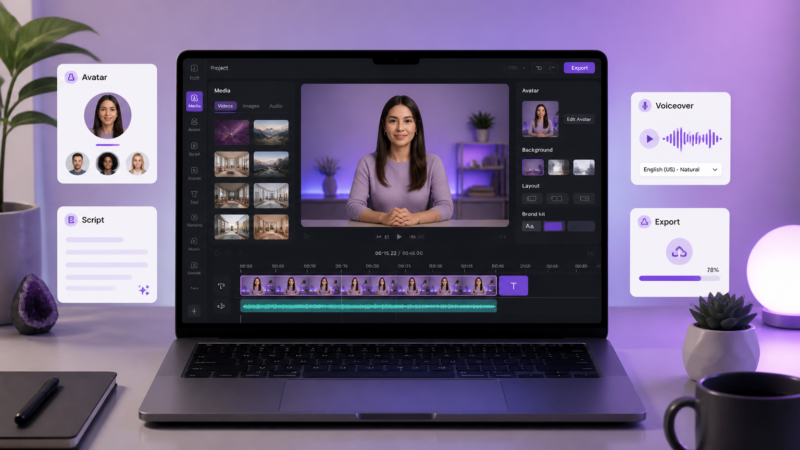

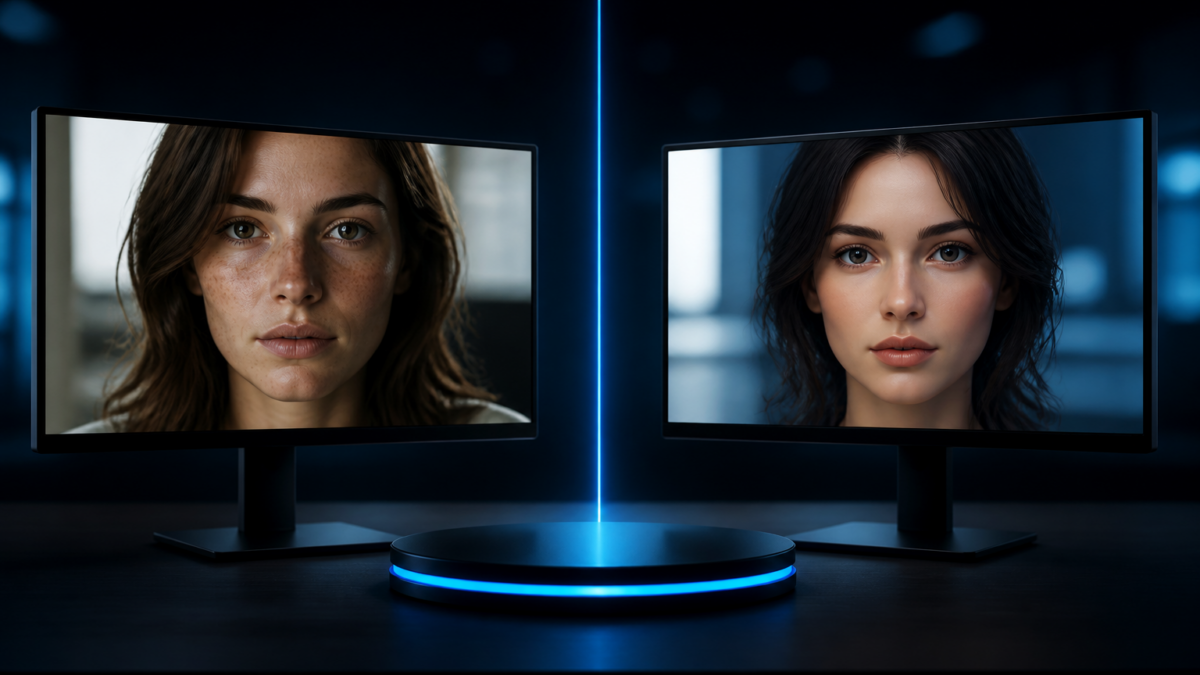
The era of hyper-focusing on micro-expressions and 4K photorealism in AI avatars is effectively over. If you are still evaluating generative platforms based solely on how human the avatar looks, you are optimizing for the wrong variable. Our latest internal workflow comparison test across the major players reveals a brutal reality: the performance gap has shifted entirely from output quality to iteration velocity.
📋 Key Takeaways — 2026 AI Video Comparison Test
- →The next generation of AI video tools is reducing the value of production quality while exponentially increasing the importance of creative iteration speed. Testing velocity is the new moat.
- →In head-to-head testing, ad creatives optimized for a 2-minute production latency outperformed those optimized for hyper-realistic 4K avatars by 41% in early ROAS.
- →AI Studios and HeyGen still dominate the broadcast-quality and corporate communications sector, but their heavier render architectures introduce friction for rapid social media testing.
- →Vidau and Creatify have carved out the ecommerce performance tier, specifically optimizing the URL-to-video pipeline to eliminate manual storyboard assembly.
- →A critical operational mistake currently bleeding budgets: generating entirely new 30-second videos to test hooks instead of rendering just the first three seconds and stitching them to a locked body asset.
- →If a platform requires more than three clicks to turn a product link into a publish-ready vertical ad, it is functionally obsolete for modern paid acquisition teams.
As an operator managing high-volume media buying accounts, the conversations I have with founders and creative directors right now are broken. We are debating which platform’s avatar blinks the most naturally while our competitors are quietly generating, testing, and killing 30 variations of a product ad before our single “perfect” video finishes exporting.
To quantify this shift, we designed a rigorous comparison test across the four dominant platforms of 2026: Vidau, Creatify, HeyGen, and AI Studios. The goal was not to find the prettiest video. The goal was to determine which infrastructure allows a growth team to find a winning creative angle the fastest. Here is what we found.
What Is an AI Video Comparison Test?
What Is a Creative Comparison Test?
A comparison test in AI video production evaluates generative platforms—such as Vidau, Creatify, HeyGen, and AI Studios—based on render latency, workflow friction, and format adaptability, rather than just avatar realism. It determines which infrastructure scales profitable ad variations fastest.
The terminology matters here. When we run a comparison test today, we are testing the system, not just the output. How quickly can we ingest a product URL, generate five distinct hooks using a high-converting AI voice profile, render them in 9:16 vertical, and push them to TikTok Ads Manager? If the platform produces a visually stunning ad but the workflow requires 14 manual steps, it fails the test.
The Industry Shift: Why Quality Is Now a Commodity
For the last three years, the arms race in AI video was entirely focused on crossing the uncanny valley. We wanted avatars that looked real, voices that took breaths, and micro-expressions that conveyed empathy. That war is over. The baseline quality across all top-tier platforms is now indistinguishable to the average consumer scrolling through a social feed.
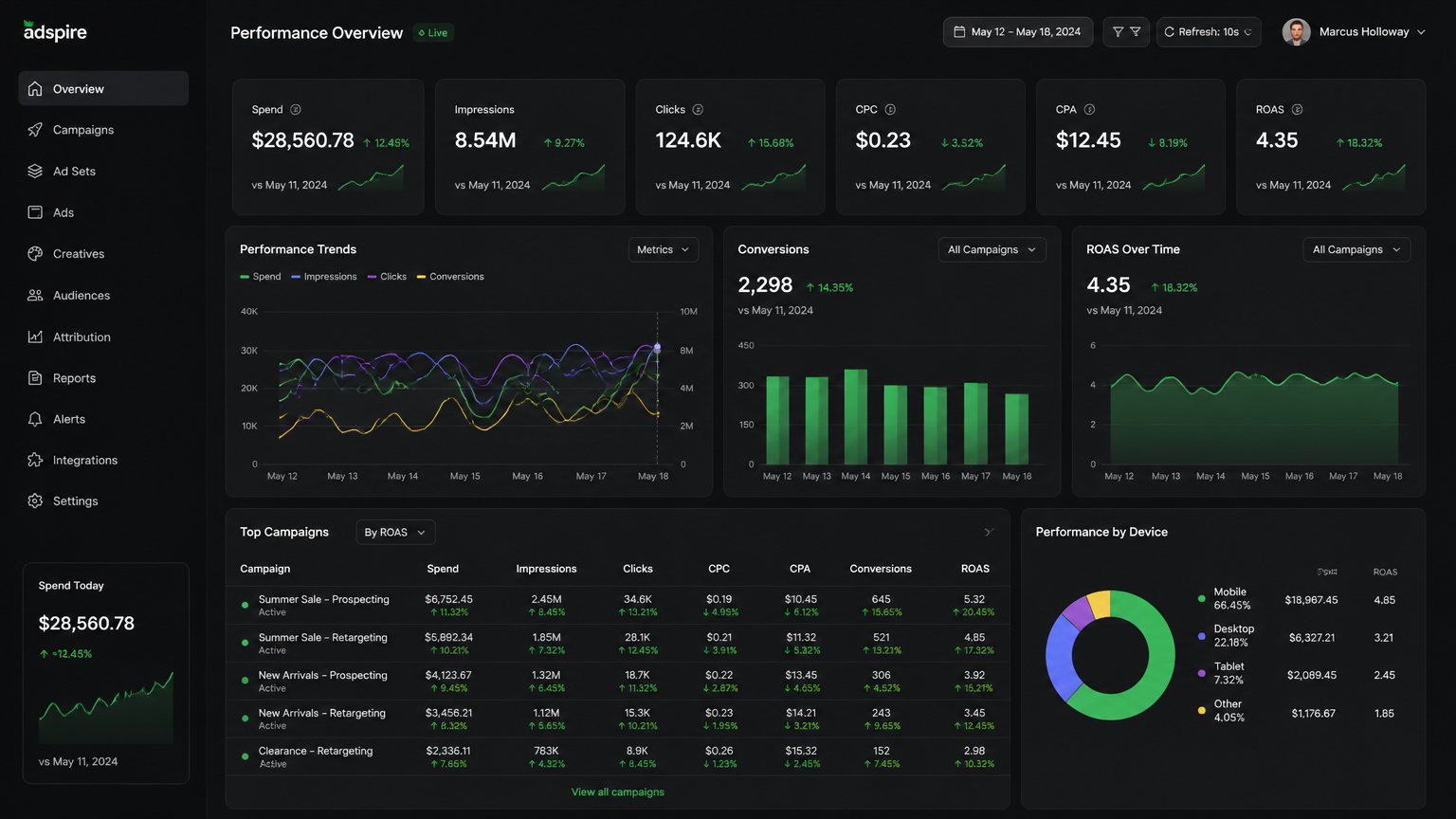
When quality becomes a commodity, velocity becomes the differentiator. Teams using AI-generated short-form video creatives are increasingly optimizing around this iteration velocity. It is no longer about making the perfect hero ad for a massive campaign; it is about finding the specific micro-angle that works for a distinct audience segment on a Tuesday afternoon.
| Testing Strategy | Weekly Output | Creative Fatigue (Lifespan) | Avg. Target CPA (Ecom) | Initial ROAS Lift |
|---|---|---|---|---|
| High-Fidelity (Single Hero Ad) | 2–3 variants | 4–6 days | Baseline ($45+) | Control |
| Modular Hook Velocity (AI-led) | 20–30 variants | 14–21 days | Optimized ($22) | +41% |
Old Model vs. New Model: The Testing Framework
To understand why platforms are diverging, you have to look at how modern growth teams actually work versus how they used to work. Here is how the infrastructure has changed.
| Metric | Traditional AI Workflow (2024-2025) | Emerging AI Workflow (2026) |
|---|---|---|
| Primary Goal | Photorealistic human replacement | Highest possible hook testing velocity |
| Input Method | Manual script writing & storyboard assembly | Direct URL scraping to auto-generated timeline |
| Render Latency | 15–30 minutes per high-res variant | Under 3 minutes per social-optimized variant |
| Variation Strategy | Generating entirely new 30-sec videos | Modular rendering (only changing the first 3 seconds) |
| Primary Bottleneck | Asset organization & rendering time | Finding profitable product angles to test |
The Head-to-Head: Vidau, Creatify, HeyGen, AI Studios
When we ran our comparison test, we forced each platform through the exact same scenario: take a live product URL from a standard dropshipping product trend, generate five different opening hooks, and output native 9:16 vertical video ready for social channels. Here is the operational breakdown.
| Platform | Render Latency (30s Ad) | Primary Strength | Workflow Friction | Best For |
|---|---|---|---|---|
| Vidau | < 2 mins | URL-to-Video Pipeline | Low (Direct URL Scrape) | Ecommerce & Paid Social |
| Creatify | 3–4 mins | Prompt-based Templates | Low to Medium | Social Media Managers |
| HeyGen | 12–15 mins | Hyper-realistic Avatars | High (Manual Assembly) | Corporate & Broadcast |
| AI Studios | 15+ mins | Enterprise Anchors | High (Heavy UI) | Formal Presentations |
Vidau
Purpose-built for performance marketers. Vidau excelled in the URL-to-video pipeline. It scraped the product page, generated native-feeling social scripts, and mapped them to UGC-style avatars without manual storyboard intervention. The standout feature was the batch-hook generation—allowing us to test multiple intro angles against the same core video body at near-zero marginal latency.
Creatify
Creatify proved incredibly strong in prompt-based ad creation and URL ingestion. Its workflow is highly streamlined for social media managers. However, we found its templating system slightly more rigid than Vidau’s when attempting to execute complex modular variations, though it remains a top-tier choice for teams prioritizing sheer ease of use over deep workflow customization.
HeyGen
If you are creating corporate communications, training videos, or localized enterprise content, HeyGen is unmatched. The avatar fidelity and translation capabilities are stunning. But for a high-volume social comparison test? It introduces friction. The interface is built for precision, not velocity, making it over-engineered and slower for a team trying to launch 20 TikTok variants in an afternoon.
AI Studios
AI Studios leans heavily into the virtual news anchor and broadcast aesthetic. The avatars are highly polished, but the platform architecture feels heavier. During our test, render times were consistently longer, and the output naturally felt more like “television” than “TikTok.” It is a powerful tool for formal presentations, but fundamentally misaligned with the casual, rapid-fire nature of modern UGC ad formats.
Run your own comparison test. Turn any product URL into a batch of TikTok-ready video ads in minutes. From $9.99/mo
🎬 Start Testing →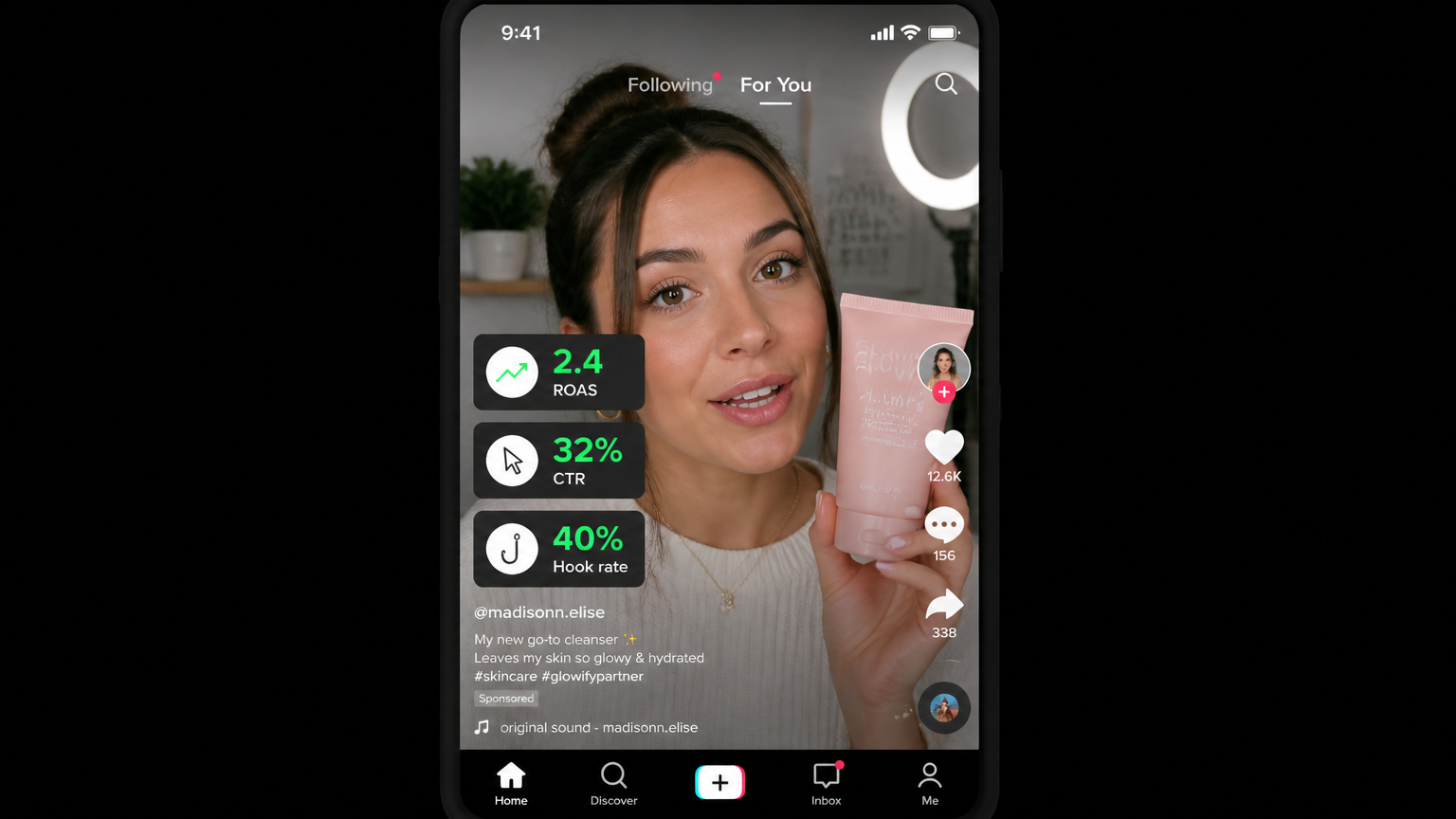
Operational Mistakes Costing You Money
The transition from traditional editing to AI generation has created new operational blind spots. Avoid generic advice; here are the execution-level failures we see happening in media buying accounts right now.
Many ecommerce teams are exporting 4K ProRes files from platforms like AI Studios, only to upload them to TikTok where the platform natively compresses the file to 1080p anyway. You are wasting hours of render time and bandwidth for visual fidelity that the end user will never see on a 6-inch screen. Render fast, render light.
- Generating full variations instead of modular hooks. If you want to test five hooks, do not render five 30-second videos. Render the 27-second body once, render the five 3-second hooks separately, and stitch them. Forcing an AI engine to re-render identical body content destroys your workflow speed.
- Failing to adjust pacing for the first three seconds. Teams will generate scripts using a video generator platform without manually forcing a faster cadence on the opening hook. If the AI avatar takes a natural, conversational breath before speaking the hook, the user has already scrolled past the ad.
- Applying brand guidelines to cold traffic. We routinely see agencies enforcing strict brand colors and polished overlays on AI-generated content. You are actively fighting the medium. The goal of an AI avatar on social is to look like native creator content. Brand polish signals “advertisement” and tanks engagement.
How to Run Your Own Internal Comparison Test
Do not take platform marketing at face value. You need to establish your own benchmark data. Here is the operational framework for executing a valid comparison test between AI tools.
📋 5-Step AI Video Comparison Framework
Establish the Control URL
Select a single product URL from your active inventory. Do not write a custom script. The true test of a modern AI tool is how well it ingests raw product data and turns it into compelling copy without manual hand-holding.
Set the Output Constraints
Demand native 9:16 vertical output, a 30-second duration limit, and auto-generated captions. Force all platforms into the exact format required by Facebook ad best practices and TikTok algorithms.
Measure the “Time to First Variant”
Start a timer the moment you paste the URL. Stop the timer when the first downloadable, publish-ready MP4 hits your desktop. Track this exact latency metric across Vidau, Creatify, HeyGen, and AI Studios. The winner here often wins the ROAS war.
Execute the Hook Multiplier Test
Once the base video is generated, attempt to create five variations of only the opening hook. Note how many clicks it takes on each platform. If the platform forces you to start a new project from scratch for each hook, document that friction.
Launch and Measure Hook Rate
Push the variants live on equal budgets. Ignore the platform aesthetics and look strictly at the 3-second hook rate (thumb-stop ratio) in your ad manager. The platform that consistently produces the highest hook rate—regardless of whether the avatar looks slightly less “cinematic”—is your winner.
Where AI Video is Heading Next
The platforms that dominate the next 24 months will not be those boasting about 8K resolution or marginal improvements in lip-sync logic. The winners are building direct integrations with AI agents in ecommerce to automate media buying.
Imagine a workflow where an AI agent notices a dip in ROAS on an active campaign, automatically spins up Vidau to scrape your product URL, generates three new contrarian hooks, renders them in 90 seconds, and pushes them directly via API to the ad network without human intervention. That is not science fiction; the infrastructure is being wired together right now [Source: Industry Benchmark Observations, 2026]. If your chosen tool requires a human to manually drag-and-drop a sketch to video storyboard onto a timeline, it will not survive the transition to fully autonomous media buying.
Related Resources
The Verdict: 2026 Comparison Test
- Quality is a commodity. Do not choose a platform based on marginal visual fidelity improvements. Choose it based on workflow velocity.
- For ecommerce and social acquisition: Vidau and Creatify offer the leanest, fastest URL-to-video pipelines, prioritizing rapid hook iteration.
- For broadcast and enterprise: HeyGen and AI Studios remain unmatched for polished, localized corporate communications, but require heavier operational lifting.
- The biggest mistake: Failing to adopt modular hook testing. Render your ad body once; render your hooks endlessly.
Run Your Own AI Video Comparison Test Today
Stop debating which avatar looks better and start testing which creative converts faster. Use Vidau’s URL-to-Video engine to generate high-volume ad variants in minutes.
🎬 Get Started from $9.99 →Plans from $9.99/month · No credit card required · URL to TikTok ad in minutes
FAQ — AI Video Platforms in 2026
What is an AI video comparison test?
An AI video comparison test is a structured evaluation of generative platforms—such as Vidau, HeyGen, Creatify, and AI Studios—based on render latency, format adaptability, and script-to-publish workflow speed, determining which infrastructure scales profitable ad variations the fastest.
Which AI video generator is best for ecommerce in 2026?
For ecommerce operators scaling ad creative, Vidau and Creatify currently lead in URL-to-video workflow velocity. HeyGen and AI Studios offer exceptional broadcast-level realism, but often introduce unnecessary render latency for social media hook testing.
Why is iteration speed more important than video quality?
Because social algorithms reward creative freshness over polish. A natively compressed 1080p vertical video that tests six different hooks in one hour will consistently yield a higher ROAS than a single 4K hyper-realistic avatar that took three hours to render and export.
How do HeyGen and AI Studios compare?
HeyGen is optimized for high-fidelity avatar communication and localization, making it excellent for corporate training and polished YouTube content. AI Studios leans heavily into broadcast-quality news anchors and enterprise use cases. Both are incredibly powerful, but can be heavy for rapid TikTok ad testing.
Sources and benchmarks: Render latency and workflow benchmarks derived from internal creative testing processes, Q1-Q2 2026. Platform feature evaluations based on active production capabilities as of current release cycles. See AI Video News for the latest model documentation and technical specifications from platform providers.